
Ecological Belonging Fellows
Exploring Ecological Belonging Together
Over 50 fellows from across four universities (Georgetown University, Centro Universitario Facens, University of Hawaii at Manoa, University of Ljubljana) have embarked on a two-year fellowship journey, exploring the concept of ecological belonging and the driving question at the heart of this work: how do we live? The students come from different academic backgrounds including: chemical engineering, medicine, law, environmental studies, anthropology, economics, and business.
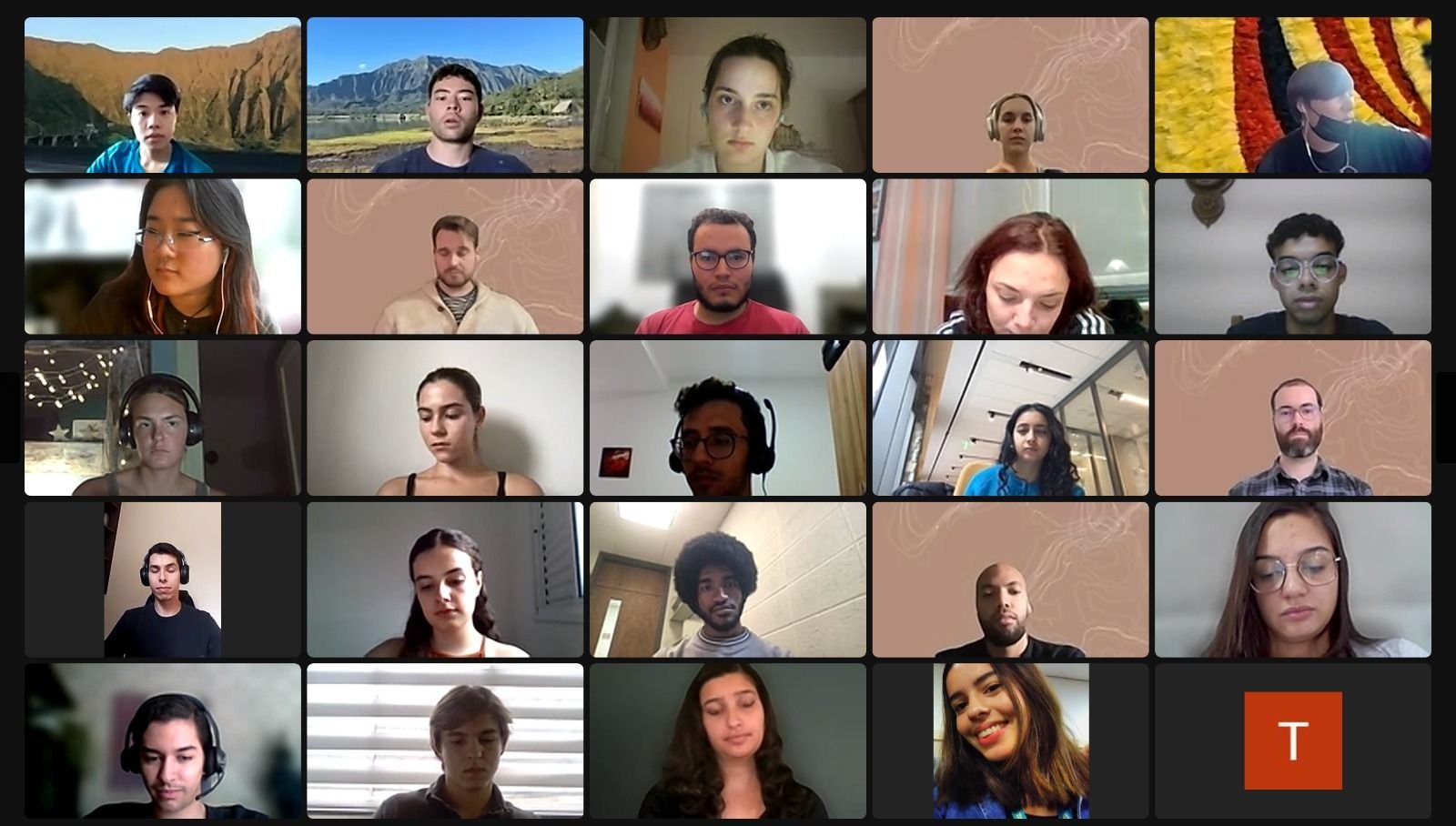

The Fellows are providing leadership over a two year cycle to our Ecological Belonging exploration. They are doing a program that includes:
- Modules that dive into topics that are becoming part of new curriculum
- Engaging a broader community at their University
- Attendance at the Global Wellbeing Summit in 2025
- A certificate from Georgetown
Healing From Trauma: The Leadership Skill You Didn’t Know You Needed Healing From Trauma: The Leadership Skill You Didn’t Know You Needed
A CONVERSATION WITH:
Benoît Legrand
Business leader, psychogenealogist, former CEO and Chairman
🌍 Paris, France
As the conversation around the impacts of trauma in the social change sector continues to grow, changemakers can take an opportunity to reflect on how their wellbeing impacts their leadership skills.
Last November, TheMerode Club brought together seasoned executives from the government, business, civil society, and academic sectors to reflect on wellbeing at the individual, collective, and planetary levels.
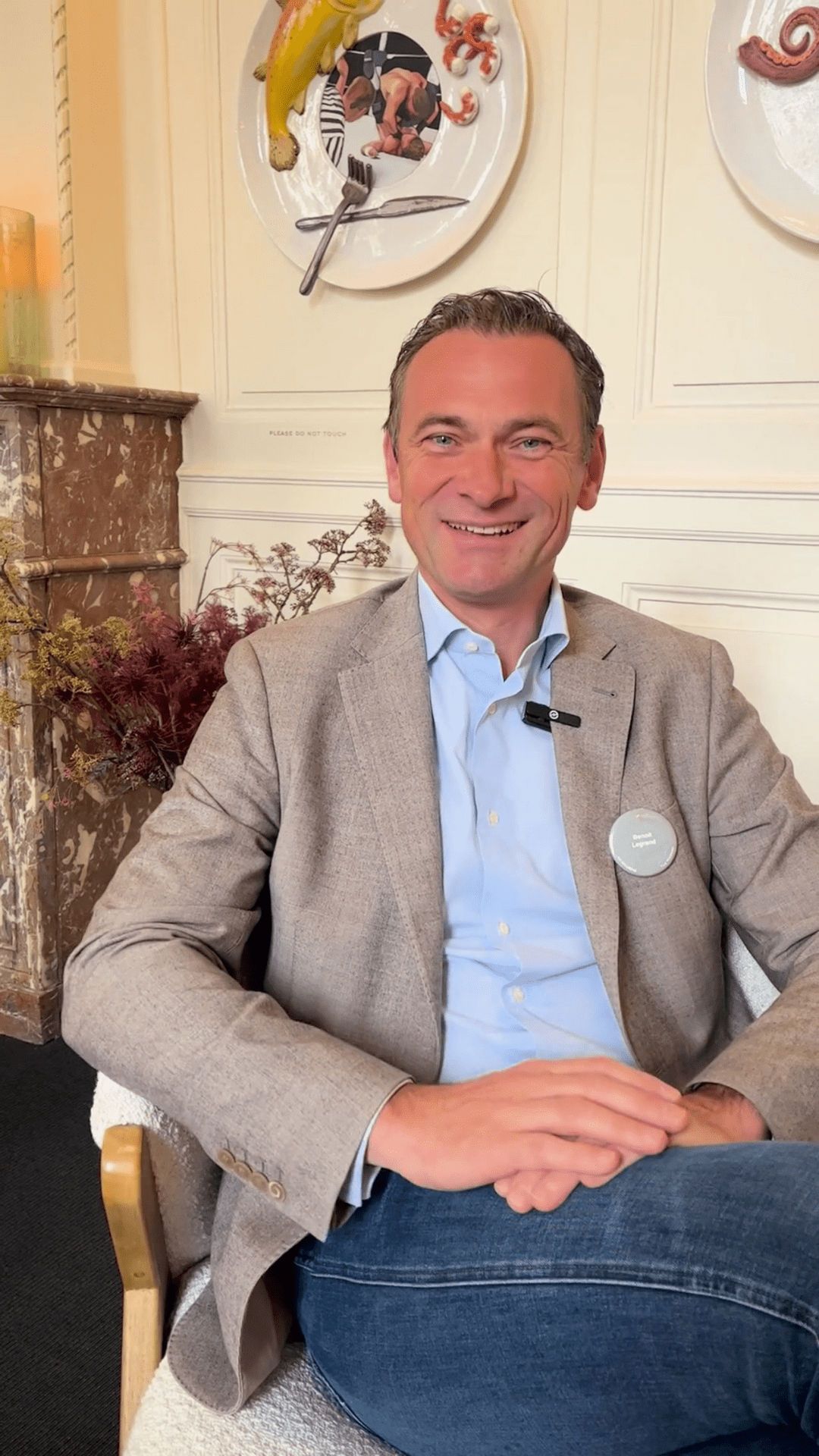
Benoît Legrand, a visionary business leader with over 25 years of experience in various C-level positions in the European financial sector, joined The Wellbeing Summit Brussels to share reflections from his career in business and newfound venture as a psychogenealogist.
Speaking on a panel about the impacts of intergenerational trauma with The Wellbeing Project’s co-lead, Aaron Pereira, and Katherine Milligan, Director of the Collective Change Lab, Benoît encouraged changemakers to connect the individual with the organizational by asking themselves: how do my traumas impact my leadership style?
We sat down with Benoît to dive deeper into this topic. Drawing on his business and personal experiences, hear from Benoît about why acknowledging and addressing one’s traumas is an essential leadership skill, plus encouragement for leaders to start this important journey.
“It should be part of the essentials of leadership. Because, knowing your own darkness is, I think, the best method for dealing with the darkness of other people. You cannot have change, have people change, and change yourself before you accept that something is really wrong. Right?”
Tell us about the impacts of trauma.
Trauma, for me, is something which we all go through, and something absolutely necessary to be aware of to give the best of yourself and find your place in this world. The idea of “trauma” might give or have a sense of drama, which is of course very true when we think about those very macro-level traumas which have affected large populations or very deep traumas that some individuals can go through. Yet, trauma goes also into more subtle dimensions of things which traumatize you. You can be affected by what happened to you consciously, but also by what happened in your family, school, community, country, continent, or race. These impacts are being inherited, which we see now from an analytical and empirical point of view. So in a way, we are all traumatized. But it’s okay. The point is merely for every one of us to just first acknowledge it, dare to look at it and think beyond everything which we know consciously.
I’ll always have in my mind what Carl Jung said, “who looks outside, dreams, and who looks inside, awakes.” I’ve learned that from this process. I thought just looking outside would make me smart and intelligent. But the awakening comes from looking inside of myself, not being scared and not being afraid. By facing reality, we can unlock a lot of situations.
Leaders care about so many people and they don’t want to let anyone down. But they should realize that if they go down themselves, they let everyone down.
When leaders do inner work, including healing from trauma, how does it impact their organization’s wellbeing?
It’s just essential to face your trauma as a leader. You will notice anyone who’s just going out there and showing his vulnerability, just making himself more human. As a leader, if you effectively radiate this positive energy, then it diffuses around the organization. It’s a bit like a pendulum: if at the very top, the positive radiation is there, the radiation at the bottom will be just proportionate. And if the organization is big, or you go to a company or a country, then the impact you can have is just immense. So it’s our own responsibility to think for ourselves: What do I want to be in this world? Do I want to be an agent of positive radiation? Or do I still want to keep all this hatred and and violence and fear and negative energy in myself and overload the world with that right?
Do you think leaders understand the importance of caring for their wellbeing?
Let’s say, okay, we know it’s important to eat. We know it’s important to sleep. We know it’s important to read good things. But do we take, as leaders, the time to step back to sit with someone and just have a conversation? Get a couple of things out, talk and discuss, just to say, “Well, I’m not alone here, right?” and to take care of yourself? It’s fantastic because leaders care about so many people and they don’t want to let anyone down. But they should realize that if they go down themselves, they let everyone down. So having a preventative strike, taking a step back, breathing it, having a discussion and looking at your psychological health is very important. But that can be very hard for leaders, to say, “I need to ask for help.” I personally have been very bad at this.
Can you tell us a bit more about that?
I’ll just testify what I’ve been through. I was having a very intense business life. I was managing teams all over the world and travelling 80% of the time. I was also under heavy stress, with a new CEO that was misaligned with what I was thinking. There was a combination of things, including me having worked like hell for the last 20 years, going all over the place, with pressure from left to right. And at one point, my body – because my brain didn’t want to understand it – sent the signal: stop. My heart gave me a very strong signal that I needed to stop. I stayed in the hospital for four or five days, where I realized that I went over a limit because I was not sufficiently courageous to face my limits and ask for help.
I kept denying reality. I thought, because I’ve been through so many challenges and successes as a leader, I’m going go through it this time also. I’m not going to ask for help or say I’m vulnerable. But the second problem is once you effectively realize you’re not OK and you might not manage to deal with the situation, there’s some kind of taboo. So you just keep fighting on your own. This is what leaders might face. I know that in France, about one out of two leaders or entrepreneurs is close to being in burnout. One out of two, which is just dramatic.
So what should leaders be doing to care for their own wellbeing, which then will have a positive impact on their organizations?
You, as a leader and manager, have been doing nothing else than daring right? You have been taking risks. This is what you do daily. But there are also risks to take about yourself so you can see a couple of things. It’s okay. You will be more powerful by doing it. And really, what do you have to lose? Even if you’re 40, 50, 60, you still have life to live. What do you want to do with it? So look forward and say, “Is it worth taking the time and challenging myself just to try to be at the best place can be on this planet?” If you take that time, once you’re there, nobody can stop you.
Look forward and say, “Is it worth taking the time and challenging myself just to try to be at the best place can be on this planet?” If you take that time, once you’re there, nobody can stop you.
And the systemic approach is so powerful. We live in systemic environments: whatever changes something which influences something which changes, and so on. Once you start talking about something, you see things happening around you. The power of communication, daring to put things on the table and explain things, starts to unlock a lot of things that can bring a lot of peace.
But do this in a secure environment: bring safety and security around you. It can be hard, but if you do it with the right spirit of care, love, and positivity, it will come right back to you.
About Benoît
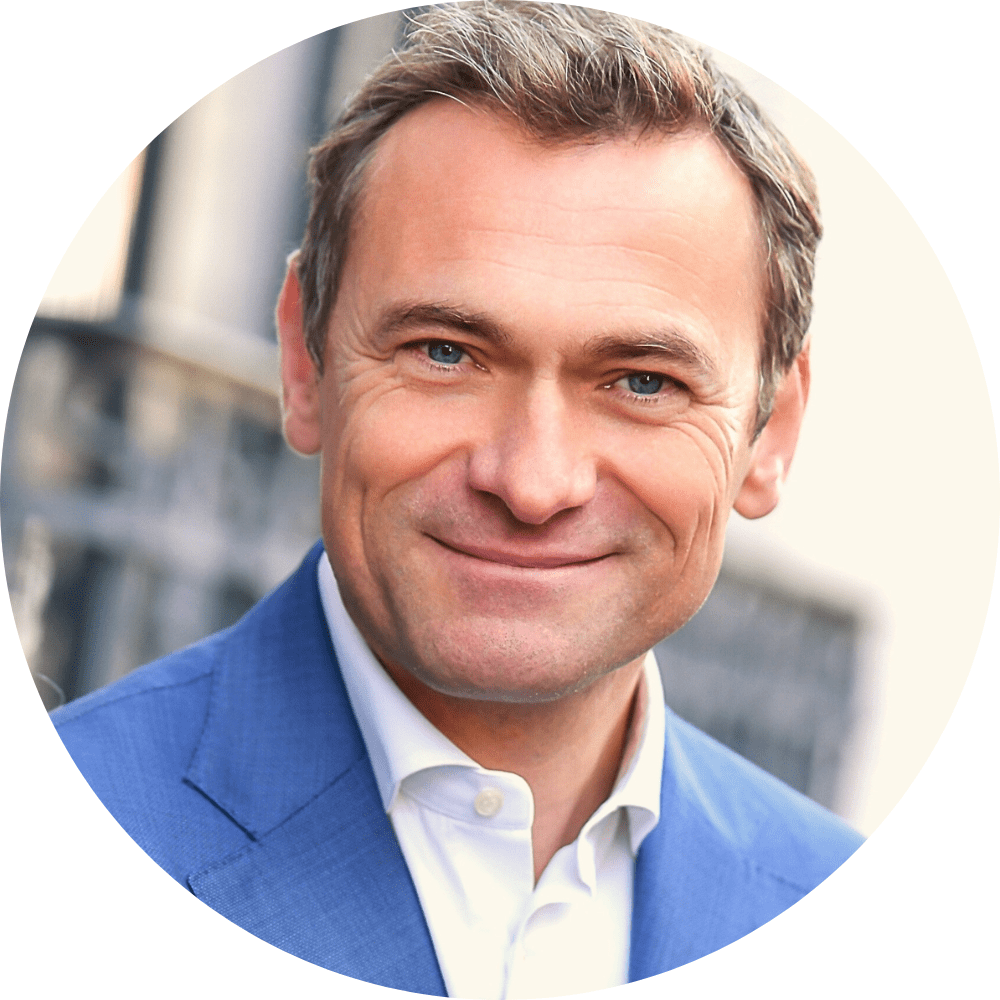
Benoît Legrand is a visionary business leader with over 25 years of experience in various C-level positions across multiple countries. Throughout his career, Benoît’s driving conviction has been centered around putting people at the heart of the company. He believes in genuine care for employees and customers to achieve lasting success. Having served as CEO of ING Direct France, Country CEO of ING France, and Chairman of ING France, he demonstrated his dedication to innovation by spearheading ING Ventures, the EUR 300m Corporate Venture Capital arm. After leaving ING in 2021, Benoît now advises organizations on innovation and transformation. He holds degrees in International Relations and Economics. Belgian and based in France for over 10 years, he has lived in 8 different countries and speak 5 languages.
Want to know more about trauma and its impacts?
Watch the first virtual convening in our webinar series hosted by The Wellbeing Project and the Collective Change Lab. You can also visit our new hub for research and stories on intergenerational trauma. Together, we explore how we can move from trauma-informed to healing-centered ways of working for systemic change.
Discover the Wellbeing Movement in Europe Discover the Wellbeing Movement in Europe
Meet and hear stories from the changemakers championing the wellbeing movement in Europe.

Content By RegionContent By Region
Discover Diverse Expressions of Wellbeing Around The World
In our interconnected world, the concept of wellbeing transcends boundaries, taking on unique meanings and expressions in diverse cultural contexts. This page serves as a vibrant hub where visitors can explore a tapestry of perspectives, practices, and stories related to wellbeing from various regions across the globe.
Join us as we celebrate the universal pursuit of wellbeing, woven through the vibrant threads of global diversity.
AfricaAfrica
Asia and PacificAsia and Pacific
EuropeEurope
Central & South America and the CaribbeanCentral & South America and the Caribbean
US & CanadaUS & Canada
Welcome to the Good Feeling House: Home to Peer-to-Peer Youth Mental HealthcareWelcome to the Good Feeling House: Home to Peer-to-Peer Youth Mental Healthcare
INTERVIEW WITH:
Thieu Scheys
“Conflixer” student volunteer at the Goed Gevoel Huisje (The Good Feeling House)
🌍 De Prins Secondary School, Diest, Belgium
In 2022, a passionate 17-year-old student, Noor Van Reet, won a grant to construct a small house on her school campus where peers could counsel and support each other about mental health.
Today, the Goed Gevoel Huisje (or “The Good Feeling House”) welcomes students of all ages at the De Prins Secondary School to join their peers for a moment of calm, connection, and creativity throughout the school day. Students are trained as “Conflixers” by mental health professionals from the Flemish School Association (VSK) on how to provide age-appropriate peer support in an inviting and welcoming space. Seventeen-year-old volunteer Thieu Scheys joined the Peer-to-Peer Wellbeing Practices Forum at The Wellbeing Summit Brussels to share with changemakers the youth perspective on mental health and community wellbeing. Here’s his point of view.
What is the Goed Gevoel Huisje ?
The Goed Gevoel Huisje (the “Good Feeling House”) is a wooden house built on the playground of our school where students can come talk about their problems with other students. They can also come to hang out, play board games, and read books. We also plan other activities in the house outside of school. It’s a very cozy and fun place.
How does it work?
People can walk in to hang out or start talking to us, or they can send us a message beforehand about what they may want to talk about. We received training about how to talk to kids about their feelings and how to listen to them. We also give everyone the option to sit in different places at school to talk, because the house is on our playground where everyone can see, and maybe they want to talk in a private space.
How did the Goed Gevoel Huisje start?
It started with a student named Noor. When she was little, she was in the hospital for a while and couldn’t go to school. She realized how hard it was to be alone and have no other students or friends around to talk about her feelings. So she had the idea for the Good Feeling House and won a competition in Europe with the idea, which gave her a budget. Our school agreed to build the house on the playground and the company Wood-You built it based on our designs.
Why do you think the Goed Gevoel Huisje is important for your school?
Some people have good home environments where they can talk about their feelings but some people don’t, so it’s nice for kids to have a place at school where they can talk about their feelings with other students. It can also be really hard for kids to talk to adults about what’s going on because of the age difference. The volunteers are in the fifth year of school and we’re mostly focused on inviting students from the first and second grade to join. It’s easier to talk to someone when they are closer in age to you.
How can kids support each other with their mental health?
I think kids can support each other by listening to someone else, but also saying if they have a problem. If you can give an example, and other people feel that it’s possible to share their feelings, then it becomes something that just becomes so normal to talk about. It becomes an open conversation. In society, I don’t think it’s very normal and it would be really good to get rid of this stigma.
The Flemish School Association (VSK) equips students to serve as peer supporters with conversational skills for talking about mental health and resolving conflict. Conflixers also learn about topics like bullying, harassment, mental health first aid, hate speech, bias, and more.
“It is often small things that affect the atmosphere or wellbeing of students at school. The Conflixers are doing something about it!
Conflixers are students who support other students at their own school where necessary. It can take different forms, but one thing is certain:
students will get it done.“
What have you learned since being involved with the Goed Gevoel Huisje?
We all had training about how to talk to each other about our feelings and mental health. It was really interesting because I learned that when we communicate, we often put our perspective on the other person. The main thing we can do to help each other is listen, not look at ourselves, and maybe not offer them a solution — just listen to the other person. It’s also important to take the time to care for ourselves and sometimes say no to other people. Sometimes, saying no to other people and thinking a little bit about yourself will mean that you can give more to other people eventually.
I’ve also learned how fun it is to be involved in a project. It’s very nice to work with other people, do activities, and do nice things for other people.
What is wellbeing to you?
I think wellbeing is feeling good in your skin, having the chance to do what you like, be who you are, and just feel good in general. I think other kids would agree with me that it’s about feeling good and happy in general, without too many bumps on the road.
What do adults not understand about young people’s mental health?
I think most adults are doing a good job helping young people express their feelings. Teachers, for example, do a lot for us. But I think they don’t understand that it can be very hard to go to someone who is a lot older than you. That can be a really big step, so we’re trying to make that step smaller so students will be quicker to act when something is wrong.
What do you need from adults to see the change you want in the world — to make it easier for kids to talk about their mental health?
I think adults need to be more open about how they feel. With kids, they may not want to share how they are feeling. But I think that if they start sharing from a young age, like if they are tired or not having a good day, then it will be easier for the young kids to share the same when they are older.
What advice do you have for other youth who want to do something positive in their community?
Spread the word about your project and just have fun! Make a good impression on the world and hopefully start to make it a better place. There are a lot of different little projects in the world and eventually, the world will become a much better place.
If someone wanted to start a Feeling Good House at their school, what would you tell them?
All schools are different and all people are different so just see what works for you. Do whatever you want and fun!
Discover the Wellbeing Movement in EuropeDiscover the Wellbeing Movement in Europe
Meet and hear stories from the changemakers championing the wellbeing movement in Europe.

Remembering, Renewing, and ReweavingRemembering, Renewing, and Reweaving
Ecological Belonging x Regional Hearth Summits
With a name inspired by the fires around which humanity has gathered since the dawn of time, regional Hearth Summits are built on a profound appreciation for ritual, tradition, and culture. They epitomize a harmonious fusion of local traditions and global connectivity, fostering a profound discovery of cultural heritage and our intrinsic bond with nature. At the core of this exploration of Ecological Belonging: living in an ongoing interconnected relationship with ourselves, each other and our broader natural world.
These locally-led, globally-connected, and universally human events serve as vibrant hubs where communities converge to celebrate and preserve their unique customs. Through storytelling, workshops, and experiential learning, the Hearth Summits invite changemakers to a global dialogue rooted in the authenticity of local identities and a shared reverence for the natural world.
Across the regional Hearth Summits, discover how local communities are remembering their inherent bond with the world, reweaving ancient rituals into modern-day life, and reconnecting with the natural environment. Want to go deeper into the world of Ecological Belonging? Join our global movement.

RECONNECTING WITH NATURERECONNECTING WITH NATURE
“Nature is the source of all true knowledge.”
Leonardo Da Vinci
With many events hosted in the heart of local landscapes, changemakers immerse themselves in the raw beauty of their surroundings, allowing nature’s awesome wisdom to permeate every aspect of the Hearth Summit experience.
Nestled in the gardens of Tamarind Brasserie, Hearth Summit Nairobi offered changemakers a serene retreat into nature, with forests, flowers, and even new friends: cats, hares, tortoises, and monkeys regularly roamed through the space throughout the event.
Immersed in the magical landscape of the Omega Institute, changemakers at the first regional summit in North America were able to connect to each other and themselves, all in the awe-inspiring environment of the 250-acre campus.
Nestled on the banks of the Guarapiranga dam, The Wellbeing Summit São Paulo offered a pristine view of the Brazilian coast, including 200,000 m2 of preserved Atlantic forest, home to 290 native species that have been re-introduced to the environment, thanks to Clube de Campo’s conservation efforts.
A “Planting Manifestation” station let changemakers contribute to Bangalore Creative Circus‘ permaculture garden. The activity guided them through a meditation as they held their plants, touched the soil, watered the sapling, and planted seeds of dreams into the earth.
Nestled on the banks of the Guarapiranga dam, The Wellbeing Summit São Paulo offered a pristine view of the Brazilian coast, including 200,000 m2 of preserved Atlantic forest, home to 290 native species that have been re-introduced to the environment, thanks to Clube de Campo’s conservation efforts.
The permaculture garden at Bangalore Creative Circus offered participants a serene space to reflect on the Summit’s theme of Ecological Belonging, enjoying a full multi-sensory experience with the garden’s different landscapes and treasures.
ENTERING IN DIALOGUE WITH THE EARTHENTERING IN DIALOGUE WITH THE EARTH
“Nature is the source of all true knowledge.”
Leonardo Da Vinci
Ecological Belonging and planetary wellbeing were key themes at Hearth Summit Nairobi, hosted in the biodiverse Karen neighborhood. A diverse group of experts – Fridah Kiboori, Nyaguthii Chege, Constant Cap, and Kevin Juma – shared perspectives on contributors and inhibitors to ecological wellbeing in Kenya. Reflecting on the drastic environmental changes over the years in Kenya, they offered ideas for different solutions to promote conservation, regeneration, and healthy cities, focusing on common themes like justice, grassroots empowerment, equity, and financing.
In Bangalore, a diverse panel on Ecological Belonging brought three perspectives on social change in India and the importance of reconnecting with nature. Abhayraj Naik, Co-Founder of the Institute of Climate Action, discussed the profound spiritual dynamic of the human-nature relationship; Dr. Mala Kapadia, Director of the Anaadi Foundation Center for Indigenous Knowledge Systems, reflected on India’s unique cultural traditions and their roots in nature; and Naveen Vasudeva, Co-Founder of Ritambhara, presented the deep wisdom and hope one can find in Yoga.
INTERGENERATIONAL EDUCATION
SESSION AT HEARTH SUMMIT HIGHER ED
In México at the annual Wellbeing in Higher Education gathering, Papalii Dr. Tusi Avegalio, an Elder of the student-led Ecological Belonging fellowship, shares his wisdom and vision. He discusses the power of ancestral wisdom to meet contemporary challenges; how Pacific community values can guide innovation and entrepreneurship; and strategies to boost community wellbeing through education and research. Watch the session (in English).

INDIAN WISDOM AND CONSCIOUS LEADERSHIP
SESSION AT HEARTH SUMMIT HIGHER ED
In México at the annual Wellbeing in Higher Education gathering, Nilima Bhat, distinguished professor in gender and conscious leadership studies, introduced changemakers us to the concept of Shakti Leadership: a powerful fusion of ancient Indian wisdom and emerging knowledge. Learn about the essence of Shakti Leadership, which balances feminine and masculine energies, and the practices that can strengthen your leadership. Watch the session (in English).

REWEAVING RITUALSREWEAVING RITUALS
“Learning to touch deeply the jewels of our own tradition will allow us to understand and appreciate the values of other traditions, and this will benefit everyone.”
Thich Nhat Hanh
Bringing together people from all backgrounds, the regional Hearth Summits invite local communities to share their vibrant cultural heritage and wisdom. This celebration of diversity enriches us all, inviting cross-cultural, intergenerational dialogues and preservation of treasured indigenous ways of life.
YOGA AND CONSCIOUS HUMAN DEVELOPMENT
SESSION AT Hearth Summit São Paulo
In São Paulo, Marco Schultz, coordinator of Simply Yoga, shared a profound, transdisciplinary approach to human development, drawing on various traditions of India and other Eastern and Western cultures. This approach to self-awareness and self-knowledge encompasses the spiritual and integral aspect of the human condition. Watch the session (in Portuguese).
On the Philippine island of Siquijor, traditional healers have been practising spiritual forms of healing for generations. Their rituals are deeply connected to the immense biodiversity of the Philippines and the island itself — one of the most remotely populated within the nearly 8,000 islands in the Philippines, of which only about 2,000 are inhabited by humans. Today, these practices have become intertwined with Catholicism, the primary religion in the country, though traditional spirituality remains taboo at times. Hearth Summit Philippines, hosted in collaboration with the Siquijor Healers Association, invited Filipino changemakers to reconnect with Indigenous ways of knowing and their overall impact on wellbeing. Learn more about the Siquijor healers and a Philippine take on wellbeing.
In Brussels, Buddhist monk Bart Weetjens led the crowd in a chant of the ancient Shigu Siegan Mon, or the four great vows of the Boddhisatva. This sutra represents the ideal of all Buddhists: to liberate all beings by practising the ways of the Buddha. Watch the magical moment here of changemakers chanting alongside Bart, and practice it yourself:
Shujō muhen sei gan do: Living beings are limitless, I vow to to liberate them all / Bon-no mujin sei gan dan: Delusions are inexhaustible, I vow to understand them all / Ho mon muryō sei gan gaku: Gates of Truth are incalculable, I vow to count them all /Butsu do mujō sei gan jo: The way of awakening is unsurpassable, I vow to attain it

THE SIQUJOR HEALERS
AT HEARTH SUMMIT PHILIPPINES
On the Philippine island of Siquijor, traditional healers have been practising spiritual forms of healing for generations. Their rituals are deeply connected to the immense biodiversity of the Philippines and the island itself — one of the most remotely populated within the nearly 8,000 islands in the Philippines, of which only about 2,000 are inhabited by humans. Today, these practices have become intertwined with Catholicism, the primary religion in the country, though traditional spirituality remains taboo at times. In 2025, Hearth Summit Philippines will take place on the island, hosted in collaboration with the Siquijor Healers Association, as a way to connect Filipino changemakers with Indigenous ways of knowing and their overall impact on wellbeing. Learn more about the Siquijor healers and a Philippine take on wellbeing.
MORE STORIES FROM THE REGIONAL HEARTH SUMMITSMORE STORIES FROM THE REGIONAL HEARTH SUMMITS
About Ecological Belonging

Reigniting Rituals Through the Arts, the Universal Language of Wellbeing
In an exciting collaboration with Community Arts Network (CAN), we are excited to launch a global initiative around the arts to create a unique and magical vision, along with local communities, around the concept of Ecological Belonging. Passionate and dynamic individuals in Austria, Bangladesh, Brazil, Colombia, India, Japan, the Philippines, and Senegal have taken on the role of Ritual Alchemist. Through the arts, they will delve into a local ritual or practice and engage the community in a journey to renew it for today.
The Ritual Alchemists have been chosen and are embarking on their journey of Ecological Belonging! Meet them on the Ecological Belonging Hub.

THE BASSARI
AT HEARTH SUMMIT Thiès
Both editions of the regional summit in Thiès welcomed members from the Bassari country, led by Black Keme (Antoine Indega Boubane) — an Ambassador of Bassari Culture and the 2024 Ritual Alchemist — who guided participants on an artistic, intellectual, and experiential journey exploring the Bassari’s coming-of-age traditions. Want to delve deeper into Bassari traditions and craftsmanship? Watch this introductory video to their nature-based coming-of-age practices (in English and French).

SOUTH INDIAN MYTHOLOGY
AT HEARTH SUMMIT BANGALORE
In Bangalore, Ritual Alchemist Poornima Sukumar allowed changemakers to practice making south Indian kolams: intricate, symmetrical designs drawn with rice flour or chalk powder, traditionally at the entrance of homes. They are a daily ritual in many households, symbolizing welcome, prosperity, and harmony. The practice dates back thousands of years, blending art, spirituality, and science. In mythology, kolams are said to please Lakshmi, the goddess of wealth, and ward off negative energies. The use of rice flour also reflects an offering to small creatures like ants, embodying the principle of coexistence. Over time, kolams have evolved into a cultural art form while retaining their deep-rooted spiritual significance.
EXPLORE THE RECONNECTION TO THE EARTH FURTHEREXPLORE THE RECONNECTION TO THE EARTH FURTHER
Dive Into Ecological Belonging Stories From Around the World



Experiencing Wellbeing Around the World Experiencing Wellbeing Around the World
Wellbeing Practices x Regional Hearth Summits
The regional Hearth Summits gather changemakers from a diverse range of cultures, backgrounds, and fields to explore the intersection of wellbeing and social change. The emotional and intellectual journey of a Hearth Summit inspires us not only to think about the presence of wellbeing in our lives — but to feel it too. We are offered a space to co-create global understandings of what wellbeing is, all the while believing strongly that wellbeing has no one true definition. It must be lived to be understood — and each of us has our own way of being well.
Throughout the regional Hearth Summits, changemakers are invited to explore how they can get in touch with and embody their wellbeing through a variety of practices. With options like physical movement, philosophical explorations, traditions and rituals, and evidence-based approaches, the regional Hearth Summits invite everyone to be well in their own unique way.
Explore the different ways the regional Hearth Summits are encouraging us to look inward and cultivate a sense of inner wellbeing.
Want more ideas for how you can practice wellbeing? You can also find other wellbeing tips here and tell us about your wellbeing practices.
Art as a Creative Outlet Art as a Creative Outlet
“Art has the power to transform, to illuminate, to educate, inspire and motivate.”
Harvey Fierstein
In Dhaka, participants were invited to explore the therapeutic benefits of painting, especially with bright colours, as part of a wellbeing workshop on the emotional boost of light and colours.
In Nairobi, artist Lindsay Dawn Obath guided participants in a self-portrait painting session, inviting them to reflect deeply on their inner worlds and identities, all the while playfully enjoying the simple act of painting.
Changemakers in Dakar-Thiès tried their hand at traditional African basket weaving led by IMADI, who taught them techniques that have been passed down for generations, from grandmothers to mothers to daughters.
In Dhaka, the workshop “Life is an Art” encouraged changemakers to slow down, pause, and enjoy a mindful moment before, in silence, using the arts to express their emotions and reflect on life experiences.
In Nairobi, changemakers took time to delight in the colorful art of floral bouquet design with a workshop guided by Floral Design Studio Kenya, a training studio led by three generations of family florists in Nairobi. The best part: taking your creation home to remember the extraordinary summit!
Awa Fall, who attended Tostan’s training programmes during her incarceration in the Thiès prison and then went on to establish her own tie-dying business, taught changemakers how to dye fabric. With Awa’s expert guidance, participants left the Summit with a hand-dyed scarf, a souvenir of their wellbeing practice.
The Healing Power of SoundThe Healing Power of Sound
“Music produces a kind of pleasure which human nature cannot do without.”
Confucius
In TheMerode’s “Zen Room”, Maïté Herkins guided guests through a therapeutic sound bath during session breaks during The Wellbeing Summit Brussels.
Harp therapist Alix Collin brought the beautiful, healing presence of the harp to The Wellbeing Summit Brussels, even inviting participants to sit against the harp to feel its healing vibrations as she played.
Reggie Hubbard created a harmonious blend of sound by performing a crystal bowls concert amidst the natural melodies of nature thriving at the Omega Institute.
Complimenting the natural soundtrack of birds chirping and leaves rustling in the gardens of Bangla Academy, Swayambhu led participants through a tranquil journey of sound and breath.
MINDFULNESS AND BREATHWORKMINDFULNESS AND BREATHWORK
“Feelings come and go like clouds in a windy sky, conscious breathing is my anchor.”
Thich Nhat Hanh
Amid thought-provoking talks, captivating art performances, and energizing social activities, the regional Hearth Summits remind us there is always time to slow down and notice our breath.
Find your own breath with our guided meditations here.
THE WISDOM OF MEDITATION
SESSION AT Hearth Summit São Paulo
In São Paulo, Daniel Calmanowitz, Vice President of Lama Gangchen Foundation for the Culture of Peace, shared the wisdom of meditation with changemakers and how it can impact individual and collective wellbeing. As a disciple of the Tibetan Buddhist master H.E. Lama Gangchen Rinpoche, a Buddhist practitioner since 1987, and an ordained monk since 2011, Daniel offered profound wisdom from the Buddhist tradition in a cross-cultural dialogue at Hearth Summit São Paulo. Watch the session (in Portuguese).
THE GREAT OUTDOORS THE GREAT OUTDOORS
“Some old-fashioned things like fresh air and sunshine are hard to beat.”
Laura Ingalls Wilder
Taking in the pristine setting of the Omega Institute‘s campus in upstate New York, changemakers enjoyed guided nature walks throughout the gathering. Delegates explored the natural curiosities of the 250-acre campus, filled with gardens, hiking trails, and a lakefront, which invited them to imagine a new season of life for themselves — and the world.
Nestled in the gardens of Tamarind Brasserie, Hearth Summit Nairobi offered changemakers a serene retreat into nature. The forested space not only provided space for changemakers to immerse themselves in nature, but also to interact with some new friends: cats, hares, tortoises, and monkeys regularly roamed through the space throughout the event.
In Dhaka, participants could try on a green thumb by planting seedlings of trees and flowers at a gardening station. Within the gardens of Bangla Academy, a serene oasis of vegetation in the heart of the bustling streets of Dhaka, the Summit allowed changemakers to connect with the Earth, create beauty, and strengthen local biodiversity.
Exercise and Movement Exercise and Movement
“He who has health has hope, and he who has hope has everything.”
Arabian Proverb
Shamima Akhtar Tulee, the first Bangladeshi woman to earn the Shotokan Karate Blackbelt, got changemakers moving in an invigorating chair workout in Dhaka, perfectly adapting movements for all types of abilities and experiences.
In Dakar-Thiès, changemakers discovered capoeira, a Brazilian martial arts practice, with Grupo Africa Capoeira – Ilha de Gorée. In between sessions and discussions, the opportunity to move with a unique fusion of different cultures brought fresh energy and power to the afternoon.
At many Hearth Summits, gentle movements like yoga and stretching invite everyone to turn inwards and develop a stronger connection with their physical selves. Here in Bogotá, a secluded rooftop space for yoga created an extra special moment for mind, body, and soul.
DANCE DANCE
“The drums are humanity’s common pulse.”
Shannon Thunderbird
Since the dawn of humanity, people have gathered around fires to be in community by sharing rituals and practices, such as dances. Our Hearths are no different!
MINDFUL MOMENTS
“Nature does not hurry, yet everything is accomplished.”
LAO TZU
In Brussels, Buddhist monk Bart Weetjens guided changemakers through a silent, mindful lunch. Offering prayer and gratitude for the food before them, changemakers ate together in silence, savouring the taste and nourishment of the meal along with the tranquillity of the moment spent together. A delicious moment for body and soul!
FUN AND GAMES
“A little nonsense now and then is cherished by the wisest men.”
Roald Dahl
Who says playtime is just for children? In Nairobi, time for fun and games was scheduled intentionally throughout the program to create space for joy, fun, and bonding among participants. Different games and activities created moments of lightness amidst deep conversations and interactive workshops — a delightful reminder of the value of creating balance in the world of social change.
EXPLORE WELLBEING FURTHEREXPLORE WELLBEING FURTHER
Dive Into Wellbeing Practices From Around the World