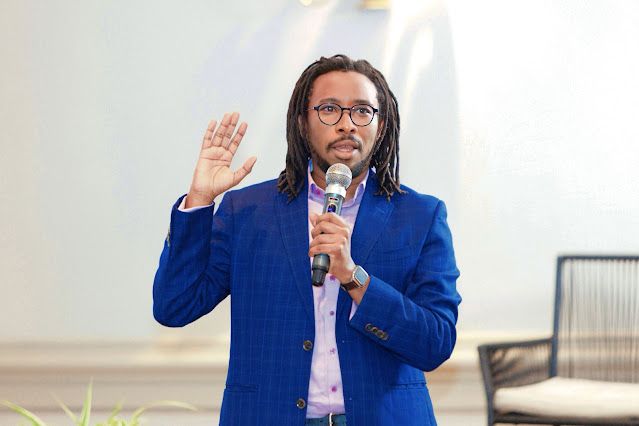
Edwin Macharia

Co-Founder, Axum

Edwin is Co-Founder and Managing Partner at Axum. He leads work with Heads of State, CEOs, Philanthropists, and Investors, supporting them on strategy, program design and capital deployment.

Prior to starting Axum, Edwin spent 16 years at Dalberg Advisors building the firm’s presence, teams and client work across the world. He left after being elected and serving as the Global Managing Partner of the firm. Before that, he was at the Clinton Health Access Initiative (CHAI) and McKinsey & Company.

Based in Nairobi, Edwin currently sits on a range of global boards that reflect his commitment to transforming lives in Africa and beyond: The Nature Conservancy, Mozilla Foundation, Nabo Capital, The End Fund, Prudential Kenya and The Wellbeing Project. He is a WEF Young Global Leader, Archbishop Desmond Tutu Fellow and was listed by Forbes as one of the 10 Most Powerful Africans in 2015. He holds a degree in biology from Amherst College.

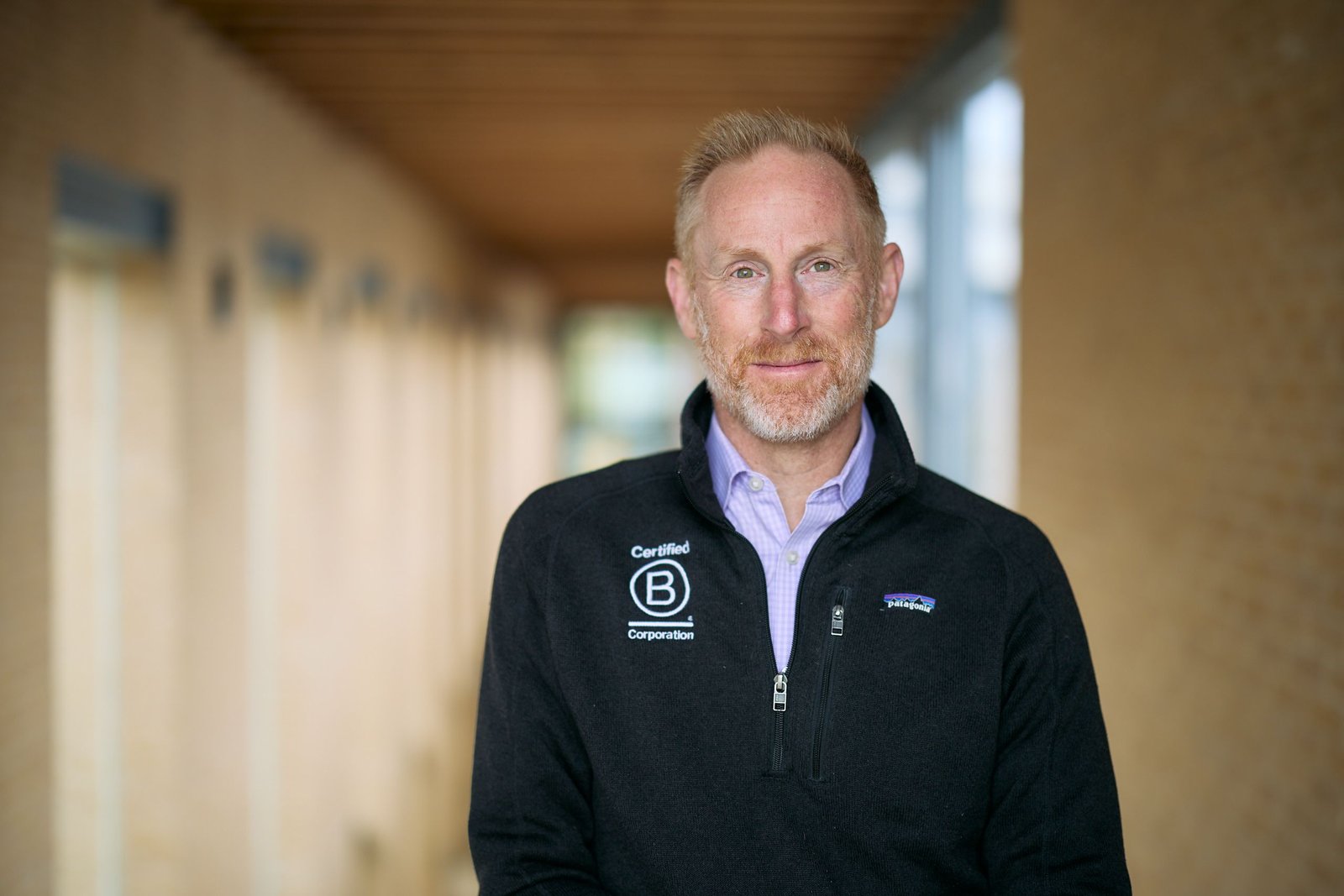
Jay Coen Gilbert

Co-founder, B Lab and the B Corp movement; Executive Chair, Imperative 21; Co-founder, White Men for Racial Justice

Jay Coen Gilbert is Executive Chair of Imperative 21, a global network building narrative power for a just economy. Imperative 21 catalyzes breakthrough narratives that open cultural space for aligned yet hesitant leaders to reimagine and redesign an economic system that cares more about people than profit. The imperatives of that system are to: design for interdependence, invest for justice, and account for all stakeholders. Imperative 21 builds on Jay’s experience as cofounder of B Lab, the nonprofit behind the global B Corporation movement with more than 9,000 companies across 80 countries. Along with his B Lab cofounders, Jay is the recipient of the UMKC Entrepreneur of the Year Award, as well as the Skoll Award for Social Entrepreneurship and the McNulty Prize at the Aspen Institute, where he is a Henry Crown Fellow.

Since 2016, Jay has been called into antiracism work, prioritizing his own learning and unlearning while co-convening multiracial and white caucus spaces, including White Men for Racial Justice (WMRJ), a BIPOC-accountable peer-led community of practice for White men to develop the literacy, skills, and commitment to dismantle the culture and systems of human hierarchy in ourselves, our organizations, our communities, and our country.

Prior to co-founding B Lab, Jay co-founded AND1, a $250M global basketball footwear, apparel, and entertainment company, and subject of documentaries on Netflix and ESPN. Jay also worked for McKinsey & Co, as well as organizations in the public and nonprofit sectors. Jay grew up in New York City and while he graduated from Stanford University with a degree in East Asian Studies, his most rewarding educational experience was co-teaching a class for a dozen years about the role of business in society at Westtown School, a 200-year-old Quaker institution. Between AND1 and B Lab, Jay enjoyed a sabbatical in Australia, New Zealand, and Monteverde, Costa Rica with his yogini wife Randi and two children, Dex and Ria, now 26 and 24. Jay and Randi live in Berwyn, PA.

Satish Kumar

Editor Emeritus, Resurgence & Ecologist Magazine; Founder, Schumacher College

Peace-pilgrim, life-long activist and former monk, Satish Kumar has been inspiring global change for over 50 years. Aged 9, Satish renounced the world and became a wandering Jain monk. Inspired by Gandhi, he decided at 18 that he could achieve more back in the world and soon undertook a peace-pilgrimage, walking without money from India to America for the cause of nuclear disarmament. Now in his 80s, Satish has devoted his life to campaigning for ecological regeneration, social justice and spiritual fulfilment.

An acclaimed author and international speaker, Satish appears regularly on podcasts, radio and television shows. He has been interviewed by Richard Dawkins, Russell Brand and Annie Lennox, appearing as a guest on Radio 4’s Desert Island Discs, Thought for the Day and Midweek. Satish presented an episode of BBC2’s Natural World documentary series, which was watched by 3.6 million people. 

Satish’s autobiography ‘No Destination’ sold over 50,000 copies, inspiring change around the world. Through his writing, teaching and international talks, Satish passionately shares visions of the more beautiful world our hearts know is possible.  Satish co-founded Schumacher College and founded The Resurgence Trust, an educational charity that seeks to inform and inspire a just future for all. He was the Editor of the charity’s change-making magazine, Resurgence & Ecologist, for over 40 years, making him the UK’s longest-serving editor of the same magazine. He continues to serve this publication as Editor Emeritus and by writing for each and every trailblazing issue.  Satish would like to offer you 20% off membership of The Resurgence Trust. When you join, you will receive a range of membership benefits including the hope-inspiring, bi-monthly Resurgence & Ecologist magazine, and support Satish (and the charity he founded) in protecting the future of people and planet.

Find out more about Satish’s work and this offer: https://www.resurgence.org/membership/satish-offer.html 

David Simas

Managing Director, Research and Impact, Emerson Collective

David Simas is the Managing Director of Research and Impact at Emerson Collective, where he works to develop in-depth research projects and distributes findings and analysis in service of Emerson’s priorities including democracy, immigration, education, and climate.

A native of Taunton, Massachusetts, David was appointed Deputy Chief of Staff to Massachusetts Governor Deval Patrick in 2007. He then joined President Obama’s administration in 2009 as a Deputy Assistant to the President, working with senior advisors David Axelrod and David Plouffe. In 2012, he served as Director of Opinion Research for President Obama’s reelection campaign. Following the reelection, Mr. Simas returned to the White House as Assistant to the President and Director of the Office of Political Strategy and Outreach. In 2016, President Obama selected Mr. Simas to serve as Chief Executive Officer of the Obama Foundation. Mr. Simas holds a B.A. in political science from Stonehill College and a J.D. from Boston College Law School. He is the son of two Portuguese immigrants and lives in Los Angeles with his wife, Shauna, and their two daughters.

Learn more from David SimasLearn more from David Simas

Kumi Naidoo

President, Fossil Fuel Non-Proliferation Treaty; Co-Founder, The Riky Rick Foundation for the Promotion of Artivism

Kumi Naidoo is a South African human rights and environmental justice activist, who currently is the President of the Fossil Fuel Non-Proliferation Treaty and the Payne Distinguished Lecturer at Stanford University. He is the former Secretary-General of Amnesty International (2018-2020) and also the first person from the Global South to lead Greenpeace International (2009-2015). He is an advisor for the Community Arts Network. He serves as a global ambassador for Africans Rising for Justice, Peace and Dignity. His family has started the Riky Rick Foundation for the Promotion of Artivism to build on the positive legacies left by popular South African rapper Rikhado “Riky Rick” Makhado through his music and life’s work. Kumi is the author of award-winning Letters To My Mother: The Makings of a Troublemaker. Kumi is also the host of the podcast Power, People and Planet.

Connect with Kumi on social media:

Connect with The Riky Rick Foundation for the Promotion of Artivism on social media:

Connect with the Fossil Fuel Non-Proliferation Treaty on social media:

IN KUMI’S WORDSIN KUMI’S WORDS

How do you think individual, collective, and planetary wellbeing are connected?

Today we live in a world with increasing evidence of climate anxiety and eco-anxiety coupled with growing anxieties that people feel as a result of the rise of fascist sentiment from the United States to Europe and ongoing failures in governance at significant scale corruption corrupted behavior by our leaders. The manifestation of that anxiety of what’s happening with regard to the climate crisis the governance crisis and so on increasingly impacts on people’s individual sense of wellbeing. I am of the view that one of the best antidotes to despair and depression is that participation is the antidote. Public participation in public life is the best antidote to despair and depression. Therefore in my work I am constantly trying to promote creative ways in which people of all classes and backgrounds can be enabled to participate in the communities at the national level and beyond. So I see a fundamental connection between individual, collective, and planetary wellbeing.

What do you hope the outcomes are from the global Hearth Summit?

Firstly, I hope that whatever happens at the global Hearth Summit is communicated beyond those that attend the summit itself. I’m hopeful that the organizers will find ways to make what’s going on at the summit accessible to a much broader audience than those of us who would be privileged enough to attend for those of us who attend. I hope it will be as the first Global Summit in Bilbao was a place for deep learning of new wellbeing techniques and capabilities as well as a place for deep connection with like-minded folks from around the world who are seeking to contribute to a just world and while being able to nurture themselves and take care of themselves. 

I also hope in particular that those who are entering the discourse and engagement around wellbeing as I did in 2022 at the Bilbao summit would be encouraged to leave the summit with a sense of being able to contribute in a substantive way to the challenges of dealing with the world in crisis but maintaining the strength and the capability to be strong while contributing to addressing the polycrisis while taking care of their own wellbeing, so that activists don’t burn them burn themselves out as I have done multiple times in my life.

WHAT KUMI IS LISTENING TOWHAT KUMI IS LISTENING TO

LEARN MORE FROM KUMI NAIDOOLEARN MORE FROM KUMI NAIDOO

Honorable Justice Martha K. Koome, EGH

Chief Justice and President of the Supreme Court of Kenya

Chief Justice Martha K. Koome, EGH, assumed office on 21st May 2021 as the 15th Chief Justice of the Republic of Kenya and 3rd President of the Supreme Court of Kenya. She is the first woman to hold the office of Chief Justice since the Judiciary of Kenya was established more than a century ago.

Chief Justice Koome joined the Judiciary in 2003 as a High Court Judge where she served until 2011. In that period, she engaged in leadership and administrative roles within the High Court.

She has served as President of the Kenya Magistrates and Judges Association (KMJA) and as an official of the East Africa Magistrates and Judges Association (EAMJA).

She was involved in the formation of the East African Law Society in 1995 and served as the inaugural Treasurer. While at the East African Law Society, Chief Justice Koome participated in negotiations towards the enactment of the East African Community Treaty.

Connect with the Hon. Justice on social media:

IN THE HON. JUSTICE’S WORDSIIN THE HON. JUSTICE’S WORDS

How do you think individual, collective, and planetary wellbeing are connected?

This is an ideal that presupposes the personal, physical, mental and social wellbeing of an individual and the subsequent increased capacity to agitate and contribute to collective wellness and social justice. A just society is keener on the sustainable use and preservation of natural endowments as well as the need to preserve the same for posterity. The wellness of the individual and the safeguarding of personal rights is therefore an important building block in realizing communal health and deliberate ecological awareness. Accessible and equitable justice systems are an integral aspect healing and collective wellbeing.

What do you hope the outcomes are from the global Hearth Summit?

To expand the platform to disseminate the message of hope and individual responsibility to be the catalyst for change as well as the collective responsibility in realizing a just and more equitable social system.

LEARN MORE FROM HON. JUSTICE MARTHA KOOMELEARN MORE FROM HON. JUSTICE MARTHA KOOME

Peace of Mind: The True Essence of Self-CarePeace of Mind: The True Essence of Self-Care

Stories from the Hearth

This blog was originally published by Talang Dalisay, the Philippines’ first youth-led education- and storytelling-focused mental health non-profit and a co-creator of Hearth Summit Philippines.

When was the last time you felt stressed out?

Perhaps it was when you missed your alarm for your morning lectures, felt disoriented, and ran late. It could’ve been when you were up all night cramming your written paper due at 11:59 pm, which, by the way, was given a week ahead of time. This feeling of panic has overwhelmed you;, your palms sweating, and your whole body trembling, yet you can’t help but feel a sense of familiarity from what you are experiencing. In fact, this pang of stress is something you’re already so familiar with. You don’t feel a tinge of shock at all.

When did it come to this point?

We have all grown so accustomed to these exhausting, tiresome, sentiments to the point where we can’t even tell the difference between a healthy and toxic mindset anymore. According to a report done in 2021 by researchers from VAAY, a German CBD company, Manila ranked as the third most stressful city in the world. The Filipino netizens who were interviewed mentioned how, due to the pandemic, it has become extremely easy for them to lose sight of the ever-present elements that surround and impact them on a daily basis (Chua, 2021). This goes to show how blindsided everyone is when it comes to their own thoughts and feelings, much like a mindless zombie.

So, indulge in my words for a minute. Allow yourself to sit back in any comfortable position and close your eyes. Take a deep breath and silently count to four as you inhale. Hold your breath for seven seconds, and then breathe out completely as you count to eight. Repeat these steps three to five times, and open your eyes. You may have not realised this, but the short breathing exercise you just practised is an easy but effective form of self-care! As you can see, it can be that simple, but that’s what the $450 billion self-care market doesn’t want you to realise.

To them, your vulnerability equals profit. Without this perception of having to rely on thousands of pesos worth of products and treatments, the self-care industry is worth nothing. This is why influence is the most important and crucial thing to them.

Social media has been feeding us this ideology that self-care is spending a day getting mani-pedis, having a huge makeover, going on a shopping spree, or simply anything related to scented candles. Don’t get me wrong, all of the self-help activities I mentioned are great but it’s important to note that this is not all that self-care is. If we continue to chase these “perfect” ideas of self-care but do not actually use them as a way to cope with our daily stressors to support ourselves, then what is the point?

There is no set list of instructions we need to follow in order to practice self-care, as self-care is not one size fits all; what works for someone might not work for you, and what works for you might not work for them, and that’s completely okay. Self-care isn’t simply doing what works for everyone else; it is practising restorative activities to take care of oneself for the betterment of one’s own physical, mental, and emotional welfare. You define what self-care is to you.

From playing with your pets, taking a hot shower, reading a book, and sleeping, to going for walks outside, taking free pottery classes, and working out; all of these activities are just a few of the thousands of other things you can classify as self-care. You don’t necessarily need to follow whatever self-care routines you see on Youtube or Instagram step-by-step. This is just a reminder that we are all separate individuals who have different ways of coping, so setting yourself up to strictly follow other people’s self-care routines is wrong. Self-care is not supposed to be a goal, but a mindset a person acts on for themselves.

“It is not selfish to love yourself, take care of yourself, and to make your happiness a priority. It’s necessary.” Self-care is not self-indulgence, but a form of self-preservation. It is not pushing others aside for oneself either. It is simply taking a step back and saying “me too”.

Sources:

Chua, P. (1970, January 1). Manila was just ranked the third most stressful city in the world. Esquiremag.ph. Retrieved December 18, 2021, from https://www.esquiremag.ph/culture/lifestyle/the-most-stressful-cities-index-2021-a00297-20210620

Cabico, G. K. (n.d.). Philippines among most stressed, emotional countries – Gallup report. Philstar.com. Retrieved December 18, 2021, from https://www.philstar.com/headlines/2019/04/26/1912816/philippines-among-most-stressed-emotional-countries-gallup-report/amp/

About Talang Dalisay

Talang Dalisay is a non-profit organization founded in Manila, Philippines centering on mental health for our fellow Filipinos.  We are a young community of storytellers and change-makers, opening conversations on the current mental health stigmas in the country as well as aiding in the integration of persons with disabilities (PWDs) as members of our global community.

Our mission upholds the values of empathy, compassion, and empowerment. We aim to focus on action oriented projects that center on moving towards a society that validates the mental health and neurodivergence of Filipinos. We acknowledge that mental health is a systemic issue — it is an ever-changing and controversial topic especially as a BIPOC community. Thus, through our art and stories, we hope to create a higher consciousness and understanding of how to create inclusive spaces for all amidst these intersectionalities.

Our vision as an organization is to become a stepping stone for Filipinos to create spaces of inclusivity. Collectively, we hope to amplify the individual’s potential to shine purely; living in authenticity, truth, and purpose. Through our projects in elevating the mental health discourse, we hope to be one of many facets that encourage others to create more avenues for positive change, always embracing the ability in any disability.

EXPLORE THE REGIONAL SUMMITS FURTHEREXPLORE THE REGIONAL SUMMITS FURTHER

Dive Into Stories From Around the World

Discover the Wellbeing Movement in AsiaDiscover the Wellbeing Movement in Asia

Meet and hear stories from the changemakers championing the wellbeing movement in Asia.

How to Rest: Tips and Lessons From a WorkaholicHow to Rest: Tips and Lessons From a Workaholic

Stories from the Hearth

Reflections From:

Akasby Pante

Correspondent, Talang Dalisay
🌍 Parañaque, Philippines

This blog was originally published by Talang Dalisay, the Philippines’ first youth-led education- and storytelling-focused mental health non-profit and a co-creator of Hearth Summit Philippines.

School has always been stressful. It wouldn’t be school unless it made you want to pull all your hair out because of pure frustration. However, this year, we were faced with a new challenge: online school. 

This new system has garnered various reactions from all kinds of students, with different personalities and learning styles. Some absolutely loathe it, claiming that they have to learn everything by themselves. Others enjoyed the freedom that comes with it, being able to take more control over how they spend their time. Fortunately enough, I am  part of the latter group of people.

You can imagine just how excited I was at the beginning of the school year. I wanted to work out, journal, and read, all these things I thought I would be able to do, now that I had more time before classes. Even so, when school work started piling once again, these plans ultimately fell through. You know, just like every other year. And I thought I could just get on with it. Stick through the sleepless nights and the terrible feeling it left me with the day after. Not be able to work properly that same day because of how tired I was and watch my entire week spiral out of control.

But for some reason, I just couldn’t do it anymore. I couldn’t force myself to stay up until three in the morning when I knew how it would make me feel later that day. I couldn’t spend my entire weekend working instead of spending time with my family. I couldn’t deal with it.

For a while, I thought that I had become lazy. I was losing my focus and I had to get my life together. I soon realized that my body just couldn’t put up with that kind of torture anymore. It wouldn’t. So I had to come up with a plan to work around it, and preferably soon. Here’s what I came up with and maybe it can help you too.

Step 1: Rest

Drastically changing your workflow will not happen overnight. It takes time and mental energy to change a routine that is probably built upon years of habit. Therefore, if you can, try to take a break from the responsibilities that you can temporarily put off.

Obviously, you cannot let go of school or work, but there may be a few things you can hold off for the time being. Personally, I took a leave of absence from Talang Dalisay for an entire month. The amount of time you take off—as well as the activities you choose to take a break from—are ultimately up to you. For the most part, it will depend on the gravity of these responsibilities, how much time you think you can spare, and how much time you think you need in order to effectively “restart”.

However, the most important aspect of this step is that it will be able to achieve the following. First, it will give you time to rest and recharge. Second, it will allow you to focus on yourself and your improvement with reduced stress.

Step 2: Recalibrate

Now, I mentioned all these things about offloading some responsibilities and giving yourself time to focus on yourself. However, before you take action, there is one important step you need to do first: recalibrate. Change the way you think about your own personal productivity and work. Consider rest and fun as an integral part of your weekly agenda and treat it as if it is just as important as all your school requirements and extracurriculars. Because it is.

If you want to be able to produce quality outputs, the amount and kind of breaks you give yourself must be of the same standard. Doing this will prevent you from getting burnt out and keep motivated throughout the week.

Step 3: Reflect

After changing your mindset, it’s time to think about how exactly you are going to improve your work-life balance. What exactly are you going to change from your current routine and habits?

If you are not sure where to start, try searching online. There are so many videos, blogs, and books out there that can help you and give you a few suggestions. Try listening to their advice and try out their techniques. Reflect on what you think would best suit you considering your working methods, personality, and lifestyle.

It’s important to contemplate upon these things because it will help you realize what you could possibly change about your current working habits. For example, one rule I decided to set for myself is that I am not allowed to work during the weekends unless absolutely necessary (usually when there is just too much to do). This was something I decided to implement after I learned about Parkinson’s law which states that “Work expands so as to fill the time available for its completion”. Therefore, if I set a mindset that weekends “do not exist” then I will be able to finish all my tasks by Friday. Doing so has given me sufficient time to recharge as well as give me something to look forward to throughout the week.

Step 4: Realize

Once you’ve set a break period, changed the way you think about work, and figured out what changes you wish to make, it’s time to take action. Realize your plans. It definitely won’t be easy sometimes because as humans, we are creatures of habit. Consequently, it is so much easier to just fall back into our old routine. Nonetheless, you must remind yourself who you are doing this for. You. No one else but you. And you deserve nothing but the best.
As a notorious workaholic, I always thought that loving my work meant putting it above everything and everyone else. However, if there’s anything that the “reset” period has taught me is that my world must not only revolve around one single thing alone. As cliche as it sounds, there must always be a balance.

Before I end this article, I wish to leave you all with a quote. It is one that a close family member sent me during those difficult times which I also feel captures the essence of this piece quite perfectly: “A friendly reminder that “your best” doesn’t mean pushing yourself to your breaking point. “Your best” means the best you can do while being your best you. Get enough sleep, give yourself breaks, listen to your limits. “Your best” is better when you are happy and healthy.
About Talang Dalisay

Talang Dalisay is a non-profit organization founded in Manila, Philippines centering on mental health for our fellow Filipinos.  We are a young community of storytellers and change-makers, opening conversations on the current mental health stigmas in the country as well as aiding in the integration of persons with disabilities (PWDs) as members of our global community.

Our mission upholds the values of empathy, compassion, and empowerment. We aim to focus on action oriented projects that center on moving towards a society that validates the mental health and neurodivergence of Filipinos. We acknowledge that mental health is a systemic issue — it is an ever-changing and controversial topic especially as a BIPOC community. Thus, through our art and stories, we hope to create a higher consciousness and understanding of how to create inclusive spaces for all amidst these intersectionalities.
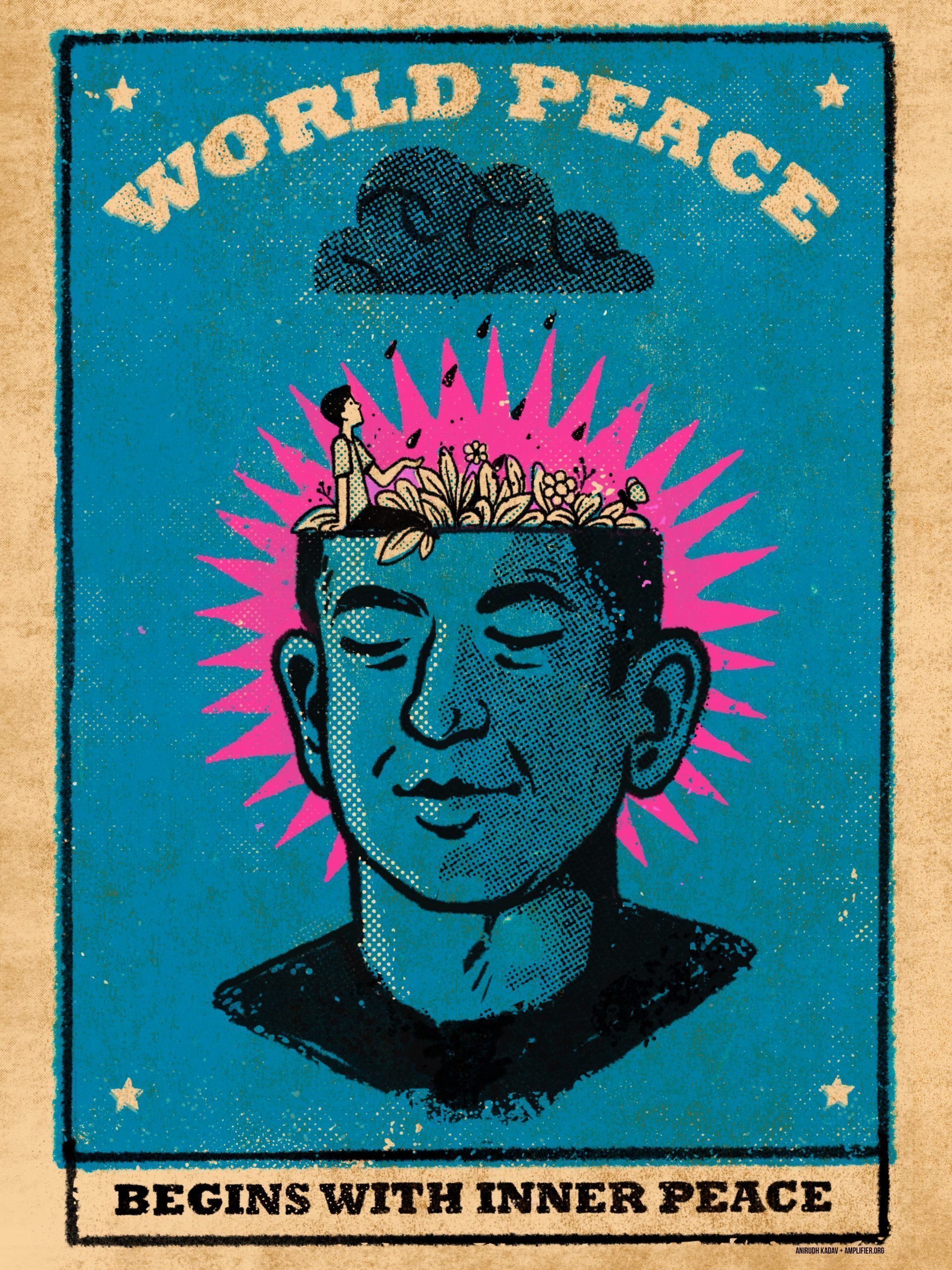
Our vision as an organization is to become a stepping stone for Filipinos to create spaces of inclusivity. Collectively, we hope to amplify the individual’s potential to shine purely; living in authenticity, truth, and purpose. Through our projects in elevating the mental health discourse, we hope to be one of many facets that encourage others to create more avenues for positive change, always embracing the ability in any disability.

EXPLORE THE REGIONAL SUMMITS FURTHEREXPLORE THE REGIONAL SUMMITS FURTHER

Dive Into Stories From Around the World

Discover the Wellbeing Movement in AsiaDiscover the Wellbeing Movement in Asia

Meet and hear stories from the changemakers championing the wellbeing movement in Asia.

Wellbeing Has Ripple Effects: Shammin SultanaWellbeing Has Ripple Effects: Shammin Sultana

Stories from the Hearth

Interview With:

Shammin Sultana

Gender and Development Specialist
🌍 Kathmandu, Nepal

In this interview, meet Shammin Sultana, a gender and development specialist from Nepal, as she explains how her wellbeing has ripple effects to positively impact the entire community, and why wellbeing needs to be an important part of conversations about development. Shammin attended the first Asian regional wellbeing summit, held in Dhaka, Bangladesh, in March 2024, and was excited about the growing conversation on wellbeing.

Watch the interview below.

EXPLORE THE REGIONAL SUMMITS FURTHEREXPLORE THE REGIONAL SUMMITS FURTHER

Dive Into Stories From Around the World

Discover the Wellbeing Movement in AsiaDiscover the Wellbeing Movement in Asia

Meet and hear stories from the changemakers championing the wellbeing movement in Asia.

Content Curation Advisory Board Member

Content Curation Specialist

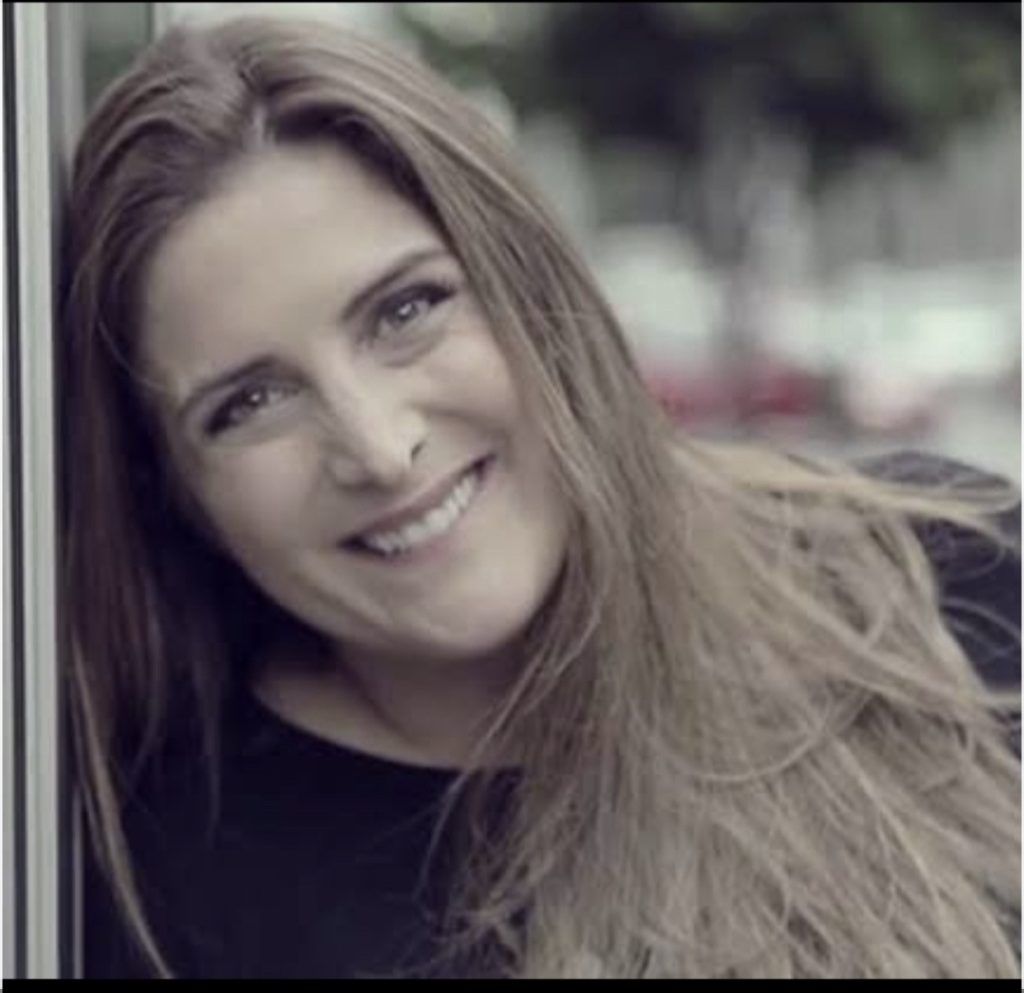
Elena Crescia

Wellbeing Events Adviser, The Wellbeing Project

12+ years experience as speaker coach and content curator. Connector of Dots. Bridge Builder. Changemaker. Wellbeing Events Adviser at The Wellbeing Project | Program curator at The Wellbeing Summit for Social Change 2022 | Content curator and organizer of The Wellbeing Summit São Paulo 2023 | Content curator at Hearth Summit Omega & Harlem Wellness Center 2025. Curator & Speaker Coach TEDxSaoPaulo | TED Speaker | Country Director Clubes TED Ed Curation consultant at The Skoll World Forum 2023 | Content Curator SOCAP 2023. Master of International Affairs, Economic and Political Development – Columbia University School of International and Public Affairs | Master in Financial Evaluation of Development Projects – Université Sorbonne | Impact Investor Manager course by ANDE and JPMorgan with Santa Clara University. Founder of Ideas Talk. Editora de Ideias and Portfolia.

Connect with Elena on social media :

IN ELENA’S WORDSIN ELENA’S WORDS

How do you think individual, collective, and planetary wellbeing are connected?

Individual, collective and planetary wellbeing are interconnected. We all affect each other and we can only flourish when we are take care of all of us, the communities and the environment that we live in.

What do you hope the outcomes are from the global Hearth Summit?

I hope all participants of the global Hearth Summit feel inspired to prioritize their wellbeing and the wellbeing of the people they care about, and we all strengthen our connection to nature and the arts, we learn new ways to improve our wellbeing and we make new friends.