














































A commitment to wellness and innovation: Design Factory Javeriana Bogotá A commitment to wellness and innovation: Design Factory Javeriana Bogotá
Guest post by:
Lucas Ivorra Peñafort, Coordinator of the Design Factory Pontificia Universidad Javeriana

The Design Factory Javeriana Bogotá (DFJBOG) was born on August 4, 2016, to strengthen the efforts of the Pontificia Universidad Javeriana (PUJ) to better articulate with different internal and external stakeholders of the University, to address different challenges of society that the university could tackle through the development of products, services, or strategies. It also aims to strengthen the Innovation and Entrepreneurship Ecosystem of the University. The commitment of the DFJBOG, managed by the Faculty of Architecture and Design in Bogotá (At the PUJ campus in Cali the Design Factory is in the Center for Innovation and Entrepreneurship), fits the mission of the PUJ under the Jesuit principles in the pursuit of the integral education of people, while being respectful of human dignity.
Educating people must 1) Transcend the merely technical aspects of education which, although important, are insufficient for a comprehensive education; and it must 2) Contribute to the satisfaction of the diverse human needs in the educational processes, not only those related to the curricular content of each course, but those linked to the whole set of material and non-material human needs. Thus, including well-being in the pedagogical dynamics is key to 1) Having more enriching and integral educational processes and 2) Contributing to the physical, mental, and spiritual health of the educational community. At the DFJBOG and the Faculty of Architecture and Design we consider it important to join the efforts of TWP Higher Education Network. Basically, with our involvement in “The Wellbeing Project’s Higher Education Network” we want to 1) Strengthen the activities that PUJ has been conducting to be a better place to study and work; 2) Share our good practices and lessons learned in terms of wellbeing and innovation, to enrich the processes in other institutions; and 3) Learn from the good practices and lessons learned from other institutions.

Currently, at the DFJBOG and the Faculty of Architecture and Design, we have been advancing and supporting different initiatives that contribute to the well-being of our university community. From the different Vice Rectors’ Offices, we develop community building and integral health activities with our Center for Cultural Management, the Center for the Promotion of Identity and Community Building, the Javeriana Center for Sports Training, the Center for Psychological Counseling and Health, the Center for Learning, Teaching and Evaluation, the San Francisco Javier Pastoral Center, the cultural events of the Faculty of Arts, the personalized support of the Academic Counseling, among others.
In the DFJBOG, one of the main bets for wellness is our Open Mind Fridays, where we conduct community and trust-building activities, which are not related to classes or projects. For example, we have developed kite and cookie-making workshops, relaxation sessions, movie and pizza afternoons, and singing and dancing sessions, among others. In this line, following the initiative of Professor David Osorio from the Faculty of Economics and Administrative Sciences, we joined the sessions that he and Professor Jairo Hurtado from the Faculty of Engineering had been conducting with game afternoons with students, lecturers, and friends. To paraphrase Professor Jairo, this initiative, which we agreed to call “Game Fridays,” strengthens the physical and mental health care of our students and contributes to building richer and closer relationships in the educational community. More recently, the Cultural Management Center offered us their support to increase the reach of Games Fridays with the Cultural Management Center’s initiative called “Fridays at Sunset”.


After more than five Games Fridays sessions held jointly, we are planning to move on to the next stage, with the participation of the Faculty of Economics and Administrative Sciences, the Faculty of Engineering, and the DFJBOG with the support of the Faculty of Architecture and Design. This new stage seeks to combine and strengthen the participation of more people from the three faculties involved, extend the impact to other faculties and units of the University, and merge and document the lessons learned and impacts achieved by this initiative.
Thank you to our TWP Higher Education Network colleagues for having us, and we trust that we can make a significant contribution to the network’s efforts to improve educational processes in an innovative way and the pursuit of the well-being of all involved.
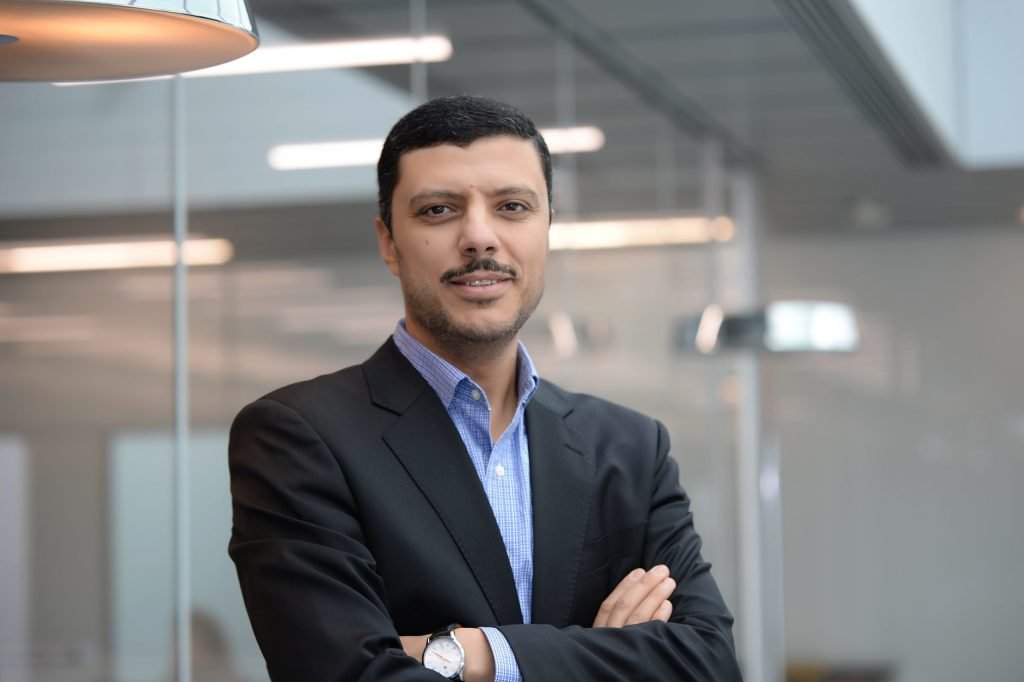
Ahmed M. Baghdady
Manager, Research and Content Development
Toronto, Ontario,
Canada
Ahmed Baghdady (EdD) is a research consultant at WISE, an initiative of Qatar Foundation. Until 2022, he was Research Manager at WISE and Adjunct Faculty member at the Doha Institute for Graduate Studies in Qatar. Ahmed has over twenty-five years’ experience in education programming, research, strategic planning and institutional development. He has worked in Qatar Foundation for fifteen years where he held research and program leadership positions including six years at the RAND-Qatar Policy Institute (RQPI), a partnership between Qatar Foundation and the RAND Corporation. Ahmed has led and supported various policy and research studies in addition to several strategic planning and capacity building efforts for governments and higher education institutions. Prior to joining Qatar Foundation, Ahmed held program management positions with the Institute of International Education (IIE) and AMIDEAST.
He is an English language teacher by training and has designed and taught a variety of English language and teacher training programs at several institutions in Egypt including the American University in Cairo. Ahmed has Master’s and Doctor of Education degrees in Educational Leadership from the University of Leicester in the UK. His research focuses on educational leadership and policy with a special focus on the internationalization of higher education, both at home and abroad, and its implications for policy and practice. Ahmed has co-authored several research reports in addition to a few single-author publications on topics related to international higher education, education policy, leadership and governance. He is a member of the American Educational Research Association (AERA) and the Comparative and International Education Society (CIES).
Connect with Ahmed M. Baghdady on social media :
NETWORK CO-LEADERS NETWORK CO-LEADERS



NETWORK MEMBERS NETWORK MEMBERS






























``AS IMPORTANT AS IT IS TO TAKE CARE OF OTHERS IT IS ACTUALLY TO TAKE CARE OF YOURSELF.`` ``AS IMPORTANT AS IT IS TO TAKE CARE OF OTHERS IT IS ACTUALLY TO TAKE CARE OF YOURSELF.``
Jose Mari Luzarraga is building a generation of changemaking entrepreneurs by re-defining education based on team learning and experimentation. He is the creator of the Leinn degree and co-founded Mondragon Team Academy, (MTA), global teams that adapt the vision of Mondragon by inserting it into the education system. Bachelor and Master’s degree students create people centered enterprises that generate economic and social impact through teampreneurship and learning by doing.
“The Wellbeing Project arrived at a crucial moment in my life. After 15 years fully devoted to serve others as a social entrepreneur, I was nearly at the edge of burnout. My life consists to reach and serve a growing number of yougsters, while dealing with many difficult issues on my own. I feel, accept pain, and suffering in my everyday life as something needed to serve better and it was having a negative impact personally and family wise.
This personal awareness of where and how I was, only came with The Wellbeing Project. Before the program I was focused on more: reach more and accept more challenges.
For me The Wellbeing Project showed me that “I could not serve and take care of others if I do not serve and take care of myself”, that we need to love others as we love ourselves. It is not about saying YES to others and NO to yourself, but the only way on the long run is to learn how to say YES to others and YES to yourself.
Throughout this personal transformation experience with great social entrepreneurs and human beings something became clear to me. On the one hand we need to accept, understand and embrace that being a social entrepreneur requires huge devotion and strength while: dealing with daily and tricky challenges, opening new paths where there are none, breaking and evolving thought models, making what is hidden or unknown to seen and understood… Being social entrepreneurs, we have the crucial, difficult and fascinating mission to “challenge the status-quo for a better world and humanity”.
On the other hand, we need to understand that the only way to do this, is to start with yourself. In the long run I cannot bring light to others if I do not light up myself. And for doing that, we need to load ourselves with the proper tools and activities to trigger the wellbeing and personal cultivation process. Wellbeing is a “life long journey”. It is a daily learning process.
The Wellbeing Project supported me with: “the understanding and awareness shift”, “providing the proper needed tools and activities” to start and nurture wellbeing, while not living this alone but “team learning” together with peers sharing the same learning journey.” JML