A digital experience created by the Museum of Art & Photography, Bengaluru in collaboration with BrandMusiq

Location: Euskalduna Exhibition – Hall 1 + Projection in Auditorium

Date: May 31st – June 3rd

Can sound influence the way we see? Can music reveal a new mode of interpreting artworks? Weaving the visual with the sonic, Sights and Sounds presents a multi-sensory journey through six artworks in MAP’s collection. Each artwork evokes a mix of emotions like fear, joy and melancholy, inviting you to perceive works of art sonically in order to empower an aesthetic experience through the act of listening.

Prabuddha Dasgupta, Francis and Bobby D’souza in their bedroom, Parra (‘Edge of Faith’ series, published 2009), 2006

Two men sit closely together on the edge of a bed, captured in a moment of intimacy and closeness. Whether the two men are brothers, friends or lovers remains an unanswered question. Time, in this image, stands still. The bare floor of the room, the worn-out interiors and stillness suggest time that is paused.

Francis and Bobby D’souza in their bedroom, Parra is part of the series Edge of Faith. In this series of photographs, Prabuddha Dasgupta documents moments of melancholy and nostalgia, but also the tenderness of interpersonal relationships within the Catholic community of Goa.

Goa became an independent state in 1987, after more than 500 years. As a newly formed state, it struggled between holding onto a religious and a colonial identity, and of a new state and national identity.  

While this image might appear magical to us, the viewers, it might be a very real and common moment to Bobby and Francis. Yet, it also allows us to witness the intimacy shared between them and the photographer.

Anjaneya, Andhra Pradesh or Karnataka, India, c. 1970

Is Hanuman on his way to fetch medicinal herbs for Sita or is he flying to search for Sita in Lanka? In the case of shadow string puppets, one string puppet such as the character of Hanuman, could be part of many scenes that puppets bring to the enactment of mythologies in Southern India. 

Shadow theatre is believed to be one of the earliest performance arts in which humans are sutradhars or “pullers of strings”. Interpretation of chaya or shadows by a group of puppeteers, singers and actors are not only a form of entertainment; these all-night performances can also serve as a reminder of one’s ancestors. The actors modify their voices to dramatize scenes and deliver dialogues for hours using 100 or more puppets per story. Here, Anjaneya’s heroic nature would be emphasized through sounds of thunder, rain and intense battles. 

This shadow play of puppets is known as tholu bommalata in Telugu and togalu gombe aata in Kannada, and are also made in Kerala and Orissa.

Baluchari sari, Undivided Bengal, India, early 20th Century

Baluchari came from Baluchar located in present day Murshidabad. The unusually long pattern suggests that the weavers were interested in weaving their local surroundings into the cloth. How did Baluchar and its neighboring areas show up in designs of steam engines, in figures of Nawabs, flowers and frames?

The rectangular cloth in typical baluchari colors like purple, gold and silver contains a pattern of kalkas, an auspicious almond shaped design which is also found in important textiles from Bengal like jamdani and kantha. The arrangement of motifs tells us that the sari was divided in a manner which is similar to terracotta temple architecture that was introduced by Jain merchants. These merchants were traders of silk cloth and collected baluchari textiles as artworks. The brocade on baluchari was woven on a jacquard loom or a draw loom, with weavers making the patterns much larger on the pallu. While most Bengali saris were draped vertically, baluchari might have been draped horizontally like the ones in Gujarat. Because of a concentration of silk traders, Bengal attracted Portuguese merchants and traders from the East India Company to settle there. We see this in the form of 18th century technologies such as the steam engine depicted above. Inside the engine, we see mysteries of life in Bengal, people exchanging flowers, drinking wine and enjoying the journey. 

Semi-automated portable display unit depicting ‘Rang Holi’, Chonker Art Studio, Bombay (Mumbai), India, early 20th century

How did one create movement within a still image? What were some of the ingenious techniques that makers used to “animate” a work in the early 20th century?

The arrival of lithography in the 1800s allowed for the democratization of calendar art and initiated a culture of mass produced imagery in India. Commercial presses established during the later half of the century produced chromolithographs, particularly images of gods and goddesses. The style of these prints was hybrid as they often blended Indian and European aesthetics.

Based on an artwork by R.G. Chonker, this portable unit contains a print showing a scene of holi. Set within a palatial backdrop, we see Krishna in a green and yellow dhoti besides gopis dressed in colourful saris. A closer look at the jewellery and clothes shows embellishments with hints of silver glitter.

As the title “Rang Holi” suggests, Krishna and the gopis are celebrating holi, a festival that also celebrates the divine love between Krishna and Radha. The strewn colours on the ground, the golden pichkaris or water guns and the coy look of a seated gopi all add to this sense of joy and celebration.

A turn key mechanism at the back of the unit brings the print to life. Some of the figures have their heads and hands cut out and then pasted back onto the print to allow for visible movement. Once it is wound up, you see subtle movement such as the nodding of heads and slight motion of the hands and pichkaris.

Brahmani, 10th century, Karnataka, India

Brahmani, personifies the shakti or the energy of Brahma and belongs to a group of seven or eight goddesses called the matrikas or mothers.

Ram Kumar, Untitled, 1976

Ram Kumar, Untitled, 1976
A painting that merges colours, primarily hues of red, evoking a sense of a burning landscape.

Mandala Lab Bilbao – The Rubin Museum of ArtMandala Lab Bilbao – The Rubin Museum of Art

The Mandala Lab is an interactive installation by the Rubin Museum of Art that invites curiosity about our emotions. Consider how complex feelings show up in your everyday life and imagine how you might have the power to transform them.

Location: Doña Casilda Park (Map)
OPEN TO THE PUBLIC.
Date: May 31 – July 30

Located in Parque de Doña Casilda de Iturrizar

Inspired by powerful Buddhist principles, the Mandala Lab features five thought-provoking, playful experiences— including videos accompanied by scents, a pulsing light sculpture that invites collective breathing, and curated percussion instruments dipped in water—that guide you along an inner journey focused on self-awareness and awareness of others.

As visitors journey through the space they will examine feelings of pride, attachment, envy, anger, and ignorance—known as kleshas in Buddhism—that cloud our understanding of the world around us. See, smell, touch, and breathe your way through the space, designed to inspire connection, empathy, and learning.

The Mandala Lab includes artist contributions from:

  • Laurie Anderson | Sanford Biggers | Tenzin Tsetan Choklay
  • Billy Cobham | Amit Dutta | Sheila E.
  • Peter Gabriel | Dame Evelyn Glennie | Sarah Hennies
  • Taku Hirano | Huang Ruo | Shivamani
  • Wang Yahui | Palden Weinreb | Apichatpong Weerasethakul
  • Scents created by Christophe Laudamiel

ESPAÑOL

Mandala Lab es una instalación interactiva del Museo de Arte Rubín que invita a la curiosidad sobre nuestras emociones. Considera cómo aparecen los sentimientos complejos en tu vida cotidiana e imagina cómo podrías tener el poder de transformarlos.

Situado en el Parque de Doña Casilda de Iturrizar

Inspirado en poderosos principios budistas, el Mandala Lab (Laboratorio de Mandalas) presenta cinco experiencias lúdicas que invitan a la reflexión -incluyendo vídeos acompañados de aromas, una escultura de luz pulsante que invita a la respiración colectiva e instrumentos de percusión curados sumergidos en agua- que le guían a lo largo de un viaje interior centrado en la conciencia de sí mismo y de los demás. 

Mientras los visitantes recorren el espacio, examinarán los sentimientos de orgullo, apego, envidia, ira e ignorancia -conocidos como kleshas en el budismo- que nublan nuestra comprensión del mundo que nos rodea. Vea, huela, toque y respire a través del espacio diseñado para inspirar la conexión, la empatía y el aprendizaje.

Mandala Lab incluye contribuciones artísticas de:

  • Laurie Anderson | Sanford Biggers | Tenzin Tsetan Choklay
  • Billy Cobham | Amit Dutta | Sheila E.
  • Peter Gabriel | Dame Evelyn Glennie | Sarah Hennies
  • Taku Hirano | Huang Ruo | Shivamani
  • Wang Yahui | Palden Weinreb | Apichatpong Weerasethakul
  • Aromas creados por Christophe Laudamiel

Failure Files x The Wellbeing ProjectFailure Files x The Wellbeing Project

Failure is a part of life, especially for those working on complex issues for social change. Yet, very few people talk about failure, the deep impact it has on individuals as well as those around them, and the life lessons that come from failing.
To break this silence, The Wellbeing Project is partnering with India Development Review (IDR).

The partnership with IDR will bring forth stories at the intersection of failure and well-being through IDR’s Failure Files, a multimedia initiative that seeks to normalise conversations around failure in the pursuit of social change.

We invite you to tune into the Failure Files podcast, to hear the inspiring stories of people who have failed forward. Listen to social entrepreneurs, a Dalit rights activist, and an Olympic gold medallist tell us about their failures, how it impacted both individual and collective well-being, and what the road to recovery and resilience looks like.

EPISODE 1

Having a dream is not enough | Vishal Talreja, Suchetha Bhat

In Part I of this conversation with IDR, Dream a Dream’s co-founder Vishal Talreja and CEO Suchetha Bhat share the story of the organisation’s implosion, Vishal’s burnout, and how owning up to failure was the first step in figuring out the way to build back up.

LISTEN ON – APPLE | SPOTIFY | GOOGLE

EPISODE 2

The road to recovery | Suchetha Bhat, Vishal Talreja

In Part II of this conversation, Dream a Dream CEO Suchetha Bhat and co-founder Vishal Talreja talk about what it took to rebuild an organisation in crisis, and how that led to discovering a new kind of leadership—one that the world needs more of.

LISTEN ON – APPLE | SPOTIFY | GOOGLE

EPISODE 3

Preparing for a marathon, not a sprint | Thenmozhi Soundararajan

What does self-care mean for those who are fighting systems of oppression and discrimination that are set up against them? On this episode, Thenmozhi Soundararajan, founder and executive director of Equality Labs, a Dalit civil rights organisation, talks about how systems of oppression affect well-being, what healing looks like for individuals and communities, and why failure is an opportunity to build power.

LISTEN ON – APPLE | SPOTIFY

ABOUT INDIA DEVELOPMENT REVIEW ABOUT INDIA DEVELOPMENT REVIEW

India Development Review (IDR) is Asia’s largest online media platform covering social change. IDR publishes cutting-edge ideas, lessons and insights, written by and for the people working on some of India’s toughest problems.

FOLLOW IDR ON SOCIAL MEDIA :

PSYCHE – Science Gallery Bengaluru PSYCHE – Science Gallery Bengaluru

Why do we think? Why do we dream? Why are we emotional beings? Is intelligence and the ability to think and feel restricted to humans?

Location: Bizkaia Aretoa – Sala Chillida
Dates: May 31 – 15:00-19:00
June 1 and 2 – 11:00-19:00
June 3 – 8:30-15:00

Researchers have grappled with the inner workings of the human mind – from mapping billions of neurons to trying to understand the intangible expressions of thought and consciousness. We have experimented on the human brain with drugs, hypnosis, genetic techniques and more. The mind plays its own tricks through optical illusions, déjà vu, delusions and hallucinations. Combined with the imagination and hormones these manifest in intriguing behaviours.

Neuroscientists, chemists, doctors, psychologists, philosophers, mathematicians, systems analysts – each take us a few steps closer to unravelling the enigma of the psyche. It is worth noting that much of laboratory research to understand the human mind, in fact, is carried out on other living beings who exhibit degrees of decision making, planning and emotion.

The mind is inextricably implicated in our perception of the world and our experience of it. Our actions, informed by this perception, continue to shape the world. Our thoughts and emotions likely create a sense of wellbeing or a lack of it, yet we do not fully understand the biological or psychological or social underpinnings of our intellectual being.

The future of the mind could be stranger than fiction – weaponizing of emotions, extra sensory perception, prediction of criminal behaviours or the wiping out of traumatic memories – nothing, it seems, is impossible. Even machines need not be exempt – as we continue to replicate the human mind in-silico – from thinking or experiencing emotions in a manner similar to humans.

ESPAÑOL

¿Por qué pensamos? ¿Por qué soñamos? ¿Por qué somos seres emocionales? ¿La inteligencia y la capacidad de pensar y sentir se limitan a los humanos?

Los investigadores se han enfrentado al funcionamiento interno de la mente humana, desde el mapeo de miles de millones de neuronas hasta el intento de comprender las expresiones intangibles del pensamiento y la conciencia. Se ha experimentado con el cerebro humano mediante fármacos, hipnosis, técnicas genéticas y mucho más. La mente juega sus propios trucos mediante ilusiones ópticas, déjà vu, delirios y alucinaciones. Combinadas con la imaginación y las hormonas, se manifiestan en comportamientos intrigantes.

Neurocientíficos, químicos, médicos, psicólogos, filósofos, matemáticos, analistas de sistemas… cada uno de ellos nos acerca un poco más a desentrañar el enigma de la psique. Cabe señalar que gran parte de la investigación de laboratorio para comprender la mente humana se lleva a cabo, de hecho, en otros seres vivos que muestran grados de toma de decisiones, planificación y emoción.

La mente está inextricablemente implicada en nuestra percepción del mundo y nuestra experiencia de él. Nuestras acciones, informadas por esta percepción, siguen dando forma al mundo. Nuestros pensamientos y emociones probablemente crean una sensación de bienestar o de falta de él, pero no comprendemos del todo los fundamentos biológicos, psicológicos o sociales de nuestro ser intelectual.

El futuro de la mente podría ser más extraño que la ficción: el armamento de las emociones, la percepción extrasensorial, la predicción de comportamientos delictivos o la eliminación de recuerdos traumáticos… parece que nada es imposible. Incluso las máquinas no tienen por qué estar exentas -mientras seguimos replicando la mente humana in-silico- de pensar o experimentar emociones de forma similar a los humanos.

AMPLIFIER ART – Aaron Huey and The Wellbeing Project AMPLIFIER ART – Aaron Huey and The Wellbeing Project

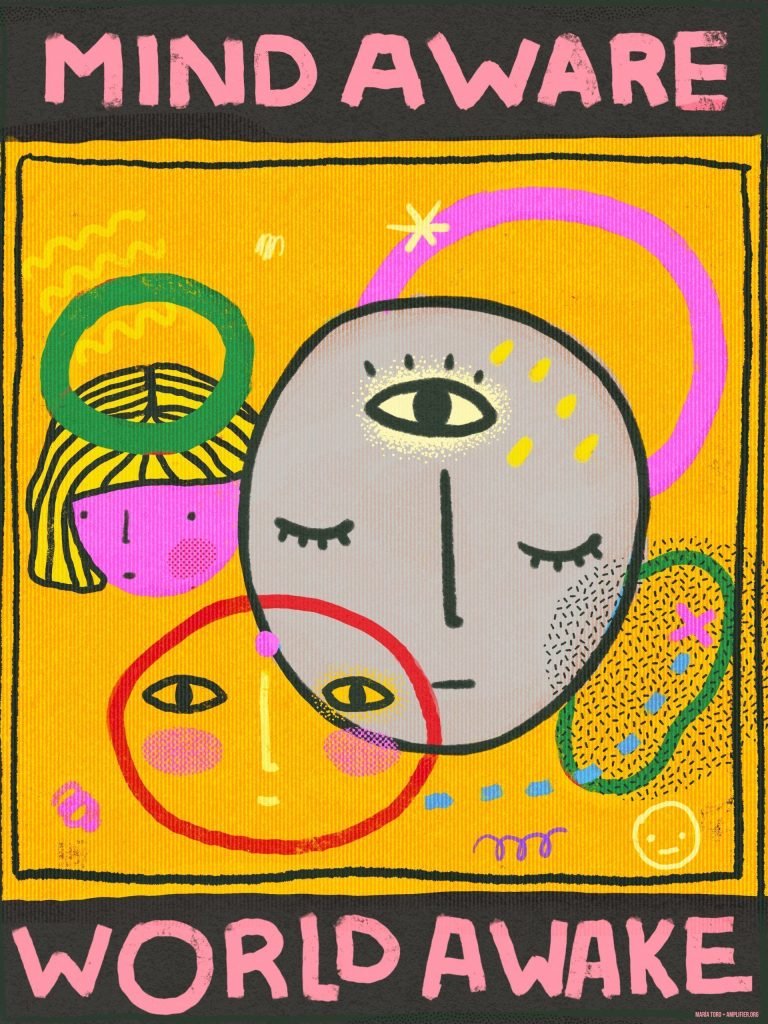
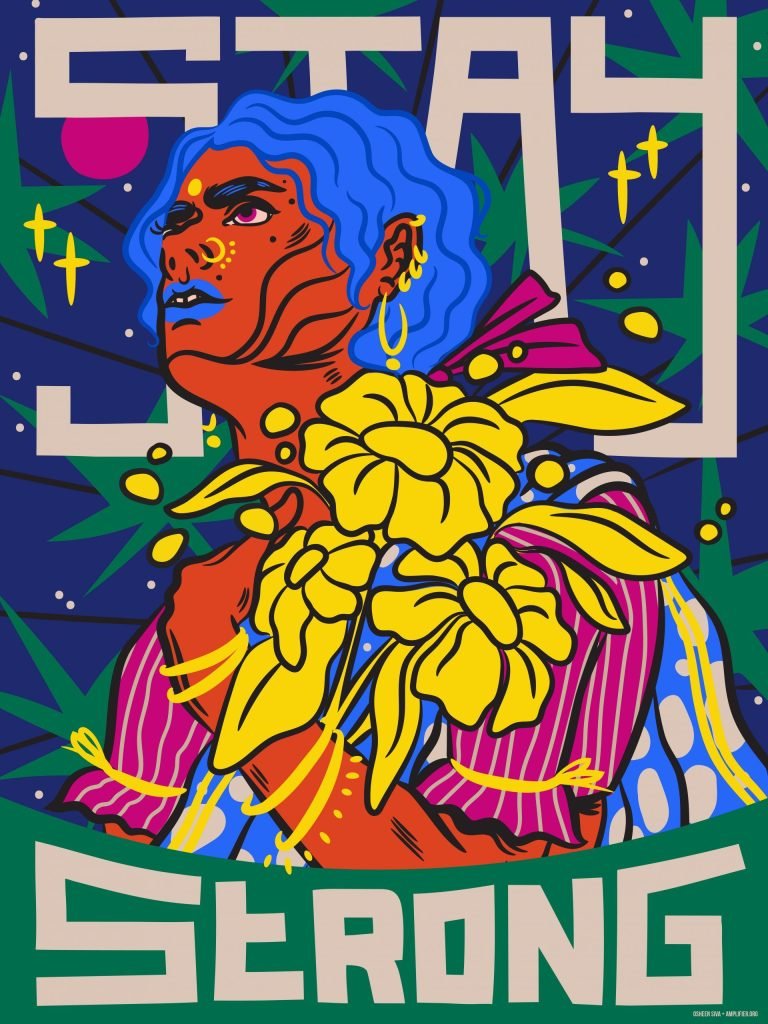
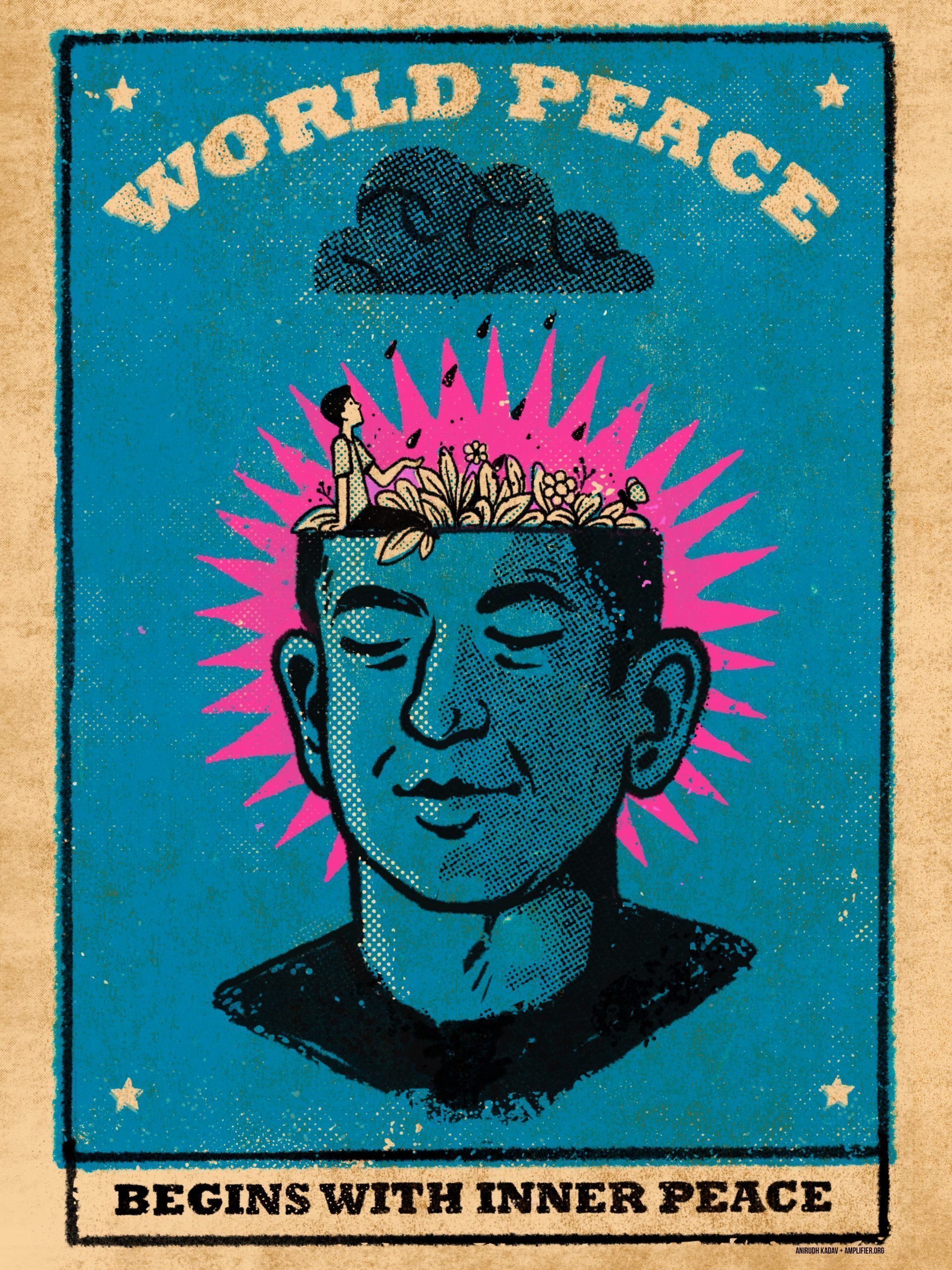
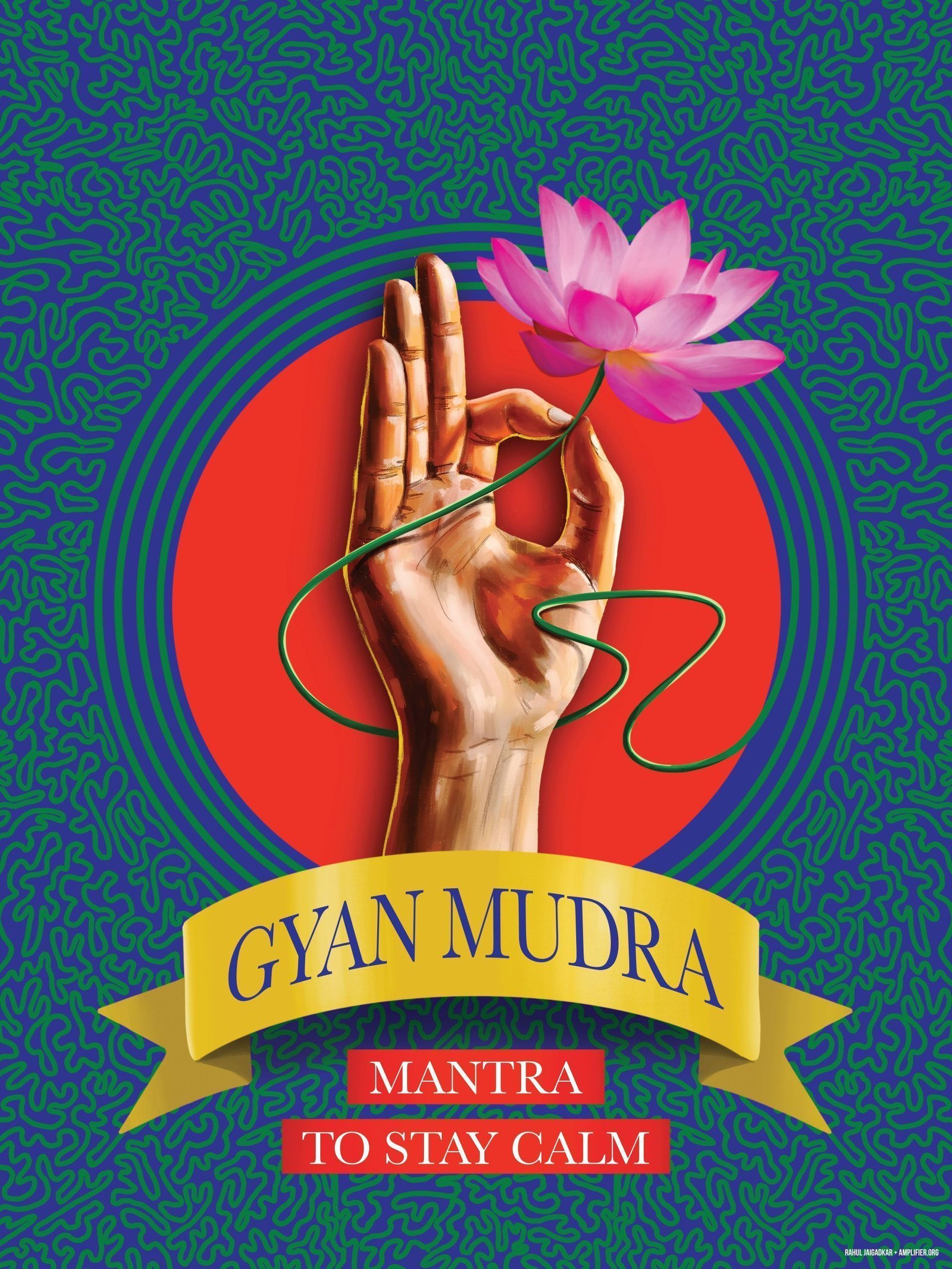
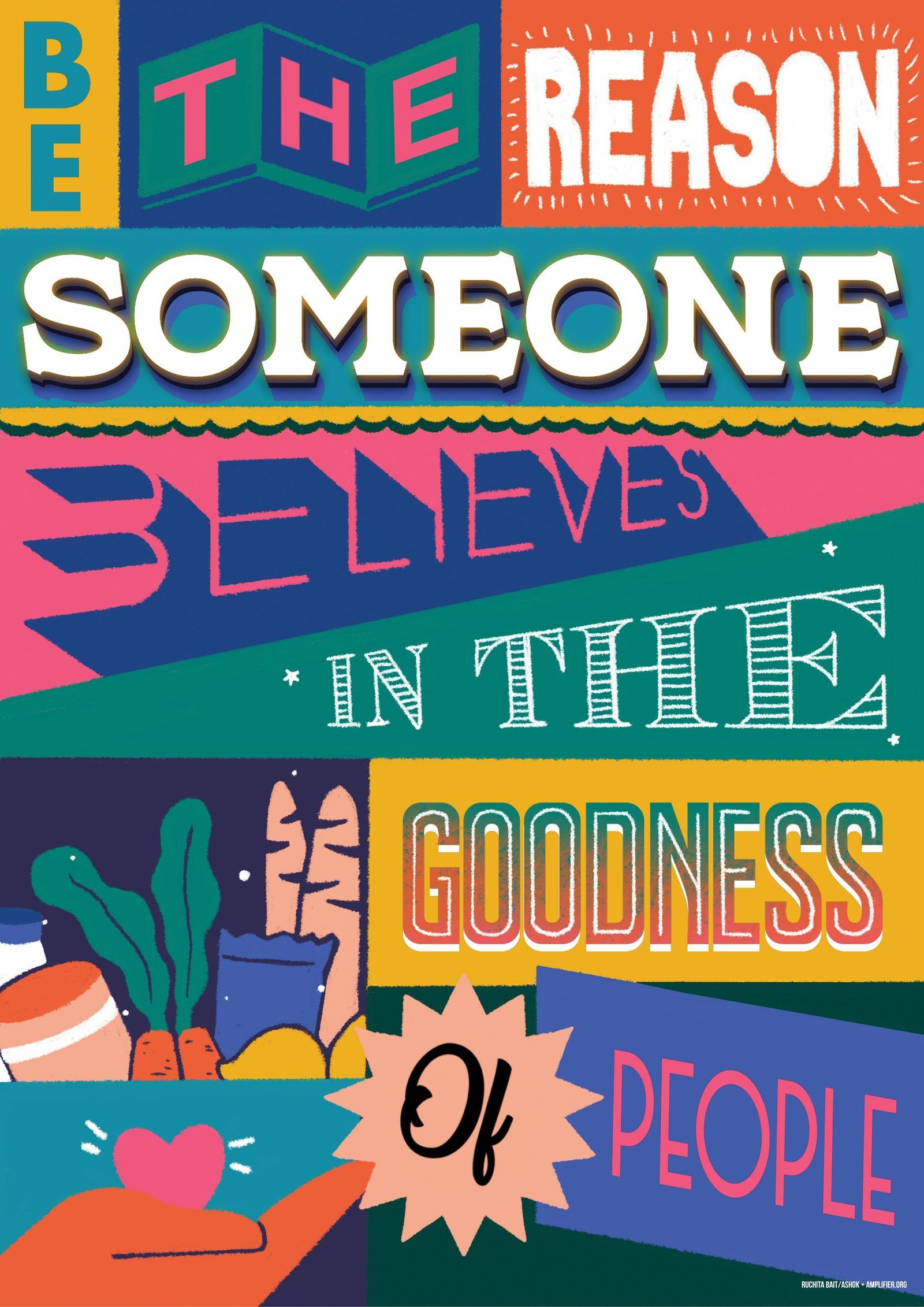
In early 2021, in solidarity with artists and in partnership with Amplifier Art and in direct response to the COVID-19 pandemic, The Wellbeing Project launched an open call for art that promotes wellbeing and social change work for us all, and especially for changemakers responding at the frontlines (nurses, community workers, teachers and more).

All artwork has been judged by senior members of the arts community including Nancy Spector (Chief Curator, Guggenheim) and Vicente Todoli (Former Director, Tate Modern). It has been screened for appropriateness for mental health and wellbeing messaging by key members of the health community such as Dr Richard Davidson (Founder and Head of the Center for Healthy Minds, University of Wisconsin-Madison) and Dr Michele Barry (Director of the Center for Innovation in Global Health, Stanford University).

The winning awards were funded entirely by philanthropists from a pool of $35K. They are available below as free downloads for anyone to print and share.

ESPAÑOL

A principios de 2021, en solidaridad con los artistas y en asociación con Amplifier Art y en respuesta directa a la pandemia de COVID-19, The Wellbeing Project lanzó una convocatoria abierta para el arte que promueve el bienestar y el trabajo de cambio social para todos nosotros, y especialmente para los agentes de cambio que responden en primera línea (enfermeras, trabajadores comunitarios, maestros y más).

Todas las obras de arte han sido evaluadas por miembros de alto nivel de la comunidad artística, como Nancy Spector (conservadora jefe del Guggenheim) y Vicente Todoli (antiguo director de la Tate Modern). La idoneidad de los mensajes sobre salud mental y bienestar ha sido examinada por miembros clave de la comunidad sanitaria, como el Dr. Richard Davidson (fundador y director del Center for Healthy Minds, Universidad de Wisconsin-Madison) y la Dra. Michele Barry (directora del Center for Innovation in Global Health, Universidad de Stanford).

Los premios ganadores fueron financiados íntegramente por filántropos con una dotación de 35.000 dólares. Están disponibles a continuación como descargas gratuitas para que cualquiera pueda imprimirlos y compartirlos.

TONE Installation – Janet Cardiff & George Bures MillerTONE Installation – Janet Cardiff & George Bures Miller

“Toning” is a therapeutic practice where the natural vibrations of the human voice are thought to induce healing. I have found that using my voice in this way in the mornings, even for 5 minutes, allows me to feel calmer as I start my day. This experience gave us the idea to create a ‘healing’ exhibition space in which the audience is physically surrounded by a virtual choir creatively using their voices. Since starting it the artwork has been constantly changing. One person’s voice layered over another through time, as one singer responds to the recorded mix of tones and experimental melodies of the others.

Location: Deusto – Salón de Grados

Date: May 31st – June 3rd

Time: May 31st:  6pm – 9.30pm

June 1st, 2nd: 10am – 2.30 pm + 5pm – 7pm

June 3rd: 10am – 2.30 pm

As you enter the exhibition space, you may sit or stand and just listen to the mix of voices emanating from an array of 24 speakers or ‘sing’ along and improvise to the recordings live in the space. If you would like to participate even more by adding your own voice to the recording please let the attendant know and you will be directed to the microphones in the recording area. During the Wellbeing Summit our sound engineer will be working on-site to record the new voices which will then be added to this continually changing and expanding artwork.

ESPAÑOL

“Toning” es una práctica terapéutica donde las vibraciones naturales de la voz humana inducen la sanación. He descubierto que usando mi voz de esta manera en las mañanas, incluso por 5 minutos, me permite sentirme con más calma al comenzar el día. Esta experiencia nos da una idea de crear un espacio de exposición “curativo” en el que el público está rodeado físicamente por un coro virtual que utiliza sus voces de forma creativa. Desde que empezó, la obra de arte ha estado cambiando constantemente. La voz de una persona se superpone a la de la otra a lo largo del tiempo, mientras un cantante responde a la mezcla de tonos grabados y a las melodías experimentales de los demás. 

Al entrar al espacio de la exposición, podrá sentarse o permanecer de pie y limitarse a escuchar la mezcla de voces que emana desde un conjunto de 24 altavoces o “cantar” e improvisar con las grabaciones en directo en el espacio. Si desea participar aún más añadiendo su propia voz a la grabación, hágaselo saber al asistente y se le dirigirá a los micrófonos de la zona de grabación. Durante el evento, nuestro ingeniero de sonido trabajará in situ para grabar las nuevas voces que se añadirán a esta obra de arte en continuo cambio y expansión.

The Wellbeing Summit for Social Change - Acting Responsibly for our Planet The Wellbeing Summit for Social Change - Acting Responsibly for our Planet

Sustainability at TWBS

INTRODUCTION

Recommendations from our pro bono partner, UreCulture

At The Wellbeing Project, we understand the urgent need to preserve our natural environment to protect the health and wellbeing of current and future generations. We believe that the health and wellbeing of the planet is intrinsically connected to the health and well-being of all people, and that social and economic sustainable development will only succeed if environmental components achieve their stability such that communities around the world can experience a good quality of life.

We are committed to planting a seed to bring sustainability to the core of our objectives, and are beginning the process of embedding  this into event planning together with the pro bono consultancy of one of our specialist partners, UreCulture. For our first edition we are carrying out an audit of our carbon and circularity footprint, which will help build our future sustainability plan. The results of the audit will be presented transparently after the Summit and donations in compensation for this impact will be carried out. Our  sustainability plan will include a detailed sustainability footprint audit, including creative and innovative solutions to reduce our negative impact and a reporting process which involves carbon circularity and social footprints. Our ambition for TWBS24 is to align with best practice in sustainability from the outset of our planning.

HOW CAN YOU MINIMIZE YOUR ENVIRONMENTAL IMPACT?

WHILST IN BILBAO

Intercity Travel

The venues for the conference are all close together, so most journeys should be possible by walking, for most participants. If you do need to use a vehicle at some point, please choose public transport rather than taxis where you can (although of course, we understand this will not be possible for everyone).

Your Hotel Stay

  One of the largest parts of a hotel’s carbon footprint is the daily washing of towels and linen. Ask your hotel for their policy on this, and whether they have the option to only wash things on request rather than washing everything every day by default. You can also leave the “Do Not Disturb” sign on your door when out to prevent unnecessary washing.

  Bring your own toiletries, and leave those mini bottles of soap and shampoo in the room! Hotels generate huge amounts of waste from single-use toiletries.

  Be sensible in your use of energy and water, like you would at home. It’s tempting to take extra-long showers, leave lights and appliances on etc. when we’re staying away from home, but the impact on the climate is still the same.

  Ask your hotel about their environmental policies and make it clear these issues are important to you as a guest.

DURING THE WELLBEING SUMMIT

Food and Drink 

  Look for food options that are lower-carbon where possible – that means reducing meat and dairy, and seeking out less processed and more locally-produced food where possible.

– Avoid the use of single-use plastics and avoid buying plastic water bottles. 80 percent of plastic water bottles end up in landfills and it takes up to 1,000 years for every single bottle to decompose. Please bring your own water bottle and refill as necessary.

HOW CAN YOU HELP OUR PLANET?

Compensating for your Climate Impact

Rather than buying conventional “carbon offsets” (which can vary hugely in reliability and impact), donating to the programmes below will make a positive climate difference in a fast enough timeframe to help with the climate crisis. These won’t make your emissions disappear, but they will do something useful to help compensate for the climate impact of your flight.

In the non-profit industry a suggested benchmark for donations would be USD 70-USD 140 per tonne of CO2e. You can check the CO2e impact of your flight through this website

1/ Cutting Fossil Fuel Use

ClientEarth is an environmental charity with a unique approach. They use existing environmental laws to challenge polluting projects – and win. In the last few years their actions have helped stop the construction of three huge coal plants in Poland and Germany and a giant gas plant in the UK, amongst a range of other victories. You can read more about ClientEarth here and donate here.

Solar Aid work to help communities in Africa ‘leapfrog’ over dirty energy and build a clean energy future. Their mission is to provide solar lighting to every home, school and clinic in Africa by 2030, replacing millions of polluting kerosene lamps and preventing the need for new fossil-fuelled power stations. They don’t simply hand out solar lights – they work with local partners to build knowledge, capacity and skills in communities with the aim of creating a long-term sustainable solar lighting market that can thrive without outside support. You can read more about SolarAid here and donate here.

2/ Defending and Preserving Forests:

Did you know… nearly all forests across the globe are inhabited? For nearly 30 years the Forest Peoples Programme (FPP) have worked alongside Indigenous organisations and forest communities to advocate for their rights.

The FPP believes the smartest way to protect the world’s forests is by investing in the people who have managed them for millennia, and have a history of scoring crucial victories in defence of their lands. The FPP’s Forest Visions Partnership fund provides money directly to Indigenous groups and communities whose lands are under threat— to help secure their rights, protect their cultures, and defend their territories. Support the Forest Visions Partnership fund here. Please note, FPP can only accept donations from foundations or individuals.

3/ Supporting Regenerative Agriculture:

The AgroEcology Fund supports inspiring projects around the world that are changing the way we produce food. Industrial agriculture is a huge source of emissions – not just from fuel use and livestock, but nitrous emissions from fertilisers and massive amounts of carbon due to short-sighted soil management. Agroecology (combining traditional methods of farming with appropriate renewable technology) doesn’t just prevent emissions in the short term, it has the potential to pull huge amounts of carbon back into the soil in the longer term, while supporting local livelihoods and sustainably feeding the world. Read more about the Agroecology Fund here and donate here. Based partly on research by the Gallery Climate Coalition.

This list of programmes above is based partly on research by the Gallery Climate Coalition and Danny Chivers.

Create Conversations Around Our Planetary Crisis During the Summit:

Talk to people about the climate crisis and how it relates to the work being done at the summit.  It’s probably the greatest threat to our collective wellbeing on this planet right now, including the huge mental and emotional toll it is taking on all of us. It can sometimes feel hard to raise as a topic but it’s vital that we do, otherwise we will not take the collective action needed to avert disaster. Look for ways to start a conversation about how we can all urgently reduce the carbon emissions from our work and practice, including ways to make The Wellbeing Summit for Social Change lower-carbon in the future.

ABOUT OUR FUTURE SUSTAINABILITY PLAN AND THESE RECOMMENDATIONS

The consultancy work relating to our future sustainability plan, the 2021 environmental audit and these recommendations have been developed by our pro bono partner UreCulture who work at the intersection of the arts and sustainability.

UreCulture’s goal is to support the cultural and non-profit industries align with sustainability best practice, whilst also maximizing the potential of the arts to catalyse change for a better future for the planet and its people. UreCulture works with Danny Chivers who is an environmental expert and carbon analyst.

In collaboration with Vuslat Foundation, Generous Listening will be put forward at The Wellbeing Summit as one of the essential elements of wellbeing and a way to deepen our connection with ourselves, each other, and nature.

Generous listening is the practice of listening, to oneself, to one another, and to nature – with an open mind, with compassion, and without prejudice or agenda. It is the ability and willingness to expand our horizons, reach insight and enlightenment, and form empathy and understanding across deep divides.

Generous listening arrives from the practice of taking oneself out of one’s comfort zone, knowingly exiting the echo chambers or ideological bunkers in which we exist, and making an active effort to listen to opinions, ideas, and experiences that may challenge us. 

Generous listening leads to authentic connections and revelation. Through listening generously and working together to cultivate a culture of generous listening, we can transform the way we experience the world – Vuslat Foundation.

HOW IS GENEROUS LISTENING INTEGRAL TO WELLBEING?

We believe that listening plays a key role in the creation of a culture of wellbeing. A healthy relationship with self is essential for sustaining relationships with others and this in turn also affects the way we connect with our work and the world around us. 

Wellbeing is the experience of wholeness and interconnectedness and derives from a lifelong journey of inner work and conscious and intentional choices. 

Kindness, vulnerability, connection, and community can only be cultivated through the three pillars of generous listening: listening deeply to oneself, listening genuinely to one another, and listening sincerely to nature.

Through learning to listen deeply to ourselves, we can cultivate better mental health. Be it through self-compassionate approaches like spiritual practices, meditation, and journaling, or through seeking external guidance through therapy and more, we can embark on both self-development and self-acceptance. Only through some degree of self-awareness and inner peace, can we achieve compassion and empathy towards others. By opening the space and holding the intention to listen generously to one another, we overcome the modern epidemic of loneliness, forge authentic connections, and find paths to bridging cultural or political differences. Finally, we must listen generously to nature in order to value, preserve and seek refuge in the world’s natural environment which nourishes us and gives us life. Our common need and desire for security, safety, and belonging can be attained through cultivating a culture of generous listening. 

HOW IS GENEROUS LISTENING INTEGRAL TO THE WORK OF SOCIAL CHANGE, GOVERNMENT, ARTS AND BUSINESS LEADERS TO CREATE LASTING SOLUTIONS AND SYSTEMATIC CHANGE?

Social change and inner wellbeing are deeply interconnected. Changemakers who dedicate their lives to working on some of the world’s most pressing issues must similarly demonstrate leadership in listening generously, both to themselves, to others, and to nature. To drive meaningful social change, changemakers must have an acute ability to listen to the needs and experiences of the communities around them. To consistently display the adequate courage and compassion to respond to the challenges of others, they must first and foremost possess a state of inner wellbeing. Through being able to listen compassionately and intuitively to oneself, changemakers will then be able to step outside of themselves to understand the viewpoints of others, gain a more holistic perspective, and tackle social and environmental challenges. 

VUSLAT FOUNDATION AT THE WELLBEING SUMMIT

Vuslat Foundation is a global initiative that fosters a deeper appreciation of listening as the essential element of all our connections. The Foundation creates awareness about and spreads the skill of generous listening. Established in Switzerland in 2020, with offices in Istanbul and London, Vuslat Foundation works with artists, storytellers, changemakers and thought leaders. Through partnerships with academia, civil society, artists, and businesses; the Foundation develops knowledge, research, methodologies, and tools on generous listening, cultivates generous listening in the ecosystems of youth and children, and builds awareness and inspiration on generous listening–deeply aligned with the Wellbeing Summit.

Journey with Grief: Reflections on Transformation and Impact Journey with Grief: Reflections on Transformation and Impact

Hosts: Sharon Salzberg & Parker J. Palmer

Guest: Zarlasht Halaimzai, Robi Damelin, and Kristin Urquiza

April 7, 2022

As we Face/Forward and make strides toward systemic change, we must also create space to acknowledge and honor the immense individual and collective loss caused by the COVID-19 pandemic. During this session, we explored the powerful role grief plays in our lives as a transformational process as well as an ongoing force inspiring new ways of building resilience and affecting change. This session was hosted in partnership with Skoll Foundation as part of #SWF2022.

Related Posts Related Posts

Sitting at the Feet of Elders – February 7, 2023

POETRY READINGS BY PARKER J PALMER

Practice For Presence

WELLbinar: The relationship between Art and Wellbeing, featuring Joshua Roman and Jazmine Williams WELLbinar: The relationship between Art and Wellbeing, featuring Joshua Roman and Jazmine Williams

Hosts: Sharon Salzberg & Parker J. Palmer

Guest: Joshua Roman & Jazmine Williams

March 15, 2022

Hosts Sharon Salzberg and Parker J. Palmer are joined by Joshua Roman, cellist, composer and curator, and Jazmine Williams, poet writer and producer, to discuss the power of the arts for individuals and communities. Through the live practice of “slow listening,” we explore how the quality of experiencing artwork connects to our feelings and our wellbeing.

Related Posts Related Posts

At The Heart Of It – Episode 0: A Declaration Of Wellbeing

Tedx Talks

Joshua Roman