Sharon Salzberg

Meditation Teacher and Author

Sharon Salzberg is a meditation pioneer, world-renowned teacher, and New York Times bestselling author. She is one of the first to bring mindfulness and lovingkindness meditation to mainstream American culture over 45 years ago, inspiring generations of meditation teachers and wellness influencers. Sharon is co-founder of The Insight Meditation Society in Barre, MA, and the author of twelve books, including the New York Times bestseller, Real Happiness, now in its second edition, and her seminal work, Lovingkindness. Her forthcoming release, Real Life: The Journey from Isolation to Openness and Freedom, is set for release in April of 2023 from Flatiron Books. Her podcast, The Metta Hour, has amassed six million downloads and features interviews with thought leaders from the mindfulness movement and beyond. www.sharonsalzberg.com

Connect with Sharon Salzberg on social media :

Related Posts Related Posts

Sitting at the Feet of Elders – February 7, 2023

Practice For Presence

Sitting at the Feet of Elders – May 2, 2023

Parker J. Palmer

Writer, speaker, activist, and Quaker elder

Parker J. Palmer is a world-renowned writer, speaker, activist, and Quaker elder who focuses on issues in education, community, leadership, spirituality, and social change. Parker holds a Ph.D. in sociology from the University of California at Berkeley, as well as thirteen honorary doctorates, two Distinguished Achievement Awards from the National Educational Press Association, and an Award of Excellence from the Associated Church Press. Founder of the Center for Courage & Renewal, he has reached millions worldwide through his ten books, including Let Your Life Speak, The Courage to Teach, A Hidden Wholeness, On the Brink of Everything, and Healing the Heart of Democracy.

Connect with Parker J. Palmer on social media :

Ana Janošev

Social Impact Award

Berlin,
Germany

Ana Janosev, in her role as the Managing Director, is leading Social Impact Award, one of the world’s largest communities of early-stage social entrepreneurs under 30, active in Europe, Africa and Asia. Ana is committed to build capacity among early-stage entrepreneurs and foster cross-sector dialogues on the topic of social entrepreneurship. Based in Vienna, Austria, she is leading a diverse team of 100+ SIA team members and is overseeing the community growth and strategic development. Moreover, Ana is an experienced workshop and event facilitator, trained in design thinking and organizational development. She enjoys designing events which bring people together and is curious about how people connect in different settings. Ana is a frequent speaker and moderator at events and conferences with a focus on social entrepreneurship, social innovation, and youth advocacy. Before she joined Social Impact Award in 2018, Ana was a Program and Partnerships Manager at Razlivalište (Serbia), coordinating Social Impact Award Serbia and other youth programs, with a strong focus on fundraising. Ana holds a Bachelor’s degree in International Affairs. She received two scholarships from the U.S. Department of State for education in the U.S. In 2022, Ana was received a recognition as Top 100 Women in Social Enterprise by Euclid Network.

What does inner wellbeing mean to you?

Being content from within with the life you have, finding spaces to engage and re-connect with yourself and your purpose.

Are there any rituals or practices you use to enhance your wellbeing?

Exercise, long walks, reading

Connect with Ana Janošev on social media :

Joana Breidenbach

betterplace.org

Berlin,
Germany

Joana holds a PhD in cultural anthropology, is a social entrepreneur and author of numerous books. She is co-founder of betterplace.org and founder of the betterplace lab. Over the last 8 years, she has experimented with distributed leadership and radical self-organisation and is deeply interested in the inner competencies needed for the current paradigm shift. As an advisor and investor, she supports many digital-social innovations, such as the ReDi School, DeepL or The Next We.

What does inner wellbeing mean to you?

To balance my basic needs between belonging and becoming and to be able to hold the inevitable inner tensions that arise in life.

How would you define wellbeing in one word?

Selfcontact
Are there any rituals or practices you use to enhance your wellbeing?

Meditation, self-reflections, sharings

Why is it important that we prioritise individual and collective wellbeing?

Because the deep crisis we find ourselves in – individually, as societies and nature – can only be transcended if we include more of reality, especially the subjective, inner side of the world.

Do you have any favourite books, podcasts, or articles that you believe support, promote, or educate on wellbeing and related themes? 

My own podcast , Iain McGilchrist: https://channelmcgilchrist.com/and free Wellbeing online courses by betterplace lab.

Connect with Joana Breidenbach on social media :

Reggie Hubbard

Teacher, Activist, Strategist, and Organizer

Severn, MD,
United States

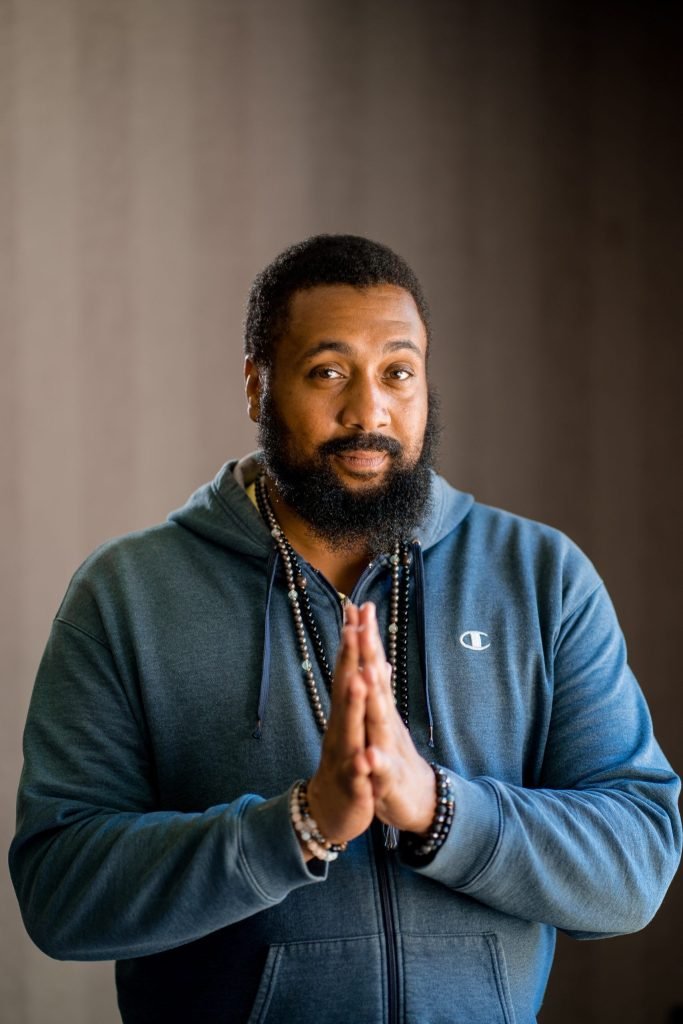
Reggie is the founder/chief serving officer of Active Peace LLC. His yogic and meditative practices have served as a sanctuary of peace and perspective while navigating the stresses of being a black man in the world and serving in pressure-filled jobs at the height of US politics. His practices have also helped him navigate complicated emotions (anger, grief, disappointment) to find and nurture peace of mind and ease of spirit, which is why he now seeks to share them widely for the wellbeing of all. Reggie has taught Members of Congress, Congressional Staff, leading progressive organizations, and individuals from all walks of life – simple tools for managing stress and bringing peace to mind body, and spirit.

In addition to his yoga teaching practice, Reggie has held many senior strategic and logistical roles across a variety of fields, ranging from global marketing, digital and community organizing, government relations, and international education to Presidential campaigning. He is a featured speaker on political strategy, new consciousness, wellbeing and social justice, and civic engagement for leading publications, podcasts, and platforms including Be Here Now Network, The Hill, Mind and Life Institute, SoundsTrue Foundation, Upaya Zen Center, Wanderlust, the Wellbeing Project, Summit, Yoga Alliance, and Yoga Journal.

Reggie’s life work sits at the intersection of bringing more peace and balance to activists; guiding the wellness community toward being more engaged, concerned citizens; enhancing the well-being of all walks of life; and, shifting the world toward more justice for all. Through Active Peace LLC, he teaches and advises all walks of life to enhance well-being as a foundation rather than an afterthought, shifting culture and improving personal and professional outcomes.

In addition to advanced training in yoga and meditation, Reggie received a B.A. in philosophy from Yale University and an MBA in international strategy from the Vlerick Business School in Belgium.

What does inner wellbeing mean to you?

Inner wellbeing is the wellspring from which creativity, passion, purpose, clarity, health and justice flow from. If we hope for peace, love, grace, joy and justice in the world and do not nourish our inner-wellbeing to flourish, it will never happen. Conversely, the more we provide for and fortify our inner wellbeing, the deeper our impact in the world.

In my personal life, as I have made inner wellbeing sacrosanct and foundational, it has transformed my impact as an activist and in service to the healing and wellbeing of others.

How would you define wellbeing in one word?

Vibrancy.

Are there any rituals or practices you use to enhance your wellbeing?

Every evening and morning I play a sound bowl to make soothe my mind in preparation for sleep and to set the tone for the remainder of the day.

Why is it important that we prioritize individual, organizational and societal wellbeing?

As mentioned above, if we hope for peace, love, grace, joy and justice in the world and do not nourish our inner-wellbeing to flourish, it will never happen. Conversely, the more we provide for and fortify our inner wellbeing, the deeper our impact in the world.

Remembering that our organizations and society are made up of individuals, prioritizing inner-wellbeing in community has the compound effect of making organizations and society more structurally compassionate and human, and less bureaucratic.

Connect with Reggie Hubbard on social media :

Cómo los líderes empresariales pueden enfrentar la crisis de salud mental Cómo los líderes empresariales pueden enfrentar la crisis de salud mental

Es el Día mundial de la Salud Mental y aún es un tema que nos elude en el mundo empresarial. Tal vez porque se siente como un tema privado, difícilmente entendemos nuestro rol frente a un reto que es altamente público.

Hace unos meses, tuve la oportunidad de tener una experiencia inmersiva en uno de los encuentros más importantes a nivel global. Entre las  palabras de bienvenida, un líder empresarial explicaba: “El bienestar emocional tiene un rol central en el sector privado, es fundamental para la innovación y colaboración,” dijo Edwin Macharia, Global Managing Partner de Dalberg, frente a más de 1000 personas que se dieron cita en la ciudad española de Bilbao la primera semana de junio.

El encuentro global “The Wellbeing Summit” o Cumbre del Bienestar, juntó a las mentes más influyentes en la intersección de la salud mental, el bienestar integral, el activismo  y la investigación científica. Este encuentro, este año 2022 no es para menos: de manera colectiva, los ponentes presentaron un reto enorme al que nos enfrentamos como sociedad de frente al bienestar integral y la salud mental.

La OMS define a la salud como “el estado de bienestar físico, mental y social, no solamente la ausencia de enfermedad” y a la salud mental como “el estado de bienestar en el que cada individuo logra su potencial, se enfrenta a los estreses normales de la vida, puede trabajar productiva y fructíferamente, y puede contribuir a su comunidad.”

La pandemia y sus secuelas presentan retos sin precedentes para la humanidad en términos de salud mental. En los últimos dos años, la estimación conservadora de suicidios está en 700,000 personas anuales; sin explicaciones alternativas, los médicos continúan atribuyendo más y más enfermedades al estrés.

Si el número previo nos genera una fuerte impresión, al llevarlo a un lapso más concreto, cada hora del día, se suicidan 81 personas en el mundo; y a ello, también encontramos el fenómeno aterrador  de school shootings, los feminicidios, los enfrentamientos por causas raciales, y más. Se estima que la mala salud mental le cuesta a la economía mundial entre $3 y $5 trillones al año en productividad reducida.

En América Latina, la salud mental continúa acarreando un tabú en el mundo empresarial, se lo habla poco pero se siente su efecto cada vez más seguido. En el mejor de los casos, se lo aborda de manera tangencial, solamente cuando los impactos se hacen visibles. Pero los diagnósticos de patologías de salud mental son sólo el primer paso. El liderazgo integral debe abordar el tema mediante prácticas, servicios y acciones tangibles que arrancan desde el lado preventivo.

Uno de los ponentes del Wellbeing Summit, el neuro-científico Richard Davidson , presentó una colección de hallazgos científicos sobre lo que él llama la “neuroplasticidad’ del cerebro – nuestra cualidad de tener una mente que puede ser moldeable mediante repetición y prácticas que re configuran cómo está programada. La tesis principal es que la compasión y felicidad es un habilidad que se puede aprender:

  • El cerebro de un monje en estado meditativo es algo replicable –   Davidson propone que la habilidad de estar presente, consciente de sus propios pensamientos es un camino de prevención buscando el bienestar mental. En un estudio del 2004  (Lutz et. al) se midieron las oscilaciones gamma, que predicen niveles de claridad de percepción, en el cerebro de un monje budista con años de experiencia en meditación. Las oscilaciones de las ondas en el cerebro de los monjes en estado meditativo eran significativamente más amplias. Es decir, cuando el cerebro se encuentra presente y perceptivo, las ondas gamma se abren. En estados de miedo o incertidumbre se contraen. Lo importante, es que los monjes tienen la capacidad de controlarlo con práctica, y que la incorporación de hábitos de manera consistente puede crear el mismo efecto en la población general.
  • La capacidad de conexión con otros re-configura el cerebro – Un estudio del 2013 (Weng et al) trabajó con un grupo de personas ofreciéndoles capacitación en técnicas meditativas de cultivar compasión. En sólo dos semanas, los neurocientíficos encontraron diferencias tangibles en imágenes de escaneos cerebrales de quienes habían participado – sus niveles de “conectividad DPLFC-Nacc”, que se asocia con comportamiento altruista (un indicador de salud mental), se muestran claramente dilatados en los scans.
  • El sentido de propósito correlaciona con la longevidad – Un meta-análisis de estudios de la última década (Cohen et. al, 2016) determinó que el sentido de propósito (incluso en las actividades diarias más mundanas)  es un predictor potente de longevidad y prevención de eventos cardiovasculares. Los efectos del bienestar son reales – un estudio del 2019 de Evans y Soliman presentaron una fuerte correlación entre la expectativa de vida promedio y el bienestar en 151 países: aquellos con percepción de bienestar más alta tienen hasta 30  años más de vida en promedio que quienes viven en países bajos niveles de bienestar emocional.

Hace un siglo, el hábito de tomarse 3 minutos después de cada comida para lavarse los dientes no existía a nivel global. Sin embargo, como sociedad, lo incorporamos como una acción de importancia para nuestra supervivencia como especie. Este principio de incentivar hábitos, promoviendo  una mente más saludable, puede tener efectos enormes en las distintas crisis que enfrentamos. La diferencia es que esta vez contamos con avances de tecnología móvil y de wearables (relojes inteligentes, tracking devices, etc) que nos permiten acelerar la incorporación de buenos hábitos de manera exponencial.

Por esta razón, no sorprende que el Dr Barry Kerzin, el médico personal del Dalai Lama, se apoya en una aplicación móvil para hacer prácticas de compasión y altruismo más accesibles a la población, o que Betterfly , la start-up unicornio Latinoamericana incentiva buenos hábitos meditativos  recompensando a los usuarios con medallas que facilitan la donación a causas. El potencial de generar impacto positivo mediante modelos de negocio que innovan con propósito es enorme.

Los retos más grandes que enfrentamos como humanidad siempre han presentado oportunidades para el empresariado que quiere marcar una diferencia.

Las buenas noticias son que podemos entrenar nuestros cerebros para crear bienestar mental y que podemos promover estos hábitos gracias a los avances de la tecnología móvil.

Con una oportunidad como esta, es cuestión de tiempo para que el sector empresarial tome el liderazgo para escalar la construcción de una sociedad más conectada consigo mismo y con su propósito. Así es cómo el mantra intangible de que “la paz interior puede crear paz para el mundo”, se convierte cada día en algo más tangible y viable conforme esta intersección única de maestros de meditación, científicos y empresarios convierten sus voluntades en una nueva realidad. Así es como el mundo empresarial puede enfrentar la crisis de salud mental: no solamente con voluntad, sino también apalancándose de tecnología y ejerciendo el liderazgo que este reto público exige.
Author bio

Michelle Arevalo-Carpenter is the Global VP of Purpose and Communities at Betterfly, the first social unicorn start-up, with operations across Latin America. Before her current role, Michelle was the CEO and co-founder of IMPAQTO, a B Corporation with a mission to support impact entrepreneurs reach their goals by building the ecosystem and network they need to thrive. Michelle is a recent mother of twins and a member of The Ecosystem Network at The Wellbeing Project.
How business leaders can face the mental health crisis How business leaders can face the mental health crisis

October is World Mental Health Month yet, mental health remains a topic that eludes us in the business world. Perhaps because it feels like a personal issue, we hardly understand our role in the face of a challenge that is highly public. 

A few months ago, I had the opportunity to have an immersive experience in one of the most important global meetings related to mental health and wellbeing, which is a more holistic way to explore it. From the very first welcoming remarks, I was all in:  “Emotional wellbeing plays a central role in the private sector, it is essential for innovation and collaboration,” said Edwin Macharia, Global Managing Partner of Dalberg, in front of more than 1,000 people who met in the Spanish city of Bilbao the first week of June 2022.

The Wellbeing Summit for Social Change brought together the most influential minds at the intersection of mental health, holistic wellbeing, activism, arts, and scientific research. In the convening, the Summit speakers collectively presented the enormous challenge that we face as a society and the wellbeing of our people.

The World Health Organisation (WHO) defines health as “the state of physical, mental and social wellbeing, not merely the absence of disease” and mental health as “the state of well-being in which each individual achieves his or her potential, copes with normal stresses of life, can work productively and fruitfully, and can contribute to the community.”

The pandemic and its sequels present unprecedented challenges for humanity in terms of mental health. In the last two years, conservative estimates of suicides are at 700,000 people per year; with no alternative explanations, doctors continue to attribute more and more illnesses to stress. If the previous number makes a strong impression on us, when taken to a more specific period, every hour of the day, 81 people commit suicide in the world; besides, we also find the terrifying phenomenon of school shootings, femicides, clashes for racial reasons, and more. Poor mental health is estimated to cost the global economy between $3 and $5 trillion per year due to reduced productivity.

In Latin America, mental health continues to be a taboo topic in the business world, it is rarely talked about but its effects can be noticed more and more often. At best, it is approached tangentially, only when the impacts become visible. But diagnoses of mental health pathologies are only the tip of the iceberg. Business leaders must address the issue through practices, services, and tangible actions that start from the preventive side.

One of the speakers at the Wellbeing Summit, neuroscientist Richard Davidson, presented a collection of scientific findings on what he calls the brain’s ‘neuroplasticity’ – our quality of having a mind that can be molded through repetition and practices that reconfigure how it is programmed. The main thesis is that compassion and happiness are skills that can be learned. Below are a few of the findings that back up this theory that we can train ourselves to shape the health of our brain:

  • The brain of a monk in a meditative state can be replicable – Davidson proposes that the ability to be present, and aware of one’s own thoughts is a preventive path toward mental well-being. In a 2004 study (Lutz et. al) gamma oscillations, which predict levels of perceptual clarity, were measured in the brain of a Buddhist monk with years of meditation experience. The wave oscillations in the brains of the monks in a meditative state were significantly broader. That is, when the brain is present and perceptive, the gamma waves open up; in states of fear or uncertainty, they contract. The important thing is that monks have the ability to control it with practice, and incorporating habits consistently can create the same effect in the general population- we don’t necessarily need to be super-meditators to reap the benefits.
  • The ability to connect with others reconfigurates the brain – A 2013 study (Weng et al) worked with a group of people by offering training in meditative techniques for cultivating compassion. In just two weeks, the neuroscientists found tangible differences in brain scan images of those who had participated – their levels of “DPLFC-Nacc connectivity”, which is associated with altruistic behavior (an indicator of mental health), looked clearly dilated in the scans. Again, visualizing scientifically the effects of human connection on our brains.
  • A sense of purpose correlates with longevity – A meta-analysis of studies from the last decade (Cohen et. al, 2016) found that a sense of purpose (even in the most mundane daily activities) is a powerful predictor of longevity and prevention of cardiovascular events. The well-being effects are real – a 2019 study by Evans and Soliman found a strong correlation between average life expectancy and well-being across 151 countries: those who live in countries with the highest perceived well-being levels live up to 30 years longer on average than those who live in countries with low levels of emotional wellbeing.

A century ago, the habit of taking 3 minutes after each meal to brush your teeth didn’t exist globally. However, as a society, we incorporated it as an important action for our survival as a species. This principle of encouraging habits, and promoting healthier minds, can have enormous effects on the different crises we face. The difference is that this time we have advances in mobile and wearable technology (smart watches, tracking devices, etc.) that allow us to accelerate the incorporation of good habits exponentially.

For this reason, it is not surprising that Dr. Barry Kerzin, the Dalai Lama’s personal physician, relies on a mobile application to make practices of compassion and altruism more accessible to the population. Or that Betterfly, the Latin American unicorn start-up, encourages good meditative habits by rewarding users with medals that make it easy to donate to causes. The potential to generate a positive impact through business models with purpose-driven innovations is enormous.

The greatest challenges we face as humans have always presented big opportunities for the business community that wants to make a difference. The good news is that we can train our brains to create mental wellbeing and that we can promote these habits thanks to advances in mobile technology.

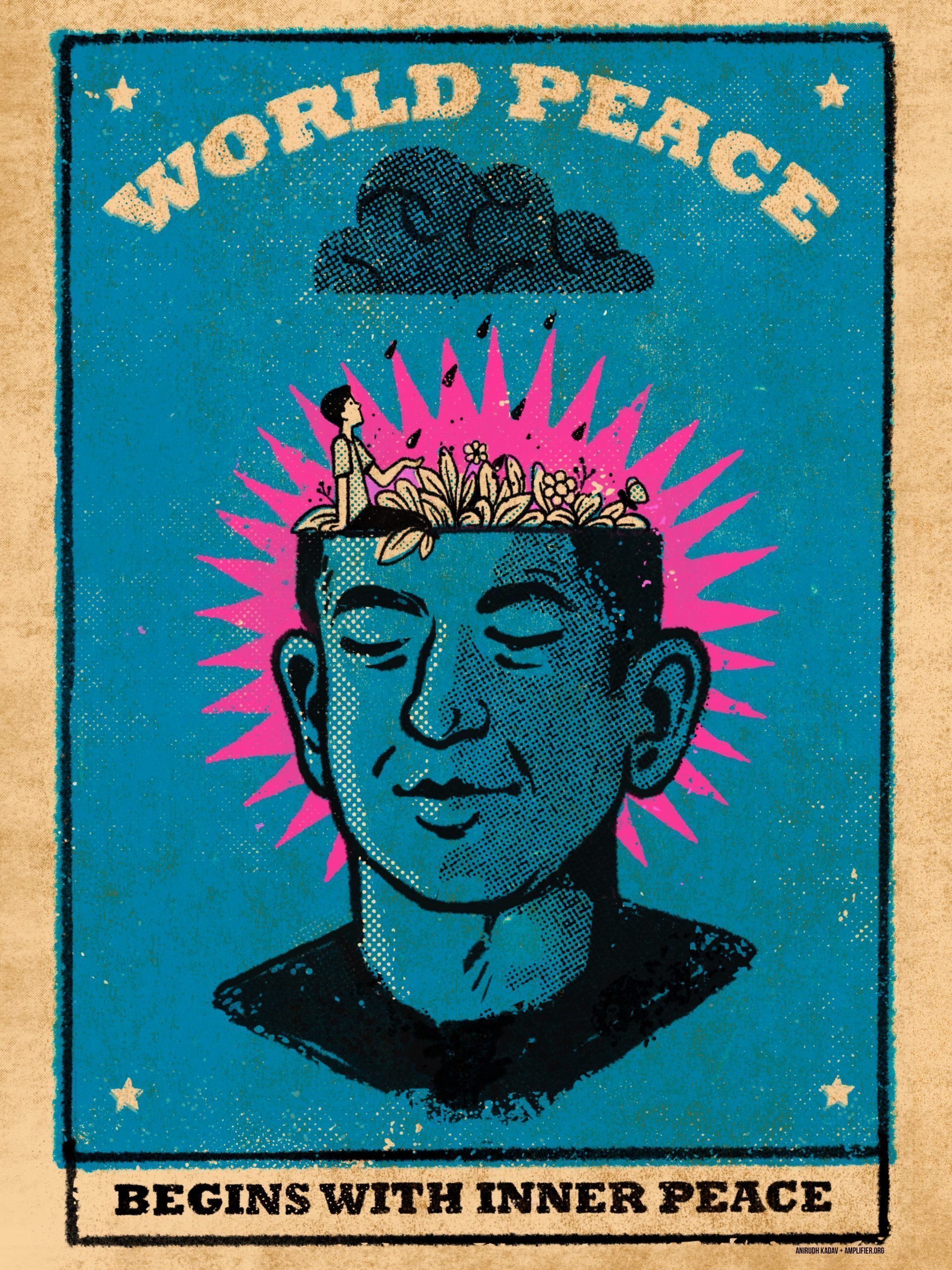
With an opportunity like this, it is a matter of time before the business sector takes the lead in building a society that is more connected with itself and with its purpose. This is how the intangible mantra that “inner peace can create peace for the world” becomes more tangible and viable every day as this unique intersection of meditation teachers, scientists, and start-up leaders turn their wills into a new reality. This is how the business world can face the mental health crisis: not only with will but also by leveraging technology and exercising the leadership that this public challenge demands.

Author bio

Michelle Arevalo-Carpenter is the Global VP of Purpose and Communities at Betterfly, the first social unicorn start-up, with operations across Latin America. Before her current role, Michelle was the CEO and co-founder of IMPAQTO, a B Corporation with a mission to support impact entrepreneurs reach their goals by building the ecosystem and network they need to thrive. Michelle is a recent mother of twins and a member of The Ecosystem Network at The Wellbeing Project.

Michelle Arevalo-Carpenter

Betterfly / IMPAQTO

Quito,
Ecuador

Michelle is the Global VP of Purpose and Communities at Betterfly, the first social unicorn start-up, with operations across Latin America. Before her current role, Michelle was the CEO and co-founder of IMPAQTO, a B Corporation with a mission to support impact entrepreneurs reach their goals by building the ecosystem and network they need to thrive. IMPAQTO offers coworking spaces, a business accelerator, innovation consulting services and an impact investing fund to Latin American entrepreneurs building a better world. Before her career in business, Michelle was the founding Country Director of Asylum Access Ecuador, a legal clinic for refugees that later scaled to Asia, Africa and did direct advocacy at the United Nations in Geneva.

As a consultant, has focused on paths to scaling impact for grassroots organizations, including an association of families of disappeared children in El Salvador, and communities at risk of development-induced displacement in Thailand, Cambodia and India. Michelle counts a number of firsts throughout her career: with IMPAQTO, she opened the first private coworking space in Ecuador, also the first certified B Corporation in the country. She launched GreenCrowds, Ecuador’s first crowdfunding platform. She is also the first woman under 40 to be named in the top 100 reputation ranking business leaders in the Merco Ranking.

Michelle is a recent mother of twins, and is married to tech and climate entrepreneur and writer Matthew Carpenter-Arevalo. They live in Quito, the place they have chosen as their home. She holds an Mst in International Human Rights Law from the University of Oxford and a Master’s in Public Policy, UC Berkeley.

Connect with Michelle Arevalo-Carpenter on social media :

Luzette Jaimes

Ashoka

Washington, DC,
United States

Luzette works on social ecosystem activation and system change through the design and facilitation of transformational learning processes. She works in the areas of human development, coaching, being-well, and awareness-based leadership development for changemakers. For two decades she has focused on social entrepreneurship through different roles at Ashoka, including launching Ashoka’s Learning & Development to deepen an organizational learning culture in support of their vision of accelerating the emergence of an “Everyone a Changemaker” world. Luzette works with CoCreative – a consulting firm that designs and facilitates Multi-stakeholder Innovation Networks to solve complex problems, from community revitalization to supply chain sustainability to education. Luzette is the founder of Alive & Thriving – a human development incubator for individuals and groups, co-founder of Consciousness Coalition (CoCo Labs*) – an ecosystem catalyst for cultural evolution and consciousness expansion, and co-founder of Weaving Lab – a network focused on creating learning ecosystems for wellbeing for all. Luzette is adjunct faculty at George Washington University Center for Public Leadership’s e-Co Leadership Coaching Program. She holds a BA in Finance & Intl Rel, a MSc in Holistic Science (whole and complex systems). Professional Certified Coach PCC, Theory U facilitator, Being-well coach and mindfulness practitioner.

What does inner wellbeing mean to you?

Inner wellbeing happens when I am grounded and present to meet life as it comes. When I have a state of okay-ness, even when facing difficult situations or experiencing difficult emotions. Inner wellbeing means freedom of mental, emotional, physical and spiritual conditioning and wounds that I no longer carry and that no longer limit my capacity to flourish and feel well in the human experience.

How would you define wellbeing in one word?

quality-of-life-experience

Are there any rituals or practices you use to enhance your wellbeing?

Mindfulness, Somatic Therapy, Positive Contribution to the World, Walks in Nature, Sabbaticals, Taking Pauses, Cultivating Friendships, Creating collective soulful spaces.

Why is it important that we prioritise individual and collective wellbeing?

All we do depends on how we feel. If we prioritize wellbeing, we prioritize our life.

Do you have any favourite books, podcasts, or articles that you believe support, promote, or educate on wellbeing and related themes? 

Wellbeing Toolkit by Ashoka

Connect with Luzette Jaimes on social media :

Voices of Wellbeing | Mallika Dutt Voices of Wellbeing | Mallika Dutt

“Without the earth, we are nothing”

Mallika Dutt, founder, activist, social change leader and speaker at The Wellbeing Summit for Social Change, joins us to share how her process of healing in community, as well as being open to exploring many other healing modalities, led her to understand the importance of inner work.

Listen to Mallika’s story to find out why her work is now centered around inspiring leaders to remember their innate interconnectedness and transform their impact. In a world of division and isolation, she invites us to see our shared wellbeing with people and planet.

How can we embrace collaboration and cultivate a world where we can flourish and thrive together?