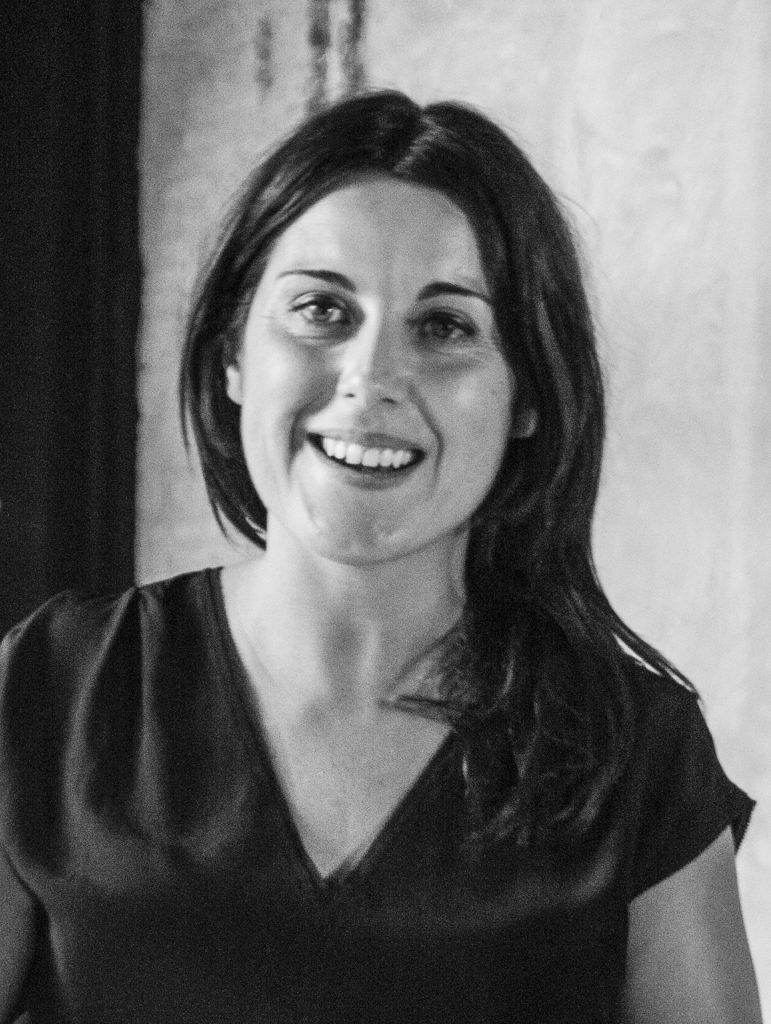
Raquel Vicedo

Regional Summits Director at The Wellbeing Project

Madrid, Spain

Connect with Raquel Vicedo on social media :

Raquel has extensive experience as a Project Manager in multicultural and multilingual contexts, and has worked both nationally and internationally at private and public institutions, such as the A. P. Moller – Maersk Group, the Spanish Ministry of Culture or the Hay Festival of Literature & the Arts.

Naturally interested in people and current affairs, she is passionate about learning and about personal and organisational development, and truly believes in the power of listening, listening, listening. In her thirties, she came across a poem —”Wild Geese”, by American author Mary Oliver— that literally brought her back to life and forced her to regain connection to that thing that used to keep her going and had somehow lost. After a year-long sabbatical, she finally managed to turn that out-of-tuneness into a yearning, and redirected her efforts so that her professional life would be aligned with her personal wish to find that place of encounter which her inner self was craving for.

Sociable and dynamic, her main motivation is to help implement instruments that can generate sustainable social and economic development for communities and individuals, as well as to contribute in a broad sense to making our society more human-centered, sustainable and fair.

When she’s not working, she loves to spend time with her family and friends, go for long walks with her dog, travel or read a book (yes, she’s an avid reader).

What does inner wellbeing mean to you?

Acceptance, compassion and empathy towards oneself and the rest of fellow creatures.

How would you define wellbeing in one word?

Interconnectedness

Are there any rituals or practices you use to enhance your wellbeing?

I meditate three times a week and practice pilates regularly. I also try to walk everywhere! Walking is an amazing practice that helps to stay fit, bot physically and spiritually.

Why is it important that we prioritize individual, organizational and societal wellbeing?

Because as my dear Mary Oliver says: “Whoever you are, no matter how lonely, the world offers itself to your imagination, calls to you like the wild geese, harsh and exciting —over and over announcing your place in the family of things”.

Do you have any favourite books, podcasts, or articles that you believe support, promote or educate on wellbeing and related themes?

The Art of Contemplation” and “Tao: The Watercourse Way“, by Alan Watts

Devotions: The Selected Poems of Mary Oliver“, by Mary Oliver

Mysticism for Beginners“, by Adam Zagajewski

“Minase Sangin Hyakuin —A Poem of One Hundred Links Composed by Three Poets at Minase”, by Sogi, Shohaku

Socho (or any other good poetry book —the healing power of poetry is immense!).

Wellbeing Tracks, Sessions & Partner Events Wellbeing Tracks, Sessions & Partner Events

Tracing The Journey Through Our Footsteps One Happening At A Time

Following our mission to advance a culture of wellbeing at individual, societal, organizational, and planetary levels, The Wellbeing Project supports leading events by curating a Wellbeing Track.

2023 EVENTS2023 EVENTS

OTHER EVENTSOTHER EVENTS

State of Well-Being for ImpactState of Well-Being for Impact

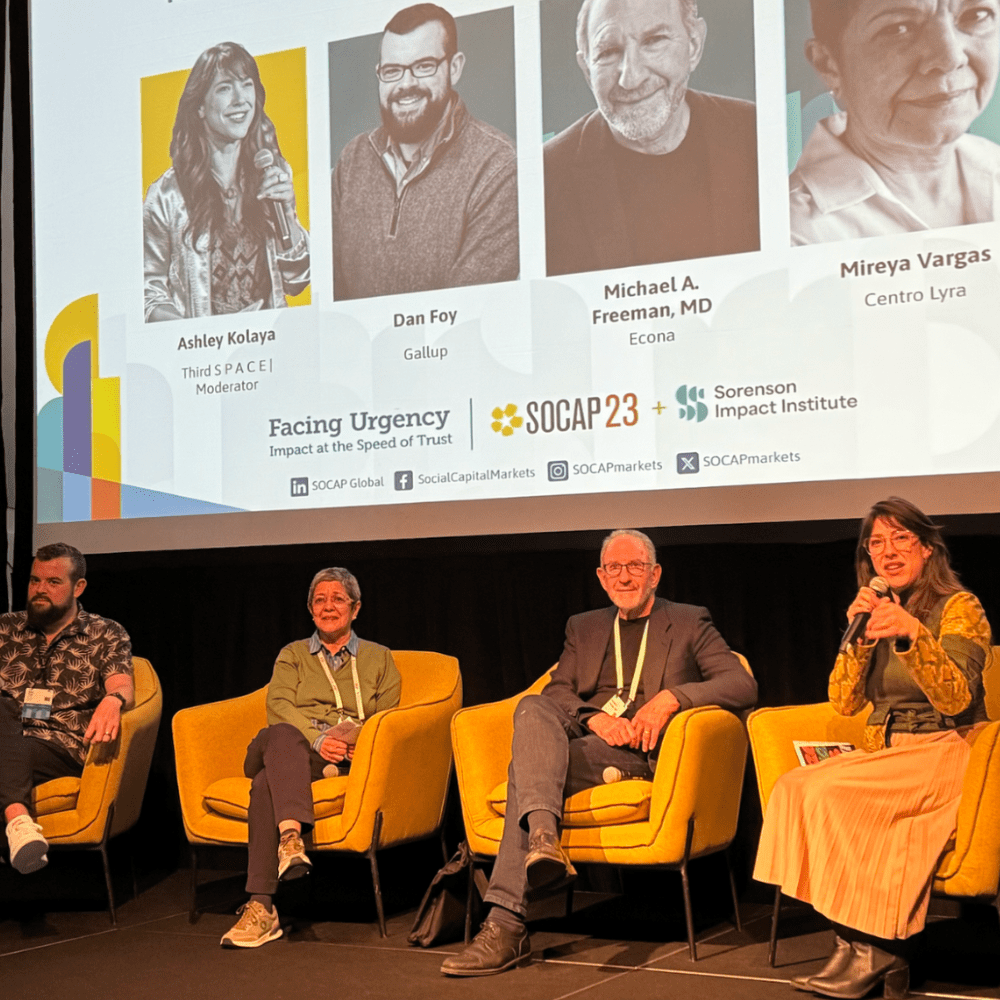
The Track’s Opening Panel

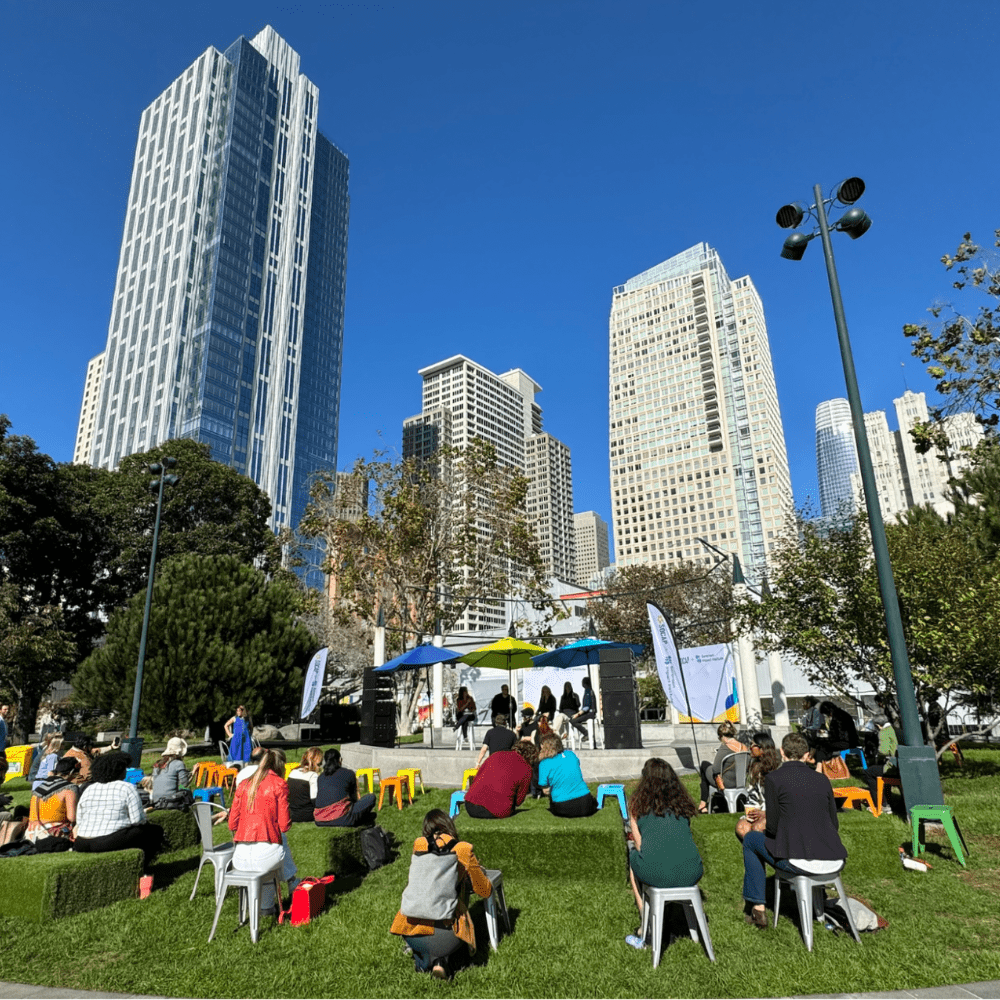
SOCAP kicked off the Well-being for Impact track with an Opening Panel! This opening panel discussed the most current and urgent challenges that guided our experts in curating the Well-being for Impact track for SOCAP23. The content track’s Content Curation Council member’s shared their perspectives on the state of the field examined through global and regional perspectives.

Session Objectives

Main points and insights

INSIGHT # 1:
Give the audience an overview/insights of what brought us to this moment where well-being is sharing the stage with topics like climate and social entrepreneurship at SOCAP

INSIGHT # 2:
Preview the track’s sessions:
Each speaker shared information about each of the sessions that made up this track. 

INSIGHT # 3:
The speakers shared some concrete examples of well-being for impact and addressed the limitations and challenges. Why is this so hard for a field that is focused on social impact?

Founder Well-Being and the Success of Social Enterprises

This session shed light on how founder and organizational well-being significantly impact the achievement of social enterprises, delving into the critical role of well-being in driving success, exploring the ways in which the mental health of founders and organizations shapes their ability to create positive social impact.

Core Insights

Mental health differences are normal for entrepreneurs

Founders have specific personality and psychiatric issues that can contribute to both their success and failure

Data can be used for policy and program purposes, and for helping individual entrepreneurs

Questions:

What is wellbeing? “Wellbeing” is a flexible term. Let’s devote a few minutes to unpacking the various connotations and what’s most important for our audience to understand about the term from your various perspectives.

What is the connection between wellbeing and founder success? We- and undoubtedly, the people in this room- read/hear a lot about the connection between wellbeing and founder/leader success. What does your work tell you about that connection?

What can we do to strengthen wellbeing practices? In this room, we have entrepreneurs, investors, policy/advocacy leaders. What’s one priority you’d like to see everyone here adopt?

QUOTES FROM THE EVENTQUOTES FROM THE EVENT

[mk_padding_divider size=”20″]
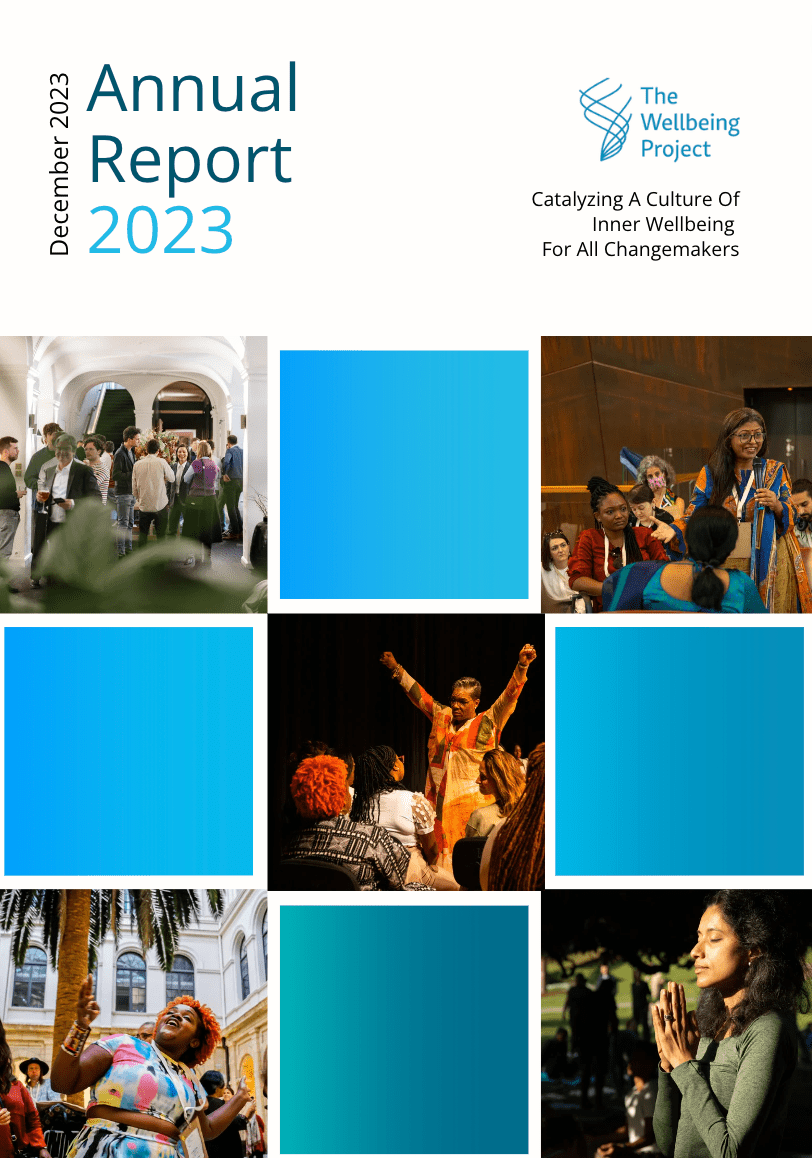
Impact Report 2023

Catalyzing a Culture of Inner Wellbeing for all Changemakers

Our work is guided by the core belief that the impact of any social or environmental change movement depends inherently on the wellbeing of the individuals and organisations within those movements. At a time of extraordinary change, The Wellbeing Project inspires those individuals and organisations to offer bold solutions to meet cascading, interconnected crises.

Read our 2023 annual infographic report to find out how together, we’re transforming optimism into action.

[mk_button dimension=”flat” size=”medium” url=”https://wellbeing-project.org/wp-content/uploads/2023/12/impact-report-2023.pdf” bg_color=”#0190bb”]DOWNLOAD REPORT[/mk_button]
[mk_padding_divider]

Cultivating a Thriving Inner Landscape Where Our Potential Can Bloom: 7 Learnings on How Mental Health Helps Achieve Social Change and PeacebuildingCultivating a Thriving Inner Landscape Where Our Potential Can Bloom: 7 Learnings on How Mental Health Helps Achieve Social Change and Peacebuilding

Guest post by:

Catalina Cock Duque

Co-Founder and President, Fundación Mi Sangre

Growing up in Colombia, a country with an armed conflict, filled with bombings, massacres, and displacement, I always felt the need to heal our wounds of violence and work towards the construction of peace. Fundación Mi Sangre, co-founded with songwriter and singer Juanes, has been my primary vehicle for pursuing this purpose. Since 2006, Mi Sangre has played a pivotal role in fostering systemic cultural change in Colombia by involving youth and the actors surrounding them as key contributors to personal, community, and systemic transformation. This model equips participants with life, leadership, and entrepreneurial skills, empowering them to co-create positive changes in their communities, including solutions towards peace.

Our work encompasses a multifaceted vision of leadership, emphasizing the development of both individual and collective skills. It involves nurturing awareness, empathy, critical thinking, and curiosity while fostering collaboration. We address the challenges young people face due to living in impoverished and violent environments, providing comprehensive mental health support as a valuable resource for personal and collective transformation. With this emphasis on inner work, mental health, and wellbeing, we have seen positive results not only in our participants’ lives but in the systems all around us.

From more than 15 years of service to young people in Colombia, here are some of the lessons from our journey that have now become integral to our work.

1. We can support the individual through the collective.

In dealing with trauma and other mental health challenges, some specific cases require individual psychosocial support. However, our organization and country lack the resources to provide it individually at scale. Therefore, we have integrated mental health skills into leadership programs, to offer support in a collective setting while integrating a preventive approach. These programs blend self-discovery and introspection, with safe spaces, fostering social connections and a sense of belonging. The mental health dimension of our leadership programs holds a special place in the hearts of our participants. From our retreats, I recall with emotion their warm hugs, the tears of healing they shed, and the laughter that set their spirits free, all within the safe space we helped create for them.

2. Holistic wellbeing – connecting mind, heart, body, and spirit – is essential.

Our programs prioritize a holistic approach encompassing the mind, heart, body, and spirit. Engaging the mind fosters critical thinking, self-awareness, and informed decision-making. Emotional aspects, represented by the heart, nurture empathy and meaningful relationships. Physical well-being, supported by the body, ensures energy and vitality, offering valuable wisdom through a strong mind-body connection. Nurturing the spirit, which encompasses purpose and resilience, provides inner strength to face challenges. Collectively, these dimensions empower individuals to lead authentically, while achieving significant change. Our young participants have successfully created more than 1,800 change initiatives, achieving profound systemic transformations in areas such as violence prevention, reconciliation, gender equity, migrants’ inclusion, and prevention of forced recruitment to armed groups.

3. The creative arts and nature are our biggest allies.

Creative arts and nature are central to our programs. We offer creative outlets like painting, music, and writing to serve as therapeutic outlets, hellping to alleviate stress, anxiety, and depression. Art encourages mindfulness, fostering social connections and deep interactions. Simultaneously, nature provides purpose and tranquility and teaches the vital concepts of oneness and interconnection. Whether it’s a simple walk in the park, incorporating plants, or outdoor experiences in natural settings, these holistic approaches significantly enhance our program’s effectiveness. My heart fills with gratitude when I remember a participant who shared that she had discovered the wisest counselor in nature and had never received such profound guidance from anyone else.
image

Credit: Fundación Mi Sangre/Alejandro Bonnells

image-1

Credit: Fundación Mi Sangre/Alejandro Bonnells

“My heart fills with gratitude when I remember a participant who shared that she had discovered the wisest counselor in nature and had never received such profound guidance from anyone else.”

4. Mental health and wellbeing have to be cultivated.

From our community engagement, it is clear to us that mental health and wellbeing are not static conditions; they are cultivated over time through a combination of self-awareness, self-care, and positive life choices. To help our communities make these choices, we have developed several strategies, including an open-source library with tools and resources, along with trainer approaches and curriculums for parents and educators, on how to develop 17 different holistic leadership skills. To our surprise, this library, originally created for our team, has more than 2,500 visitors per month, demonstrating its regular use. We also don’t limit our mental health support to our participants: since the pandemic, our full team holds weekly online meetings to share various practices, encouraging us to lead by example and embody the change we want to be in our communities.  

5. We must shift paradigms around mental health. 

Transforming mental health paradigms is a crucial piece to this puzzle, given historical stigma that discourages those who are struggling from seeking support. To help change this dynamic, we have  launched grassroots and national campaigns at Mi Sangre to normalize mental health discussions, emphasizing the importance of open, empathetic, and non-judgmental conversations. Recognizing that change starts at the individual and community levels, we are committed to creating tailored approaches to mental health, considering differences in ethnicity, gender, and age while incorporating local wisdom. We also seek to expand the dialogue on mental health to include wider audiences: inspired by the Wellbeing Summit for Social Change in Bilbao, we co-created the Wellbeing Summit Bogotá in September 2023. Mental health was a central topic at this event, which convened changemakers from the social change, business, academic, and public sectors. We aspire to extend this initiative to other Latin American cities, further advancing this crucial agenda for mental health.

screenshot-2023-12-08-at-4.20.32p.m
image-2

An example of posters co-designed with local communities, written in Nasa Yuwe, the language indigenous communities of Toribio, Norte del Cauca, Colombia, with an invitation to reach out to mental health support services. Literal translation: “Weaving the good life. Mental health is harmony, source of inspiration and wisdom”. Credit: Fundación Mi Sangre/Alejandro Bonnells

6. Our personal journeys influence our professional work

Leading Mi Sangre has been a profoundly personal journey.My pursuit of inner growth and wellbeing commenced 18 years ago after facing burnout during my first venture. However, this journey evolved recently when I developed a deeper understanding of trauma’s impact on my work, through participation in the Inner Development Program by The Wellbeing Project. In a retreat with fellow change agents, I was transported back to a poignant childhood memory. I overheard the tragic fate of our neighbors, the parents of children my age who were kidnapped and brutally murdered. The re-emergence of this memory unleashed profound emotions, revealing the lasting impact it had on me. This experience unveiled the roots of certain unhealthy patterns in my entrepreneurial drive – a fear of losing what I cherish, an unconscious drive to do everything to survive and protect my loved ones, and a limiting belief that I must accomplish everything now because tomorrow is uncertain. I have undergone profound transformations as a result. When leaders embark on deep explorations of their inner selves, a much deeper layer of meaning emerges about who we are, what we do, how we pursue it, and, more importantly, how we want to pursue it. I have witnessed numerous stories of leaders similarly elevating their modes of operation (and impact!) by embarking on journeys of inner work.

7. Inner work can help heal systems.

In the pursuit of positive social change and lasting peace, inner work stands as a pivotal force that transcends individual growth to mend the very systems that have been fractured by violence and turmoil. The power of inner work is not confined to self-discovery and personal development; it extends to our collective consciousness and societal structures. Mi Sangre’s  work involves weaving ecosystems, bringing together a wide array of participants from the public, private, and third sectors – sometimes even including former enemies and victims – to co-create solutions. Through our methodologies, we have witnessed the potential to transcend differences, hate, and fear in order to act collectively towards peace. By delving into the depths of our inner selves, we unearth the empathy, resilience, and wisdom required to reshape these systems.

“By delving into the depths of our inner selves, we unearth the empathy, resilience, and wisdom required to reshape these systems.”

Both through my work and personal experience, I’ve learned to embrace pain and struggles as inherent aspects of life. However, I’ve also seen the potential for leading a life filled with profound meaning, even in the face of persistent challenges. Equipping leaders with the skills to address trauma, support their mental health, and enable wellbeing is essential. In doing so, we are able to help them cultivate resilience, enabling them to reach their highest human potential, foster healthy relationships, and serve life with freedom and joy. 

Looking back at the dream Juares and I had 16 years ago – working towards peace – I am convinced that including inner work in our systemic approach has been pivotal in catalyzing extraordinary leadership. Without it, we may have never been able to advance the reconstruction of our social fabric, influence decision-makers, and help heal systems that impact over 2 million people who have undergone profound transformations toward peace-building and social change.  I invite you to explore how mental health, healing, and inner work may transform your work in social change – with a thriving inner landscape, there’s no limit for our how our potential can bloom. 

About the authorAbout the author

catalina-cock

Meet Catalina Cock Duque

Catalina Cock Duque, a seasoned catalyst for systemic change with over 25 years of experience, is a passionate leader in sustainable development, peace-building, and social impact. Distinguished as a Young Global Leader by the World Economic Forum and recognized by Silla Vacía in Colombia, she co-founded Fundación Mi Sangre, impacting over 2 million people in Colombia. As a Co-Founder of Oro Verde and the Alliance for Responsible Mining, Catalina played a pivotal role in establishing the first global certification for artisanal gold mining, expanding its reach to over 10 countries. She holds a BA from the University of Maryland and a Master’s from the London School of Economics, complemented by executive courses in leadership and innovation from top institutions worldwide.

Hear from Catalina's experience on taking part of The Wellbeing Summit Bogotá: Hear from Catalina's experience on taking part of The Wellbeing Summit Bogotá:

Defenders’ Wellbeing Collective

The Defenders’ Wellbeing Collective holds a space for leaders of grassroots, community, and survivor-led human rights organizations to reflect, experiment, share, and learn together about how best to support greater wellbeing and resilience within their organizations.

The mission of the Defenders’ Wellbeing Collective (DWC) is to understand the impact of human rights work on people who are from or directly working with communities to address human rights around the world.
The DWC has garnered an overwhelming response from human rights defenders worldwide. The remarkable interest demonstrates the urgent need for wellbeing support among human rights defenders and highlights the potential of the DWC to make a transformative impact on the field.
The program started in April 2023, the DWC is a two-year program that provides a space for human rights defenders to connect, learn, and strengthen their wellbeing practices, with virtual meetings and workshops every two months. The DWC plans to produce an internal work report, a survey of wellbeing on human rights defenders and a collection of reflections and shorter pieces of information for the overall public.
The Wellbeing Project co-created the DWC in collaboration with the Human Rights Resilience Project. The Wellbeing Project supports the work of the DWC in an administrative and advisory way.

twg2-1

LEVERAGING THE EVIDENCE ON THE RELATIONSHIP BETWEEN TEACHER AND STUDENT WELL-BEING IN LEARNING AND TEACHING:

A Scoping Review and Educator and Student Interviews

By Kimberly A. Schonert-Reichl, Denise Buote, Rebecca Baelen, Joshua Lovett, Maryam Al-Khalaf, Kay Thursby Bourke, Claire Galloway, Aynsley Parker & Ahmed Baghdady

The crisis of children’s mental health and rising disparities in educational outcomes have become global concerns, particularly due to the surge in mental health challenges among children and youth attributed to the COVID-19 pandemic and other global events that have caused disruptions to student learning and social and emotional wellbeing. Alongside the declines in the well-being of children and youth have been concomitant challenges for the teaching profession leading to discernible increases in teacher stress and burnout, potentially causing teacher shortages worldwide. In light of these concerning trends in the wellbeing of children and teachers, research examining the relationship between teacher and student well-being in the context of learning and teaching is profoundly needed not only to advance science and theory but to also to inform the design and implementation of programs and practices that allow for the creation of learning environments in which both teachers and students can thrive and flourish and reach their greatest potential.

In this extensive report, we present findings from two interrelated research studies that focused explicitly on exploring the relationship between teacher and student well-being in learning and teaching — a topic for which many questions remain. The aim of our research is to offer a deeper understanding of these relationships in order to provide valuable insights for educators, policymakers, and other stakeholders who share an investment in finding ways to improve educational experiences and opportunities for students both in the present and in the future.

At the Learning Planet Festival Watch Report Presentation

Join us as a Teacher Wellbeing PLC Member! Join us as a Teacher Wellbeing PLC Member!

The Teacher Wellbeing Professional Learning Community (TW PLC)  is co-created by the World Innovation Summit for Education (WISE), an initiative of Qatar Foundation for Education, Science and Community Development, and the Wellbeing Project which is co-created with Ashoka, Georgetown University, Impact Hub, Porticus, Skoll Foundation and Synergos.

TW PLC is a group of members representing several sectors including non-profit, government, philanthropy, and academia. TW PLC aims to be a global learning community of professionals interested in teacher wellbeing and engaged in efforts to promote and support the wellbeing of teachers at the school, district, and system levels. Members of the community will include researchers and scholars, leaders and policymakers, trainers and professional coaches, and school principals and teachers who are engaged in teacher and curriculum development, assessment, action research and other school-based activities. LEARN MORE.