Music Creatives for ChangeMusic Creatives for Change

Stories from the Hearth

Hearth Summit Athens Session Featuring:

Becky Young

Head of Ops & Community, Earth Percent
🌍 London, England

Vickie Amiralis

Label Development Manager, In Place of War / EarthSonic
🌍 London, England

Tori Tsui

Climate justice activist, organiser, writer, consultant & speaker
🌍 Bristol, England

Misia Furtak

Musician, Music Declares Emergency
🌍 Poznań, Poland

In Athens, a co-created agenda with arts group Act in Synch invited changemakers to reflect on social change through an artistic lens. In the music industry, different musicians, producers, organizers, and non-profits have been taking a step outside their bubble to drive change in both environmental and social justice arenas. Hear from four different examples of this innovative approach bridging arts for positive change with:

Becky Young, Head of Ops & Community, EarthPercent. EarthPercent invites artists and the music industry at large to donate a small percentage of their income, making change through organisations that meaningfully address the climate and nature crises. Over 250 artists and companies have already pledged their support.

Vickie Amiralis, Label Development Manager, In Place of War, and EarthSonic. In Place of War is a global organisation that uses artistic creativity in places impacted by conflict and climate change as a tool for positive change. It enables grassroots changemakers in music, theatre and across the arts to transform cultures of violence and suffering into hope, opportunity and freedom. EarthSonic is a global project telling the story of climate change through music, working with indigenous communities, musicians, cultural organisers, scientists and climate activists and experts.

Tori Tsui, climate justice activist, organiser, writer, consultant & speaker; and

Misia Furtak, musician, Music Declares Emergency. Music Declares Emergency brings together artists, music industry professionals and music fans to call for an immediate governmental response to the climate change emergency to protect all life on Earth.

Act in Synch ‍brings together leaders from across industries to confront climate change. Its mission is to inspire action by addressing our relationship with the planet and the choices we make.

Watch the session (in English).

EXPLORE THE REGIONAL SUMMITS FURTHEREXPLORE THE REGIONAL SUMMITS FURTHER

Dive Into Stories From Around the World

Discover Wellbeing and the ArtsDiscover Wellbeing and the Arts

Meet and hear stories from the changemakers championing wellbeing in the arts.

How to Make Impact With the Wellbeing EconomyHow to Make Impact With the Wellbeing Economy

Stories from the Hearth

Hearth Summit Athens Session Featuring:

Lorenzo Fiaromonti

Former Italian Minister of Education and Founding Director, Institute for Sustainability at the University of Surrey
🌍 London, England

Conchita Galdon

Vice Dean, Instituto de Empressa
🌍 Madrid, Spain

In AthensLorenzo Fiaromonti, former Italian Minister of Education in Italy and Founding Director of the Institute for Sustainability at the University of Surrey, and Conchita Galdon, Vice Dean, Instituto de Empressa, answered the big questions around wellbeing economies: Are they realistic? Do they work? How can we build them in practice? Take a deep dive into a theoretical and practical discussion on what a wellbeing economy is, how it can drive sustainability, and how everyone can benefit from it.

Watch the session (in English).

EXPLORE THE REGIONAL SUMMITS FURTHEREXPLORE THE REGIONAL SUMMITS FURTHER

Dive Into Stories From Around the World

Discover Wellbeing EconomiesDiscover Wellbeing Economies

Meet and hear stories from the changemakers championing wellbeing in business and economics.

Wellbeing for People and the PlanetWellbeing for People and the Planet

Sustainability x Regional Hearth Summits

The regional Hearth Summits are transforming the way we approach sustainability, weaving it into every aspect of their mission to foster wellbeing and drive social change. These groundbreaking events delve into sustainability not just in their discussions — highlighting innovative solutions and community-driven practices — but also in their design, prioritizing eco-conscious operations, waste reduction, and local partnerships. By aligning their content and practices with a commitment to planetary and social health, the Hearth Summits inspire individuals and communities to rethink their role in creating a sustainable, thriving future for all.

Explore the inspiring stories of changemakers worldwide and discover how they are advancing sustainability, wellbeing, and social change in impactful ways.

Want to get involved with the Hearth Summits?

Members of our global network are co-creating regional wellbeing for social change movements around the world.

Express your interest in getting involved and we’ll share your information with them.

RENEWING OUR APPROACHRENEWING OUR APPROACH

“Progress is impossible without change, and those who cannot change their minds cannot change anything.”

George Bernard Shaw

Learning From Living Buildings at the Omega Institute

THE OMEGA CENTER FOR SUSTAINABLE LIVING

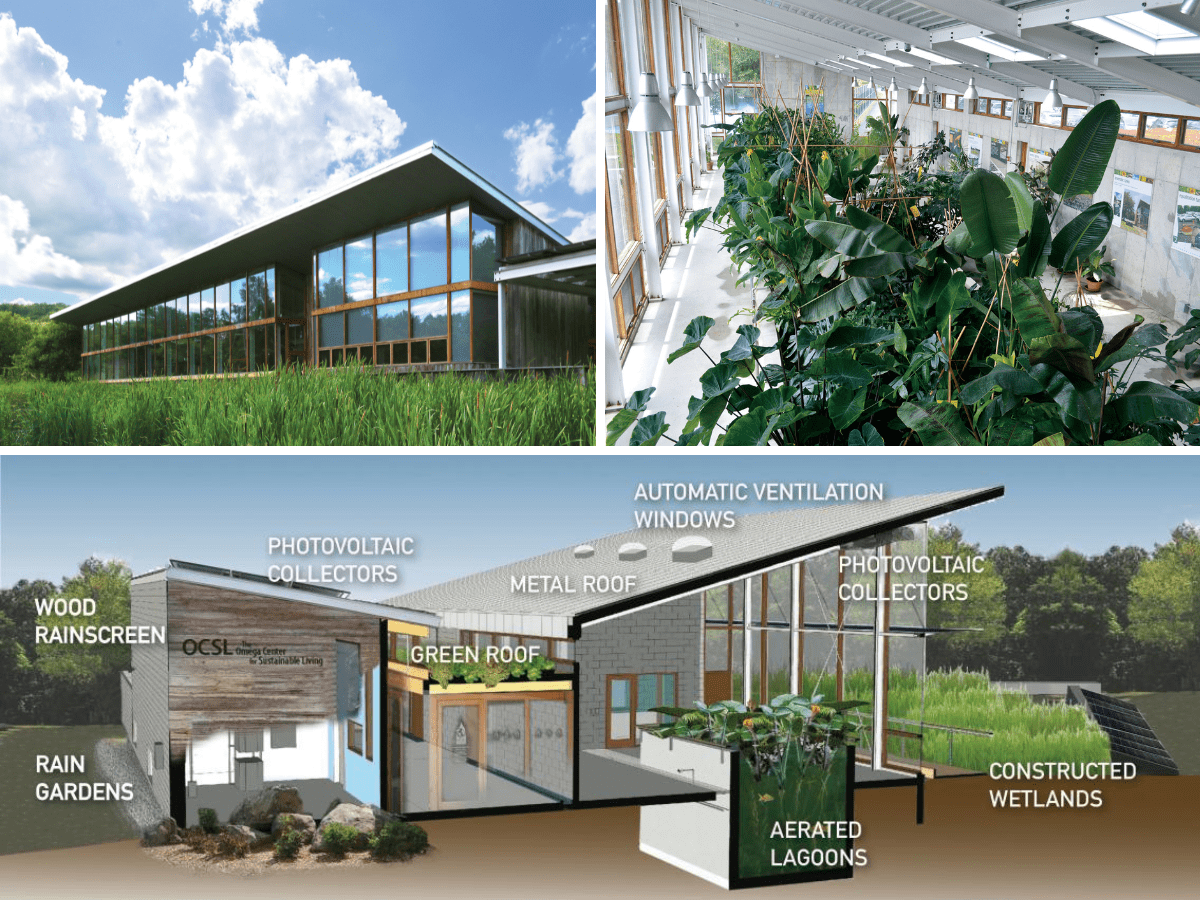
In addition to enjoying magical moments of inner and outer discovery on the Omega Institute campus, participants also learned about innovative solutions for ecological preservation at the Omega Center for Sustainable Living (OCSL). The OCSL’s award-winning living building hosted talks on regenerative, climate-positive design, using the center’s Eco Machine™, a water reclamation system that uses only natural processes to treat wastewater, as an example. Answering the question, “how should we live?”, the OCSL inspired changemakers to reexamine how they relate to the world and natural resources.

Ways for Decentralization

Session at Hearth Summit Athens

In Athens, representatives from corporations, civil society, impact ventures, and institutions discuss strategies, initiatives and challenges to build more sustainable relationships between urban and rural areas. Panellists include: Savvas Chionides, Secretary General for Decentralization; Dimitrios Kaliampakos, National Technical University of Athens; Sotiris Tsoukarelis, Ta Psila Vouna; Sheila Darmos, The Southern Lights and Regenerative Farming Greece initiative; Nikos Politis, Coffee Island. Watch the session (in Greek).

The Campus of the FutureThe Campus of the Future

FACENS UNIVERSITY, SOROCABA

In 2024, Hearth Summit São Paulo received the CARBON RESPONSIBLE seal, a certification element developed by Aguama which recognizes the offsetting of emissions and indicates that in addition to offsetting, emissions were positive through an action that will plant more trees than necessary to offset. Working with the Ipê Institute, FACENS will plant 40 seedlings of native species from the Atlantic Forest Biome in the forest restoration projects in the Cantareira and Mantiqueira Mountains, as a way of joining forces for water security, which corresponds to the event’s emissions, plus an additional 20%.

The host and venue of the second regional summit in Brazil, the Facens University Center, Sorocaba, is an innovation and technology hub, and a Smart Campus which aligns the development of projects with the axes of smart cities and the 17 UN Sustainable Development Goals (SDGs). Facens is a signatory to the UN Global Compact, in a green space of 100 thousand m², with more than 60 specialized laboratories and 12 Innovation Centers. In 2023, the institution recycled more than 6 tons of waste, which corresponds to 69% of its waste diverted from landfills. It has 100% smart water meters and 100% of the water consumed is treated on campus. The energy consumed is 100% from renewable sources and FACENS plans to be carbon neutral by 2028.

Ecological Belonging and Regeneration

Session at Hearth Summit São Paulo

In São Paulo, a diverse panel reflected on the environmental challenges Brazilians face today and the path forward to planetary wellbeing, featuring: Carolina Sampaio Machado, Instituto Terra; Josué Graton, FIT Instituto de Tecnologia; Nathalia Manso, Ecotuner (Facilitator of Reconnection with Nature); and Telma Silva, Flex Brasil. Watch the session (in Portuguese).

Designed With the Earth in Mind

THE WELLBEING SUMMIT DHAKA

The Wellbeing Summit Dhaka was decorated with Ecological Belonging in mind. All materials used to accentuate Bangla Academy’s lush gardens were:

  • Upcycled, such as printed signs on cotton from used sarees;
  • Locally handmade, reducing the environmental footprint of production and transportation;
  • Free of single-use plastic; and
  • Designed to be used again or recycled rather than thrown away after the event.

EXPLORE LOCAL INNOVATIONS AND DIALOGUES FURTHEREXPLORE LOCAL INNOVATIONS AND DIALOGUES FURTHER

Dive Into Sustainability Stories From Around the World

WHAT IS THE ORGANIZATIONAL EXPLORATORY PROGRAM? WHAT IS THE ORGANIZATIONAL EXPLORATORY PROGRAM?

The Organizational Wellbeing Exploratory Program (OWEP) was born from the need that members of The Wellbeing Project community expressed on embedding their individual wellbeing learnings into the culture of their organizations. Understanding that organizations are much more than the sum of its members, TWP decided to launch an Exploratory Program for 8 purpose-driven organizations across the globe to explore what it means to put humans at the centre of their organizations.

A 3-year long program was put in place to support organizations leaders in understanding what wellbeing meant to their container and to explore how to integrate a wellbeing lens on an organizational level in their various contexts. With the participation of three members per organizations, the OWEP program took place from April 2019 to June 2022. The program was then extended for two more years on response to members’ request until April 2024, to allow more space for organizational change efforts to take place and hold the community together.

The OWEP members participated in three in-person retreats (in 2019, 2022 and 2024) and one virtual retreat in 2020 during the pandemic. Tools and constant support were provided from TWP by means of online webinars, virtual workshops and meetings with the cohort, support from locally based organisational change coaches, access to some financial support from TWP and quarterly individual check-ins with the TWP team. Additionally, during the first 3 years of the OWEP program, qualitative research was carried out by the Tavistock Institute of Human Relations to follow the journey of the 8 organisations and understand the challenges and achievements of the different approaches.

The OWEP container ended in April 2024 with a last in-person retreat, where the group decided to evolve into a Community of Practice and open the space to other organisations to learn from their experience.

How to define Wellbeing at an Organizational level

We understand that organizations are living systems that are constantly changing and evolving. Each system has their own inherent properties that will be determined by the underlying interactions of all its parts that occur simultaneously and at different levels. Adopting a wellbeing lens within an organisation has to do with taking care of the quality of processes (how things are done) over the outcomes (what is done). It is adopting a way of thinking and doing across all the members of an organisation. To implement wellbeing approaches within a system’s culture it is first important to define what wellbeing means to their organisation. This concept will depend on the culture of the organisation, its context, its members, its challenges, at a determine moment in time. And as the system itself, the understanding of wellbeing at an organisational level will too be in constant evolution.

About the 8 organizations

Eight non-for-profit organisations were chosen from diverse context, cultures, sizes, purpose and style of leadership. This diversity – often challenging on a logistical level – ensured that a representation of the entire sector was involved, so that learnings would be relevant for many organisations across contexts. The OWEP organisations are described below:

BluePrint For Life is a Canada based small size organisation (< 20 staff) that works in promoting healing and building hope in traumatized youth communities. BluePrint offers programs that are founded on HipHop, rooted in traditional culture, and centered on community needs. The majority of staff members are drawn from creative and performance backgrounds that also have suffered trauma and vulnerability, enhancing the real role models that have been able to heal through art, expression and music.

Educate Me Foundation is an Egypt based middle-size organisation (65-70 staff) dedicated to redefining education in schools through a learner-centered education model. It creates learning programmes using national and international standards to educators and students from public schools across 6 governorates in Egypt. Educate Me promotes a culture of self-actualization and lifelong learning among individuals.

Forest Trends is a Washington DC based organisation founded in 1999, that works in preventing the degradation of natural ecosystems by embedding conservation values and practices within economic systems. It promotes environmental finance, markets, and other payment and incentive mechanisms. With around 90 employees distributed in two offices between DC and Peru, Forest Trends has demonstrated that the preservation of natural assets yields much greater long-term economic and societal benefits than the economic activities that damage these natural assets for short-term profit.

Imazon is a Brazil based medium size (50 staff) organisation founded in 1990 to promote conservation and sustainable development in the Brazilian Amazon through research, dissemination and public policy influencing. Activities include socioeconomic diagnosis; demonstration projects; development of methods for evaluating and monitoring sustainable land use; analysis of public policies for land use; and development of sustainable development scenarios and models for those economic activities.

Khwendo Kor is a Pakistani based middle size (80 staff) organisation that works on empowering local women through civil rights, education, health and economy. “Khwendo Kor” translates from Pashto as ‘Sisters’ home’. The organisation was established in 1993 to provide women with a forum to address their issues. It has become a sisterhood, guiding women to take practical steps for the betterment of themselves and their families. The head office is in Peshawar and there are regional offices in several districts.

OneSky is an international organisation founded in China in 1998 that provides quality care in early childhood within vulnerable communities. With over 180 employees, OneSky operates in 4 countries: China, Hong King, Vietnam and Mongolia. By training caregivers (early educators, child welfare workers, childcare providers, parents, extended family members, foster parents, and others), OneSky provides responsive care and creates nurturing learning environments for thousands of marginalized children.

Tostan is a large African organisation. Founded in 1991 in Senegal with the purpose of driving community-led change in West Africa. With over 700 employees Tostan currently works in five countries: Guinea, Guinea-Bissau, Mali, Senegal, and The Gambia. It has created a new type of development programme to enact change, called the Community Empowerment Program (CEP), which Tostan uses to respectfully engage communities by working in their own languages and using traditional methods of learning. Areas of focus include supporting communities with issues such as education, health, environmental concerns, and economic growth.

VillageReach is an international organization founded in 2000, dedicated to deliver quality healthcare in remote villages in sub-Saharan Africa. VillageReach’s goal is to reduce inequities in access to quality primary health care for 350 million people by 2030. By working with governments, the private sector, partners and communities they build responsive primary health care systems that deliver health products, information and services to the most under-reached. As a locally driven and globally connected organisation, with over 180 employees, VillageReach’s has offices in the Democratic Republic of Congo, Kenya, Malawi, Mozambique and the United States.

VIEWING CHANGE THROUGH THE LENS OF WELLBEING VIEWING CHANGE THROUGH THE LENS OF WELLBEING

The social change sector is facing a wellbeing crisis. Social change organizations work on the front lines, tackling complex societal issues and providing critical support to vulnerable populations. A demanding workload combined with ever-present pressure to achieve meaningful outcomes with limited financial or operating resources exacerbates heightened levels of burnout experienced by the sector.  

Aiming to better understand how a wellbeing orientation can positively impact organizational health, The Wellbeing Project partnered with the Center for Healthy Minds and The Tavistock Institute for Human Relations to conduct research which identified the following approaches to fostering healthy, effective, and sustainable workplace environments for social changemakers.

The Critical Role of Organizational Leadership 

Senior leaders modeling wellbeing, communicating explicitly about the priority around wellbeing, and making time and providing resources for wellbeing activities as well as developing policies and strategies that reflect this organizational commitment, ‘gave permission’ to staff teams to participate in wellbeing.

The Benefits of Co-Created Strategies

Listening to staff and creating the conditions where people can speak up about the difficulties of their role are cardinal values of organizational wellbeing. By engaging staff and drawing on their strengths, skills, and ways of working, organizations can implement wellbeing-oriented actions and policies that are experienced by staff as more vital and authentic, create less additional burden, and increase the likelihood of uptake and sustainability. Top-down approaches to wellbeing are less sustainable and can be perceived as additional demands on staff time.

Integrating Wellbeing into Daily Workflow

Implementing microshifts–small, incremental changes to organizational policies, communications, personal development procedures, structure, staffing and workflow management–over time are key to supporting the emergence and maintenance of healthy, human-centric organizations.

The eight participant organizations employed a wide range of approaches, addressing obstacles to structural wellbeing such as income inequality, discrimination, and employment insecurity as well as focusing on personal (or inner) wellbeing through practices such as mindfulness and efforts to improve emotional awareness and social bonding. 

Making Inner Wellbeing Tangible and Accessible

The program’s focus on inner wellbeing appears pivotal insofar as it provides leaders and staff with a personal experience of the benefits of a focus on wellbeing. It transforms something that may be abstract into something that’s valued and understood experientially. Researchers found that equipping staff with strategies and personal practices to enhance resilience in the face of work challenges undoubtedly protects their wellbeing and can motivate staff to drive changes within their work environments. 

Consistent and Adaptive Funding is Central to Sustaining Wellbeing 

Nonprofits operate in a competitive funding environment and regularly experience pressure to deliver more results with less funding. Our organizational wellbeing research helps funders better understand the strains placed on the sector by existing funding and reporting models. Streamlining funding requirements reduces the administrative burden on nonprofit staff. Providing flexible and comprehensive funding allows social change organizations to respond to changing circumstances. Revisiting funding requirements as well as providing direct support for wellbeing activities has the potential to increase workplace wellbeing and organizational sustainability.  

Catalysing Wellbeing

The program played a catalytic and role modeling function, especially in authorising participants to pursue wellbeing as a legitimate organizational goal. The decision to work with a group of organizations rather than to work with each organization separately appears crucial, creating a community with shared goals whose members were able to provide mutual support, reinforcement, and inspiration to one another. As representatives of the organizations met and worked together, sharing their challenges, dilemmas and successes, they initiated and continued a process of mutual authorisation, deepening their commitment to building organizational wellbeing capacity over time.

Viewing change through the lens of wellbeing encourages organizations to consider the implications of their decisions, strategies, policies, and practices on the wellbeing of employees and can foster a work environment that promotes the overall health, happiness, and success of their staff.  A broader notion of wellbeing takes into account both the social, economic, and political context and the need to address inequalities and injustices as part of collective wellbeing. Recognising the need to address these broader pressures by implementing structural changes within organizations can potentially reshape the sector and our social systems.

gaby-flores-fortmann-photo-1-gaby-flores

Gaby Flores Fortmann

Chief of Staff at The Wellbeing Project

Valencia,Spain

Connect with GABY FLORES FORTMANN :

Gaby is a proud community-builder that is incredibly grateful for 20 years of professional experience in public service, public affairs, and social impact consulting. She has been a mission-aligned partner to elected officials, governments, corporations big and small, non-profit organizations, and diverse communities working collaboratively on challenging issues from health equity and civic engagement to economic development and homelessness. Gaby is particularly passionate about relationship building, connecting the dots, being of service, and supporting organizations and their teams on their unique community building journeys.

She was born in Nicaragua, immigrated to the United States as a child (where she grew up and studied), and moved to Spain with her husband and daughter in 2022. This milestone international family relocation presented her with precious space and time to get settled, connect with her new community, and explore new personal and professional chapters.

This deeply important exploration around purpose cemented her lifelong desire to contribute to global social change in a meaningful way through her skills and experience – leading her to The Wellbeing Project where she is thrilled to join as its inaugural Chief of Staff.

What does inner wellbeing mean to you?

Personally, inner wellbeing became a true priority three years ago. I plan for it to be a lifelong journey now! For me, inner wellbeing is an ongoing, honest conversation with yourself – your hopes, fears, likes, dislikes, what makes your heart sing, what makes you blue – and being proactive in the many acts of self-care and kindness that can nurture your soul and make you a stronger, more authentic version of yourself (so you can be that for others). I see it as seeing you as the love of your life – or your own best friend – making any effort you can to demonstrate that you are worthy of this attention and care just as you are.

How would you define wellbeing in one word?

Peace

Are there any rituals or practices you use to enhance your wellbeing?

Guided meditation, Pilates practice, park walks, daily gratitude conversations with husband and daughter, reading, and celebrating our households many cultures through food, music, and annual celebrations.

Why is it important that we prioritize individual, organizational and societal wellbeing?

We must honor the interconnectedness between individual, organizational, and societal wellbeing. You truly cannot have one without the other!

Do you have any favorite books, podcasts, or articles that you believe support, promote or educate on wellbeing and related themes?

I am currently focused on reading books about the Latinx immigrant experience in the United States. These books have helped me process my personal journey growing up Latina in Los Angeles, California – guiding me to look at complex issues from racism and assimilation to belonging and the importance of community in a new light as an adult. Any literature etc. that helps you unpack trauma, make sense of experiences, and can educate you and others has the power to promote wellbeing and self-development. A couple of books that I connected with related to the aforementioned are: Crying in the Bathroom, A Memoir by Erika L. Sanchez; and You Sound Like a White Girl: The Case for Rejecting Assimilation by Julissa Arce.

Adrian Griffin

Digital Marketing Coordinator at The Wellbeing Project

Budapest,
Hungary

Connect with Adrian Griffin :

Adrian Griffin is a dynamic digital marketer and designer based in Budapest, Hungary, originally hailing from Miami, United States. With a passion for storytelling and visual communication, Adrian excels at bridging communities through thoughtful design and impactful narratives.

His career spans diverse experiences across the United States, including designing for the games and entertainment industries, curating art gallery shows in Los Angeles, and supporting black-owned small businesses in the Midwest. Each opportunity has contributed to his holistic worldview and fueled his drive to create meaningful connections through his work.

Adrian’s love for storytelling shines through his digital marketing expertise, where he uses social media as a powerful platform to share stories that resonate across cultures. His designs spark conversations, evoke emotions, and inspire deeper engagement.

Outside of his professional life, Adrian enjoys exploring global cuisines through cooking, seeking creative inspiration on Pinterest, and immersing himself in games and entertainment. A proponent of balance, he also prioritizes physical well-being with regular workouts and hiking adventures.

Adrian Griffin is committed to crafting designs and strategies that bring people together, spread positivity, and spark meaningful interactions.

What does inner wellbeing mean to you?
Inner wellbeing, to me, is about building a positive relationship with yourself. It’s recognizing that you are your own greatest supporter, nurturing self-compassion, and finding balance within to thrive.

How would you define wellbeing in one word?
Serenity

Are there any rituals or practices you use to enhance your wellbeing?
Consistently nourishing my body with good food, prioritizing my physical health, and taking time to pray.

Why is it important that we prioritize individual, organizational and societal wellbeing
Prioritizing your wellbeing is crucial, especially when life feels difficult and unstable. Amidst the uncertainty, it’s important to stay true to yourself and find stability within.

EPISODE 1

WITH GAIL CHRISTOPHER, TIEN UNG, JOHN KANIA & LAURA CALDERON DE LA BARCA

EPISODE 2

With Natalia Quinones, Rana Dajani, Melanie Goodchild, Celina De Sola & Katherine Milligan

EPISODE 3

WITH KERRY GRAHAM, DONNA KERRIDGE, LOUISE MARRA, MARK YETTICA PAULSON, ALLISON WAINWRIGHT