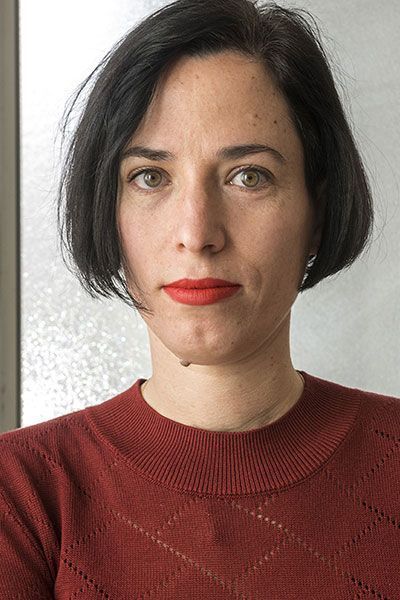
Katherine Milligan

Director, Collective Change Lab

Katherine Milligan is a Director at the Collective Change Lab, a think tank that provides practical inspiration, insight, and guidance for attaining transformational collective change. Named a “Top 100 Women in Social Entrepreneurship” by the Euclid Network, Katherine is affiliated with many innovation and entrepreneurship networks, including as a founding member of the Geneva Innovation Movement, an elea Fellow at IMD, an Accelerate2030 Advisory Council Member, an Unreasonable Mentor, a board member of Water for People, and a member of the Learning Partner Group of The Wellbeing Project. She teaches courses on social innovation and entrepreneurship at the Graduate Institute of International and Development Studies and Fordham University and is the author of 20 publications, articles, and blogs published by International Institute of Economics, Stanford Social Innovation Review, MIT journal Innovations, Forum Agenda, and the Harvard Business School. Previously, she was the Executive Director of the Schwab Foundation for Social Entrepreneurship, the sister organization of the World Economic Forum, which supports the largest community of late-stage social entrepreneurs in the world.

Click here to find out more about Collective Change Lab.

Read on for an exclusive Q&A with Katherine ahead of the Summit:

What does wellbeing mean to you?

To quote Reverend angel Kyodo williams, “There is this place of vulnerability from which truly transformative action must come from…For us to transform as a society, we have to allow ourselves to be transformed as individuals.” To me, wellbeing is that individual transformation that makes societal transformation possible.

Why are you looking forward to being part of The Wellbeing Summit?

I am most looking forward to deepening relationships with other leaders and fellow travellers who are working for a more just and sustainable world.

How does your work connect to wellbeing?

At the Collective Change Lab, our mission is to shift the discourse about how systems change happens based on what we believe, grounded in a fundamental insight that systems do not transform until the people in them do. Transforming systems towards justice and equity means supporting people in the system to change in fundamentally consciousness-altering ways. Inner change, or supporting people to evolve towards a state of inner wellbeing, is an important part of that process.

How do the topics you will explore at the Summit bring you and your audience closer to wellbeing?

Many of the largest systemic issues we face have intergenerational trauma at their roots. But what does it mean to say that there is systemic level trauma? What words do you use and how do you describe it? These are the questions we are asking dozens of social change leaders working in multiple countries. Our goal is to articulate a common language along with a set of symptoms or manifestations of trauma at a systemic level. Hopefully, by weaving together their experiences and insights, we can help shed light on the connection between intergenerational trauma and systems change in a way that’s accessible to other social sector leaders. Because right now, trauma is just not part of the mainstream conversation about social change – and that needs to change.

Connect with Katherine Milligan on social media :

Dr. Eddie S. Glaude Jr

Educator, author and political commentator

Dr. Eddie S. Glaude Jr., is an educator, author, political commentator, and public intellectual who examines the complex dynamics of the human experience. His writings, including “Democracy in Black: How Race Still Enslaves the American Soul”, “In a Shade of Blue: Pragmatism and the Politics of Black America”, and his most recent, the New York Times bestseller, “Begin Again: James Baldwin’s America and Its Urgent Lessons for our Own”, takes an exhaustive look at Black communities and the democratic challenges we face. He is also a former president of the American Academy of Religion, with a number of best-selling books published on religion and philosophy. He is the James S. McDonnell Distinguished University Professor and Chair of the Department of African American Studies, on the Morehouse College Board of Trustees, an MSNBC contributor and a columnist for TIME Magazine. Combining a scholar’s knowledge of history, a political commentator’s take on the latest events, and an activist’s passion for social justice, Glaude challenges all of us to examine our collective conscience.

Connect with Dr. Eddie S. Glaude Jr on social media :

June Crespo

Artist

June Crespo (Pamplona, 1982) obtained her BFA from the Universidad del País Vasco (Bilbao) in 2005 and completed a two years residency at De Ateliers (Amsterdam) in 2017. Her solo shows include Am I an Object (2021) PA///KT (Amsterdam); Helmets (2020) Artium, Basque Museum-Center of Contemporary Art, Vitoria-Gasteiz; Voy, sí (2020) Heinrich Ehrhardt gallery, Madrid;No Osso (2019) at Certain Lack of Coherence artist-run space Porto; Ser Dos (2017) and Cosa y tú (2015) at CarrerasMugica gallery in Bilbao; Chance Album No1 (etHALL, Barcelona, 2016); Kanala (MARCO, Vigo, 2016.) Her work has also been shown in group or duo shows such as: Fata Morgana (2022) Jeu de Paume (Paris); The Milk of Dreams, Venice Biennale 2022; Parentescos (2019) Nordenhake gallery in Mexico City; internal view (2018) at galeria Stereo, Warsaw; foreign bodies (2018) at P420 gallery in Bologna.

Click here to find out more about June Crespo.

Connect with June Crespo on social media :

Himali Singh Soin

Writer and Artist

Himali is a writer and artist based between London and Delhi. She uses metaphors from outer space and the natural environment to construct imaginary cosmologies of interferences, entanglements, deep voids, debris, delays, alienation, distance and intimacy. In doing this, she thinks through ecological loss, and the loss of home, seeking shelter somewhere in the radicality of love. Her speculations are performed in audio-visual, immersive environments.

Himali’s poetic methodology explores the myriad technologies of knowledge, from scientific to intuitional, indigenous and alchemical processes. Outer space is often used as a place from which to navigate alien distances and earthly intimacy, rewiring ideas of nativism, nationality, nihilism and cultural flight. Her inspirations include the ancient Stoics and contemporary literature, travel diaries and ancient diagrams. By manipulating semiotic flows, she creates conditions for the observation of microstructures of social and geopoetic time. In the face of extinction, her work insists on resurgence.

Click here to find out more about her previous works and exhibitions.

Read on for an exclusive Q&A with Himali ahead of the Summit:

What does wellbeing mean to you?

We feel wellbeing, I think, when we are able to listen to and attend to our many senses and the pleasures of the natural world and follow their guidance, softly. Wellbeing is a sense of justice, aided by an openness to magic.

Why are you looking forward to being part of The Wellbeing Summit?

It feels like making kin.

How does your work connect to wellbeing?

Ancestors of the blue moon draws on research into my namesake, the Himalayas, and its animistic rituals and remedies, mystical geometries, old-new materialisms and spirit realisms. These flash fictions are from the perspective of remote or forgotten deities. Deities protected by rites of secrecy or left out of archives. Deities invisible and formless. Deities incarnated as ruined objects, dangerous aspects or shadowy energies. They flow through our contemporary timescape, recounting the world they witness. These 13 dispatches signify the Tibetan Buddhist conception of the layers of the astral world and the years it takes to transform linear time into mythical time.

How does your work for the summit bring you and your audience closer to wellbeing?

It is my hope that the words of the goddesses protect everyone, that they give life to lesser heard voices, and brings us closer to the spirits of the earth. That we might consider the catastrophe of climate change and imagine new rituals for healing.

Connect with Himali Singh Soin on social media :

Daan Roosegaarde

Artist & innovator

Dutch artist and innovator Daan Roosegaarde (1979) is a creative thinker and maker of social designs which explore the relation between people, technology and space. Roosegaarde has been driven by nature’s gifts such as light-emitting fireflies and jellyfishes since an early age. His fascination for nature and technology is reflected in his iconic designs such as Smart Highway (roads which charge from sunlight and glow at night), Waterlicht (a virtual flood) and Urban Sun (cleans public spaces of coronavirus to bring wellbeing).

He founded Studio Roosegaarde in 2007, where he works with his team of designers and engineers towards a better future. Together they develop ‘Landscapes of the Future’ and build smart sustainable prototypes for the cities of tomorrow. Roosegaarde is a Young Global Leader at the World Economic Forum, named Artist of the Year 2016 in The Netherlands, and visiting professor at Tongji University Shanghai, OCAD University Toronto and Monterrey University in Mexico.

Learn more at https://www.studioroosegaarde.net/stories

Dr. Julia Kim

Program Director, Gross National Happiness Centre Bhutan

Dr. Julia Kim is the Program Director of the Gross National Happiness Centre Bhutan. She joined the GNH Centre after serving as a member of the International Expert Working Group for a New Development Paradigm, convened by the Royal Government of Bhutan. Prior to living in Bhutan, Julia worked as a physician and HIV researcher in Africa and Asia, before serving with the United Nations (UNDP and UNICEF) in New York. She brings a background in leadership development, research, and policy in the fields of wellbeing economics, global health, and sustainable development, and is an Executive Committee member of the Club of Rome, and an associate of the Presencing Institute – a global network that views awareness-based systems change as a core capacity for 21st-century innovation and leadership

Briggs Bomba

Programs Director, TrustAfrica

Briggs Bomba serves as the Programs Director for TrustAfrica, a pan-African foundation that works across Africa to promote democratic governance and equitable development.

As part of the senior management team for TrustAfrica, Briggs provides strategic leadership to the programs team and oversees a diverse portfolio of programs and initiatives spanning several African countries that deal with a wide array of themes encompassing – Natural Resource Governance and Economic Transformation; Taxation and Illicit Financial Flows; Climate Justice and Food Sovereignty; Citizenship, Rights and Civic Engagement; Gender and Women’s Rights; Youth, Education and the Future of Work; as well as African Philanthropy.

In this role, Briggs oversees the implementation of TrustAfrica’s strategies that include Grantmaking; Convenings; Knowledge generation and management; Capacity building; as well as Advocacy engagement with policymakers at national, RECs and AU levels.

Previously, Briggs served as Project Director of TrustAfrica’s Initiative to Curb Illicit Financial Flows from Africa; Director for Zimbabwe Alliance – a donor collaborative founded by TrustAfrica, Wallace Global Fund and Schooner Foundation to strengthen civil society in Zimbabwe; and Director of Campaigns for a Washington, D.C based Africa policy advocacy organization.

Briggs holds a Master’s of Science Degree in Applied and Social Economics from Wright State University (Ohio, USA).

His analysis and commentary has appeared on CNN, BBC, WorldFocus, AllAfrica, Alliance Magazine, Foreign Policy in Focus, Pambazuka News, NewsHour with Jim Lehrer, Al-Jazeera as well as Rev. Jesse Jackson’s Keeping Hope Alive show among other platforms.

Briggs is married to Dr. Mutheu Bomba a lawyer and African arts, culture and heritage enthusiast and they have three sons – Tafara, Cheukai and Maita.

Content Curation Advisory Board Member

Sacred Economy Specialist

Connect with White Men for Racial Justice on social media:
Connect with Imperative 21 on social media:
Connect with B Lab on social media:

Connect with B Lab on social media:

Connect with Imperative 21 on social media:

Connect with White Men for Racial Justice on social media:

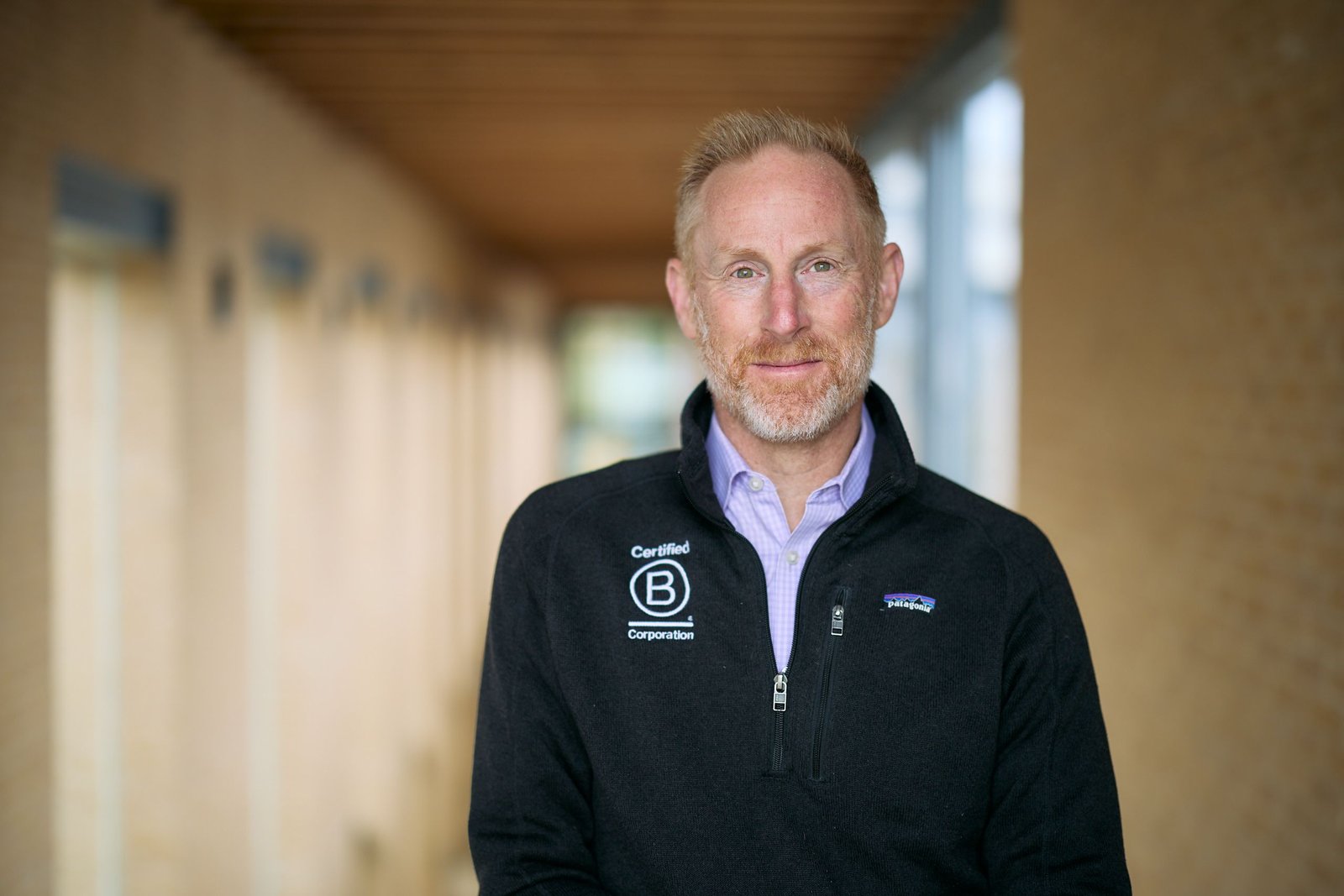
Jay Coen Gilbert
Co-founder, B Lab and the B Corp movement; Executive Chair, Imperative 21; Co-founder, White Men for Racial Justice

Jay Coen Gilbert is Executive Chair of Imperative 21, a global network building narrative power for a just economy. Imperative 21 catalyzes breakthrough narratives that open cultural space for aligned yet hesitant leaders to reimagine and redesign an economic system that cares more about people than profit. The imperatives of that system are to: design for interdependence, invest for justice, and account for all stakeholders. Imperative 21 builds on Jay’s experience as cofounder of B Lab, the nonprofit behind the global B Corporation movement with more than 9,000 companies across 80 countries. Along with his B Lab cofounders, Jay is the recipient of the UMKC Entrepreneur of the Year Award, as well as the Skoll Award for Social Entrepreneurship and the McNulty Prize at the Aspen Institute, where he is a Henry Crown Fellow.

Since 2016, Jay has been called into antiracism work, prioritizing his own learning and unlearning while co-convening multiracial and white caucus spaces, including White Men for Racial Justice (WMRJ), a BIPOC-accountable peer-led community of practice for White men to develop the literacy, skills, and commitment to dismantle the culture and systems of human hierarchy in ourselves, our organizations, our communities, and our country.

Prior to co-founding B Lab, Jay co-founded AND1, a $250M global basketball footwear, apparel, and entertainment company, and subject of documentaries on Netflix and ESPN. Jay also worked for McKinsey & Co, as well as organizations in the public and nonprofit sectors. Jay grew up in New York City and while he graduated from Stanford University with a degree in East Asian Studies, his most rewarding educational experience was co-teaching a class for a dozen years about the role of business in society at Westtown School, a 200-year-old Quaker institution. Between AND1 and B Lab, Jay enjoyed a sabbatical in Australia, New Zealand, and Monteverde, Costa Rica with his yogini wife Randi and two children, Dex and Ria, now 26 and 24. Jay and Randi live in Berwyn, PA.

IN JAY’S WORDS

How do you think individual, collective, and planetary wellbeing are connected?
We can’t change the world without changing ourselves.
What do you hope the outcomes are from the global Hearth Summit?
Deeper roots. Stronger branches

Voices of Wellbeing | Dr. Barry Kerzin Voices of Wellbeing | Dr. Barry Kerzin

“Handling grief with kindness, forgiveness, love and compassion, makes life easier”

Dr. Barry Kerzin, physician, buddhist monk and speaker at The Wellbeing Summit for Social Change, shares tools for us all to lead happier lives and to be more thorough in our healing of grief.

Part of his work centres around “emotional hygiene” without suppression, giving people practical methods to transform anger into tolerance and patience, and to recognise jealousy and transform it into admiration and appreciation.

Listen to Dr. Barry’s full story to learn about his belief that the key for social changemakers to lead healthier lives and to have more impact in their work is to “move beyond empathy to compassion.”

The Wellbeing Project’s Statement on Racism & Police Violence | June 2022 The Wellbeing Project’s Statement on Racism & Police Violence | June 2022

Dear Wellbeing Summit for Social Change community,

We hope you had a great time at the summit. We will continue to share stories, memories and recaps. Thank you for bringing your love and energy as we created community and meaningful conversation.

We have much work to do.

Early this morning, there was an incident between a member of the Wellbeing Project community and the local police. We condemn all forms of police violence and racism. Over the last few days we have had multiple speakers address the racism that pollutes our wellbeing. We believe it is paramount to support and advocate for the wellbeing of change makers. It is why we exist.

We continue to offer support to our community member, cultivate the wellbeing of those on the frontlines working towards addressing these serious issues, and advocate for a world without racism.

Sincerely,

Aaron Pereira & Sandrine Woitrin, The Wellbeing Project Co-Leads, and The Wellbeing Project Co-Creators