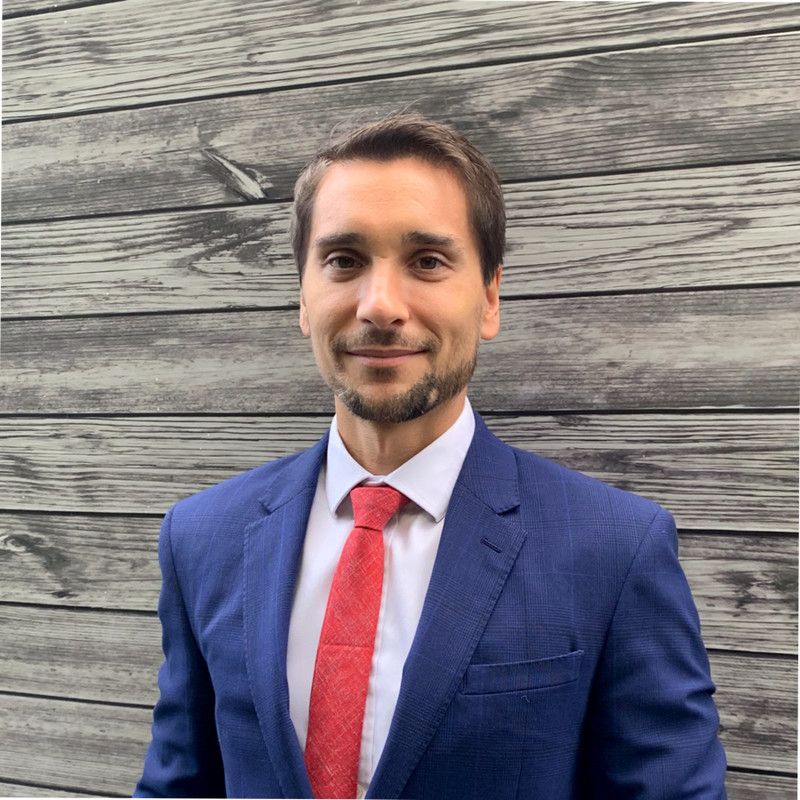

Vale Jokisch

Executive Director, People & Operations at B Lab (USA)

Vale is the Executive Director for People & Operations at B Lab, a nonprofit organization that is transforming the global economy to benefit all people, communities, and the planet. A leader in economic systems change, B Lab’s global network creates standards, policies, and tools for business, and certifies companies – known as B Corps – who are leading the way. To date the community includes over 3,500 B Corps in 70 countries and 150 industries, and over 100,000 companies that manage their impact using the B Impact Assessment and the SDG Action Manager. Vale joined B Lab in 2010 as Director of B Corp Community Engagement, supporting the community of Certified B Corps to build the movement and leverage their certification. As head of People & Operations, she leads the teams that enable B Lab’s work through a thriving, JEDI (justice, equity, diversity, & inclusion) forward culture, thoughtful resource allocation, and effective operations. Prior to B Lab, Vale was the Deputy Director of Empowerment Group, a nonprofit microenterprise development organization serving the Hispanic community in Philadelphia. She also has
experience in law and as a full-time touring musician. Vale holds a BA in Economics and Political Science from Swarthmore College and an MBA with a concentration in Social Entrepreneurship from Duke University’s Fuqua School of Business. She grew up between El Salvador and the U.S. and now lives outside Philadelphia with her husband and two daughters.

Connect with Vale Jokisch on social media:

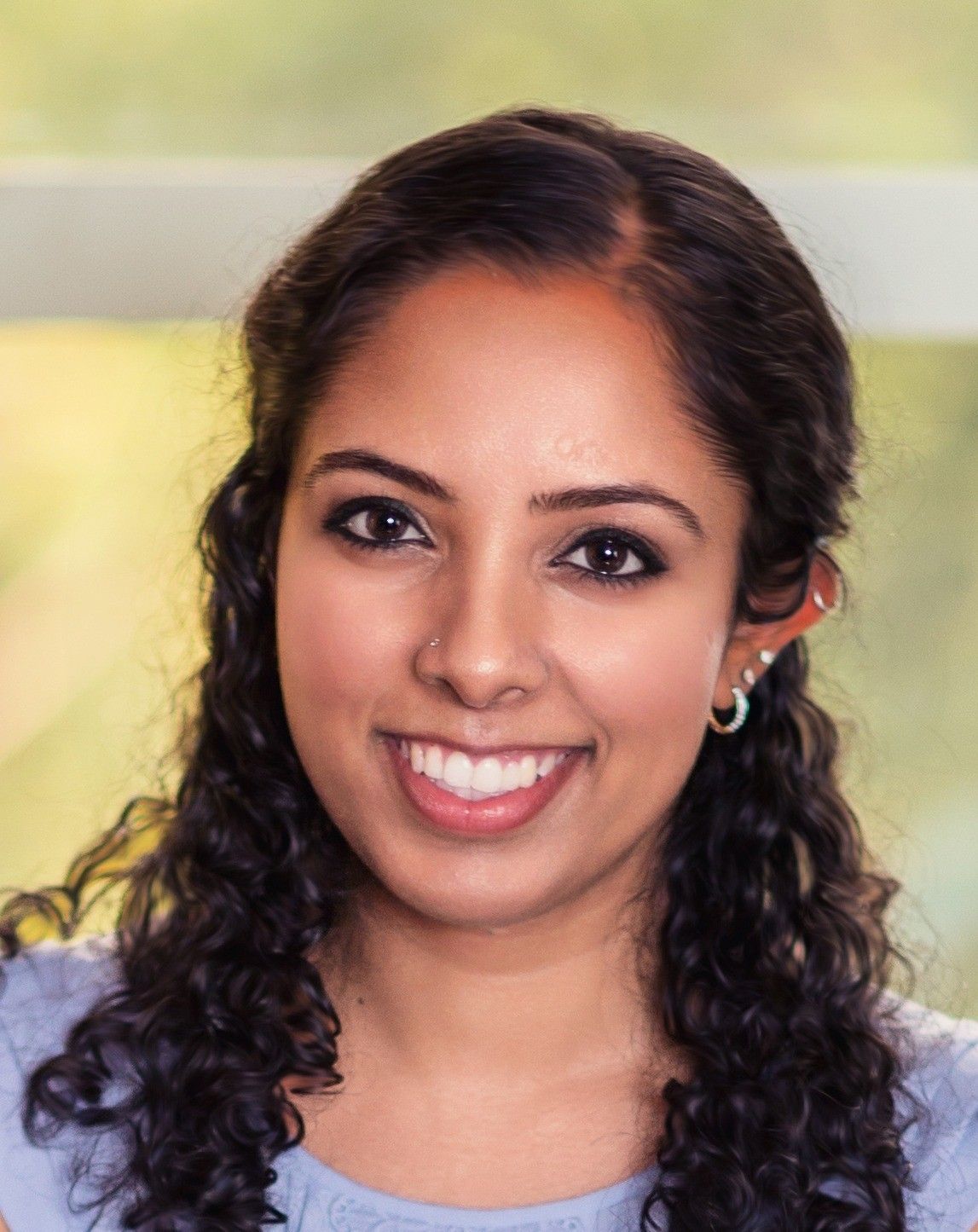
Sandrine Deveaux

Executive Vice President, Farfetch Store of the Future (United Kingdom)

Sandrine is at the helm of Farfetch’s retail innovation business unit ‘Store of the Future’ and is responsible for developing, executing, and implementing new, in-store technologies with strategic partners. Sandrine also sits on the Farfetch Executive Board. Under Sandrine’s leadership, the team is focused on developing a pioneering mix of technology that will shape the retail experience of the future. Her marketing, omni-channel, and e-commerce expertise was honed in her previous roles at Harvey Nichols as multi-channel director and director of marketing and e-commerce at Matchesfashion.com. Sandrine also previously held roles at AOL, Bloomberg Media, and Ernst & Young. Sandrine graduated from French business school ISC and following this completed a master’s degree in Technology and Telecoms at ESSEC.

Connect with Sandrine Deveaux on social media:

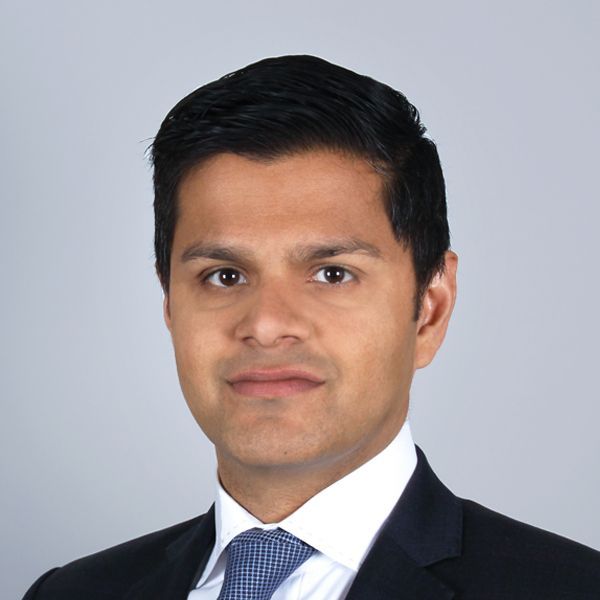
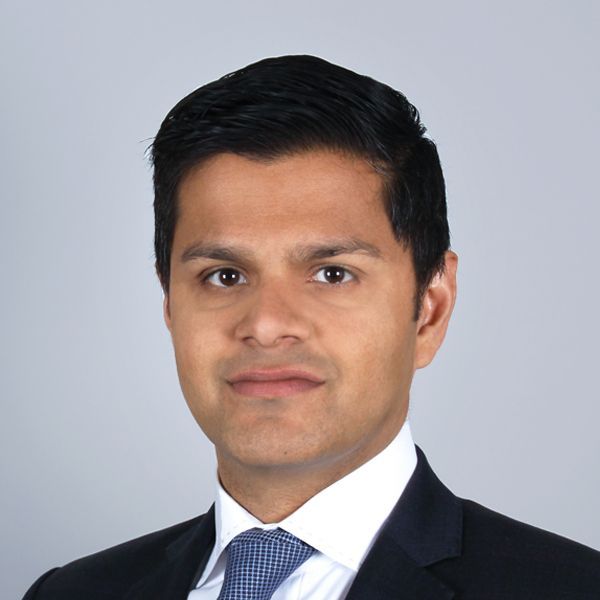
Rohit Chopra

Portfolio Manager/Analyst at Lazard Asset Management (USA)

Rohit Chopra is a Managing Director and Senior Portfolio Manager at Lazard. He co-manages the Emerging Markets Equity strategy, one of the firm’s largest investment portfolios. His responsibilities include both portfolio management and research in the telecommunications and consumer sectors. His work involves frequent travel to meet with business and political leaders in developing economies. He joined Lazard in 1999 with a bachelor’s degree in finance and information systems from New York University. He also studied at the London School of Economics. He passionately supports two charitable organizations – Empower and Pratham – which address pressing social problems in developing economies.

Connect with Rohit Chopra on social media:

Jasmin Cooke

Global Director of Operation, Dalberg Global Development Advisors (USA)

Director of Operations with experience working in the management consulting industry and international development. Skilled in Operational Strategy, Talent Development, Organizational Effectiveness, Operations Management, Management, Data Analysis, Monitoring & Evaluation, and Strategic Planning. Operations professional with a Masters focused in International Public Health/International Health from The London School of Economics and Political Science (LSE) and an undergraduate degree from Stanford University.

Connect with Jasmin Cooke on social media:

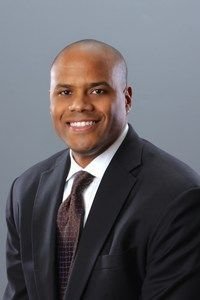
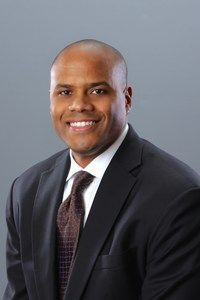
Anthony Williams

EVP, Chief Human Resources Officer at Akamai Technologies (USA)

Anthony Williams is Executive Vice President and Chief Human Resources Officer at Akamai. Mr. Williams leads global HR strategy including workplace management, employee development, talent acquisition, inclusion and diversity and compensation and benefits across Akamai’s more than 40 offices around the world. Mr. Williams assumed the role effective January 1, 2020 after five years with Akamai. He began his Akamai career with the task of developing a world-class global recruiting function and was The company’s first diversity and inclusion leader. He led the human resources function for Akamai’s growing populations outside of the U.S., reflecting the company’s expanded footprint. Mr. Williams played an essential role in the Akamai Foundation’s transition from private funding to an official corporate philanthropic entity. He serves as its president and hired its first executive
director. Further, Mr. Williams launched the company’s employee resource groups (“ERG”), voluntary associations that represent the needs of Akamai’s global employee population.

He also launched the Akamai Technical Academy, a training program designed for people who have an interest and aptitude for technology but may not come from a traditional technical background. The unique program empowers diverse talent with technical work-ready skills while offering opportunities for prepared graduates to become full-time employees of Akamai. Prior to Akamai, Mr. Williams held a wide range of global human resource positions at First Data Corporation, Newell Rubbermaid and Time Warner – Turner Broadcasting System. He holds a Bachelor of Science in Business Management from Norfolk State University and a Master of Business Administration from University of Georgia, Terry College of Business.

Connect with Anthony Williams on social media:
ABOUT THE CORPORATE & ACADEMIA GROUP (CAG)

THE OBJECTIVES THE OBJECTIVES

As a result of the global pandemic, mental health and wellbeing have become center stage. The Corporate and Academia Group (CAG) was created to bring together corporate and academic leaders to contribute to the field of social change by sharing their knowledge of wellbeing and broader corporate practices. This novel initiative offers a space for reflection and discussion where members have the opportunity to deepen their own understanding of organisational wellbeing in dialogue with each other.

To create a platform of discussion to exchange ideas and learn from the wellbeing related work of each institution by:

❏ Sharing best practices and lessons learnt and create peer support among the members
❏ Gaining a better understanding of current trends such as the impact of the pandemic on wellbeing
❏ Learning what empowers organizations to transform their organizations/how they have shifted their corporate culture to incorporate wellbeing

To offer a different lens to help support more broadly wellbeing in the field of social change by:

❏ Sharing knowledge, resources and tools which can be applied to the social change context
❏ Developing new perspectives and thinking on the issue of wellbeing by reflecting on it more broadly

To collaborate on research projects by:
❏ Learning from the research and evaluation The Wellbeing Project has conducted on inner development
❏ Helping guide the organisational wellbeing research the Wellbeing Project is currently conducting

CORPORATE & ACADEMIA GROUP MEMBERS CORPORATE & ACADEMIA GROUP MEMBERS

CAG brings together an initial group of 12 global conscious leaders. The list of members will grow over time as CAG evolves. The Wellbeing Project has selected individuals who have shown a commitment in promoting wellbeing within their organization and broader community. In addition, the individuals are in senior positions within their organisations and/or have the ability to share their research, knowledge and lessons learnt. Lastly, there is a broad diversity of organizational structures, industries and geographies represented.

NETWORK CO-LEADERS NETWORK CO-LEADERS

NETWORK MEMBERS NETWORK MEMBERS

Institute for Collective Wellbeing

Location: Madison, Wisconsin,
United States of America

Can you share the intention behind creating the Institute for Collective Wellbeing (ICW) and what communities the Institute serve?

The intention behind ICW is to reimagine the purpose of organizations, systems, and society in service of collective wellbeing. It can be hard to transform a system from the inside due to bureaucracy, a sense of inevitability or stuck mindsets, and strongly embedded power differentials. We dreamt of something bigger – something more expansive and more aligned with a sense of possibility. So we took a leap of faith to co-create ICW free from stories about what we need to do, or who we need to be, in order to find purpose and meaning in organizational life.

We’re on a journey to be a microcosm of the world we aspire to see. It is very hard work! Increasingly, we understand that a society that honors collective wellbeing is also one that has reverence for the unknown. Our research and programming engage stakeholders across nonprofit, government, private, academic, and community sectors, and we are pleased with how often participants identify common ground in our often deeply siloed world.

The common thread among communities we serve is a shared commitment to authentic, inclusive, and generative relationships that are at the heart of systems transformation.

The mental models of what it means to be a “successful” organization don’t always align neatly with our commitment to an emergent strategy and a deeply relational ethos, but we’re doing it anyway.

What are some of the Institute’s focus themes?

There are so many! Here’s one that has been showing up a lot recently: As part of a study we’re conducting with our colleagues at <a href=”https://santamonicawellbeing.org/” target=”_blank” rel=”noopener”>Civic Wellbeing Partners</a>, we’ve interviewed leaders across silos and sectors globally to learn how stakeholders create conditions for collective wellbeing to emerge within their organizations and the communities they serve.

We hypothesize that one of the drivers at play is a lack of attention to mental models. Mental models are at the root of our systems and include our beliefs, values, and even consciousness. Time and again, we hear about programs, policies, and structures they have built to address racial inequity, the climate crisis, individual and collective trauma, etc. Yet there is repeatedly a narrative of burnout and/or a sense of bumping up against the limits of what a system will allow when it comes to real transformation.

For example, we can say we value collective wellbeing at our organization, but if employees feel like they need to “turn off” parts of who they are at work, is that collective wellbeing? What if one “big boss” ultimately speaks for the collective? What if we can’t share a viewpoint without data to back it?

These kinds of questions are critical when we work in service of collective wellbeing because even the best of intentions can prove futile if grown in poor soil, so to speak. It’s at the roots where mental models change the quality of the conditions by which transformation takes hold.

The Institute talks about the goal of co-creating Wellbeing for all.
What does that look like?

First, co-creation speaks to our desire for a deeply relational and collective approach. We push back on the idea that we need to assert our expertise, or lead from a place of power or hierarchy, in order to realize change. On the contrary, we feel a sense of harmony within ourselves, each other, and the universe when we honor the wisdom of one another.

When we attempt short-sided efforts to address wellbeing, we quickly see the error of our ways. For example, when organizations support remote work but insist on tracking people’s time use, they lack trust. When they promote racial/social/gender equity for the communities they serve but do not do the same for their internal teams, they lack insight. When they espouse a commitment to the environment but frequently fly staff across the globe without regard to planetary impacts, they lack consistency. 

Collective wellbeing for all speaks to the idea of interconnection. We honor the fact that our wellbeing is wrapped up in the wellbeing of others and the earth.

Collective wellbeing for all is not a panacea nor does it address all social ills, rather, it moves us in the direction of awareness of how our actions impact ourselves, others, and the planet, and it is a vision of what’s possible.

[mk_padding_divider size=”10″]

What are three things people interested in collective wellbeing can do to learn or put it into practice in their organization?

1. Engage change at various levels simultaneously

The interconnectedness of transformation at the personal, organizational, community, and planetary dimensions provides a holistic approach to collective wellbeing. Each dimension supports and relies on the others. Collective wellbeing is difficult when we prioritize one over another. That’s not to say that organizations need to do it all. Rather, make decisions with all dimensions in mind.

2. Pay attention to mental models

As discussed, surfacing “hidden” mental models helps us see the roots of suffering. For example, when working on equity issues, we may not see “hierarchy” as a mental model that contributes to inequity. We may have diversity among leadership but still support a system where a small group of individuals has power over others. An alternative is an “ecosystem” approach where power rests in relationship to one another and the system as a whole. Other shifts include: short to long-term thinking, fixed/static to emergent, tasks to relationships of care, rational to embodied, etc. What mental models are operating in your life that might benefit from a shift? 

3. Practice collective wellbeing daily

Start every meeting with a wellbeing check-in to help each other feel seen and to decompress before starting the work. Sometimes our check-ins become the meeting because we believe so strongly that all parts of our lives are interconnected. Other practices include: self-managing structure; engaging one’s purpose and purpose of the organization; opening to emergent opportunities (not wedded to fixed outcomes); and adapting to a slower pace – questioning urgency.

What does the Institute imagine the future of wellbeing to look like?

Adrienne Maree Brown said, “We’re in a time of new suns. We have no idea what we could be, but everything that we have been is falling apart. So it’s time to change. And we can be mindful about that. That’s exciting.” For all that feels broken, uncertain, painful, and cold in the world, there is an opening underway, and it is powerful. It often doesn’t make headlines, and it’s far more intuitive than practical, but it is happening! 

The future of collective wellbeing lives in the space between the systems that are dying and those that are waiting to be born. It is supple, feminine, honest, and imaginative. And if honored, it will reveal to us what our rational minds cannot; a change that will favor the collective wisdom and wellbeing of all people and the earth. As Arundhati Roy said, “Another world is not only possible, she is on her way. On a quiet day, I can hear her breathing.”

This may seem vague, and that’s okay! Part of embracing collective wellbeing is valuing what we feel even if we can’t say why at this moment. For readers interested in learning more about how we see the future of collective wellbeing unfolding, we welcome you to register for our 1-day virtual summit on September 15, 2022.

If ICW were an animal, what would it be and why?

So many animals are brilliant in their embodiment of transformation – the snake, the butterfly, the raven, etc. It’s hard to pick just one! There is the Lion featured prominently in the story of the Hindu Goddess Durga, a symbol of destruction for good, which seems apt.

Perhaps we’ll go with one that comes up in a phrase we like, “the elephant in the room;” alluding to something uncomfortable and often avoided.

To be clear, we don’t think of ICW as an organization that is uncomfortable or that should be avoided. Rather, what we mean is that we don’t shy away from complexity. We gravitate towards the deeply embedded narratives and mental models of what collective wellbeing means and what it takes to bring it to life. We move toward what is unknown, guided by a sense of what is possible rather than a certainty of what’s to come. Because that’s the thing about the elephant in the room. Whether or not you can put your finger on what it is, you know it’s there. How you respond often depends on what you believe is possible and if you dare to act on what you sense is true.

If you would like to learn more about Institute for Collective Wellbeing or are interested in supporting ICW’s work, please message the team at info@tifcw.org.