Peace of Mind: The True Essence of Self-CarePeace of Mind: The True Essence of Self-Care

Stories from the Hearth

This blog was originally published by Talang Dalisay, the Philippines’ first youth-led education- and storytelling-focused mental health non-profit and a co-creator of Hearth Summit Philippines.

When was the last time you felt stressed out?

Perhaps it was when you missed your alarm for your morning lectures, felt disoriented, and ran late. It could’ve been when you were up all night cramming your written paper due at 11:59 pm, which, by the way, was given a week ahead of time. This feeling of panic has overwhelmed you;, your palms sweating, and your whole body trembling, yet you can’t help but feel a sense of familiarity from what you are experiencing. In fact, this pang of stress is something you’re already so familiar with. You don’t feel a tinge of shock at all.

When did it come to this point?

We have all grown so accustomed to these exhausting, tiresome, sentiments to the point where we can’t even tell the difference between a healthy and toxic mindset anymore. According to a report done in 2021 by researchers from VAAY, a German CBD company, Manila ranked as the third most stressful city in the world. The Filipino netizens who were interviewed mentioned how, due to the pandemic, it has become extremely easy for them to lose sight of the ever-present elements that surround and impact them on a daily basis (Chua, 2021). This goes to show how blindsided everyone is when it comes to their own thoughts and feelings, much like a mindless zombie.

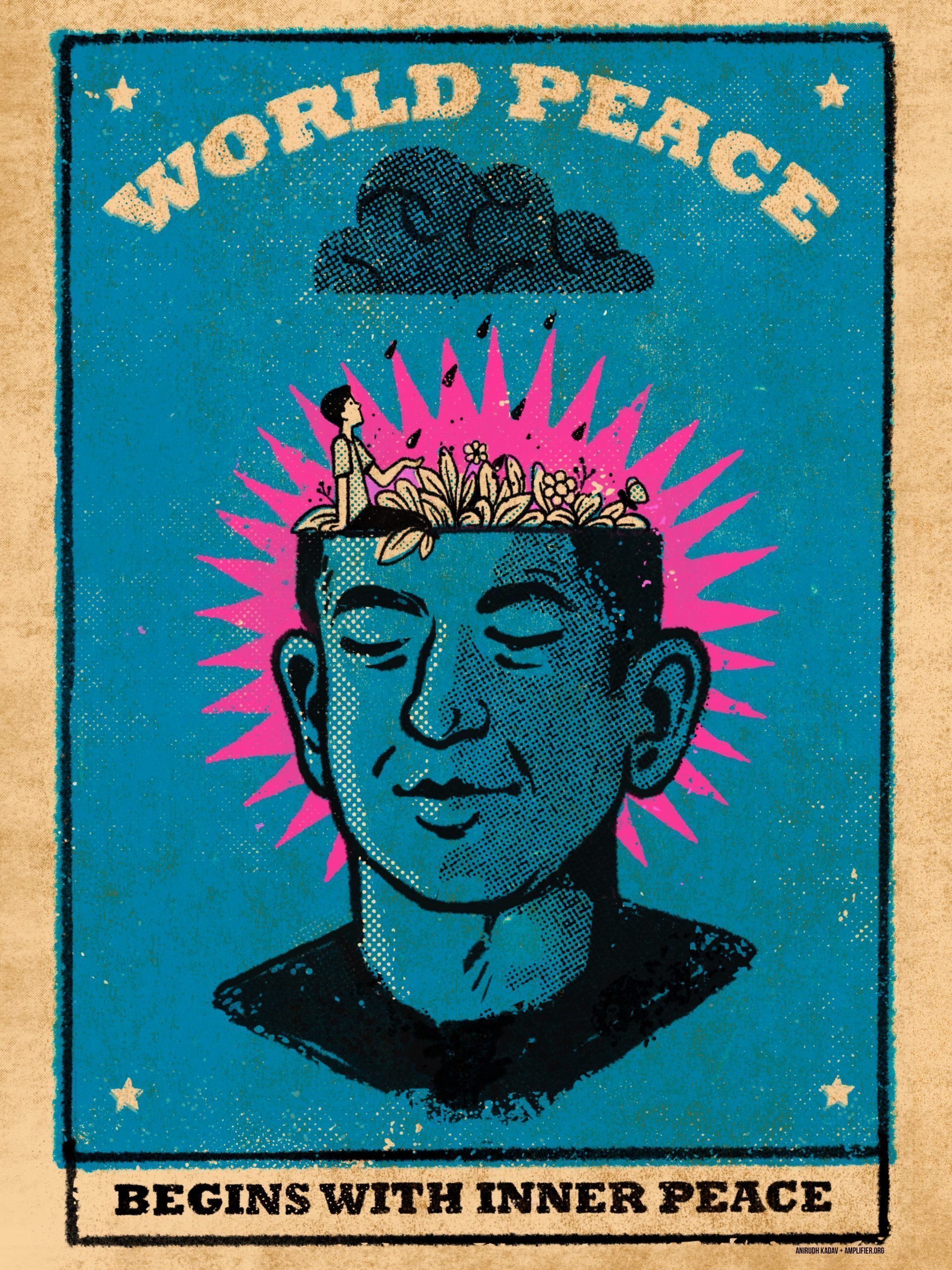
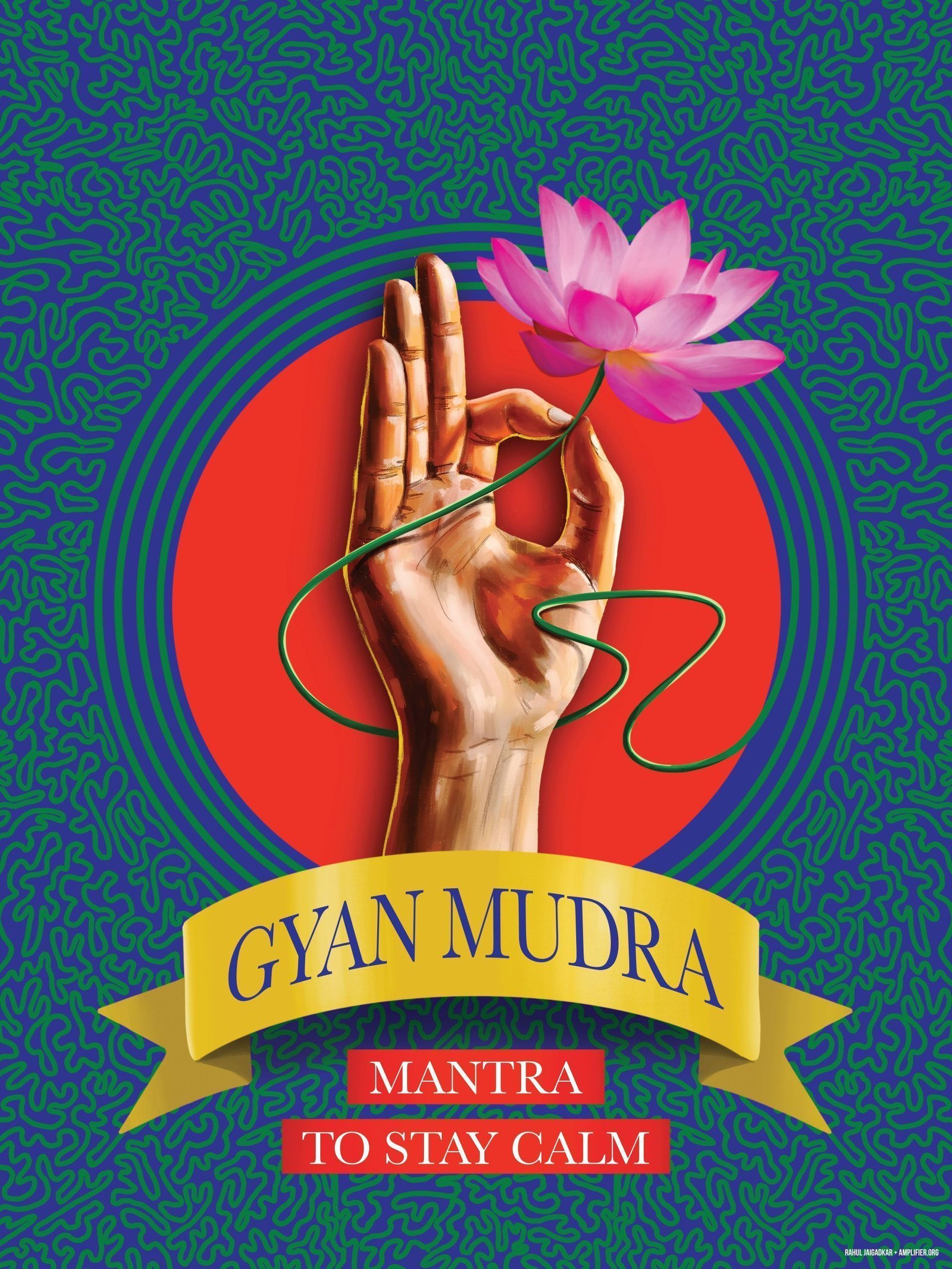
So, indulge in my words for a minute. Allow yourself to sit back in any comfortable position and close your eyes. Take a deep breath and silently count to four as you inhale. Hold your breath for seven seconds, and then breathe out completely as you count to eight. Repeat these steps three to five times, and open your eyes. You may have not realised this, but the short breathing exercise you just practised is an easy but effective form of self-care! As you can see, it can be that simple, but that’s what the $450 billion self-care market doesn’t want you to realise.

To them, your vulnerability equals profit. Without this perception of having to rely on thousands of pesos worth of products and treatments, the self-care industry is worth nothing. This is why influence is the most important and crucial thing to them.

Social media has been feeding us this ideology that self-care is spending a day getting mani-pedis, having a huge makeover, going on a shopping spree, or simply anything related to scented candles. Don’t get me wrong, all of the self-help activities I mentioned are great but it’s important to note that this is not all that self-care is. If we continue to chase these “perfect” ideas of self-care but do not actually use them as a way to cope with our daily stressors to support ourselves, then what is the point?

There is no set list of instructions we need to follow in order to practice self-care, as self-care is not one size fits all; what works for someone might not work for you, and what works for you might not work for them, and that’s completely okay. Self-care isn’t simply doing what works for everyone else; it is practising restorative activities to take care of oneself for the betterment of one’s own physical, mental, and emotional welfare. You define what self-care is to you.

From playing with your pets, taking a hot shower, reading a book, and sleeping, to going for walks outside, taking free pottery classes, and working out; all of these activities are just a few of the thousands of other things you can classify as self-care. You don’t necessarily need to follow whatever self-care routines you see on Youtube or Instagram step-by-step. This is just a reminder that we are all separate individuals who have different ways of coping, so setting yourself up to strictly follow other people’s self-care routines is wrong. Self-care is not supposed to be a goal, but a mindset a person acts on for themselves.

“It is not selfish to love yourself, take care of yourself, and to make your happiness a priority. It’s necessary.” Self-care is not self-indulgence, but a form of self-preservation. It is not pushing others aside for oneself either. It is simply taking a step back and saying “me too”.

Sources:

Chua, P. (1970, January 1). Manila was just ranked the third most stressful city in the world. Esquiremag.ph. Retrieved December 18, 2021, from https://www.esquiremag.ph/culture/lifestyle/the-most-stressful-cities-index-2021-a00297-20210620

Cabico, G. K. (n.d.). Philippines among most stressed, emotional countries – Gallup report. Philstar.com. Retrieved December 18, 2021, from https://www.philstar.com/headlines/2019/04/26/1912816/philippines-among-most-stressed-emotional-countries-gallup-report/amp/

About Talang Dalisay

Talang Dalisay is a non-profit organization founded in Manila, Philippines centering on mental health for our fellow Filipinos.  We are a young community of storytellers and change-makers, opening conversations on the current mental health stigmas in the country as well as aiding in the integration of persons with disabilities (PWDs) as members of our global community.

Our mission upholds the values of empathy, compassion, and empowerment. We aim to focus on action oriented projects that center on moving towards a society that validates the mental health and neurodivergence of Filipinos. We acknowledge that mental health is a systemic issue — it is an ever-changing and controversial topic especially as a BIPOC community. Thus, through our art and stories, we hope to create a higher consciousness and understanding of how to create inclusive spaces for all amidst these intersectionalities.

Our vision as an organization is to become a stepping stone for Filipinos to create spaces of inclusivity. Collectively, we hope to amplify the individual’s potential to shine purely; living in authenticity, truth, and purpose. Through our projects in elevating the mental health discourse, we hope to be one of many facets that encourage others to create more avenues for positive change, always embracing the ability in any disability.

EXPLORE THE REGIONAL SUMMITS FURTHEREXPLORE THE REGIONAL SUMMITS FURTHER

Dive Into Stories From Around the World

Discover the Wellbeing Movement in AsiaDiscover the Wellbeing Movement in Asia

Meet and hear stories from the changemakers championing the wellbeing movement in Asia.

How to Rest: Tips and Lessons From a WorkaholicHow to Rest: Tips and Lessons From a Workaholic

Stories from the Hearth

Reflections From:

Akasby Pante

Correspondent, Talang Dalisay
🌍 Parañaque, Philippines

This blog was originally published by Talang Dalisay, the Philippines’ first youth-led education- and storytelling-focused mental health non-profit and a co-creator of Hearth Summit Philippines.

School has always been stressful. It wouldn’t be school unless it made you want to pull all your hair out because of pure frustration. However, this year, we were faced with a new challenge: online school. 

This new system has garnered various reactions from all kinds of students, with different personalities and learning styles. Some absolutely loathe it, claiming that they have to learn everything by themselves. Others enjoyed the freedom that comes with it, being able to take more control over how they spend their time. Fortunately enough, I am  part of the latter group of people.

You can imagine just how excited I was at the beginning of the school year. I wanted to work out, journal, and read, all these things I thought I would be able to do, now that I had more time before classes. Even so, when school work started piling once again, these plans ultimately fell through. You know, just like every other year. And I thought I could just get on with it. Stick through the sleepless nights and the terrible feeling it left me with the day after. Not be able to work properly that same day because of how tired I was and watch my entire week spiral out of control.

But for some reason, I just couldn’t do it anymore. I couldn’t force myself to stay up until three in the morning when I knew how it would make me feel later that day. I couldn’t spend my entire weekend working instead of spending time with my family. I couldn’t deal with it.

For a while, I thought that I had become lazy. I was losing my focus and I had to get my life together. I soon realized that my body just couldn’t put up with that kind of torture anymore. It wouldn’t. So I had to come up with a plan to work around it, and preferably soon. Here’s what I came up with and maybe it can help you too.

Step 1: Rest

Drastically changing your workflow will not happen overnight. It takes time and mental energy to change a routine that is probably built upon years of habit. Therefore, if you can, try to take a break from the responsibilities that you can temporarily put off.

Obviously, you cannot let go of school or work, but there may be a few things you can hold off for the time being. Personally, I took a leave of absence from Talang Dalisay for an entire month. The amount of time you take off—as well as the activities you choose to take a break from—are ultimately up to you. For the most part, it will depend on the gravity of these responsibilities, how much time you think you can spare, and how much time you think you need in order to effectively “restart”.

However, the most important aspect of this step is that it will be able to achieve the following. First, it will give you time to rest and recharge. Second, it will allow you to focus on yourself and your improvement with reduced stress.

Step 2: Recalibrate

Now, I mentioned all these things about offloading some responsibilities and giving yourself time to focus on yourself. However, before you take action, there is one important step you need to do first: recalibrate. Change the way you think about your own personal productivity and work. Consider rest and fun as an integral part of your weekly agenda and treat it as if it is just as important as all your school requirements and extracurriculars. Because it is.

If you want to be able to produce quality outputs, the amount and kind of breaks you give yourself must be of the same standard. Doing this will prevent you from getting burnt out and keep motivated throughout the week.

Step 3: Reflect

After changing your mindset, it’s time to think about how exactly you are going to improve your work-life balance. What exactly are you going to change from your current routine and habits?

If you are not sure where to start, try searching online. There are so many videos, blogs, and books out there that can help you and give you a few suggestions. Try listening to their advice and try out their techniques. Reflect on what you think would best suit you considering your working methods, personality, and lifestyle.

It’s important to contemplate upon these things because it will help you realize what you could possibly change about your current working habits. For example, one rule I decided to set for myself is that I am not allowed to work during the weekends unless absolutely necessary (usually when there is just too much to do). This was something I decided to implement after I learned about Parkinson’s law which states that “Work expands so as to fill the time available for its completion”. Therefore, if I set a mindset that weekends “do not exist” then I will be able to finish all my tasks by Friday. Doing so has given me sufficient time to recharge as well as give me something to look forward to throughout the week.

Step 4: Realize

Once you’ve set a break period, changed the way you think about work, and figured out what changes you wish to make, it’s time to take action. Realize your plans. It definitely won’t be easy sometimes because as humans, we are creatures of habit. Consequently, it is so much easier to just fall back into our old routine. Nonetheless, you must remind yourself who you are doing this for. You. No one else but you. And you deserve nothing but the best.
As a notorious workaholic, I always thought that loving my work meant putting it above everything and everyone else. However, if there’s anything that the “reset” period has taught me is that my world must not only revolve around one single thing alone. As cliche as it sounds, there must always be a balance.

Before I end this article, I wish to leave you all with a quote. It is one that a close family member sent me during those difficult times which I also feel captures the essence of this piece quite perfectly: “A friendly reminder that “your best” doesn’t mean pushing yourself to your breaking point. “Your best” means the best you can do while being your best you. Get enough sleep, give yourself breaks, listen to your limits. “Your best” is better when you are happy and healthy.
About Talang Dalisay

Talang Dalisay is a non-profit organization founded in Manila, Philippines centering on mental health for our fellow Filipinos.  We are a young community of storytellers and change-makers, opening conversations on the current mental health stigmas in the country as well as aiding in the integration of persons with disabilities (PWDs) as members of our global community.

Our mission upholds the values of empathy, compassion, and empowerment. We aim to focus on action oriented projects that center on moving towards a society that validates the mental health and neurodivergence of Filipinos. We acknowledge that mental health is a systemic issue — it is an ever-changing and controversial topic especially as a BIPOC community. Thus, through our art and stories, we hope to create a higher consciousness and understanding of how to create inclusive spaces for all amidst these intersectionalities.

Our vision as an organization is to become a stepping stone for Filipinos to create spaces of inclusivity. Collectively, we hope to amplify the individual’s potential to shine purely; living in authenticity, truth, and purpose. Through our projects in elevating the mental health discourse, we hope to be one of many facets that encourage others to create more avenues for positive change, always embracing the ability in any disability.

EXPLORE THE REGIONAL SUMMITS FURTHEREXPLORE THE REGIONAL SUMMITS FURTHER

Dive Into Stories From Around the World

Discover the Wellbeing Movement in AsiaDiscover the Wellbeing Movement in Asia

Meet and hear stories from the changemakers championing the wellbeing movement in Asia.

Wellbeing Has Ripple Effects: Shammin SultanaWellbeing Has Ripple Effects: Shammin Sultana

Stories from the Hearth

Interview With:

Shammin Sultana

Gender and Development Specialist
🌍 Kathmandu, Nepal

In this interview, meet Shammin Sultana, a gender and development specialist from Nepal, as she explains how her wellbeing has ripple effects to positively impact the entire community, and why wellbeing needs to be an important part of conversations about development. Shammin attended the first Asian regional wellbeing summit, held in Dhaka, Bangladesh, in March 2024, and was excited about the growing conversation on wellbeing.

Watch the interview below.

EXPLORE THE REGIONAL SUMMITS FURTHEREXPLORE THE REGIONAL SUMMITS FURTHER

Dive Into Stories From Around the World

Discover the Wellbeing Movement in AsiaDiscover the Wellbeing Movement in Asia

Meet and hear stories from the changemakers championing the wellbeing movement in Asia.

Content Curation Advisory Board Member

Content Curation Specialist

Elena Crescia

Wellbeing Events Adviser, The Wellbeing Project

12+ years experience as speaker coach and content curator. Connector of Dots. Bridge Builder. Changemaker. Wellbeing Events Adviser at The Wellbeing Project | Program curator at The Wellbeing Summit for Social Change 2022 | Content curator and organizer of The Wellbeing Summit São Paulo 2023 | Content curator at Hearth Summit Omega & Harlem Wellness Center 2025. Curator & Speaker Coach TEDxSaoPaulo | TED Speaker | Country Director Clubes TED Ed Curation consultant at The Skoll World Forum 2023 | Content Curator SOCAP 2023. Master of International Affairs, Economic and Political Development – Columbia University School of International and Public Affairs | Master in Financial Evaluation of Development Projects – Université Sorbonne | Impact Investor Manager course by ANDE and JPMorgan with Santa Clara University. Founder of Ideas Talk. Editora de Ideias and Portfolia.

Connect with Elena on social media :

IN ELENA’S WORDSIN ELENA’S WORDS

How do you think individual, collective, and planetary wellbeing are connected?

Individual, collective and planetary wellbeing are interconnected. We all affect each other and we can only flourish when we are take care of all of us, the communities and the environment that we live in.

What do you hope the outcomes are from the global Hearth Summit?

I hope all participants of the global Hearth Summit feel inspired to prioritize their wellbeing and the wellbeing of the people they care about, and we all strengthen our connection to nature and the arts, we learn new ways to improve our wellbeing and we make new friends.

Manuel Bagorro

Creative Advisor at Carnegie Hall in New York City; Founder and Artistic Director of the Harare International Festival of the Arts (HIFA) in Zimbabwe; Artistic Director of Bay Chamber Concerts in Camden, Maine

Manuel Bagorro is a long-time Creative Advisor at Carnegie Hall, working on the design, planning and implementation of a range of programs. He is also Artistic Director of Bay Chamber Concerts and Music School in Rockport ME, Founder and Artistic Director of the Harare International Festival of the Arts (HIFA) in Zimbabwe and served as a program advisor for CultureSummit Abu Dhabi in 2017 and 2018. He curated the arts program for the first Wellbeing Summit in Bilbao, 2022 and leads the artistic team for the Global Hearth Summit in Ljubljana, 2025. For the last 12 years, his work with Bay Chamber Concerts and Music School has resulted in a new approach to the organization’s educational offerings and community engagement programs. Under his leadership, the Harare International Festival of the Arts (HIFA) became one of the most significant artistic and social impact projects in Southern Africa, weathering the social, political and economic turmoil in Zimbabwe for more than a decade.

He is also a pianist, having performed extensively and won prizes in the Newport International and Royal Overseas League Piano Competitions. He performed in the John Schlesinger film, Madame Sousatzka, and appeared as soloist with the BBC Welsh and Cape Town Symphony Orchestras. He composed the music for a series of documentaries entitled Africa Unmasked and played for Queen Elizabeth II and other dignitaries at a State Banquet in London in 1995.

Connect with Manuel on social media :

IN MANUEL’S WORDSIN MANUEL’S WORDS

How do you think individual, collective, and planetary wellbeing are connected?

Wellbeing begins with the individual – with the creative and innovative thinking of each of us as we journey through our lives. What I think our individual journeys make clear to us is that our own wellbeing relies not only on our personal practices and outlook, but on social groups, communities and a sense of belonging to a larger whole. The existence of this beautiful, human, wellbeing ecosystem is of course entirely dependent on planetary wellbeing – the planet provides the home for our journeys as humans, and our sense of individual and collective belonging. 

What do you hope the outcomes are from the global Hearth Summit?

I hope that the global Hearth Summit strengthens and emboldens our collective commitment to keeping our own wellbeing and the wellbeing of our planet in our minds and hearts long after the Summit ends. I hope for a collective realisation that the arts have a powerful role to play in nurturing individual, collective and planetary wellbeing.

Carrie Rebora Barratt

Director, LongHouse Reserve, and Founder, The Solace Project

Carrie Rebora Barratt is an energetic and collaborative curator and executive leader, who has deployed her growth and resilience mindset into organizational culture in top cultural institutions. At the Metropolitan Museum of Art, the New York Botanical Garden, LongHouse Reserve, and through her umbrella organization, The Solace Project, she leads through big transitions by championing collective intelligence of staff and board at the intersection of art, nature, and the human spirit, to welcome visitors to culture and build community.

At The Met, she rose from summer intern to Deputy Director, immersing herself in the vital importance of museum work in our world. As the leader of 27 departments and over 400 staff—curatorial, conservation and scientific research, libraries, education, publications, and digital—she worked with commitment to the common purpose of shaping the collection, putting on superb exhibitions, and enriching visitor experience. That work requires structured governance and decisive administration matched with collaboration, curiosity, and creativity. She delivered results through strategic planning, marketing savvy, institutional advancement, and facilities management.

In 2018, she took over the New York Botanical Garden as ninth CEO and President, the first woman to hold the position in its 127 year history. A 250 acre campus of art and nature with nearly 500 staff, NYBG faced a major leadership transition and weather challenges on the grounds. In just two years, she developed a long-range art exhibition plan with vital educational programs and new digital content, drafted an agenda for increasing diversity, equity, inclusion, and accessibility, improved facilities, heightened the garden’s role in the botanical and horticultural dimensions of climate change and human wellness, and expanded the urban gardening program in our region. She managed the challenges of the pandemic, and saw the Garden to reopening in summer 2020, staff intact, budget balanced, and visitors returning.

In 2020, during the pandemic, she founded The Solace Project as a vessel to write, talk, teach, and gather community in pursuit of basic wellness through art and nature. Her work in the space continues as a speaker, consultant to museums, gardens, and organizations sharing the value of resilience and wellbeing.
She joined LongHouse Reserve in autumn 2021, invited to lead the institution through transition and turnaround following the passing of founder Jack Lenor Larsen (1927-2020). Since then, she has stewarded the 16-acre integrated environment within a mission to inspire living with art in all forms, serving the community with vast open space, programs in art, nature, and wellness, providing a sanctuary for Long Island and beyond.

Connect with Carrie on social media :

IN CARRIE’S WORDSIN CARRIE’S WORDS

How do you think individual, collective, and planetary wellbeing are connected?

Through our breath and our collective growth as living beings. 

What do you hope the outcomes are from the global Hearth Summit?

Enhanced appreciation for art in nature as the tie that binds us, heals us, generates our curiosity, and creates those awe-filled moments that teach us to feel in our bodies.

WHAT CARRIE IS READING, LISTENING TO, AND WATCHING

Claire Wilcox, Patchwork: A Life Amongst Clothes (Bloomsbury, 2020)

James Elkins, Pictures and Tears: A History of People Who Have Cried in Front of Paintings (Routledge, 2001)

Brene Brown talks to David Eagleman Unlocking Us podcast about The Inside Story of the Every-Changing Brain

Katherine May, Wintering: The Power of Rest and Retreat in Difficult Times (Riverhead Books, 2020)

George Mumford, The Mindful Athlete: Secrets to Pure Performance (Parallax Press, 2016)

Ruth La Ferla, “The Power of Positive Thinking, Reborn,” The New York Times, January 21, 2021

Content Curation Advisory Board Member

Ecological Belonging Specialist

Aaron Pereira

Project Co-Lead, The Wellbeing Project

Connect with Aaron Pereira on social media :

Aaron recently came across an old and slightly dusty high school paper and was more than a bit surprised to see it explored the connection between inner lives and social change. It was lovely to (re)discover that his work in the Project touches on a life long interest alongside other wonderful things in life like travel, meeting people, reading, and hosting dinner parties or really gatherings of all kinds.

Aaron’s mom got him involved in social change work (some time before the high school paper) and it stuck. The key thread in much of his work is exploring the way we live together. Sometimes that’s taken the form of pop up experiments, boards, or running an organisation. A few other times he’s been a co-founder such as with CanadaHelps. CanadaHelps, one of Canada’s leading charities, engages over 3 million Canadians to raise over $400 million a year for social causes across Canada and around the world.

Taking time for a morning cup of tea helps his day start out gently and well. It started as a (gentle) daily ritual sometime during a 7 year walk-about which was all about taking time for and re-centering his inner life. Something the cup of tea helps with every day. He loves being based in Paris and continuing to spend a lot of time in India.

Our Wellbeing Is Tied to the Health of the Planet: Jane NjugunahOur Wellbeing Is Tied to the Health of the Planet: Jane Njugunah

Stories from the Hearth

Guest post by:

Jane Njugunah

Climate activist, Climate Mobility Community Action Network; youth member, United Nations Framework Convention on Climate Change
🌍 Nairobi, Kenya 

Jane Njugunah, a youth activist with Climate Mobility Community Action Network and member of the official youth constituency to the United Nations Framework Convention on Climate Change (UNFCC), attended her first Hearth Summit in Nairobi in July 2024. As the Summit weaved together the topics of intergenerational wellbeing, Ecological Belonging, and personal resilience, Jane was deeply impacted by the two-day gathering.

Read Jane’s reflections from the event and how the Summit has inspired further action in her organization to promote climate resilience and youth wellbeing.

Attending the Hearth Summit Nairobi was more than just an event — it became a catalyst for change in my personal, organizational, and community wellbeing. As a youth advocate passionate about climate diplomacy and international relations, I’ve always felt the weight of responsibility to contribute to sustainable solutions. However, the Summit provided me with a renewed sense of purpose and clarity, particularly in aligning my personal goals with the greater wellbeing of my community and my work with CMCAN (Climate Mobility Community Action Network).

On a personal level, Hearth Summit Nairobi expanded my understanding of how climate change deeply affects wellbeing — not just in terms of environmental health, but also mental and social resilience. It underscored the importance of self-care as an advocate and emphasized the need for sustainable personal practices as we work toward larger goals. I left the Summit with a stronger commitment to both my own wellbeing and that of my fellow youth advocates.

On a personal level, Hearth Summit Nairobi expanded my understanding of how climate change deeply affects wellbeing — not just in terms of environmental health, but also mental and social resilience.

For my organization, CMCAN, Hearth Summit Nairobi became a turning point. I brought back innovative ideas and strategies, particularly around youth-centered climate action, that we’ve since incorporated into our initiatives. We now focus not only on climate mobility but also on building community resilience and wellbeing, thanks to insights I gained from the Summit on holistic sustainability. The ripple effects are already being felt in my community: through workshops and dialogues inspired by the Summit, we are fostering a greater sense of collective responsibility for climate action. The conversations that started at Hearth Summit Nairobi are now shaping community-based solutions, empowering youth and marginalized voices to take leadership roles in local environmental actions.

The Hearth Summit Nairobi has become a foundational experience in my journey, reinforcing the belief that wellbeing — whether personal, organizational, or community — is tied to the health of our planet.

The Hearth Summit Nairobi has become a foundational experience in my journey, reinforcing the belief that wellbeing — whether personal, organizational, or community — is tied to the health of our planet.

The global network I connected with continues to inspire me, and I look forward to contributing even more to this shared mission. I am looking forward to more Hearth Summits. Thank you for having me!

EXPLORE THE REGIONAL SUMMITS FURTHEREXPLORE THE REGIONAL SUMMITS FURTHER

Dive Into Stories From Around the World

Discover Ecological Belonging FurtherDiscover Ecological Belonging Further

Meet and hear stories from the changemakers exploring our relationship with the planet and nature.

How I Discovered Wellbeing Through the Arts: Rakhe RahmanHow I Discovered Wellbeing Through the Arts: Rakhe Rahman

Stories from the Hearth

Guest post by:

Rakhe Rahman

Community Affairs Coordinator, Heroes for All
🌍 Dhaka, Bangladesh

Rakhe Rahman, Community Affairs Coordinator at Heroes for All, was a key partner of the first regional wellbeing summit for social change held in Asia in March 2024. In her home country of Bangladesh, Rakhe had a transformative experience learning about wellbeing, the arts, and mental health at The Wellbeing Summit Dhaka.

The mission of Heroes for All is to support children and youth to become morally responsible and conscious global citizen by realizing their fullest potential and building a purposeful life through active civic engagement, informed life choices, and global connectivity. Heroes for All envisions transforming communities through conscious, purposeful and engaged global citizens. It promises to engage its youth to become the best version of their selves through developing their moral values and sense of civic responsibilities; believing in their own potentials; and cultivating positive mindset to improve and build their intellectual, emotional, creative and physical abilities.

Read Rakhe’s reflections from the event and the last impact the arts program had on her wellbeing.

rahke-2
rakhe-3
rahke-1

In March 2024, I had the incredible opportunity to attend The Wellbeing Summit Dhaka, a transformative experience that marked my first foray into such an event. My organization, Heroes for All, was a strategic partner, allowing me to engage directly with the summit’s activities and discussions. In the midst of my own struggles with mental health, I felt compelled to reflect on this experience, hoping it might provide some solace.

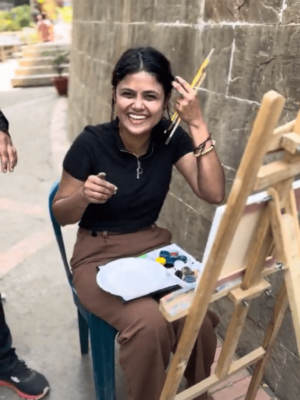
Mental fitness is a vital aspect of our lives and society, and the Summit emphasized this importance through various activities designed to promote wellbeing. One of my favorite moments was participating in art activities. Despite not being an artist or painter, I discovered a passion for playing with color. This newfound outlet has become a source of joy for me, especially during difficult times. Whenever I feel low, I now turn to colors, and the simple act of creating brings me happiness.

The Summit also featured engaging sessions like an open talk show, where participants shared their stories and insights. These conversations were enlightening and fostered a sense of community, reminding us that we are not alone in our struggles.

Despite not being an artist or painter, I discovered a passion for playing with color. This newfound outlet has become a source of joy for me, especially during difficult times. Whenever I feel low, I now turn to colors, and the simple act of creating brings me happiness.

A highlight of the event was the folk song performance during the final segment. I danced with all my heart, embracing the joy of movement and connection with others. Those two days were filled with learning and exploration, significantly impacting my perspective on life and wellbeing.

I sincerely hope The Wellbeing Summit Dhaka becomes an annual event. It has the power to bring people together, foster creativity, and inspire a collective commitment to mental fitness. Reflecting on this experience has helped me navigate my own feelings, and I encourage everyone to seek out moments that uplift and rejuvenate them.

EXPLORE THE REGIONAL SUMMITS FURTHEREXPLORE THE REGIONAL SUMMITS FURTHER

Dive Into Stories From Around the World

Discover the Arts and Wellbeing FurtherDiscover the Arts and Wellbeing Further

Meet and hear stories from the changemakers exploring social change through the arts.

AT THE HEART OF IT – EPISODE 3

KIM POLMAN AND

ANTHONY BENNETT

Values for a Life Economy

In this thought-provoking episode featuring Kim Polman and Anthony Bennett from Reboot the Future, we explore the timeless principle of the Golden Rule to foster social change and collective wellbeing. Mixing ancient proverbs, modern science, and imaginative stories, we discuss how humans are hard-wired for connection and the lessons nature can teach us about sustainable development.

Building on what Kim shared at the first regional wellbeing summit for social change in Belgium alongside Satish Kumar, we reflect further on how respect, reciprocity, and kindness can be the foundation of our wellbeing future. What are the universal values that connect us all and can empower our social change mission? Let’s get to the heart of it.

Let's dive right in!Let's dive right in!

LISTEN TO EPISODE 3

ResourcesResources

From This Episode

Full episode transcriptFull episode transcript

This transcript has been edited for clarity

Welcome to At The Heart Of It, a podcast where we explore issues at the heart of our world’s biggest challenges and their solutions. We’re on a journey inward going into ourselves, reflecting on who we are, listening to humanity’s collective story. Our guides are the visionary leaders, activists, scholars, and practitioners who are changing the world and whose own inner journeys of wellbeing inspire their welldoing.

Have you heard of the Golden Rule? There are a couple different ways you can say it, but maybe you’ve heard it like this. Treat others the way you want to be treated. Today’s guests are taking this simple idea of reciprocity, respect, and kindness and using it as a lens for social change. 

Reboot the Future, where Kim Polman is co-founder and chair, and Anthony Bennett is CEO, is envisioning a world where we treat others and the planet the way we want to be treated. Guided by the ancient essence of the Golden Rule, their educational and advocacy work invites us to reflect inwards on our values so that we can envision the outer world we wish to create.

Whether in speaking to business leaders, school teachers, youth activists, or artists, the universal message of the Golden Rule resonates with everyone. We sat down with Kim and Anthony to hear about how the complex nature of social change can really be boiled down to this simple phrase: treat others the way you want to be treated. Let’s get to the heart of it. 

Madelaine VanDerHeyden (MV): All right, here we go, welcome back to At The Heart Of It, the new podcast from The Wellbeing Project. I have the distinct pleasure today to be joined by our friends from Reboot the Future, Kim Polman and Anthony Bennett, who are here to speak with me about all things related to values for life economy, The Golden Rule and collective wellbeing. Kim and Anthony, it’s great to have you here. Why don’t you introduce yourself and tell our listeners about your work? 

Kim Polman (KP): Hello, I’m Kim Polman and I co-authored a book called Imagine Yourselves, Visions of Transformation at the end of 2016, and that led to the formation of our charity, Reboot the Future. 

Anthony Bennett (AB): Hello, Madelaine. Nice to be with you. I’m Anthony Bennett. I’m the chief executive of Reboot the Future, which was my real honor and privilege to do so. And yeah, I joined Reboot the Future just four years ago and I joined Reboot the Future on the first day of the pandemic. So it was the first day in lockdown, and it was also my birthday, and also I had COVID. 

MV: That’s definitely a triple whammy there. But what a nice birthday gift to be entering into a new job, a new organization, of course you met Kim.

AB: So, when I first came for an interview with Kim, Reboot the Future sounded like a really good name for an organization, but I think in COVID it definitely became a really good name for an organization.

MV: Well, Kim we met you at The Wellbeing Summit in Brussels last November. And you shared a little bit about your work with Reboot the Future, but really spoke to us about the fundamental concept that Reboot the Future is based on, which is the Golden Rule. So first, why don’t you both tell us a little bit about the mission of Reboot the Future and what do you do, and what needs in society at large are you looking at with your organization? 

KP: Well, I started to think about the Golden Rule seriously, it was probably 2014 or so as a guiding principle that everyone should really be aware of. 2015 was an important year for the world because that was the year the Sustainable Development Goals were agreed upon by the UN and it was also the Paris Climate Agreement, which had finally reached some sort of serious level of international agreement. And it was also the year that the Pope published his encyclical on climate change. And, even though I’m not Catholic, I did read this encyclical. It was very interesting document in which he asks every citizen of the world to think more about the planet, about other life on the planet, and not just human life. And because we live in such a hugely complex world, I’m probably a simpleton, but I thought, you know, the world needs some simple idea as a motivational principle. The SDGs are very technical. But what’s the motivation behind them? And so this Golden Rule is quite universal. It’s in all religions, at the root of all religions. A Christian version of it is “do unto others as you would have them do unto you”. The Jewish have another version which is “don’t do to others what is hateful to you”. And so, recognizing that this is thousands of years old and then listening to what the Pope asks of the world’s citizens, we added the planet to it. So it’s “treat others and the planet as you would wish to be treated”. So the need that we’re addressing is, increasing polarization and division in the world, serious mental health issues, and kind of a lack of values, an awareness of what our common values are as humanity. So, this simple principle really summarizes the basic values that tie us all together. That was really what I started to want to do: to spread that simple principle, try to reduce the complexity of the world to something that people can grab onto easily and remember easily, no matter what age, no matter what anybody is doing in their lives. But it’s a kind of a daily guide for making the decisions that we make every day and how we live our lives.

MV: Thank you so much, Kim, for that background, that story. Anthony, is there anything else that you wanted to add to that?

AB: Yeah, so just to pick up on what Kim was saying there. So we live in a very information-dense world. And it seems that even though through our devices and the internet and our technologies, we have more access to data, to culture, to content, to all kinds of information. And yet trying to pick a route through that is really, really difficult. And it’s a really dense thicket that people have to traverse morally and ethically and sustainably. So,  from when I first met Kim, when I came to Reboot, it seemed to me like a really elegant precept, a really simple tool, which can lend itself to all kinds of complexity if you so choose. But the key aspect of it is that it is embedded in every culture. So it’s not about you know kind of western ideology that’s being imposed. You can find it in Confucianism, you can find it in Ubuntu, you can find it in multiple secular traditions as well. So the beauty of it when I came upon is it wasn’t that there was something new discovered here. It’s actually super old, super timeless. And you can see that some version of this idea of reciprocity has been embedded in every place ever that has had a civilized society. And so you can say that the Golden Rule is the original operating system of civilization. And what do you do when your operating system crashes? You reboot it. So this is the simple point of, re-engagement that every society can default to this this kind of factory setting. So as soon as I heard it, I recognized it. And the beauty of doing this work is we hear, you know, multiple people, multiple institutions and organizations who are coming at this from their own trajectory, but aligning upon the same realization, this idea of reciprocity. And then by extending it to the earth, I think we’re doing something really important as well. There are 17 SDGs. As Kim said, they’re very technical. And I think to give people that kind of simplicity of tool that they already recognize in an effort to pick their path through what is a very polarized world, is fundamental. In the United States and in the UK, irrespective of one’s political sympathies, you can recognize that we are deeply polarized just now as a society, and that large swathes of our communities have simply lost the ability to talk to one another. So this idea of putting other communities, other people first, but also putting the earth and its resources as part of that dialogue is, I think, just a deeply useful tool to take forward.

MV: What I find so interesting, and thank you both for those two explanations, but one of the things that feels really profound to me as you explain one, the universal human values that are held within the Golden Rule, whether you say it in one phrase or a different phrase, or whether it’s repeated in one side of the world or the other, it’s something that’s universally human. And you’re explaining that the sort of inspiration for coming back to the Golden Rule and having this be the guiding light now is in response to the polycrisis we’re facing today. In the 21st century in the technological digital era, do you see any sense of irony that, you know, the key that you’re looking at using to unlock a new future is actually something so old and so ancient that predates all of this? What are your thoughts on that?  

KP: Well, I think because of this technology and how materially focused our society is, the consumer society has a promise of happiness, but it’s actually not bringing us happiness and contentment. It only brings divisions. We’ve lost that connection with what is really the most important thing. And fortunately there’s this awakening going on right now. Many of us, we’ve been meeting a lot of these other people who were trying to get people to get back to the basics of what is really important to life. And it’s as simple as love really. And that’s what we all need and want. Obviously we need to have enough to eat and shelter on our heads, but beyond that basic level of needs that are met, we get lost in all this technology and everything. And so what we’re really trying to do is get people to get back. So we have a story called the map about the imaginal cells, and it’s a metaphor with what’s going on today that gives it perspective. And so the caterpillar represents an old way of doing things. Which is the economy as we have developed it very exploitative, very competitive, very focused on me, my, what I want and I’m told what I want as well. So that caterpillar eats and eats and eats. And then he goes into his cocoon and starts breaking down. But inside the caterpillar, dormant are these imaginal cells that hold the identity of the butterfly. So, when the caterpillar is decaying, that ignites this imaginal cell, which is innate, as I said, but the caterpillar doesn’t like it, the old way doesn’t like this new way, and so starts to attack this new way, these imaginal cells. But the imaginal cells, they emit a common frequency and they cluster and find each other and then the caterpillar disappears and out comes the butterfly. So it is this idea of this butterfly is innate, just as the Golden Rule caring for others is innate in all of us. And we just have to tap into that core part of humanity. In fact, it’s a quality of all mammals because we give birth to babies that are helpless. They don’t survive more than a few days without their mothers nourishing them, nurturing them. So it’s that caring part is so fundamental to who we are. And what we’re trying to do is really activate that.  

AB: I’ll give you some examples of how this manifests itself in real time. There’s a professor of neuropsychology at Rockefeller University in New York called Donald Pfaff, and he wrote a book about the Golden Rule in neuropsychology. And he was on the New York subway one day, and he saw somebody fall onto the tracks. And, you can imagine the scene and he and most other folks there just froze. In the sense of what would you do in that situation? And then in the split second where he froze, somebody else jumped onto the tracks and recovered this individual and dragged them back onto the platform. And at that moment, Pfaff realized that we are hardwired for cooperation. We’re hardwired to look out for each other. There was no rational reason why that individual would completely disregard their own self-preservation, put themselves in harm’s way in order to look out for somebody that they didn’t know. There’s something very important that is inherent to our survival as a species where we look out for each other, but we can forget that. Again, especially in this period of history, it seems like we are atomized and completely thinking about our own, selfish individual needs and desires. But actually the basis of our survival is about cooperation and about looking out for each other. You can take a very simple act in order to look out for the wellbeing of others. And in the big macro level I would extend that to the idea of the just transition. The idea that the Global North and the Global South are in this together and that there is every danger that we try and move to, a new paradigmatic shift for a sustainable planet in which people in the Global South, as ever, are expected to do most of the labor. And they’re also meant to not dig or tunnel or extract the carbon and fossil fuels under their own territories and to sacrifice that. So in order to move to a genuinely sustainable planet, we have to rebalance and recalibrate the relationship between the wealthy North and the poorer nations of the South, and rethink what that relationship looks like. And I think that’s a genuine example of treating others on the planet as you wish to be treated. A lot of the presumptions about where we go next on this thing are about people in the Global South making all the sacrifices in order to preserve the standards of living that we acknowledge and accept here in the West. So I think, again, it’s about trying to envisage the needs and the wishes and the lives of the people in every part of the planet as being equal and that we are co-pilots and partners in this thing. So for me, the Golden Rule is something that you can bring in on a very personal, intimate level to your own kind of, you know, family life, your own kind of personal relationships, but it’s also something that affects on the bigger level, big macroeconomic institutions too.

MV: Well, thank you both. And Anthony, at the end of your last response, you were hitting the magic word of wellbeing that we love here at The Wellbeing Project. But both of you were leading into part of the conversation I’d really like to have, which is how the Golden Rule is deeply interconnected between concepts of individual and collective and planetary wellbeing. And as you’re talking about, how, for example, the caterpillars transition into the butterfly or the baby that’s being cared for by its mother or the future of humanity and cooperation between the global North and the global South in a just manner, it’s all about relationships, and the dynamic in between the relationships, whether that’s on an interpersonal level, or on a more systemic macroeconomic or political level. And just for the benefit of our listeners here, I wanted to read two things from your book, Values of a Life Economy. Of course, you both know these two things that I’ll share, but I wanted to make sure that our audience have them as well.

One you’ve written that, “The Golden Rule leads us to recognize the sacredness and fragility of the world and to treat the earth and its species with compassion. Ultimately, it leads us to promote a life economy. A system that works towards the wellbeing of all life on our planet.”

And then you’ve listed ten values that you explore in the book that I guess you could say, maybe are the foundation or help create the space in which this life economy can thrive. And I’ll just read them very briefly, but it’s to love each other; to have compassion and empathy; to love the earth and be good stewards; to find balance; to listen and empower the youth; to promote education and good citizenship; to act as a good ancestor; to build a life-centered economy; and to work in partnership. So looking at all of these values and looking at what you see as the deep meaning behind the Golden Rule, and that’s on a more emotional level, maybe more spiritual or philosophical level, but then also on a more practical level: how do you see the Golden Rule guiding us when it comes to wellbeing for social change, where do you think it’s taking us?

AB: So I would point to one of those values. There is balance. And as I was thinking about this word, wellbeing, what does it mean to be well, and there’s obviously different applications of that word, but the ones where it seems to be most readily applied is the idea of wellness as sufficiency. So if I say to you, I’m doing well, it means I’m doing well enough. And similarly, if I say to you that somebody is known well, it means that they are known to a kind of sufficient level, and I think this idea of sufficiency is key, that we’re acting within an appropriate level of boundaries. It makes me think of Kate Raworth’s Donut Economics. And wellness is something about having a balanced appetite for life and balancing of one’s own personal appetites and desires versus those of sufficiency. The obvious, direct example of that would be not consuming resources, either food or energy or anything else to a point where it becomes destructive for yours or oneself. So I think for me, that’s the key concept where there’s an optimal point that we can hit in terms of what’s best for our own spiritual and psychological growth and nutritional growth and biological growth and everything else and what’s optimal for everybody else in the rest of the planet.

KP: Yeah, so for me, the Golden Rule takes us to something even simpler, which is every day whatever we’re doing, are we being helpful or are we being hurtful? Just a very practical example, let’s just talk about vaping: vaping is the exact opposite of anything we should be doing for the life economy. It was not designed with any environmental understanding the effects that it has on the earth and the production of it with lithium batteries, and then the disposability of it, and then the colors and marketing of it to young people. It was built as being safer than cigarettes, healthier than cigarettes, but it’s actually not, it’s more toxic because of all the chemicals in it. So it’s completely opposite of wellbeing on all aspects of this particular product. So, we have to ask ourselves in any one of those capacitors, the investor, the designer, the factory, all of these, what is it that I’m working on every day that is helpful? And what is harmful? We must be honest about this question. And it requires a completely different set of questions that businesses should be asking themselves. For example, not only businesses, but businesses are responsible for producing everything that we use in this world and consume, so they are very, very responsible. But it’s also how we behave in our daily life, how we relate to each other. So, that for me is really the key question. Are we being helpful or harmful?

AB; Yeah, I’d add to that. I mean, I think that the vaping thing is really interesting because if you think of tobacco in its natural organic form, tobacco was used as a sacrament by Indigenous peoples in North America. And it was used on a very occasional basis for rituals and traditions and ceremonies. And it was used as a meditative process with other members of the community. So compare that against how the big tobacco industries have ruthlessly extracted harvest and accelerated the addictive qualities of that substance. You could point to a similar history of, cocoa and chocolate, right? Which was again, originally, a kind of religious sacrament to be used sparingly and at certain times with certain purposes amongst the people who cultivated it. Which has now become, you know, an ubiquitous product which is harvested at a completely ecologically dangerous level and you know, modified with vegetable oils and sugars in such a way as to turn it into actually quite a destructive consumer product as well. So the substances themselves aren’t inherently iniquitous. It’s about how people deploy them, harvest them, cultivate them and market them.

MV: Well, I think the path that you’re going down to talk about the environment is really interesting and I want to come back to that, but maybe just one final question on the interplay between the individual and the collective. Of course, you know, the Golden Rule is beautiful and it’s aspirational. And for example, Anthony, in your example, you gave up the person who fell on the subway track in New York is an example of how humans are hardwired to be in community and be connected. But I’m sure we can all look at our own lives and think of shifts and changes we want to make in our own lives that we know might be for the benefit of others, but might cause us to be a little bit out of our comfort zone, or we might have to spend a bit more money, or we might have to humble ourselves a little bit. What’s the dynamic there between the individual and collective then when we maybe come to a wall and think, my life would really have to change if I wanted to do something or if I wanted to act in a way that’s really, really helpful and not harmful?

AB: Well, first of all, I don’t want to be pejorative about New York. But I’m reminded of, a movie called “Crocodile Dundee”. And at one point somebody comes to New York and asks how many people live in New York. And he gets an answer, 8 million people. And the guy says, well, 8 million people in New York must be the friendliest city in the world. And of course, that’s the joke, right? Because nobody thinks of New York as being so nice, but when you think about it, for any number of people to live together in a community like New York or London or anywhere else, there have to be a billion acts of kindness embedded into the system every day. That actually these are places of real flourishing of kindness, which is so commonplace actually becomes banal and invisible. And I think that’s, a useful way to think about, how many of those acts of kindness have just become so commonplace that we embed in it in our operating system just to get by. So I continuously remind myself with gratitude about that, that the big visible acts of cruelty are so egregious. And seems so exceptional because they are exceptional. 

KP: Actually, I agree with you. It is the exception to be violent it just gets a lot of attention and it can be so destructive. I’m always trying to find the answer to why, it is so hard to build something up and so easy to destroy it. But because it is so easy to destroy it, it’s just a cautionary note that we need to be even more careful and do ask this question more often, am I being helpful or hurtful? And I’ve gotten very interested in farming lately and the health of the individual is just really important for a collective health. And so this little analogy is I’ve learned a lot about soil lately. Dirt, in fact, dirt has a bad connotation, you know, like washing ourselves and cleaning our clothes and we don’t like dirt. But in fact, it’s soil that is growing our food. And you need to have really healthy soil and the healthier the soil, it is, the more undisturbed it is the more it holds moisture and all kinds of things. So you plant your seeds in this healthy soil and you get a healthy plant. And that plant is then durable, sustainable, and it can withstand the heat and the challenges that come to it. So a pest can come in there. They can withstand it. Trees even have this power to produce a chemical that will ward off the pests that would attack it. And then, it produces, of course, a much more nutritious fruit or vegetable. And that then is given to the animals to eat, given to us humans to eat, and so the healthier the food is, the healthier we are, not just individually, but we all become healthier. It’s collective health. That’s what I mean. All connected. That’s what we really need to understand. And this is the inspiration of nature. At Reboot, we talk a lot about nature and our connection to nature and how we can be inspired by nature.  

AB: I can add to what Kim’s saying here so there’s a guy called John Higgs who talks about how in the 20th century, you had two dominant models of ideology, right? And one was the West and the individual. And the other one was communist Russia and the idea of the state. So you had the individual versus the state. And you either were the triumphant hero of your own story or you were part of the collective. And those were the two binary opposites between which we have bounced for much of the 20th century. And then in 1989, Soviet Russia fell and it seemed like it was the triumph of the individual that that ideology was now triumphant. And I think we’ve seen over the last 20, 30 years that simply putting the kind of selfish concern of the individual foremost isn’t sufficient. It’s kind of leading us off the edge of a cliff. And what Higgs proposes is that there’s another model, which is one of the network, and actually, you realize that your power what makes you powerful, is your ability to flex those networks. And to Kim’s point about the ecology and the mycelium networks, the idea is that if you look at where these underground embedded symbiotic networks exist, it seems to me a much more healthy and also agile way to think about our relationships as individuals and our families and our communities and our working lives. so it needs more work. It’s not quite as reassuring as knowing that you’re either, you know, Superman or part of the collective. But I think there is something in there, that these networks start to emerge and you can recognize people across them and start to build a different kind of structure that brings forward a wholly more sustainable and attractive paradigm. 

KP: Yeah, I think, I think just to emphasize that point, Anthony, that you are never alone.  Even if you’re just one person living on an island, you know, all by yourself as a human being, you are connected with that environment because you need to eat and sleep somewhere safe. But you think of also the drops of water that make up an ocean, every drop is important. Because if you didn’t have all those drops, you wouldn’t have an ocean. So parts of that imaginal story is that the cells, when they’re innate, they are dormant in the caterpillar. They have different identities. So one’s the wing, one’s the color, one’s the eye, you know, that kind of thing. And they form the whole. So we may be just one, but we’re one important one next to the next important one and the next important one. And we’re all part of this system.

MV: Well, it’s amazing to me that I think every single metaphor you’ve shared so far during this conversation has been a metaphor connecting human relationships with existing relationships in nature, whether that be between organisms or just the life cycle of a plant, for example, that to me is also proof that we are all connected. That mirroring of behavior is one in the same. And we’re exploring at The Wellbeing Project, we’re exploring this concept of reconnecting and remembering how the earth does not belong to us, but we belong to the earth: Ecological Belonging. And in a very similar way that you are looking at the Golden Rule as unlocking something new and innovative in the future, we also see sense, how going back to square one, reconnecting with this intuitive organic relationship we have had with the earth is then one of the major levers in solving or getting out of this poly crisis that involves such environmental and ecological destruction. And what you say about the network approach, I think is really interesting as well. That sense of adaptability gives you flexibility and creativity and innovation for how we might be going about doing that. We’ve seen as you touched on both of you touched on that. There’s been a pattern of behavior, of binary set of way of thinking in the past that’s led us to where we are today. So having that openness to try new things and to act in a different way, look at the world in a different way is really, really important now. So I wanted to ask you what are you working on now that aligns with this idea of  going back to the beginning, going back to square one, reconnecting with that relationship with nature that we, for the most part as a society have lost. 

AB: Well, we center on education, culture, and leadership, and we embed our values in the Golden Rule across all these three different programs essentially recognizing that as we say, the SDGs, they work with the hemisphere of the brain, which is rational and technocratic, and we want to look at the ways in which we communicate the golden rule and the SDGs through the empathetic way. And the intuitive and to some extent or not, though the word always comes back is spiritual. So we have a network of 18,500 teachers and educators, the majority of whom are here in the UK, and we publish a platform called Global Dimension in which we provide free to air resources for all those teachers around how do you smuggle sustainability and values practice within to whatever your discipline is, and we ran a survey of  members of that teaching community, asking them  what kind of teaching practice do they need?  How do you want to prepare your students for a sustainable economy? What kind of lesson plans, what kind of jobs do you want to direct young people to? What was clearly evident was that teachers really want to talk about values. They want to prepare young people for a sustainable vision of the planet, but they don’t feel that they’re resourced. So we published that report, we took it to COP in Dubai. We took it to Anthropy and other events as well. And for this year, we want to work with that teaching community to see, how can we drive that reform within the national curriculum? We are embedded here in the UK, but we also work with partners around the world who are doing similar work in their own curricula, because, of course, you can’t talk about this stuff in isolation, and we have partners now in India, Saudi Arabia, in Paris, we’re not the only people working in this space. Looking at what are the motivations for current classroom practice, but also what will we need in 5, 10, 15 years. My own conviction, not necessarily Kim’s or Reboot’s, but my own feeling is that it’s going to be really tough for us to stay within 1.5 and we probably need to start to prepare for that. And  if we’re not going to stay within 1.5, the next best thing we can do is to start to prepare young people for the world that’s going to come. And I don’t want to couch language or use word that’s apocalyptic or negative or pessimistic. I think we have every technology and every resource we need to create that sustainable vision for the future. We just need to get busy with it right now. And students and schools and the teaching professions are the way that we’re going to do that. I say we have 18,000 plus teachers, that every one of those teachers is a conduit to 30 young people. So we take that point that looking after the interests and nurturing that community of teachers is absolutely central to preparing the world for a  sustainable planet. 

MV: Well, I just absolutely love and admire what you are focusing on with preparing the future generation. Empowering the youth to be aware and involved in what’s happening and giving them the resources as well to take action is also very important and it reminds me of Kim’s metaphor as well with the plant growing in the healthy soil the environment in which we act is really, really important. And we’re getting to the end of our conversation here with both of you. And it’s been so illuminating and I just wanted to end by asking you going beyond what I know is already at the heart of your work, which is the Golden Rule for each of you, what is your main motivation, inspiration, or message for the world. Anthony, I liked what you said about not wanting to use language that’s so negative and both of you sharing that there are billion acts of kindness happening around the world, but it’s just maybe the scary things or the really negative things that get the most attention. But coming from a place of hope, or of inspiration, what is driving both of you to do the work that you’re doing?

KP: A deep caring. And my message would be just be grateful, grateful for all the goodness that is around us and that we have in our lives. I would also say if you see something and you’re really moved by it and that’s kind of epiphany, like, wow, I really want to work on that, act on it, have the courage to act on it. We do all have a responsibility to do whatever we can in whatever way we can to improving ourselves first, and our families, our friends, our communities, and then that ripples out to the world.

MV: Another natural metaphor there with the ripple effects! Anthony, over to you.

AB: So I would 100 percent subscribe to Kim’s gratitude, we are super empowered in a way that previous generations could never have dreamed of. And we should be grateful for that. And the last thing I would say is that what will lead us to catastrophe is the idea that we are isolated and disempowered and we don’t have agency. And there’s a, there’s a Scottish environmental campaigner called Alistair McIntosh that I like to quote and he’s been active for a great many years in this space and his phrase is, “you dig where you stand,” which means you look at where you are in the universe and realize that your contribution is just as vital as anyone else’s and you have to, to use Kim’s farming metaphor once more, you have to dig on the land that you stand and make use of that with the tools that you’ve got.

MV:  Incredible though. Thank you so much, both from a sense of gratitude from me, for coming onto the podcast but also just for the work that you’re doing and for the message that you’re spreading in the world and for the seeds that you’re sowing in the minds of young people and in other organizations as well, as you continue your work to help us come back to, as you said, throughout our conversation today, something that is truly universal, something that unites us beyond culture, beyond language, beyond religion beyond country or nationality, something that is truly a fundamental human value. So thank you very, very much for joining us today. Before we go, are there any last words, anything else you’d like to share with our listeners?

KP: Well, just remember, treat others and the planet as you wish to be treated!

AB: Yeah, I’ll be even more I’ll act in self interest here and just say go to www. rebootthefuture.org or globaldimension.org.uk for more information about everything that we do. And thank you so much, Madelaine.

MV: Yeah, thank you. Thank you very much.  

Thank you for listening to this episode of At The Heart Of It. For more news, research, and stories about wellbeing and social change, visit wellbeing-project.org. The Wellbeing Project is the world’s leading organization advocating for the wellbeing of changemakers and for wellbeing in changemaking. We believe wellbeing inspires welldoing. Thanks for listening and see you next time.