
The Wellbeing Project

Mexico
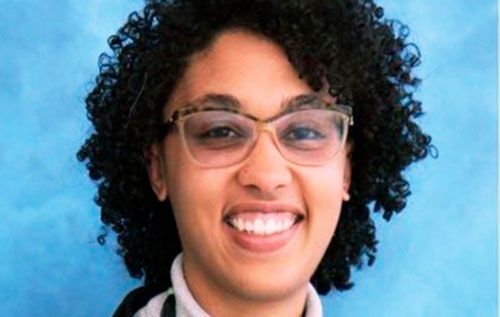
Ramsés believes that a deep redefinition in how humans relate to one another and planet is vital to solving humanity’s greatest challenges.
He currently serves as the Global Head of Community Experience at Betterfly. A purpose-driven benefits platform that rewards healthy habits with charitable donations and no-cost life insurance coverage that grows every day.
Ramsés is the former Executive Director of Sistema B Mexico where he advanced the vision of “Business as a force for good”, and he also served as the Director of Academia B at Sistema B International promoting the development of research, methodologies and pedagogical tools to advance the training of a new generation of professionals for the new economy. Prior to it, he served as the Director of Ashoka U for Mexico, Central America and the Caribbean to change institutional systems at Higher Education to become supportive environments for social entrepreneurship and changemaking, and prior to that he spent his days as co-founder and Director of Impact Hub Mexico City.
In 2019 he was selected as a Fellow of the Compassionate Leadership network, an initiative supported by His Holiness the Dalai Lama, which aims to accompany the development of leaders – current and future – with the skills and wisdom to build a more just and compassionate world. Ramses is also a member of the BMW Foundation’s Responsible Leaders network, and the global initiative The Wellbeing Project.Among his activities, he serves on Ashoka’s social entrepreneurship selection panel, and is on the advisory board of several social enterprises. He has been a guest speaker at various institutions, and has participated in the co-design and delivery of entrepreneurship and social innovation programs at institutions such as the Universidad Nacional Autónoma de México (UNAM), Tecnológico de Monterrey, among others.
– What does inner wellbeing mean to you?
I perceive inner wellbeing as one of the most effective and yet one of the most challenging ways of being.
– How would you define wellbeing in one word?
Authenticity. One thing that I’ve observed (and experienced!) to be true is that the more we are in contact with ourselves, the “easier” it is to pursue what is relevant and true. To be able to define authenticity as a path for wellbeing has been the result of a very long and on-going personal journey.
– Are there any rituals or practices you use to enhance your wellbeing?
Nature has been increasingly my go-to place. Also, one of my key learnings after attending the Wellbeing Summit was the idea of “going home”, which has nothing to do with a physical place per se but rather being in constant connection with myself.
– Why is it important that we prioritise individual and collective wellbeing?
So that the work of our field becomes more enjoyable, congruent, and sustainable.
– Do you have any favourite books, podcasts, or articles that you believe support, promote, or educate on wellbeing and related themes?
Yes. On being by Krista Tippett is my go-to Podcast when I am in need of inspiration. These are two of my favorites episodes: Ai-jen Poo, This Is Our (Caring) Revolution – Listen to the Podcast, and Ocean Vuong, A Life Worthy of Our Breath – Listen to the Podcast.
Connect with Ramsés Gómez on social media :

World Alliance for Citizen Participation is an international alliance of members and partners which constitutes an influential network of organisations at the local, national, regional and international levels, and spans the spectrum of civil society. CIVICUS includes the following in its definition of civil society: civil society networks and organisations; trade unions; faith-based networks; professional associations; NGO capacity development organisations; philanthropic foundations and other funding bodies.
CIVICUS has worked for nearly two decades to strengthen citizen action and civil society throughout the world, especially in areas where participatory democracy and citizens’ freedom of association are threatened. CIVICUS has a vision of a global community of active, engaged citizens committed to creating a more just and equitable world. This is based on the belief that societies’ health is directly proportional to the degree of balance between the state, the private sector and civil society.
CIVICUS provides a focal point for knowledge-sharing, common interest representation, global institution-building and engagement among these disparate sectors. It advocates for citizen participation as an essential component of governance and democracy worldwide. CIVICUS seeks to amplify the voices and opinions of ordinary people and it gives expression to the enormous creative energy of the burgeoning sector of civil society.

The Ford Foundation is a global, grant-making philanthropy that works to disrupt inequality in all its forms.
The Ford Foundation believes in the inherent dignity of all people. Thus it addresses the reality of too many people being excluded from the political, economic, and social institutions that shape their lives.
A vision of social justice guides the Ford Foundation—a world in which all individuals, communities, and peoples work toward the protection and full expression of their human rights; are active participants in the decisions that affect them; share equitably in the knowledge, wealth, and resources of society; and are free to achieve their full potential.
Across eight decades, its mission has been to reduce poverty and injustice, strengthen democratic values, promote international cooperation, and advance human achievement. It works in 11 regional offices around the world and supports programs in over 50 countries.

Echoing Green has been on the front lines of solving the world’s biggest problems, raising up the transformational leaders willing to speak truth to power and challenge the status quo.
For the past 30 years, it’s been supporting visionaries around the world who are transforming economies, and pursuing racial and gender equity, environmental sustainability, and more. Echoing Green accelerates talent that will change the world for the better by finding, funding, connecting, and supporting a new generation of social impact leaders.
It finds emerging leaders with the best ideas for social innovation as early as possible, and set them on a path to lifelong impact. Echoing Green’s community is of almost 1,000 social innovators. It includes past Fellows like first lady Michelle Obama, the founders of organizations like Teach for America and One Acre Fund, and major public figures like Van Jones.

Impact Hub has been a catalyst for entrepreneurial action for 15+ years. It is a global network of 100+ Impact Hubs worldwide, with 25,000+ people driving change – in 60+ countries across 5 continents. Impact Hub enables inclusive and sustainable innovation at scale by connecting entrepreneurs and innovators to large organizations, cultural and public institutions.
Impact Hub believes world challenges can only be tackled through collaboration. Thus it makes collaboration happen by designing impactful solutions, building business for good and (re)imagining the future. This is what the community of impact-driven entrepreneurs, creators, innovators and intrapreneurs does; taking action – today – to create a better tomorrow for people and planet.
Impact Hub started in 2005, with one community, in one city. It was a space for anyone who had an idea for a better world to meet and collaborate – a place where ideas turned into impact. Today, it provides access to spaces, resources, connections, knowledge, talent and investments to turn ideas into action around the world.
All big ideas start small. The time to act is now. And the way to act is together!
The Collective Change Lab aims to catalyze a global movement towards more transformational ways of fostering just and equitable systems. For systems to transform, people in the system must collectively become more connected, compassionate, and attuned to their interdependence. Thus supporting people, organizations, communities and collectives in catalyzing social change beyond the incremental.
The Collective Change Lab provides practical insight and guidance for attaining transformational collective change through research, practice, leadership development, and narrative change.
The Stanford Center on Philanthropy and Civil Society (Stanford PACS) is a research center for students, scholars and practitioners to explore and share ideas that create social change. Its primary participants are Stanford faculty, visiting scholars, postdoctoral fellows, graduate and undergraduate students, philanthropists and nonprofit and foundation practitioners. As publisher of Stanford Social Innovation Review, Stanford PACS informs policy and social innovation, philanthropic investment and nonprofit practice. SSIR is a shared intellectual space where scholars and practitioners publish inter-disciplinary and cross sector research and ideas to advance social change. The journal is complemented by a website, blog, conferences, webinars and podcasts.
Stanford PACS is a part of Stanford University’s School of Humanities and Sciences and falls under the aegis of the Institute for Research in the Social Sciences. However, Stanford PACS’ seek to serve as a university-wide center with interdisciplinary networks and collaborations by developing and sharing knowledge to improve philanthropy, strengthen civil society and effect social change.

Intrinsic Labs supports organisational leaders in creating work cultures that harness the motivation and talents of all employees, particularly in this new age of hybrid work. Organisations range from across the corporate, public and non-profit sectors.
The new realities of hybrid work, if harnessed correctly, can actually be a strong help. Thus, Intrinsic Labs focuses on intrinsic factors such as Purpose, Autonomy and Mastery, to embed these deeply into the work cultures of our organisations.
Intrinsic Labs takes leaders on a “Guided Journey” to help them redefine their Working Cultures, creating safe spaces for them to think differently and create new solutions with their teams and stakeholders. This journey can range from a one-off talk or inspiration session to interactive workshops, fire-side discussions, coaching sessions and wider town halls.
Valerie Gaudreault Guilbert
LETS REACH OUT
In response to COVID-19, The Wellbeing Project, in collaboration with Amplifier Art launched a campaign with top art curators and public-health advisors from around the world, looking for symbols that promote mental health, wellbeing and social change work in this new age.
“During these stressful times, loneliness can be hard for a lot of people and staying home often means feeling isolated. To break this cycle and protect our wellbeing, contacting a family member, a friend or a mental health professional can help us go through this. Let’s reach out.”

bonnie browN
APART YET CLOSER THAN EVER
In response to COVID-19, The Wellbeing Project, in collaboration with Amplifier Art launched a campaign with top art curators and public-health advisors from around the world, looking for symbols that promote mental health, wellbeing and social change work in this new age.
“Heading into our sixth week of lockdown in New Zealand I’ve been feeling physically distant from those around me, yet closer than ever mentally. From waving to my neighbours from my balcony, to catching up with childhood friends. When we leave lockdown it’ll be with a new sense of community, hope and optimism.”

Bee Harris
FIND YOUR PEACE
In response to COVID-19, The Wellbeing Project, in collaboration with Amplifier Art launched a campaign with top art curators and public-health advisors from around the world, looking for symbols that promote mental health, wellbeing and social change work in this new age.
“This moment in time has heightened the anxieties of many people around the world. Now more than ever, it’s important that we look inward and focus on the things that bring us joy and peace.”
See more from Bee here

Chris Andri Lourens
THINK HAPPY THOUGHTS
In response to COVID-19, The Wellbeing Project, in collaboration with Amplifier Art launched a campaign with top art curators and public-health advisors from around the world, looking for symbols that promote mental health, wellbeing and social change work in this new age.
“This artwork was created as an art piece to remind people to focus on the positive things. It also has a colouring book version which can be downloaded and coloured in for those who need some at-home entertainment.”
See more from Chris-Zandri here

natalia cardona puerta
SUPPORT SYSTEMS GO THE DISTANCE
In response to COVID-19, The Wellbeing Project, in collaboration with Amplifier Art launched a campaign with top art curators and public-health advisors from around the world, looking for symbols that promote mental health, wellbeing and social change work in this new age.
“Even though social distancing has pulled us physically apart, the emotional bonds that we share with our loved ones are still intact and our support system will always be there to help, no matter what. In the meantime, let’s gather in a telepathic embrace, let’s hear our voices over the phone, and let’s read our words of joy & concern through letters. We will hug, and look at each other in the eyes again, and when that day comes, our connection will be stronger than ever.”
See more from Natalia here

Lisa Vollrath
SPREAD COMPASSION
In response to COVID-19, The Wellbeing Project, in collaboration with Amplifier Art launched a campaign with top art curators and public-health advisors from around the world, looking for symbols that promote mental health, wellbeing and social change work in this new age.
“I see nerves getting frayed, from all the staying home, and little inconveniences of our new day to day life. I always try to remember to spread a little laughter when I go out, even if I’m not feeling particularly happy. The world isn’t all about me, and it’s good to have a little compassion for the folks around us right now.”
See more from Lisa here

Danica Ricciardi
TAKE CARE
In response to COVID-19, The Wellbeing Project, in collaboration with Amplifier Art launched a campaign with top art curators and public-health advisors from around the world, looking for symbols that promote mental health, wellbeing and social change work in this new age.
“Protect each other and be kind!”

lindsay-bonavolonta
MENTAL HEALTH
In response to COVID-19, The Wellbeing Project, in collaboration with Amplifier Art launched a campaign with top art curators and public-health advisors from around the world, looking for symbols that promote mental health, wellbeing and social change work in this new age.
“I, like all essential workers, have recently been given an important task; to be the face of resilience during this pandemic. However, while we spend much of our time helping others it can be easy to forget about our own mental health needs as we navigate this new normal.”
See more from Lindsay here

Kahfi Azhary
STAY HEALTHY STAY STRONG
In response to COVID-19, The Wellbeing Project, in collaboration with Amplifier Art launched a campaign with top art curators and public-health advisors from around the world, looking for symbols that promote mental health, wellbeing and social change work in this new age.
This poster has a message for all citizens of the world to remain healthy and strong in the fight against the plague covid19. stay safe, stay home, stay healthy, stay strong.

CAM WATTS
COVID COMPASSION
In response to COVID-19, The Wellbeing Project, in collaboration with Amplifier Art launched a campaign with top art curators and public-health advisors from around the world, looking for symbols that promote mental health, wellbeing and social change work in this new age.
We can’t offer each other our hands, but we can cultivate our compassion garden and be there for each other in other ways during these trialing times. Compassion for the sick, the fearful, the jobless, the old, the young, and the alone. We are all being challenged in different ways right now and compassion for each other is of the utmost importance.

LISA SALDIVAR
KINDNESS NOT CANCELLED
In response to COVID-19, The Wellbeing Project, in collaboration with Amplifier Art launched a campaign with top art curators and public-health advisors from around the world, looking for symbols that promote mental health, wellbeing and social change work in this new age.
A demonstration of kindness from communities around the world shown to inspire a contagion of kindness in these difficult times.

RAUL GUTIERREZ
STAY MINDFUL
In response to COVID-19, The Wellbeing Project, in collaboration with Amplifier Art launched a campaign with top art curators and public-health advisors from around the world, looking for symbols that promote mental health, wellbeing and social change work in this new age.
In the current Covid-19 crisis thinking on the future just makes me experience much anxiety. As I currently see things, there’s no point to think about the future when a storm of uncertainty surrounds us and our lives are on hold. I think it’s time for us to stay mindful, concentrating on the present moment and tackle everyday problems in the calmest way possible. If our mind is overloaded, our capacity response will stay low which won’t allow us to progress. I suggest practicing yoga and meditation as a powerful tool to stay calm and coherent.

ELIZA WOLFSON
STAY IN TOUCH
In response to COVID-19, The Wellbeing Project, in collaboration with Amplifier Art launched a campaign with top art curators and public-health advisors from around the world, looking for symbols that promote mental health, wellbeing and social change work in this new age.
In the current Covid-19 crisis thinking on the future just makes me experience much anxiety. As I currently see things, there’s no point to think about the future when a storm of uncertainty surrounds us and our lives are on hold. I think it’s time for us to stay mindful, concentrating on the present moment and tackle everyday problems in the calmest way possible. If our mind is overloaded, our capacity response will stay low which won’t allow us to progress. I suggest practicing yoga and meditation as a powerful tool to stay calm and coherent.
See more from Raul here

GIANCARLO MANCUSO
HOPE
In response to COVID-19, The Wellbeing Project, in collaboration with Amplifier Art launched a campaign with top art curators and public-health advisors from around the world, looking for symbols that promote mental health, wellbeing and social change work in this new age.
This poster is a symbolic expression of Hope. The color yellow is known to be the colour of hope, and happiness. All the images illustrated are used to express hope, peace, love, and the fight against COVID-19. See more from Giancarlo here

KIMBERLY ASHBY
SELF CARE
In response to COVID-19, The Wellbeing Project, in collaboration with Amplifier Art launched a campaign with top art curators and public-health advisors from around the world, looking for symbols that promote mental health, wellbeing and social change work in this new age.
Kimberly Marie Ashby is a Black and Native American, queer, woman artist, activist, and doctoral candidate in counseling psychology. Kimberly creates hand-cut collages through an Afrofuturist lens, using found materials to reflect marginalized people’s ability to make marvels out of the scraps they are given. Kimberly created this hand-cut collage To express the importance of self-care, particularly for Black and Brown people in the US who are being disproportionately impacted by COVID-19.

SHIRIEN DAMRA
LET YOURSELF REST
In response to COVID-19, The Wellbeing Project, in collaboration with Amplifier Art launched a campaign with top art curators and public-health advisors from around the world, looking for symbols that promote mental health, wellbeing and social change work in this new age.
Capitalism tries to push the idea that we need to be productive. A lot of us feel like we need to constantly hustle and be on the grind to achieve our dreams. But giving yourself time to rest and take care of yourself is a gift that can empower you. It sounds counter-intuitive, but rest ultimately allows you to be in a stronger place to tackle whatever comes your way. But we are in a global pandemic right now. It’s necessary to rest and breathe and check in with yourself!
See more from Shirien here

YASH PRADHAN
THIS TOO SHALL PASS
In response to COVID-19, The Wellbeing Project, in collaboration with Amplifier Art launched a campaign with top art curators and public-health advisors from around the world, looking for symbols that promote mental health, wellbeing and social change work in this new age.
“Even if you’re isolated, you’ve to remind yourself you’re not alone in this. Staying home can be uninspiring, times passes slower but remember this too shall pass.”
See more from Yash here

DAMIEN CIFELLI
JUST REMEMBER TO BREATHE
In response to COVID-19, The Wellbeing Project, in collaboration with Amplifier Art launched a campaign with top art curators and public-health advisors from around the world, looking for symbols that promote mental health, wellbeing and social change work in this new age.
“My poster is one of a series of three original oil paintings. I used oil due to its association with portraits of important historical figures, adding gravity to the message in the poster. The idea is to insert the mask into attractive and aspirational images, representing the idea of wearing a mask as a positive thing. Each poster is based around the word breathe. Firstly – around the literal idea of being able to breathe freely by wearing a mask, secondly – allowing the planet the space to breathe by doing your part and thirdly – addressing the anxiety that comes with the unknown elements of the crisis.”

DAMIEN CIFELLI
LET THE PLANET BREATHE
In response to COVID-19, The Wellbeing Project, in collaboration with Amplifier Art launched a campaign with top art curators and public-health advisors from around the world, looking for symbols that promote mental health, wellbeing and social change work in this new age.
“My poster is one of a series of three original oil paintings. I used oil due to its association with portraits of important historical figures, adding gravity to the message in the poster. The idea is to insert the mask into attractive and aspirational images, representing the idea of wearing a mask as a positive thing. Each poster is based around the word breathe. Firstly – around the literal idea of being able to breathe freely by wearing a mask, secondly – allowing the planet the space to breathe by doing your part and thirdly – addressing the anxiety that comes with the unknown elements of the crisis.”

damien cifelli
BREATHE
In response to COVID-19, The Wellbeing Project, in collaboration with Amplifier Art launched a campaign with top art curators and public-health advisors from around the world, looking for symbols that promote mental health, wellbeing and social change work in this new age.
“My poster is one of a series of three original oil paintings. I used oil due to its association with portraits of important historical figures, adding gravity to the message in the poster. The idea is to insert the mask into attractive and aspirational images, representing the idea of wearing a mask as a positive thing. Each poster is based around the word breathe. Firstly – around the literal idea of being able to breathe freely by wearing a mask, secondly – allowing the planet the space to breathe by doing your part and thirdly – addressing the anxiety that comes with the unknown elements of the crisis.”

Skye Sturm
SPREAD LOVE
In response to COVID-19, The Wellbeing Project, in collaboration with Amplifier Art launched a campaign with top art curators and public-health advisors from around the world, looking for symbols that promote mental health, wellbeing and social change work in this new age.
“I created this artwork because I wanted to celebrate all of the acts of selflessness and kindness, both big and small, that we have seen during the pandemic. But I was also seeing so much hatred and blame. I wanted to remind people to withhold judgement, to remember that we are all in this together and that a little kindness goes a long way. Even wearing a mask and maintaining distance is an act of kindness and respect to those around us. I chose the rainbow and sunshine as a bright and positive backdrop to the message – the symbol of hope, of rays of sunlight which shine through in a dark storm. I hope this message can help people to stay positive, and that it encourages everyone to spread a little love in these difficult times.”

Varshini Ramakrishnan
GOOD DAYS NOT FAR AWAY
In response to COVID-19, The Wellbeing Project, in collaboration with Amplifier Art launched a campaign with top art curators and public-health advisors from around the world, looking for symbols that promote mental health, wellbeing and social change work in this new age.
“It’s time to manage the voice of the Media and take control of the voices inside our heads. The media content we’ve been consuming since Covid-19 has taken a toll on our thoughts and emotions. We feel the urge to stay up to date on the current happenings and tend to incline towards negativity. This artwork is inspired by vintage advertisements, portraying the importance of a mental cleanse. Visual media like advertisements, cinema etc, have always been part of our mental growth. I visualise the voice of media to be more positive and break stereotypes around mental illness.”

María toro
mind-aware world-awake
In response to COVID-19, The Wellbeing Project, in collaboration with Amplifier Art launched a campaign with top art curators and public-health advisors from around the world, looking for symbols that promote mental health, wellbeing and social change work in this new age.
“If we all connect our minds and stay aware, the world will wake up. MIND AWARE- WORLD AWAKE!”

VARSHINI RAMAKRISHNAN
MIND MEDIA POSITIVITY
In response to COVID-19, The Wellbeing Project, in collaboration with Amplifier Art launched a campaign with top art curators and public-health advisors from around the world, looking for symbols that promote mental health, wellbeing and social change work in this new age.
“It’s time to manage the voice of the Media and take control of the voices inside our heads. The media content we’ve been consuming since Covid-19 has taken a toll on our thoughts and emotions. We feel the urge to stay up to date on the current happenings and tend to incline towards negativity. This artwork is inspired by vintage advertisements, portraying the importance of a mental cleanse. Visual media like advertisements, cinema etc, have always been part of our mental growth. I visualise the voice of media to be more positive and break stereotypes around mental illness.”

ALEJANDRO VARELA
DON’T PANIC, BE RESILIENT
In response to COVID-19, The Wellbeing Project, in collaboration with Amplifier Art launched a campaign with top art curators and public-health advisors from around the world, looking for symbols that promote mental health, wellbeing and social change work in this new age.
“This work riffs off the famous phrase of the Indian spiritual master Meher Baba, “Don’t worry; Be happy,” later converted into song by Bobby McFerrin in 1988. Its concise message of positivity has at times been misunderstood as careless or passive, but simplicity is powerful and mantras like these continue to be used because they encourage us during challenging times. While its difficult to be happy in the face of this crisis and the uncertainty it brings, together we can withstand the curve, flatten it, and recover- not through worry or panic, but through collaboration as a world community. With this work, I want to express a simple message for all of us: to resist fear-mongering messages and to focus on our innate human resilience.”

PACO ESPINAR
HOPE HOME
In response to COVID-19, The Wellbeing Project, in collaboration with Amplifier Art launched a campaign with top art curators and public-health advisors from around the world, looking for symbols that promote mental health, wellbeing and social change work in this new age.

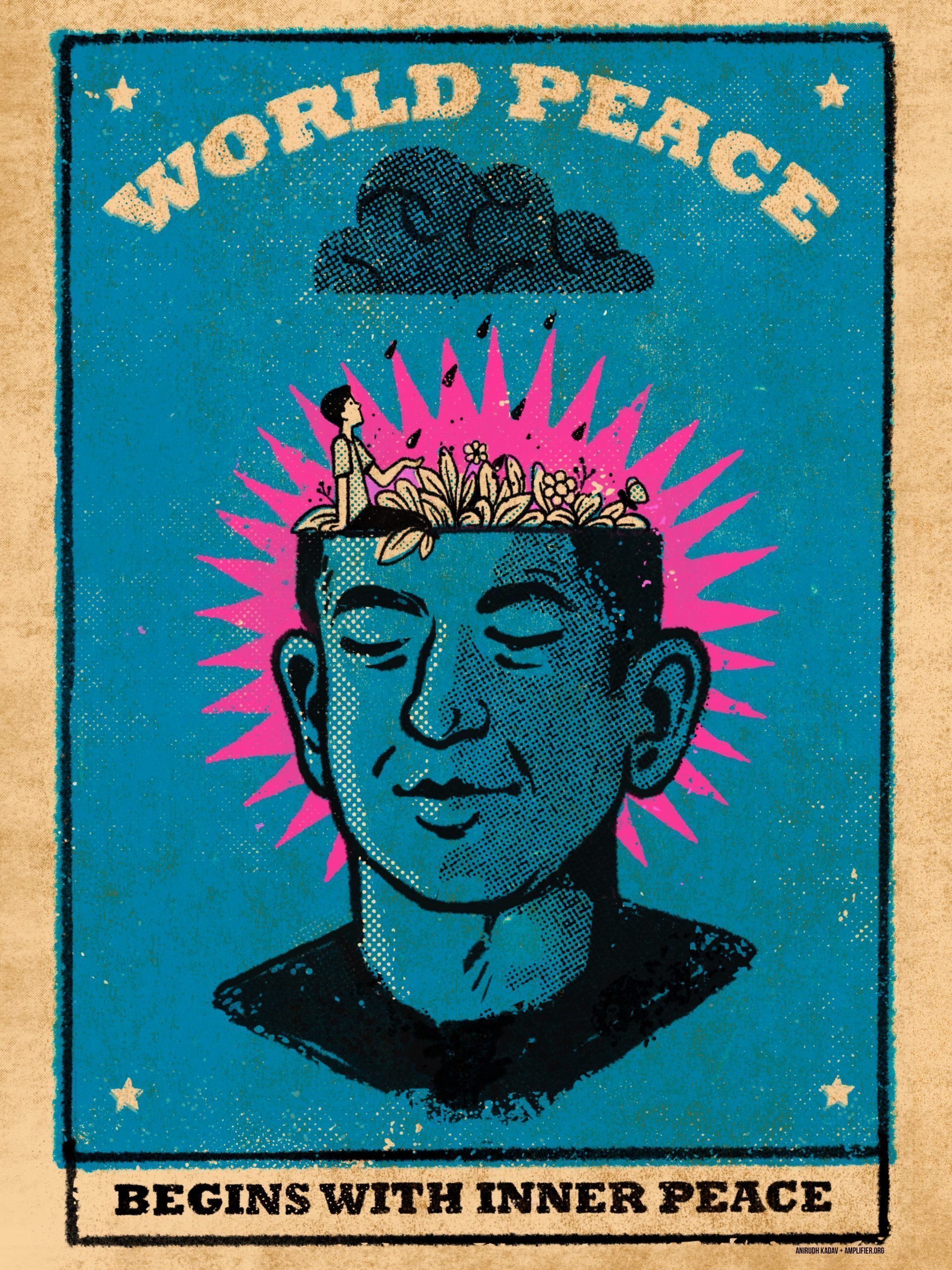
ANIRUDH KADAV
BREATHE
In response to COVID-19, The Wellbeing Project, in collaboration with Amplifier Art launched a campaign with top art curators and public-health advisors from around the world, looking for symbols that promote mental health, wellbeing and social change work in this new age.
“The nearer a man comes to a calm mind, the closer he is to strength’ In my opinion, mental health is the most overlooked aspect of human nature. Seldom we give it the attention it deserves. No amount of wealth guarantees ones well being and current global scenario is a reflection of the same. At the moment, when the world is facing a, what seems to be an immortal, enemy, no amount of wealth or militia is enough to fight it. In these times, when people are forced to be at home, take a step back and reflect. As much effort is being put in maintaining and enhancing physical strength, try and focus on your inner peace as well. What makes you happy? A question, to which most of us have an answer to, but rarely do we act on it. We have always been too pre occupied with things and troubles, which now do not seem to matter as much. So let’s take a deep breathe, and focus on what is more important – YOU. Be the change you wish to see in the world. World peace, begins at Inner peace. Stay Positive. Stay Home. Stay Safe”
RUCHITA ASHOK
PRAY FOR THE WORLD
In response to COVID-19, The Wellbeing Project, in collaboration with Amplifier Art launched a campaign with top art curators and public-health advisors from around the world, looking for symbols that promote mental health, wellbeing and social change work in this new age.
“The modern pandemic COVID-19 will define this era absolutely. No one who lives through will forget the pain that people are feeling now and will continue to feel for years to come. Meanwhile on the other hand this will define brotherhood, humanity, faith, strength, courage and kindness.There is always a light at the end of tunnel but while going through that darkness nobody knows if there is any, but it is the faith and hope and willpower that keeps us driving through hardships to reach the brighter side. Pray for our world, pray for all!”

RUE OLIVER
GATHER OUR POWERS
In response to COVID-19, The Wellbeing Project, in collaboration with Amplifier Art launched a campaign with top art curators and public-health advisors from around the world, looking for symbols that promote mental health, wellbeing and social change work in this new age.

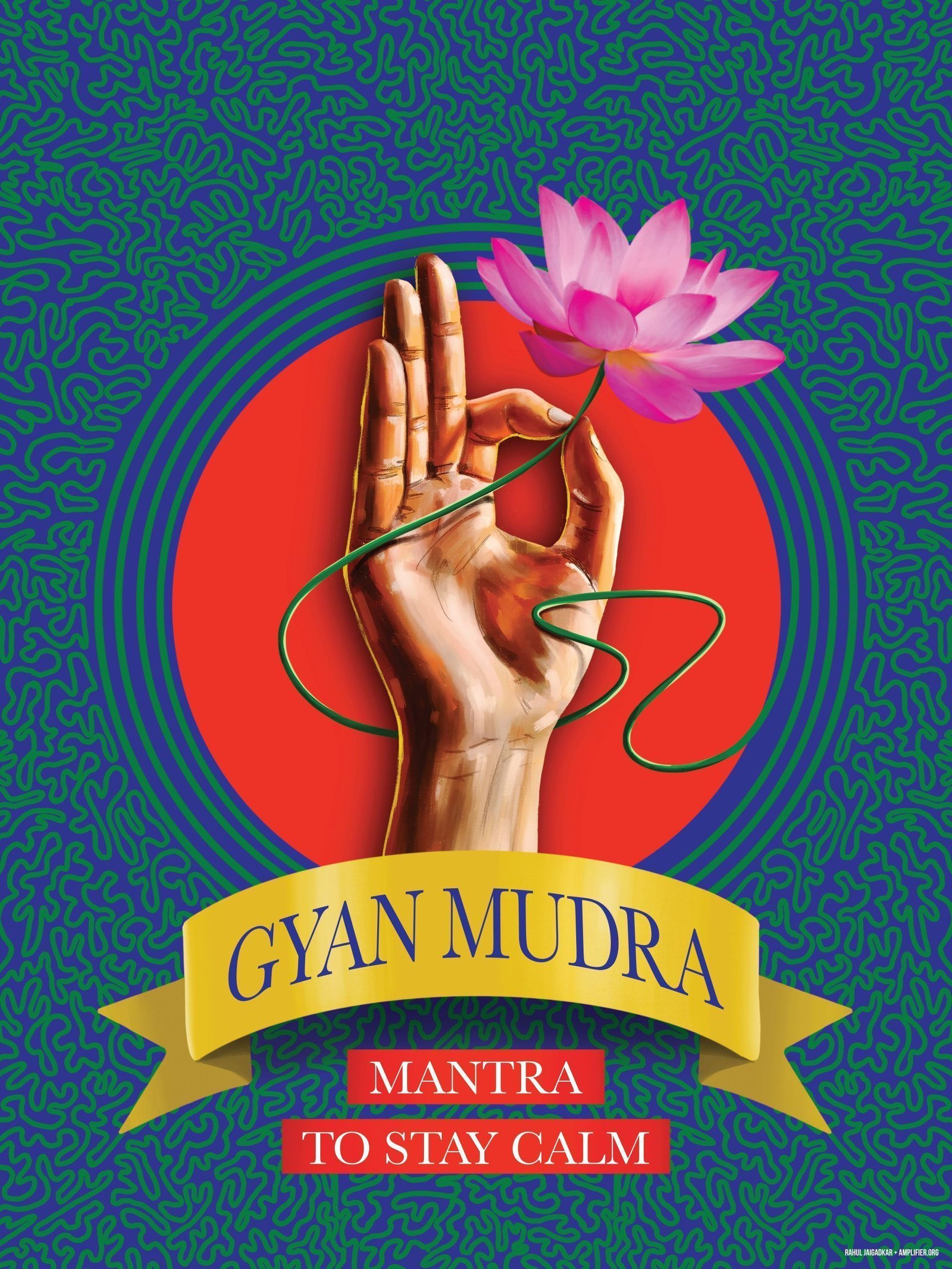
RAHUL JAIGADKAR
GYAN MUDRA
In response to COVID-19, The Wellbeing Project, in collaboration with Amplifier Art launched a campaign with top art curators and public-health advisors from around the world, looking for symbols that promote mental health, wellbeing and social change work in this new age
“Coping with the pandemic is getting harder and harder with each passing day. With so much of information freely available to read, our mind is filled with numerous thoughts such as the lotus surrounded by dirtiest water. As the lotus produces the most beautiful lotus flower from this dirty water, Gyan Mudra helps us to purify our thoughts.”
VINITHA BASKARAN
HOPE AND LOVE
In response to COVID-19, The Wellbeing Project, in collaboration with Amplifier Art launched a campaign with top art curators and public-health advisors from around the world, looking for symbols that promote mental health, wellbeing and social change work in this new age
“The world will be a better place with an abundance of Hope and Love. In this difficult time of year, Let us all hope that this too shall pass and spread as much as love as possible to one another.”

TROY CHAFIN
NATURE HEALS
In response to COVID-19, The Wellbeing Project, in collaboration with Amplifier Art launched a campaign with top art curators and public-health advisors from around the world, looking for symbols that promote mental health, wellbeing and social change work in this new age
“Nature (the sun, trees, plants, animals, and so on) is the greatest source of therapy for humans that has ever existed. Everything in nature is meant to heal us. In this age of isolation, yes, the world needs messages of action, staying in separation from each other, and helping one another. But in addition to this, we all also need messages of calming hope. That everything will be ok. Get some sunshine on your face, and connect with your plants and pets inside your home. Nature will heal us.”

Ruchita Ashok
HOPE
In response to COVID-19, The Wellbeing Project, in collaboration with Amplifier Art launched a campaign with top art curators and public-health advisors from around the world, looking for symbols that promote mental health, wellbeing and social change work in this new age
“Hope can be a powerful force, especially in difficult times. Today, the world is facing the coronavirus crisis, a pandemic that has changed lives for millions of people, so Let’s stand strong behind every fighter and to donate non-profits organizations providing relief during Covid-19 and taking all precautionary measures. Stay safe at home. And most importantly, remember prevention is better than cure.🌼”

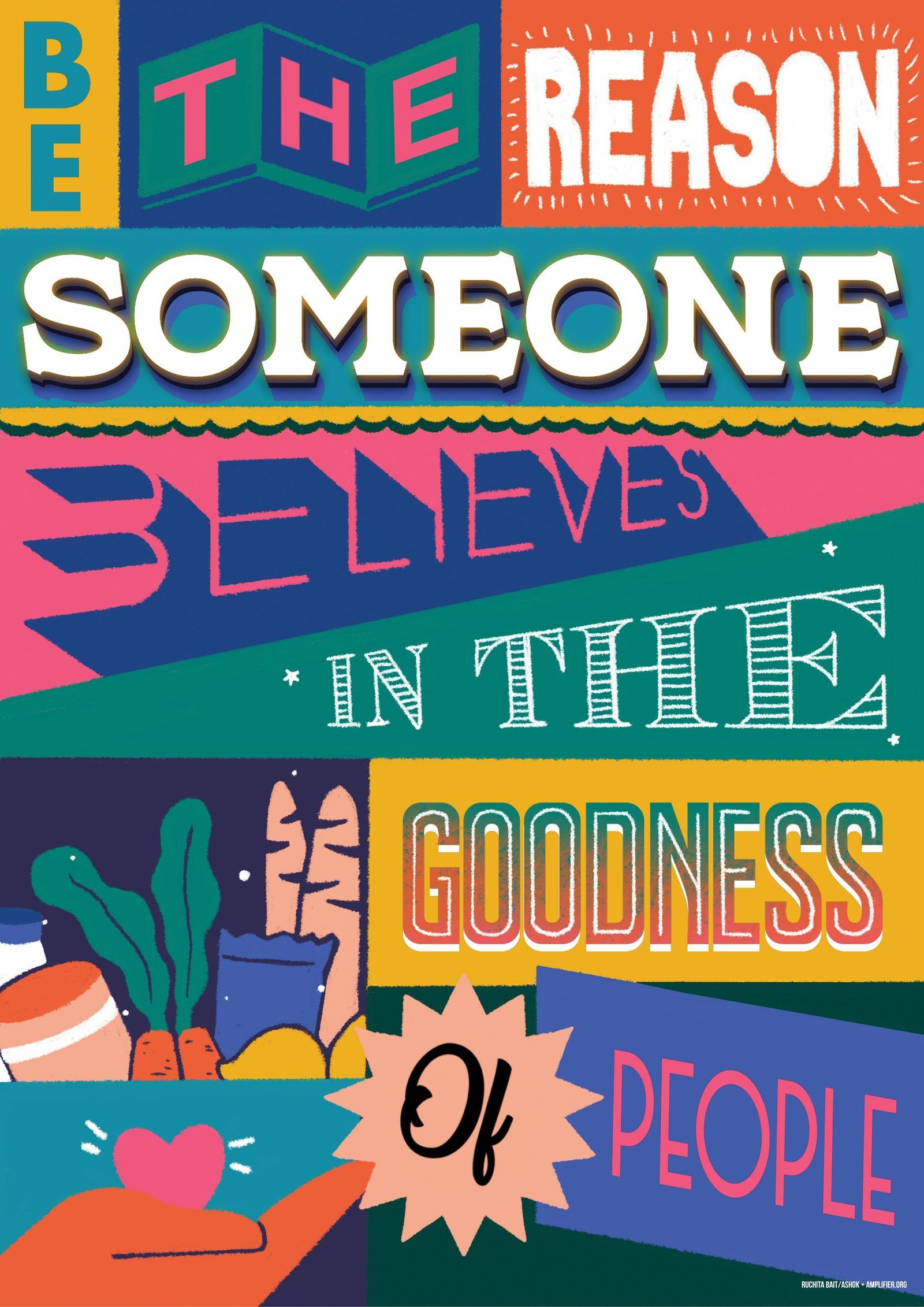
Ruchita Ashok
BELIEVES
In response to COVID-19, The Wellbeing Project, in collaboration with Amplifier Art launched a campaign with top art curators and public-health advisors from around the world, looking for symbols that promote mental health, wellbeing and social change work in this new age
“Every little donation will help in making sure that somebody doesn’t sleep hungry.”
BUNNIE REISS
HOPE
In response to COVID-19, The Wellbeing Project, in collaboration with Amplifier Art launched a campaign with top art curators and public-health advisors from around the world, looking for symbols that promote mental health, wellbeing and social change work in this new age
“I created these posters as a way to connect with the world during a time of such complete isolation. My hope is that they help others to see the light at the end of the tunnel. The only real way for us to get through this is together.

BUNNIE REISS
STANDING APART
In response to COVID-19, The Wellbeing Project, in collaboration with Amplifier Art launched a campaign with top art curators and public-health advisors from around the world, looking for symbols that promote mental health, wellbeing and social change work in this new age
“I created these posters as a way to connect with the world during a time of such complete isolation. My hope is that they help others to see the light at the end of the tunnel. The only real way for us to get through this is together.”

EMILY PERELMAN
SUPPORT EACH OTHER
In response to COVID-19, The Wellbeing Project, in collaboration with Amplifier Art launched a campaign with top art curators and public-health advisors from around the world, looking for symbols that promote mental health, wellbeing and social change work in this new age.
Digital illustration representing themes of support, coming together, and shining a light in a time of darkness, by Emily Lynn Perelman.
See more from Emily here

EMILY PERELMAN
SUPPORT EACH OTHER
In response to COVID-19, The Wellbeing Project, in collaboration with Amplifier Art launched a campaign with top art curators and public-health advisors from around the world, looking for symbols that promote mental health, wellbeing and social change work in this new age.
Digital illustration representing themes of support, coming together, and shining a light in a time of darkness, by Emily Lynn Perelman.
See more from Emily here

LENDL ROMERO
SACRIFICES
In response to COVID-19, The Wellbeing Project, in collaboration with Amplifier Art launched a campaign with top art curators and public-health advisors from around the world, looking for symbols that promote mental health, wellbeing and social change work in this new age.
A Greater risk of everything in life is what our Medical People are willing to sacrifice fighting this life threatening pandemic. Most countries are not prepared and it comes with a prize . My art speaks everything lacking on our Health Care System . We may get through this soon but we need to provide them the liberty and support they need . To our Front liners we salute and pray for the strength you put into despite the lack of measures of our Government. (Ray thorns & Sun represents the hero / liberty image)

KIMBERLY ASHBY
SELF CARE
In response to COVID-19, The Wellbeing Project, in collaboration with Amplifier Art launched a campaign with top art curators and public-health advisors from around the world, looking for symbols that promote mental health, wellbeing and social change work in this new age.
Kimberly Marie Ashby is a Black and Native American, queer, woman artist, activist, and doctoral candidate in counseling psychology. Kimberly creates hand-cut collages through an Afrofuturist lens, using found materials to reflect marginalized people’s ability to make marvels out of the scraps they are given. Kimberly created this hand-cut collage To express the importance of self-care, particularly for Black and Brown people in the US who are being disproportionately impacted by COVID-19.
