Art x Wellbeing Art x Wellbeing

Cultivating Wellbeing Through Creativity
Art is a powerful tool for self-expression, fostering self-discovery and understanding. It also sparks empathy, compassion, and social change, promoting dialogue among diverse communities. Whether creating or appreciating art, explore this section for inspiration and discover how art can enrich your life and shape a brighter future.

ART X WELLBEING ART X WELLBEING

Art can have a powerful impact on your wellbeing. Art can have a powerful impact on your wellbeing.

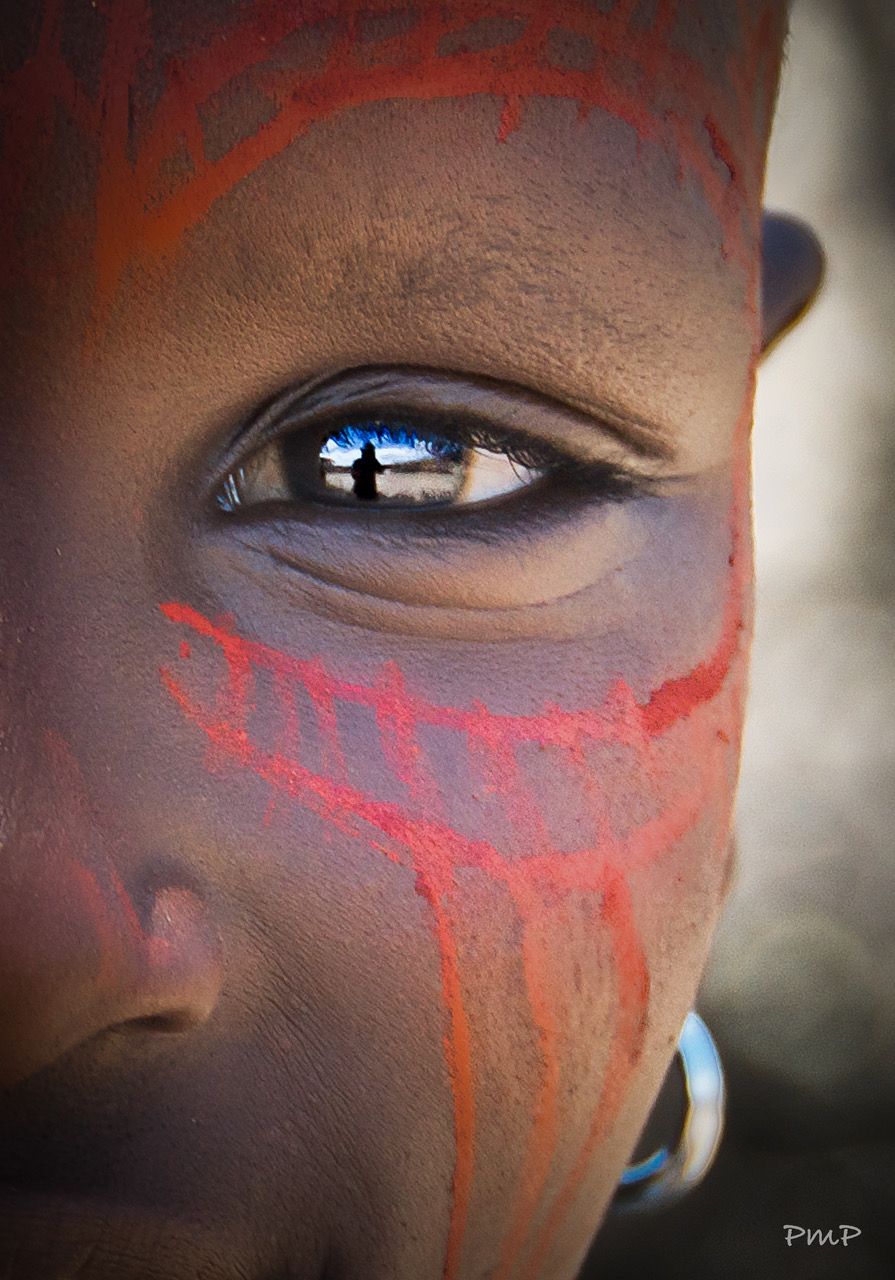
Through our collaboration with Peter Mortifee, Co-Creation Team Advisor for The Wellbeing Project since 2014, we aim to showcase the link between art and well-being through his stunning photography. Peter’s reflections on well-being are captured in his thought-provoking images accompanied by insightful captions, which invite us to pause, reflect, and connect with our inner selves.

Join us on a journey of self-discovery and explore the transformative power of art and its ability to promote well-being!

Don’t Miss Our Latest Updates!

Follow  “Reflections on Wellbeing” in real time at: @thewellbeingp@petermortifee

Explore Peter’s entire photographic work here.

Global Summit on Dance Movement Therapy for Change – Reflections Global Summit on Dance Movement Therapy for Change – Reflections

By: Anubha Agarwal , Research & Learning Manager at The Wellbeing Project

Date: January 2023

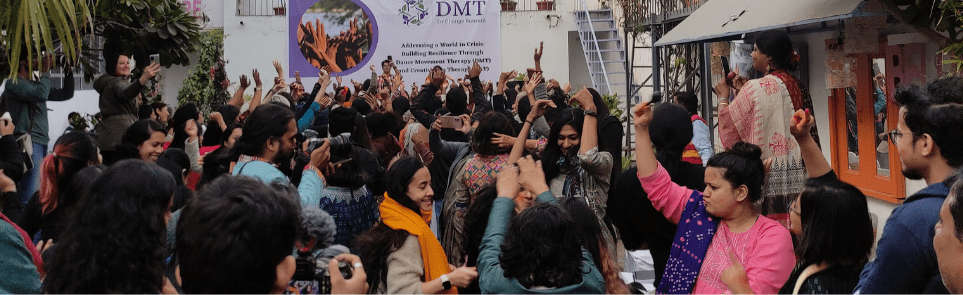
Last month I had the pleasure to represent The Wellbeing Project at the Fourth Biennial Global Summit on Dance Movement Therapy for Change in the eclectic and colorful city of Jaipur, Rajasthan in India. 

The two-day event was co-hosted by Kolkata Sanved – a non-profit organization based in India promoting holistic well-being through Dance Movement Therapy (DMT) and Center for Lifelong Learning (CLL), Tata Institute of Social Sciences – a unit of the leading public research university in India.  

The fourth biennale held on January 12-13th , 2023 in Jaipur was focused on exploring the role of DMT and other creative expressions in building our collective resilience for navigating a world that seems to be at a heightened risk of diminished ecological health and well-being. The 2023 Fourth Biennale DMT for Change was attended by a diverse global audience comprising of development sector professionals, including DMT practitioners, Creative Art Therapy (CAT) practitioners, social scientists and public health experts.

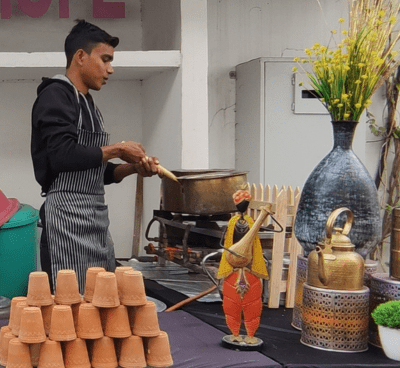
With a colorful mix of experiential sessions, workshops, panel discussions and art installations, the Summit events wove together seamlessly in a rich tapestry. While ecological well-being of planet Earth and the looming danger of the climate crisis was the dominant theme at the Summit, the event was peppered with participatory sessions and workshops employing music, visual arts and storytelling to express individual reflections. 

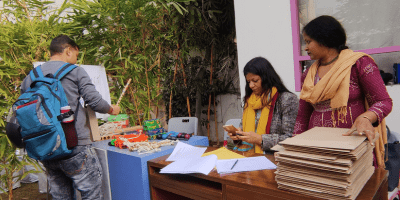
That artistic underlying theme at the Summit was evident, when at the time of registration, each Summit attendee was offered an option to choose a handheld musical instrument ( displayed below ). I found it amusing to briefly fiddle with the wide range of percussion instruments and select one, even though the intended use was not entirely clear to me. It became clear in time as the attendees enthusiastically sounded the percussion tools to endorse a speaker or an idea, infusing fresh energy and cheerfulness into the Summit events in the process. 

Before the Summit, I was unfamiliar with the role of dance movement therapy as a psycho-therapeutic healing practice. Even though it is commonly known that dancing releases mood-enhancing hormones in humans, I was curious to understand how DMT was different in terms of providing subsistence to trauma victims and survivors of violence in our communities. 

While I was quite thrilled to avail an opportunity to experience DMT through an experiential workshop at the Summit, I was also mindful not to participate in the workshop with the possibly unfair expectation to fully imbibe the therapeutic benefits of dance movement therapy. Considering DMT is a therapy, it might need longer duration support and intervention, than joining in one hour and a half long session. Having personally experienced the de-stressing effect of many dance forms in the past despite having two left feet, I was looking forward to experiencing DMT first hand. 

During the workshop, free flowing movements that came naturally to each one of us were encouraged, the underlying thought being that DMT is a safe space where in every individual is free to express themselves in the way they want. In line with this tenet, an unfamiliar yet intriguing section of the workshop encouraged each participant to imagine their physical body as a paint brush and to use their limbs and torso to paint a limitless, imaginary canvas. Shifting my mental lens to think of my physical form as a paint-brush took some getting used to but eventually the infectious energy of the workshop cohort took over.  

I admit to feeling mentally relaxed and exhilarated post-workshop but still curious to understand how DMT could potentially serve as an antidote to counteract violence in our vulnerable communities. In a country like India, society norms can be quite restrictive of womens’ movement outside the society- or family-ordained ‘safe’ physical spaces, so I felt it would have been insightful to know how the DMT practice can support individuals in freely expressing their possibly repressed agency and take better care of their holistic well-being. In retrospect, I think hearing narratives from DMT practitioners who use DMT as a tool to navigate everyday threats to their physical and mental well-being, would have been of immense value in understanding the practice better. 

It is entirely possible that such narratives may have already been shared in the past Summit editions, but as a first-time participant, I missed the absence of such narratives. I did get to interact with a couple of DMT practitioners who mentioned that the practice helps them cope with everyday stress and shift the lens on how they view their lives. 

[mk_padding_divider size=”20″]

One of the key learnings for me during the Summit was the reinforcement that approaches to enhance one’s well-being are quite individualized. Availing the opportunities to experience different expressive art forms at the Summit was a constant reminder that there is no one-size-fits-all approach to well-being. An art therapy that might have a profound impact on one, might fail to put a dent on another individual’s well-being. 

There is also the question of lack of funding to support well-being – the proverbial elephant in the room. However, until the world decided to acknowledge the presence of the aforementioned elephant and fully awaken to the mental health crisis we are in, one of the speakers at the Summit offered a slightly simpler solution to cope, “Art therapy is expensive… a good place to start is to start noticing what art tools you have easy access to at home such as fallen leaves, spices or other readily accessible elements of nature often overlooked. Art material could be taken from elements that are part of an individual’s environment or identity.” 

The two-day DMT Summit for Change feels like a great step in the right direction as such gatherings help mainstream conversations on mental well-being and facilitate the oft-forgotten human connect. Overall, the two days left me feeling happier, joyous and craving for more opportunities to rekindle the deeper human connect, that often gets overlooked in our everyday lives, but that such events help us remember. 

The reigning emotion for me at the end of the two-day art-based DMT for Change Summit and 2022 The Wellbeing Summit was that of HOPE. Hope for mental well-being taking center stage at a global level, specifically in cultures that in the aftermath of the pandemic are slowly opening up to talking about mental health and well-being.

Birdheart

Theatre Production

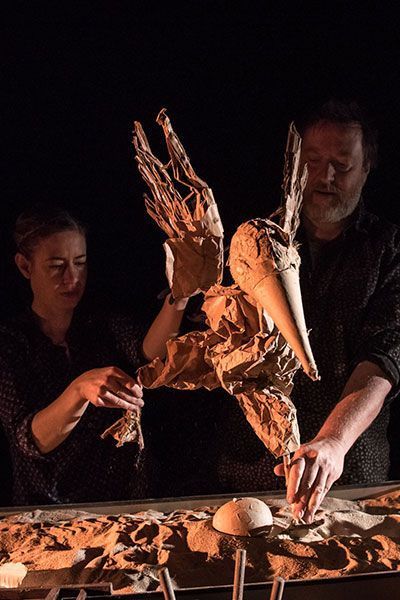
Julian Crouch and Saskia Lane’s BIRDHEART – An intimate and stunning chamber piece of animated theatre with a sheet of brown paper and a box of sand. A show about transformation, loneliness, and the urge to fly, BIRDHEART holds a hand-mirror up to humanity and offers it a chair. Through a series of animated images built in front of the audiences’ eyes BIRDHEART creates something achingly beautiful from the humblest of beginnings.

The show tells a story of man’s relationship to the world. An egg lies on the sand, and from the egg is born a large sheet of crumpled brown paper. The sheet of paper pulls elements up out of the sand; different hands, feet, heads. Sometimes the paper opens outwards and shadow images are projected in the heart of the paper figure. The figure dreams of a bird. Eventually, the sheet of paper transforms itself into a large paper bird, lays an egg, and flies off.

The onstage creation of something from nothing is at the very heart of the piece. The brown paper suggests the soul and emotion of the metamorphosing puppet, and the objects that are pulled from the sand give identity and story to the shifting characters. The egg reminds us of where we all come from. The uncontrollable nature of the material means that each show is different and grows organically in the moment.

Birdheart features a recorded soundtrack of double bass and banjo composed and performed by Saskia Lane and Julian Crouch.

Gerald Wirth

Professor and Choirmaster

Prof. Gerald Wirth received his first musical training as a member of the Vienna Boys Choir and at the Anton Bruckner University in Linz, Austria, where he studied voice, oboe and piano. In 2001, he became artistic director of the Vienna Boys Choir, in 2013, its president.

Wirth was a choirmaster of the Vienna Boys Choir and chorus master at the state theater Salzburg. After 1991, he took over the direction of the Calgary Boys’ Choir, became musical director of the Calgary Civic Symphony in Canada. Gerald Wirth has conducted choirs and orchestras all over the world. His first love is the human voice. He holds workshops all over the world, and he can get practically anyone and anything to sing.

Most of his compositions are vocal works. He has written three children’s operas, several large oratorios, motets, and songs. “Carmina austriaca”, his most recent large-scale work, is a cycle of medival songs for large orchestra, mixed chorus, and boys’ choir. Gerald Wirth is often inspired by myths and philosophical texts.

Over the years he developed his own method of music pedagogy. In 2003 he founded the wirth music academy in order to educate music teachers and choir directors according to the wirth method which combines classical music theory, consciousness for sound, training in listening, rhythm training and singing within a holistic approach.

Gerald Wirth trains teachers in schools with little or no access to music, and supports a number of organisations offering workshops for refugees – children and adults – in Jordan, Greece and others. To him, music is the language of emotions understood by everyone; through music, other subjects become accessible. “Music is a gateway to learning, and this is particularly important for children who have never been to a school.”

He is convinced music has a positive influence on every aspect of a person’s being.

Grimanesa Amorós

Interdisciplinary Artist

Grimanesa Amorós was born in Lima, Peru, and lives and works in New York City. She is an interdisciplinary artist whose diverse interests include social history, scientific research, and critical theory. A direct relationship to technology is one of the distinctive features of Amorós’ practice. Some elements must be planned and programmed but others, such as the exact placement of the lines of lights, come to Amorós while she installs. In this sense, the technology does not determine but complements the concepts of her work. Her art incorporates video, lighting, and electronic elements to create monumental sculptures activating architecture and engaging communities.

Grimanesa Amorós draws upon important cultural legacies and landscape for inspiration. Still, she does not hold an essentialist or nostalgic view of her subjects. In the art of Grimanesa Amorós, the past is meeting the future. She is often invited as a keynote speaker at museums, foundations, and universities where her lectures empower young women, attracting future artists, students, and faculty involved in architecture, science, and technology.

Amorós has exhibited in the United States, Europe, Asia, Middle East, and Latin America. She was a guest speaker at TEDGlobal 2014, a recipient of the ‘NEA Visual Arts Grants Fellowships 1993’, and has the distinction of being part of the ‘Art In Embassies Program of the U.S.’ and the Civita Institute NE Chapter Fellowship Grant. Her work has been exhibited in numerous museums including the Ludwig Museum, CAFA Museum, and Katonah Museum.

For more information about Grimanesa Amorós, visit grimanesaamoros.com

Watch this clip to find out more about Grimanesa and her project to be exhibited at The Wellbeing Summit in Bilbao-Biscay:

Watch this exclusive interview with Grimanesa and Arts Curator, Manuel Bagorro, ahead of the Summit:

Read on for an exclusive Q&A with Grimanesa Amorós ahead of the Summit:

What does wellbeing mean to you?

I always say that when we have our health, we have everything. Wellbeing is attending to our inner selves.

We must live in balance, physically, mentally, and emotionally. It is a process we are required to nurture and foster throughout our lives, but it is well worth the effort. We cannot effectively share ourselves to the world if we are not whole.

Why are you looking forward to being part of The Wellbeing Summit?

I’m looking forward to contributing to the summit as it allows me a platform to share the message of wellbeing and connection throughout the arts. My goal is to make people think, and to have them become inspired to live more purposeful, creative lives.

How does your work connect to wellbeing?

When creating monumental sculpture, I consider how our architectural surroundings influence and affect our state of mind.

Art provides a means, and has the power to, access our emotional selves. It makes us more empathetic, it gives us the space to nurture and prosper. Studies have shown how light improves our mood and mental health.

As a medium, it has the ability to bridge cultures and diverse audiences; we all connect to light.

Aakash Odedra

Dancer and Choreographer

Aakash Odedra was born in Birmingham, UK and lives in Leicester. He is a globally recognised and award-winning dancer and choreographer. He trained in bharatanatyam and kathak, then moved to India as a student of the renowned Bollywood choreographer Shiamak Davar. Aakash Odedra’s work forms the heart of the company and as a soloist he has performed over 300 full length performances in 40 countries in the past decade. His choreography pushes boundaries, responding to and drawing inspiration from contemporary issues. As a British-Asian, Aakash Odedra uses his voice to translate ancient and contemporary movement languages to tell new stories

Awards include the Amnesty International Award for Freedom of Expression; Best Dance at the Eastern Eye ACTA Awards 2018; a nomination for Best Stage Production at the 2019 Asian Media Awards for #JeSuis; and in 2021, Aakash was a awarded a British Empire Medal in the Queen’s New Year’s Honours for his services to dance. Notable commissions include James Brown: Get on the Good Foot (Apollo Theater, NY). In 2017 Aakash choreographed the Royal Opera House production Sukanya composed by the late great Pt Ravi Shankar and was movement director for Curve Theatre’s Pink Sari Revolution.

As a solo performer his awards include: Danza&Danza award (Italy); Dora performance award (Canada); Audience Award Dance Week (Croatia); Infant Award (Serbia); Bessie Award New York (Best Male Performer); and a Sky Academy Arts Scholarship.

Connect with Aakash Odedra on social media :

Bishop Dr. Chantel R. Wright

Choir director and Founder of Pneuma Ministries International

Bishop Dr. Chantel R. Wright is an internationally celebrated choir director and the founder of Pneuma Ministries International. A native of Chicago, Illinois, Chantel started her career as an award winning choral conductor and received her formal education at VanderCook College of Music where she earned her BA degree in Music Education. As part of her undergraduate studies, Chantel had the privilege of studying in London, England with Ian Pleeth and traveled throughout Europe as a soloist. She started her professional career in Atlanta, Georgia where she served on the music staff of Ebenezer Baptist Church — home of the late Dr. Martin Luther King Jr. and as an educator in Dekalb County Public Schools. After seven years of service, Chantel relocated to New York City and hit the ground running as the new Director of the Girls Choir of Harlem, as well as Minister of Music at the Macedonia Baptist Church in Mt. Vernon, New York. An honor celebrated by few women, Chantel lent her talents to working with the youth of Queens, New York as the Artistic Director of the Queens Symphony Orchestra Youth Gospel Choir.

Chantel gained valuable experience as an orchestral conductor, which then inspired her to establish her own non-profit organization, Songs of Solomon: An Inspirational Ensemble, Inc. Almost immediately, Songs of Solomon flourished and was soon featured on major television networks and went on to win at competitions including the Pathmark Gospel Choir Competitions and McDonald’s Gospelfest where it took home the 1st place prize. The Songs of Solomon ensemble also had the privilege of sharing the stage with American Idol winners, Kelly Clarkson and Fantasia Barrino, and served for five years at the US Tennis Open. Under Chantel’s leadership, The Songs of Solomon ensemble also performed with award winning recording artist, Elton John at Radio City Music Hall, sang with opera great, Jessye Norman at the Greenbrier Country Club. Jessye Norman was also the curator of the Honor Choral Music Festival conducted by Dr. Craig Jessop at the world famous Carnegie Hall, where today, the Ensemble is a mainstay. The ensemble has worked tirelessly over the past twenty years under Chantel’s guidance and has garnered national and international acclaim. Songs of Solomon was the featured chorus for the musical “Violet” on the Tony Awards. Songs of Solomon was selected to be a part of the inaugural Lip Sync Battle with Jimmy Fallon on network television. Having recently completing their recording project, “Variations of the War Cry,” Songs of Solomon is actively engaged across the United States and abroad as ambassadors of love.

Being totally committed to the spiritual, intellectual and artistic growth of today’s youth, Chantel knows that the only way to shape a generation of spirited, world class musicians is to work in conjunction with the education system. She then went on to establish The Songs of Solomon Academy for the Arts – an organization that directly serves New York City students in instrumental and vocal music appreciation. Since its inception, the program has given an impressive number of students from the Tri-State area, performance opportunities that rival professional artists around the world. The Academy maintained an artistic partnership with Professional Performing Arts School and the Harlem School of the Arts. As part of Chantel’s love for young people, she has also been actively involved in secured detention centers in the New York area and has continued to work with Carnegie Hall’s Musical Connections project for youth in detention centers. Bishop Wright is a part of the Weil Institutes Music Educators Workshop, Founder of the Sight-singing Workshop at SAG/Aftra and is a part of the Metopolitan Opera’s education department. Chantel’s Songs of Solomon Academy for the Arts plans to implement The Sounds of Hope Chorale — a trial choral program aimed at fostering an appreciation for music and creating a safe haven for detained youth at Rikers Island and the Horizion detention center in Brooklyn, New York. After a successful trial run, Chantel hopes to roll out the program nationally.

Bishop Wright has been sought out as a choral clinician nationally and internationally. For two consecutive years as the choir master for the Harare International Festival of the Arts in Zimbabwe, South Africa, as well as the Roma Gospel Festival in Rome, Italy. Chantel is a mainstay at the Ithaca Gospel Music Festival. As an initiative for aspiring artist, the government of the island of Bermuda engaged Chantel to do a series of workshops and a culminating festival. Most recently, Bishop Wright served at the Fede Gospel Festival in Barcelona, Spain and the Coro Gospel Festival in Vigo Spain.

Dr. Chantel R. Wright holds a PhD in Theology and serves as a New York State Chaplain. Chantel is a recipient of the New York Times Teachers Who Matters Most Award, The Ebony Ecumenical Ensemble Community Service Award, and the Ephesus Seventh Day Adventist Community Service Award and is a member of the Riverside Club for Education.

Chantel remains committed to building a literate music community, and also lends her time to the vocal music department of the Steinhardt School of Music at the New York University since 2008. Moreover, she serves young people nationally and internationally through the arts organization partnerships, her uncompromised passion to see humanity win.

The highest calling in her life is to the Gospel of Jesus Christ. As a licensed and ordained Bishop, within the Christ Centered Ministries Assembly. Bishop Wright has established Pneuma Ministries, International where peoples’ lives are being changed. She was anointed by the late Kenneth H. Moales Sr. and opened the church and preached her first sermon simultaneously. In addition to her work in Harlem, she is a minister for the nations with the Wednesday night Pentecost Service where worshipers from all over the world converge for a blessing from God. She is a Choral Union president of the Thomas Dorsey National Convention of Gospel Choirs and Choruses where she is on the national board of directors, and can also be found on WLIB as the host of “The Hour of Power.”

Bishop Chantel R. Wright resides in New York City.
Geo Britto

Founder and Board Director of ETP

Geo Britto, a veteran Joker. Member of the Board of Directors of School of Popular Theatre- ETP(Escola de Teatro Popular) organization created and founded by himself and Julian Boal. He worked for 32 years at the Centre of Theatre of the Oppressed-CTO in Rio de Janeiro and was one of the first generation of students who trained with Augusto Boal for 19 years.

The ETP have worked with many different grass-roots movements – housing, students, LGBT, land and others – come to learn, teach and become a multiplier. Geo Britto has coordinated and participated in many projects in slums, prisons, mental health institutions, education, cultural and human rights.

He graduated in Social Sciences from the Catholic University of Rio de Janeiro (1994) and has a Master in the Graduate Program in Contemporary Studies of Arts-UFF. 2013. He has experience in the area of Arts with emphasis in Theatre Direction. In general, from his education as Social and Political Scientist and simultaneously with the start of interest in the performing arts, he started a process to join the theory of the university campus with the practice of theater. Since 1990, when he met Augusto Boal and from this meeting he has not separated from him, learning continuously a lot in their workshops, laboratories and workshops. From 1993 to 1996 democratized politics through theater as they took the theater into the Municipality of Rio de Janeiro and took the camera for the squares, streets and slums, theatricalizing their discussions and creating the Legislative Theatre. His job, as proposed by the methodology itself, has always been broad and transversely on Human Rights. In this period built and formed groups of slums, street boys and girls, black movement, women, elderly, LGBT, mental health, peasants, ecclesial movements base, students, banking, domestic workers among others were built. After the mandate, and with the experience, I could take the work of the Theatre of the Oppressed, we can call it the Theatre of Human Rights to other social groups and to continue and deepen what they already did. Geo created, as other members of the Theatre of the Oppressed, what he called the Solidarity Network in which through the Oppressed Theatre performed theatrical dialogue where different oppressed groups had for each other. Different oppressed discovered how much their oppressors were similar and many came from the same “barracks”. Today, the Theater of the Oppressed is a present methodology in more than 50 countries on five continents, working on several fronts and themes, always with a human rights focus. He actively participated in the construction of this global network. He continued as a sociologist working not only in the classroom, but in the streets, squares, slums, prisons, settlements, mental health, schools; a practical and theoretical research with the Theatre of the Oppressed his everyday martial art, holding lectures, workshops and theatrical performances in Palestine, Bolivia, Mozambique, Egypt, India, South Africa, Argentina, Uruguay, Colombia, Peru, Mexico, Guatemala, Croatia, Portugal, Spain, Germany, England, Canada and U.S.A. He has a Master in Arts-UFF Federal Fluminense University and is also a father of twins.

Connect with Geo Britto on social media :

Alicia Framis

Multidisciplinary Artist

Alicia Framis (1967, Barcelona, Spain) is a multidisciplinary artist that comments, in her artistic practice, on outdated or uneven societal power structures and misgivings, formulating in her projects that range in scope from performance art, design, architecture and garments, new ways of reclaiming social spaces for the under privileged, overseen, undervalued, in contemporary cultures. As an artist she deals directly with her role as part of society, staging large scale interventions to shake up general economic systems and social structures. Her interventions are often seen as social sculptures, combining the designed aesthetic and idealist conviction, as an artwork with an active role for the viewer.

Framis was the director of the Master’s program at Sandberg Institute (Rietveld Academy), for Commoners Society which explored new ways of living and working together. She studied at the Barcelona University and the École de Beaux Arts in Paris. She completed two masters programs, one at the Institute d’Hautes Etudes, Paris and another at Rijksacademie Van Beeldende Kunsten, Amsterdam.

Art can function as a strong reminder in the public debate that the shine of innovation and the common markers of prosperity, often actively shape an exclusive model of reality that far from covers the many layered complexities of societies in innovation growth mode.

As an artistic cross disciplinary approach, performance art can on a profound level challenge the broad reverberations of these contemporary societal shifts as an empathic, artistic communication tool for introspection. Performance as a practice can so effectively explore interpersonal relations and social dynamics, as public spectacle or one on one experiences.

The many forms performative artistic practice art can take are always in evolution. Exploring the materiality of performative practice and embracing the fluidity of the form, is of vital importance. Actions, poems, conferences, interventions, immaterial performances, collaborations.

At the same time Framis’ work is not only performance because performance is always something in movement, in her case she works with interactive sculptures, garments, videos and photography.

Click here to find out more about Alicia Framis.

Read on for an exclusive Q&A with Alicia ahead of the Summit:

What does wellbeing mean to you?

For me wellbeing is a state of mind and body in which we are at peace with ourselves and our surroundings. Wellbeing is achieved, it is not given to us. That is why we humans have to always strive to achieve wellbeing. Wellbeing is naturally in nature, it is a state of abundance for humans, but at a time when we break the ecosystem and mankind is more concerned about power than anything else, humans then suffer from shortages and injustices, and then wellbeing again becomes a goal.

Why are you looking forward to being part of The Wellbeing Summit?

It is a great opportunity to connect with other disciplines, I believe the subject is so interesting that I hope connect there with all kinds of visitors: financiers, gurus, artists, creatives, innovators, engineers, etc. I think we have to unite to make our society better, we must live better, it is our right; the state of deprivation, poverty, the cult of the body, are all things that have to disappear.

How does your work connect to wellbeing?

My work connects to wellbeing in two ways: one is by being a part of a group of artists, collaborating with them on this subject. Secondly, the subject of wellbeing is part of my personal research as an artist – the wellbeing of people, how to live better and create new possibilities. I believe that art is a tool to bring people together.

How does your work for the summit bring you and your audience closer to wellbeing?

I believe that my work is a way of reflecting on how we can live better. The paraglider that I am making has a phrase on it that can be seen from everywhere – it says: WE ALL BELONG TO THE SAME SUN.

Connect with Alicia Framis on social media :