Regional Hearth Summits Regional Hearth Summits

Hearth Summit Higher Ed 2025

ABOUT THE SUMMIT ABOUT THE SUMMIT

Fostering Wellbeing in Higher Education

After an incredible first edition, Hearth Summit Higher Ed returns to continue sparking wellbeing and positive change in the higher education sector! Get ready for another transformative experience where an exploration of wellbeing at every level — individual, organizational, societal, and ecological — will intersect, all in pursuit of creating a culture of wellbeing within higher education.

Stay tuned for more information.

In the meantime, express your interest in attending this year’s summit and catch a glimpse of Hearth Summit Higher Ed 2024.

Express Your Interest In Attending Upcoming Regional SummitsExpress Your Interest In Attending Upcoming Regional Summits

Registrations aren’t open yet for Hearth Summit Higher Ed, but you can express your interest in attending with this form. We’ll share your information with the organizers!

HOSTED BY HOSTED BY

The Wellbeing Project’s Wellbeing in Higher Education Network

DON’T MISS AN UPDATE! DON’T MISS AN UPDATE!

Follow the Hearth Summit Higher Ed story

Subscribe to our emails and follow us on social media to stay updated about Hearth Summit Higher Ed and the other Hearth Summits.

MORE REGIONAL SUMMITSMORE REGIONAL SUMMITS

Discover the Wellbeing Movement in Higher EducationDiscover the Wellbeing Movement in Higher Education

Meet and hear stories from the changemakers championing the wellbeing movement in higher education.

AT THE HEART OF IT – EPISODE 5

ROHINI NILEKANI AND MELINDA FRENCH GATES
Funding Hope and Wellbeing

In this insightful conversation, Rohini Nilekani, Chairperson of Rohini Nilekani Philanthropies, engages in a heartfelt conversation with Melinda French Gates, Founder of Pivotal Ventures, about the power of wellbeing to inspire welldoing. As part of The Wellbeing Project’s new series, “Cultivating Hope”, Rohini and Melinda discuss the critical role of philanthropy in supporting the wellbeing of social changemakers.

Building on Rohini’s keynote address at the first regional Hearth Summit in India, they highlight how funding wellbeing initiatives can lead to sustainable impact in the social sector. By sharing their own personal wellbeing practices, they offer invaluable insights into the importance of nurturing both inner and outer work. Let’s get to the heart of it.

Let's dive right in! Let's dive right in!

LISTEN TO EPISODE 5
And find us on  Spotify  |  Apple Podcasts  |  YouTube  |  Amazon Music

Resources Resources

From This Episode

Full episode transcript Full episode transcript

This transcript has been edited for clarity

Welcome to At The Heart Of It, a podcast where we explore issues at the heart of our world’s biggest challenges and their solutions. We’re on a journey inward going into ourselves, reflecting on who we are, listening to humanity’s collective story. Our guides are the visionary leaders, activists, scholars, and practitioners who are changing the world and whose own inner journeys of wellbeing inspire their welldoing.

You may know that at The Wellbeing Project, we believe wellbeing inspires welldoing. This means that when social changeamkers’ wellbeing is cared for, their power to make the world a better place is even stronger. But sometimes changemakers have limited access to wellbeing resources, and this funding gap is holding back progress both now and for future generations.

To make a difference, philanthropy and funding organizations can play a key role in making wellbeing more accessible to the people who need it now more than ever. For today’s episode, we bring you a profound conversation from our new video series, Cultivating Hope, where leading philanthropists share how funding wellbeing is a key way to cultivate hope and sustainable impact in the social change sector.

Our special guest host is Rohini Nilekani, Chairperson of Rohini Nilekani Philanthropies, who sits down with her friend and fellow philanthropist, Melinda French Gates, founder of Pivotal Ventures, for an intimate conversation on their own wellbeing journeys, why it’s important to fund changemakers’ wellbeing, and the role philanthropy plays in driving transformative positive progress.

Let’s get to the heart of it. 

Rohini Nilekani (RN): Hi, Melinda. It’s so good to see you.

Melinda French Gates (MFG): Hi, Rohini. I’m so glad we could do this.

RN: Yeah, I’m so glad The Wellbeing Project asked us to be in this, what I think is an important conversation that should ring around the world. And with you there, I hope that will happen. 

MFG: Okay, good. 

RN: You know, I’m going to kick it off, Melinda. We’re going to talk a little more about the wellbeing of the social sector, which is what The Wellbeing Project is mostly involved with. But I want to ask you about your own journey, and I’m happy to share mine later. But how do you see the journey of your own wellbeing? I mean, it keeps changing across our lives, but anything you’d like to share about what you do, or how important you think it is and any words to share with us? 

MFG: Yeah, I think wellbeing is fundamental in terms of me doing the work that I try and do in the world. And for me, it’s when I’m sort of at my best, I think when I can align my heart, my spirit and my mind. And for me, I’ve had to develop over the last, I would say 25 years, a kind of a set of practices that helped me do that. I’d love to hear some of yours, but I’ll tell you a few of mine, which is I try in the morning, every morning to do just a little bit of yoga and then I sit and I either read something spiritual and journal or meditate on that, or I just meditate. Every day I try to get some exercise. The realistic part of that is probably five days a week. It’s harder when I’m traveling and on the road. Then kind of across the course of the month or the year, I both have a group of friends, female friends, that I try to walk with every Monday morning when we’re in town. And then I’m in two different non-denominational spiritual groups. One is about eight women. It’s been going on for over 20 years. One is started right before COVID and it’s six women. And again, we do readings and then we talk about what is alive for us or what we’re working on in terms of our spirit. So those are some of my practices. I’m curious, what are some of yours? 

RN: Yeah, you are very disciplined, Melinda. I know that about you and you work really hard at things. So, yes, wellbeing. Obviously it’s critical. I find that my needs and practices have changed over the decades. And now that I’m in my 60s, I feel like I need something different. So my first way of being well is to be with my grandson, but everybody should be so lucky to have a grandchild next to them. But apart from that, as soon as I can, I get out into nature. So, like you, when I wake up, I do some breathing exercises or some prayer or something like that to settle me before I get out of bed. But then my first thought is to go out on the balcony and listen to the birds because I’m a big birder. So the first thing I want to know is there some other bird calling? Who’s calling? Are my friends here out there in the sky on the trees? So that really helps to center me a lot. I love music. I like yoga like you. We like walking. We try to do exercise as much as we can. And we try to be disciplined at any rate. But I think of all the things I like what you said about having a circle of friends. I think women perhaps find it easier to have that circle of friends to whom you can make emotional contact and tell them what you’re feeling and hear from them too. But that’s been hugely important. And I think having them on a WhatsApp group has also helped, especially since the pandemic. So yeah, working on wellbeing seems to be critical. 

MFG: You know, there’s a great teacher who says that unless the inner work is large, the outer work can’t be large, right? If the inner work is small, the outer work stays small too. 

RN: I’m sure you’re familiar with this, but I had some statistics. The Wellbeing Project has been doing a lot of surveys among changemakers, 300 plus in 55 countries. And 75 percent of them said, yes, wellbeing was important, but only 25 percent felt able to do something about it. And that burnout, stress, anxiety, trauma seems to be part of the journey of changemakers. Because you and I are at least one degree or two degrees removed. People on the front lines dealing in war-like situations, in extreme poverty, disease. We are hearing that their substance abuse, anxiety, mental health issues are much higher than in any other sector. So which is why I think we need to think together. How are all of us who are in the donor community, in the social sector community, able to make a difference? How do you think, Melinda, we could work together, all of us, to do a little more to bring this issue more into the mainstream? It is more in the mainstream than it used to be, but any of your thoughts as to how we can highlight it more? So that even how philanthropy is done can change a little to support the social sector better. Do you think philanthropy is ready or we need to nudge it a bit? Or when will we, do you think we are more ready post-COVID?  

MFG: What you’re doing here with The Wellbeing Project is bringing it to light, and then yes, absolutely, philanthropy can keep some space to say, okay, we know this takes a little bit more overhead, but then what we see is that, like, a social worker will stay in their job longer, and there’s, there’s a huge benefit to that longevity. We can use our voice in the philanthropy sector, I think, to bring wellbeing up and to highlight it. And we’re hearing it discussed more and more around. The world at what I am seeing, particularly after COVID, is that the changemakers who were out there trying to help in the caregiving space or the teachers on the front lines or the nurses or the community health workers, they are just overwhelmed. I mean, they’ve helped to deal with that in their own family lives, let’s say COVID, and they’ve seen a lot of death in the community or near death, and they see traumatized families. So what they are experiencing is just enormous and it’s cumulative over time, right? So in one of the projects that I’ve worked on here at Pivotal Ventures, one of the things we made sure to do is one of the partners that we’re working with called the Highland Project. They’re trying to help women of color create financial intergenerational wealth But what we’ve realized with that partner and what they realize is they first had to take care of the wellbeing of their own staff. And so their own staff had to learn practices to take care of their own wellbeing, their own mental health, and their own financial wellbeing, so that then they could be out in the community, helping people on the ground have this intergenerational wealth. But you’re now having employers also say, wait a minute, if my employees aren’t well, or let’s say they’re dealing with an ageing parent who’s dying at home, they just can’t show up at work the same way. So how do we give them more wellbeing days or personal days off? And so I do think having this conversation, you know, helps us all recognize in society literally what we’re going through.

RN: Yeah, I’m so glad you mentioned the corporate sector as well, because definitely employee wellbeing and mental health are important key concerns that have come up, especially after covid. But do you think I can see how the corporate sector? Yes, they want to employ productivity. They obviously want their employees to be their fittest possible, happiest possible selves. Do you think philanthropy is ready? And how do we help make it more ready to say, yes, we talk about overheads or we talk about unrestricted funding, how can we keep a portion of that so that every organization we all support has a little space to create more wellbeing practices or whatever it needs? Maybe develop some processes, all of which take some resources so that they are also at their best to do what they want to do, which is help make social change. 

MFG: I will be honest. I don’t see the philanthropy sector doing it at large yet but the conversation has started. There are more conferences about wellbeing. I mean, how are you seeing it play out in India?  

RN: I think we are new at this. Even putting it on the table that it is such, we know that our frontline workers are under extreme stress, whether they’re in the social sector or government, medical workers, health workers, the ASHA workers, et cetera, it’s an extremely stressful situation. And I think sometimes while government has some good practices, I think it’s up to the philanthropy sector in India to now help start to develop some more tools to help those who have to face this. You know, come head-to-head with human distress every day and yet be detached enough to continue working. So I think there’s a lot of space from my philanthropy side, Melinda. One thing is I’ve begun very recently a new portfolio on mental health. I’ve put in about 13 million so far to two big national institutions that are working on five very prevalent mental health issues like schizophrenia, addiction, bipolar, etc. So, there’s long-term research going on there, which is very critical so that we can develop new, I hope, innovative therapies, or I don’t know what’s in store with that. But we’re also doing other grants in the sector which is important because it’s a huge issue in India. We’re also trying to understand what donor practices, just like you said, what are the best practices that help support our partner organizations to be at their most effective self. So we try at least to lead with trust and we try to give organizations space to change their practices or change based on what’s happening on the ground so that they’re not really locked into very hard defined ways of doing things. And we try to do some deep listening whenever we can. So I’m sure it’s the same with you. And I think that allows organizations a little more freedom and flexibility and takes the stress off of them. I must say sometimes donors can cause a lot of stress to partner organizations. So if donors were to say that we won’t be a source of stress at any rate, maybe it gives more space for peopl, especially leaders. You know, Melinda, I’ll keep this brief. We did a recent portfolio meet. And the leaders of these organizations were talking about how difficult it has become for them as leaders to constantly lead with confidence and without themselves scrambling under the increasingly complex issues, especially with climate and other things that we are facing now, climate anxiety is huge. I found among young people and young leaders. Any thoughts on that? 

MFG: Well, I would say the other thing that you haven’t mentioned just as a general thing that we can do as philanthropists. One of the things I’ve worked on with Pivotal Ventures is about six years ago, I decided I really wanted to look more at the adolescent mental health space because the numbers were not good in the United States. And one of the things we realized is that there was not a good body of knowledge about what was truly going on with adolescents and particularly around their digital usage, right? Because they get all these messages about climate change, about institutions not working for them, and they get all these messages from their friends that aren’t good. And so one of the things that we’ve done is added to the body of knowledge by creating a Center for Digital Thriving at Harvard, and what they’re doing is really surveying and talking to adolescents about where is social media helpful to you and where is it hurtful? We’ve had some pretty surprising results. For instance, adolescents are saying that it’s really hard for them because at night, if one of their friends, let’s say, is having suicidal ideation or feels like they’re on the brink, they feel like they need to stay awake and support them. So one of the things we’ve learned is then how do we give parents tools to support their own adolescents? And everybody can use that in the field, right? Whether you’re a philanthropist, whether you’re a changemaker on the front lines, you can say, I’m also supporting my adolescent son or daughter. Here’s what I know about helping them survive or thrive, actually digitally. So we’re doing that. That’s one space we work in. And another you can work in, which we’re doing again with Pivotal Ventures is really looking at the caregiving that’s going on. It’s going on in every country. Women carry the disparate burden of that, but really highlighting that issue and bringing the research forward to show. What is the double-edged sword that women face supporting elderly parents and the young and again, getting that in front of employers and helping employers realize how to connect employees to the right insurance policies and the right sort of days off. So that’s another thing philanthropy can do is, which is we can highlight issues and then create bodies of knowledge of research and then connect various industries.  

RN: Absolutely. So I hope it’s there on the Pivotal Ventures website, and I’m sure you’re putting out public documents that others can use for sure. And we shall continue. We will continue to do the same. As you know, Melinda for seven or eight years, our philanthropy has been working with young men and boys because we find that I mean, of course, you what you’re talking about women’s economic empowerment, their safety, the health is absolutely critical. And we are decades away from getting to any place that we are comfortable. But alongside, a lot is happening with young males around the world. Many of them are at extreme risk. There is enough data to show that whether it’s sexual abuse, whether it’s exposure to violence, young males sometimes have worse issues. When it comes to enrollment, and we’re finding this in many countries, that actually today, there are more girls enrolled in educational institutions than boys. So where does that leave boys in the future and young males? So I think we are working, and it creates a lot of anxiety especially in adolescent boys. And just today we were listening to stories about how ymales are getting confused. They don’t know whether to be happy that women are moving forward or whether to feel resentful and victimized by the advancement of women. Because when you get into that mental model of scarcity, then you’re not able to be generous about other groups moving forward. So I think some of these things, we all can share best practices and how do we relieve some of these anxieties and stresses, especially with young people around the world. And The Wellbeing Project actually does have a lot of work on this. Their annual summit is, I mean, it’s not annual, it’s every two years, but that brings together changemakers from around the world who talk about what they did to help not only their wellbeing, but the wellbeing of the constituencies they try to represent. And we really need much more of that sharing around the globe.  

MFG: Just add to what you said about men and boys. You’re the one that really affected me quite some time ago, it was maybe seven or eight years ago. You and I first had this conversation and I really just wasn’t looking at the issue at the time. And I realized I needed to broaden my lens because you’re exactly right. I mean,we don’t have great generative models, I think for talking to boys in society about, it’s not a pie that gets sliced, you know, half to the women, half to the men. It’s that we expand the pie. We expand the pie economically. We expand the pie of being able to live the life that you want to live, right? But if you end up with a segment of society that feels like they’re losing because women are gaining, that fear and that anxiety plays out in society and will often actually then play out in violence towards women.

RN: Right. 

MFG: And so instead so men and boys having these messages of here’s a great way, like here are three dozen archetypes of men that you can look up at and they are very generative leaders They support their daughters and their wives and their aunties. And, and they’re a great CEO or they’re a great founder of a company, but they need to see archetypes of who they can be in society, just like women and girls need to look up and see archetypes of great women and in society. Because I always say we have to be well to do well. So you have to feel good in terms of your wellbeing, but you also can’t be what you can’t see. And so I think we need to have a new conversation for men and boys about who they can be in society in an ever-expanding world, not a contracting world. 

RN: Exactly right. How can they be the best human selves without being weighed down by expectations from society and without having to take out their frustrations on the women around them, which has been unfortunately very sanctioned and normalized over the years. But things are changing. I heard so many positive stories from young males that our partners have been working with, and I feel very hopeful that our identities that split across so many, so many groupings in our heads that our human identities will be first and foremost, and that it will allow us to look at our own wellbeing and the wellbeing of all people in equal measure. 

MFG: One thing I want to just say, just because I’m not sure everybody knows it about you and Nandan, which is I’ve been in conversations with you all over time where we’re talking about very serious topics, right?  And I will watch you insert your voice because you have a different point of view from him because of what you see in society at times. And I have watched the two of you dispel that with humor. Right? Like he sees your point of view and you see his point of view. And I think sometimes we also don’t talk about, you know, humor is a way of releasing some tension, right? Or taking time out of life. I know the time, the two of you take some time for vacations, like to the extent we can take some time out away from our, Difficult change making work just to have time to reflect and to be and even to play right, I think is so important. 

RN: I think I’m so glad you brought up the point of humor.  You know, humor is very important. It’s almost like a muscle you have to develop because it keeps you humble, right? It keeps you from having too much certainty about your own beliefs. It allows you to break your ego once in a while, apart from allowing to laugh, which we all know releases endorphins and improves your wellbeing. So you’re absolutely right to bring in the humor. How can we keep our sense of humor alive even when times are very dark? So thank you for bringing up that point. It’s very, very critical. So as we come to a close of our time, Melinda, any last thoughts, any message you would have from your own life, how you went inside to strengthen yourself so that you could work outside? And what would you say for people who are just beginning to do that or just beginning to realize that? It’s not like a goal that, oh, I have to reach there in 10,000 steps or whatever. So how, what last advice would you have or what do you want to share?

MFG: I would say build a trusted group of friends that you can talk with when things are hard, when you’ve seen something different, difficult on the front lines, or you’re supporting someone in your family while you’re trying to create change. Have a trusted circle of friends that you can reach out to on WhatsApp or via a walk or on email. For me, that has really carried me through some very difficult times in life, either personally or when I’m doing the hard work out in the developing world. So find your trusted group of friends and nurture it. And the second thing I would say is have a gratitude practice. Every night, no matter where I am before a meal and whoever I’m with, even if they don’t want to, which would be my older adult children now sometimes, we go around the dinner table and we all say one thing we’re thankful for that day. And I just did it with my son and his friends who are 24 this weekend. And I did it again with my 21 year old daughter and her friends. You know, I kind of get the look like, are we really doing that mom? But I find that you’d be amazed what people say they’re grateful for and how it creates connection. And just in being grateful, it also releases some of the stress and tension.  

RN: I think that’s really beautiful because gratitude gives us so much strength to carry on. I used I’ve been saying of late that also cultivating hopefulness, not empty optimism, but hope almost as a religion, an article of faith, because when you have hope, then you have the energy for action. You can get up and do something because you have hope that some good outcome will come out of it. So I think hope when it is nurtured in the right way. Not in an empty way drives us to action and action when you’re doing something, there’s less space for you to ruminate and to be depressed. So keeping that hope, nurturing it or strengthening it, especially when things don’t seem to be going right, certainly has helped me at any rate and I hope it will help a million others in the world. So, I think I’ll close by saying thank you to The Wellbeing Project for thinking of getting us both together. It was a great pleasure to speak to you. You are a role model to many millions of women in the world because of how much you give of yourself. And I think by giving of ourself, we receive so much back and that is also part of the journey of wellbeing. So shall we end with a nod to the millions of changemakers around the world who need support, who need us to recognize that in their work, which they do on behalf of all of humanity, they need a little bit of a helping hand too. And if philanthropists like us could do a little more, I think there’d be that much more, well, wellbeing, of course, but also more opportunity and ways out of our crisis looking ahead, but I’m going to let you have the last word.

MFG: Yeah, so I would say my gratitude today and my thankfulness really is for the workers who do the really hard work on the front lines. I always say this in my own work that I don’t have the tough job. They have the tough job. They’re out working in communities and creating change and trying to help moms with a new baby and try to be a teacher of the young and set the right values. So I just have enormous gratitude for the men and women who work on the front lines. You’re doing the hard work. So I would say take care of yourselves. Be nice to yourselves and you are actually my heroes.  

RN: Thank you so much Melinda. Thanks for that message. And thank you for doing what you do. Let’s keep working together. Namaste. 

MFG: Namaste. Thanks Rohini.

Thank you for listening to this episode of At The Heart Of It. For more news, research, and stories about wellbeing and social change, visit wellbeing-project.org. The Wellbeing Project is the world’s leading organization advocating for the wellbeing of changemakers and for wellbeing in changemaking. We believe wellbeing inspires welldoing. Thanks for listening and see you next time.  
 

Connect with Cheng Tsung Feng on social media:

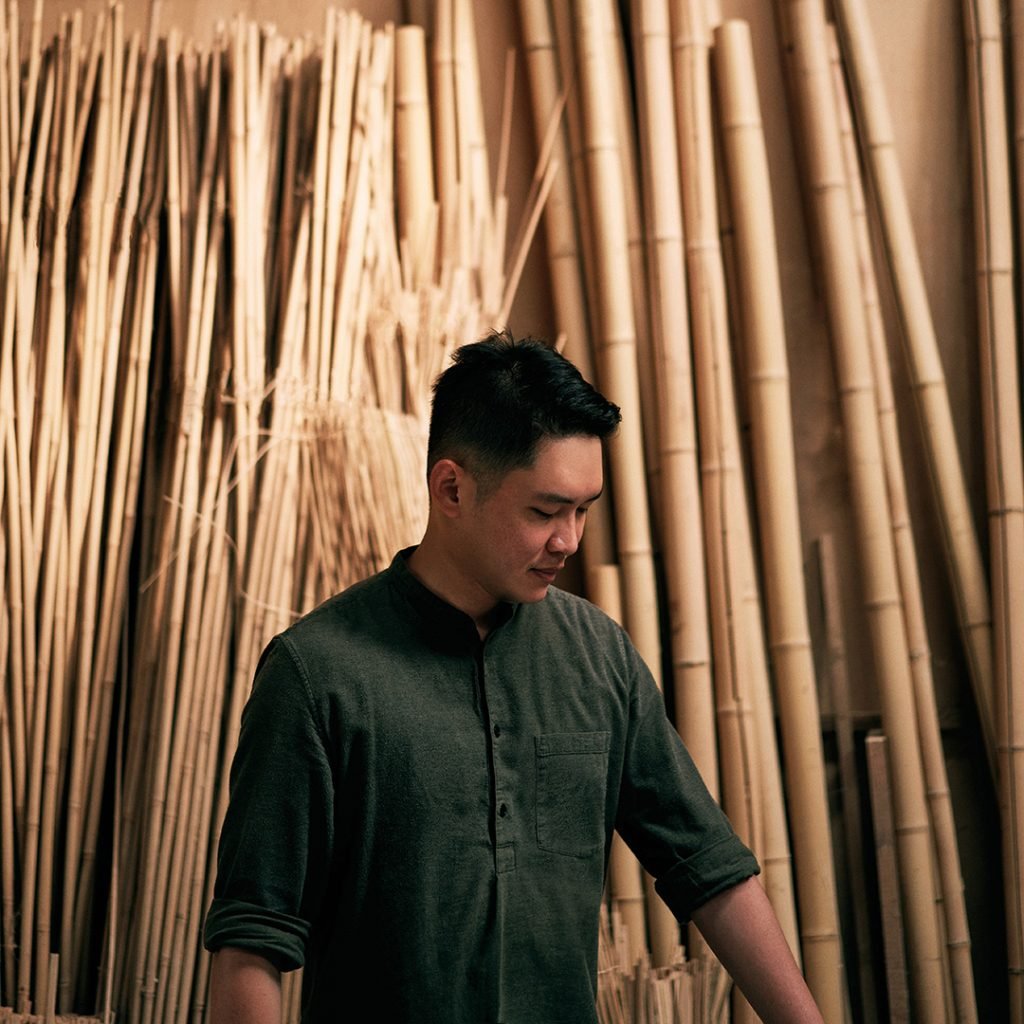
Cheng Tsung Feng

Installation and Sculpture Artist

Cheng Tsung FENG is an artist who deeply studies traditional craft culture. He learns the production of traditional handmade objects from old craftsmen from different regions, and spends a long time collecting and researching the ancient and gradually forgotten oriental culture, creating art works in various forms and sizes based on this.

His works are not only beautiful, but also storytellers of traditional culture and handmade memories. He shares the gradually forgotten stories through his works, allowing these precious handmade memories to be passed down in modern times.

He often incorporates modern technology into his works, constantly exploring new ways of creation, and always focuses on the quality and aesthetic of his works.

He is an artist with rich value in handmade craftsmanship, full of development potential, imagination, and exploration spirit.

He has been invited by Hermes, Cartier, Loewe, Bottega Veneta, The Balvenie, Apple, Aesop, Nike, The Ritz-Carlton, HBO, Kvadrat and other international brands to create commissioned artworks & projects.


IN CHENG TSUNG FENG’S WORDS

How do you think individual, collective, and planetary wellbeing are connected?

I believe individual, collective, and planetary wellbeing are deeply interconnected. When individuals live with awareness and responsibility, their choices contribute to the well-being of their communities. A healthy collective, in turn, fosters a culture that respects and nurtures the environment. The planet’s well-being is not separate from our own—it reflects how we live, create, and coexist. Sustainable practices in our daily lives and creative work can be a bridge that connects personal fulfillment, societal harmony, and environmental balance.

What do you hope the outcomes are from the global Hearth Summit?

I hope the Hearth Summit encourages exchanges that transcend cultural and disciplinary boundaries, fostering new ways of thinking and collaboration. By bringing together individuals from diverse backgrounds, we can create conversations that resonate beyond specialized fields and reach a wider audience. I look forward to seeing how these interactions inspire fresh perspectives and meaningful engagements that extend beyond the summit itself.


Stop 1: EARTH Stop 1: EARTH

Your Hearth Summit Journey Begins

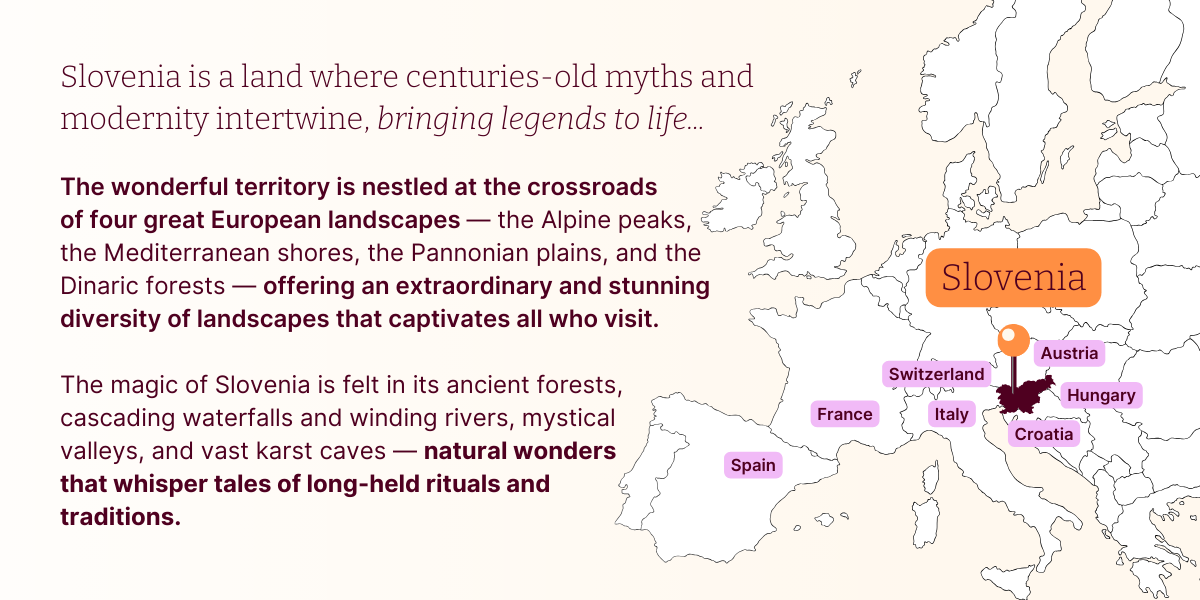
This year, all roads lead to the HEARTH – and we want to get you excited, spark your curiosity, and start connecting with the community as we approach our global gathering this June in Ljubljana, Slovenia. Your seat around our collective fire is confirmed, and now the global Hearth Summit experience begins!

We will make four stops on our road to the HEARTH – meaning that you will receive four emails of this sort, including this one. Closer to the event, you will also receive separate emails with important technical and logistic information.

These will be short stops with light, informative content for you to enjoy and start getting a sense of what is coming in June.

With no further ado, dobrodošli (welcome) to our:

MYTHS & LEGENDS

There are many myths and legends, but no Slovenian tale would be complete without mentioning its mighty guardian and protector—the Dragon.

Legend tells the story of the Greek hero Jason and the Argonauts, fleeing up the Ljubljanica River after his quest for the Golden Fleece. Suddenly, the dragon rose—scales rippling like bronze, eyes blazing with ancient fire. Its roar shook the air, a challenge to all who dared cross it.

Jason, courageous and steady, faced the beast. Their battle was fierce, a storm of strength and will. But it was Jason’s cunning that won the day. With a final blow, the dragon fell, its spirit transforming the land and woven into the very fabric of the capital city.

Some say the thick winter fog is the dragon’s sleeping breath, rising from beneath Ljubljanski Grad (Ljubljana Castle), where it continues to watch over the city, its bridges, and the people who cherish its legacy.

Today, Ljubljana’s dragon stands atop its iconic Dragon Bridge, wings wide – not as a symbol of fear, but of resilience, connection, and belonging. The dragon reminds us of what happens when we meet challenges with courage and community: we transform and can lead with our heart, breath, and collective fire.

HISTORY

The tale of Jason and the Argonauts is not the only heroic journey tied to Slovenia—the country itself has its own story of resilience and triumph.

Slovenia had been ruled by various empires throughout the centuries: from the mythical Roman Empire, the Habsburgs, and more recently, as part of the Socialist Federal Republic of Yugoslavia. But the desire for freedom and independence remained strong in the hearts of the Slovenes as they wished to govern their own land and destiny. 

In the 90s, amidst the uncertainty of a changing world, the Slovenes decided their moment had come. Despite the complications, challenges, and doubts, the people united under a vision of freedom and a yearning for prosperity. In 1991, Slovenia achieved and declared its independence from Yugoslavia, an act that echoed around the world. There were tensions in the early days, but the Slovenes remained resilient, protecting their dream of a free and peaceful country. In 2004, Slovenia strengthened its resilience by fostering closer ties with its neighbors and entering the European Union in its fifth and largest enlargement.

CULTURAL RICHNESS

From generation to generation, Slovenes have told stories, sang songs, and prayed in their own language, passing down their heritage from parents to children.

Long before borders were drawn, the Slovenes spoke an ancestral tongue—one they shared with neighboring tribes. This ancient language, Proto-Slavic, was a unifying melody that connected different peoples across vast lands.

Over time, Slovenes preserved and evolved their own distinct linguistic identity. Proto-Slavic adapted to the rhythms of Slovenian life, giving rise to a unique language deeply rooted in its landscape and traditions.

Today, Slovene stands as one of the few surviving Slavic languages that has retained its complexity and rich historical depth. There are 40 different dialects throughout the country and each of them remains a testament to the resilience of a nation that, despite the passing of empires and shifting borders, has held onto its voice—its most powerful link to the past.

The arts have long played a central role in Slovenia’s cultural and national identity. Literature was instrumental in the country’s path to freedom– so much so that the verses of France Prešeren, Slovenia’s most celebrated poet, now form the lyrics of the national anthem, Zdravljica”—a powerful ode to unity and peace.

Music is another vital part of Slovenian culture connecting past and present, from traditional folk melodies to the distinctive harmonies of Slovenian choral singing, to today’s thriving and diverse music scene featuring classical compositions, jazz festivals, and an emerging indie movement.

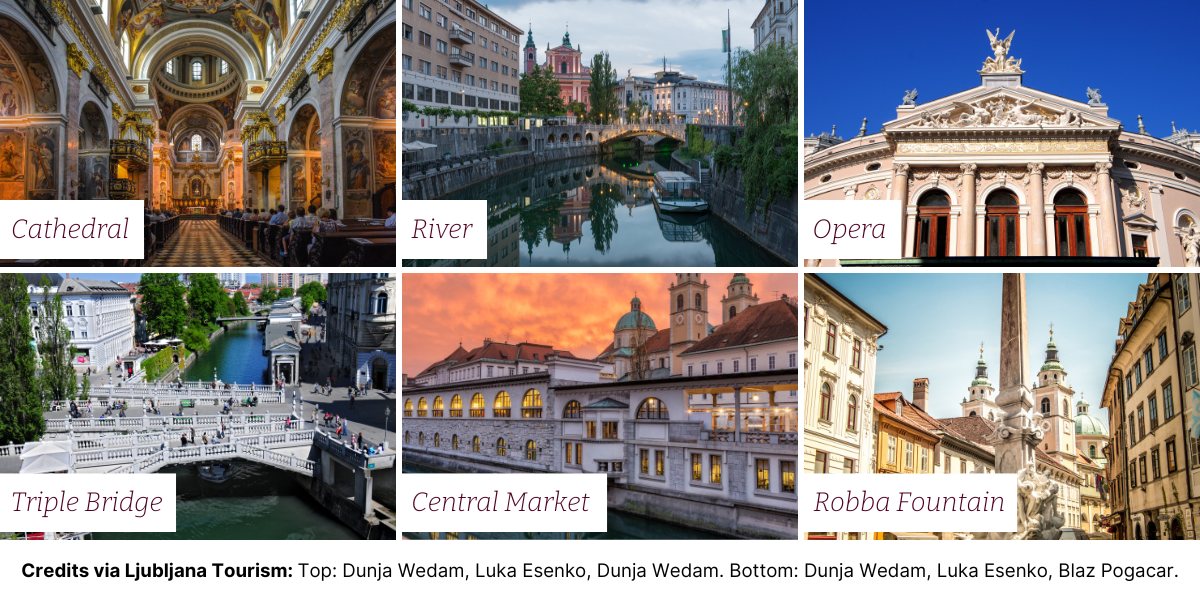
In addition, Slovenians have long balanced pragmatism with a love of beauty and artistic expression. This is evident in the works of Jože Plečnik, the visionary architect whose designs have shaped not only Ljubljana’s cityscape but also inspired urban aesthetics in Vienna and Prague. His work in Ljubljana entered on the UNESCO World Heritage List as “Human Centred Urban Design” including the Triple Bridge, the National and University Library, and the Central Market, all of which blend classical grandeur with functional modernity.

GREEN CAPITAL FOR A SUSTAINABLE FUTURE

Sustainability is evident in Ljubljana’s and Slovenia’s commitment to energy and waste-management goals, green tourism, and sustainable mobility. Top national priorities include embracing a low-carbon and circular economy via reducing greenhouse gas emissions, increasing the use of renewable energy sources, and developing sustainable urban systems and mobility.

In recent years, Ljubljana has been celebrated for its cultural scene and leadership in urban sustainability, receiving many renowned titles such as European Best Destination, European Best City Break, European Green Capital, UNESCO City of Literature, and the first capital city with a Zero Waste Goal.

In 2009, Ljubljana introduced Kavalirs (Cavaliers), electric vehicles providing free public transportation within the city’s pedestrian zones. This initiative has significantly improved accessibility for both residents and visitors, particularly benefiting the elderly and individuals with mobility challenges.

At a national level, Slovenia is dedicated to preserving its natural wonders and cultural heritage, leading the way in sustainable tourism through the Green Scheme of Slovenian Tourism. This initiative offers over 100 certified sustainable experiences as it equips destinations and service providers with tools to assess and improve their sustainability practices, ensuring long-term environmental and cultural preservation.

WHY DOES OUR ROAD TAKE US TO LJUBLJANA?

Slovenia is a country deeply committed to sustainability and inclusivity, integrating these values into every aspect of its society. Its capital, Ljubljana, is renowned as a welcoming and walkable city, offering a harmonious blend of history, nature, and modern innovation.

Through its myths, traditions, history, and artistic expression, Slovenia embodies the spirit of the hearth—a place of gathering, warmth, and renewal. For centuries, people have come together under trees and around fires, sharing stories, wisdom, and a deep connection to the land.

The global Hearth Summit mirrors the legend of Jason and the dragon—a gathering of changemakers who face the challenges of our time, not alone, but together. Here, we honor traditions, reconnect with nature, and create space for renewal. Just as the people of Ljubljana built a thriving city on the dragon’s legacy, this summit calls upon us to build a better world by supporting those who carry the fire of change.

Together, we cultivate a safe and nurturing space where changemakers can recharge, forge deep connections, and draw strength from one another and the land. Like the dragon’s tale, the Hearth Summit reminds us that through courage, connection, and belonging, we can transform chaos into creation—and shape a world rooted in care, resilience, and hope.

Slovenia is a place where you can hear yourself and others, experience art, honor the earth, and practice traditions with the heart.

In the meantime, keep exploring: You’ll HEAR from us in a few weeks.

Join The Organizational Wellbeing Community Of Practice ( OW – CoP ) Join The Organizational Wellbeing Community Of Practice ( OW – CoP )

The Organizational Wellbeing Community of Practice is an initiative that stems from the Organizational Wellbeing Exploratory Program (OWEP) (2019-2024), involving 8 non-profit organizations worldwide in exploring how to address a culture change towards building a wellbeing lens. This OWEP initiative provided a flexible platform for participants to develop new ideas around wellbeing without rigid definitions, enabling them to naturally evolve their understanding and practices within their organizations.

The OW-CoP will build upon the insights gained through the OWEP experience and foster shared learning, collaboration, and support among a wider range of organizations committed to enhancing their wellbeing practices. A total of 22 organizations, including the eight OWEP members, will be invited to participate in a two-year program consisting of online meetings with specialized coaches, peer support, optional individual coaching sessions, case studies, and one annual in-person retreat.

Who is the Program For?

This program is tailored for non-governmental organizations (NGOs) committed to embarking on an organizational wellbeing journey and building a community of shared learnings. While prior experience with wellbeing frameworks is advantageous, it is not mandatory. Each organization may engage up to two participants.

Why Join the OW-CoP?

  • Collaborative Learning: Connect with other +20 organizations eager to exchange experiences and foster a culture of wellbeing.
  • Community Support: Gain from a network of like-minded individuals dedicated to promoting organizational health.
  • Diverse Perspectives: Collaborate across various sectors to deepen your understanding on wellbeing practices.
  • Organization’s culture development: Benefit from the tools provided by the coach and the learnings shared by peer organizations to implement wellbeing strategies in your organization.

How the OW-CoP operates

  • Duration: June 2025 – June 2027 (with potential extension based on participants’ feedback).
  • Participants: 22 organizations (with up to 2 members per organization), including the eight original OWEP members
  • Format: Interactive online meetings, peer support sessions and personalized coaching.
  • Annual Retreat: Participate in an enriching in-person gathering each year.

Kick-off Event:

Launch Gathering: Join us in Ljubljana, Slovenia on June 16, 2025, just before The Wellbeing Global Hearth Summit (June 17-20) for a one day in-person retreat
A welcoming dinner will be held on June 15th.

Flexible Engagement Options:

Recognizing that each organization has distinct needs and capacities, we offer a flexible engagement model with various participation levels to accommodate your schedule and ensure that you can maximize the benefits of this program.

Commitment Details:

  • Format: Combination of online meetings and an annual retreat.
  • Duration: Two-year program with continuous support.
  • Time Commitment: Tailored options to align with your organization’s needs.
  • Cost: The OW-CoP program has no costs for participants. However, while lodging during the in-person annual retreat is covered by the program, the travel expenses are the responsibility of each participant. One member per organization is invited to each retreat.

Ready To Elevate Your Organizational Wellbeing? Ready To Elevate Your Organizational Wellbeing?

Save the date! Our call for applications will be open from February 20th, until March 31st, 2025. Seize this opportunity to join a transformative movement for enhancing organizational wellbeing. For questions or concerns please contact us at eugenia@wellbeing-project.org.

The Story Behind Our Intergenerational Trauma Community of Practice The Story Behind Our Intergenerational Trauma Community of Practice

Our journey began with a shared vision: to create a space where leaders and organizations from diverse sectors could explore the profound impact of intergenerational trauma (IGT) on communities and systems. The Leadership in Intergenerational Healing and Transformation Community of Practice (LIGHT CoP) was born from a deep commitment to understanding how trauma influences social change work and the need for collective healing. Central to our approach is the recognition that the relationship we have with ourselves shapes how we relate to others—by deepening self-awareness and healing within, we can foster more compassionate, resilient connections with the people and systems we engage. Through a collaborative process, we engaged with social change leaders, mental health practitioners, and organizations already weaving trauma -informed approaches into their work. Together, we shaped this community, not just as a platform for learning, but as a catalyst for healing and transformation on both individual and collective levels.

What Our IGT CoP Is: Vision and Key Features What Our IGT CoP Is: Vision and Key Features

Our vision is to create a global community of practice that integrates healing and trauma-awareness into social change efforts. Our IGT CoP brings together 20-25 organizations, each represented by two key members:

  • A member of the senior leadership team or the CEO, ensuring that trauma-informed practices are prioritized at the highest organizational levels.
  • An additional team member, reflecting a diverse perspective and the capacity to operationalize this work.

To join, each organization must also secure board-level approval, signifying a commitment to embedding trauma-informed principles into their internal and external practices.

With organizations from sectors such as education, healthcare, and government, among others, we aim to build a truly global and multidisciplinary community.

Currently, there are very few spaces where social change leaders can come together collectively to address these critical issues. Our CoP seeks to fill that gap by co-creating a valuable, reflective space that evolves through the contributions and experiences of its members. This is not only a platform for sharing knowledge but also for exploring what lies within our capacity to transform and for highlighting areas where we may need collective support.

In this safe space for exploration and learning, we invite members to embark on a journey of self-discovery—recognizing that to go forward, we must first go inward. Through this process, we transform ourselves, shaping our own being through the very processes in which we engage. This commitment to personal transformation opens the door for others, especially within hierarchical systems, creating opportunities for collective growth and healing.

Key Features of the IGT CoPKey Features of the IGT CoP

  • Practical Application: Our focus is on practical approaches that leaders and organizations can integrate into their work, prioritizing reciprocity and sustainability in their impact.
  • Healing Orientation: A core focus on healing, with an emphasis on personal and collective well-being as a foundation for systems change.
  • Global and Multi-Sectoral: Participants come from varied fields, offering a rich exchange of perspectives and experiences.
  • Flexible Framework: The community is built around a co-created framework that evolves with the needs and insights of its members.
  • Long-Term Commitment: Joining the CoP represents a significant long-term commitment of 3 years, with the potential for extension to 5 years. This allows for deep learning, sustained growth, and meaningful impact on both personal and organizational levels.
  • Hybrid Model: The CoP will adopt a hybrid model, combining virtual and in-person events that ensure intimate and immersive experiences for members. Virtual meetings will enable consistent learning and connection, while in-person gatherings will offer opportunities for deeper exploration and collaboration.
  • Language of Communication: The CoP will be hosted in English, ensuring accessibility for a diverse, global audience.

The Purpose of the IGT CoPThe Purpose of the IGT CoP

Our primary purpose is to deepen understanding and application of intergenerational trauma in the context of social change. We aim to:

  • Promote healing as an integral part of systems transformation.
  • Explore how trauma-informed practices can create long-lasting change in communities.
  • Foster resilience and innovation through collective learning and shared experiences.
  • Empower leaders to integrate trauma awareness into their strategic priorities and operational structures.
  • Catalyze the development of new models and practices that support individual and community healing across generations.

How the IGT CoP Operates: Facilitation and ConnectivityHow the IGT CoP Operates: Facilitation and Connectivity

The time requirement for this Community of Practice would be:

  • A CoP meeting once every 6 weeks for 2 hours
  • 30-60 minutes of preparation for each session
  • 2 additional 60-90 minutes practice sessions in triads in between calls with other CoP members
  • 1 in-person meeting every year
  • A 3-year journey (with potential to extend to 5 years) to build lasting relationships and impactful strategies.

Express Your Interest In Attending LIGHT CoPExpress Your Interest In Attending LIGHT CoP

Express your interest in the LIGHT CoP by completing the form below.
We look forward to having you join us on this journey to foster healing and transformation within our systems and communities.

In collaboration with

Berta Bragado Belío

Regional Summits Coordinator

Spain

Berta is a culturally engaged professional with a strong passion for creativity and fostering social connections. Having lived in four countries, she has cultivated a deep passion and curiosity for multicultural environments, which continues to shape her outlook on life. With a degree in Art History and a master’s in Cultural Management and Art Education for Social Inclusion, she is deeply interested in the social power of the arts and their ability to bring people & communities together. She has built her career in museums, galleries, and cultural organizations, with a growing socio-educational perspective that ended up paving her way to the Project.

She comes from a family of musicians, and she is also a musician herself, believing that art and creativity are essential to a meaningful & balanced life. She is an avid observer and finds joy in life’s small details, drawing peace and inspiration from photography, reading, gardening, and exploring art exhibitions. She also loves spending time and sharing experiences with her loved ones and feeding her curiosity by exploring new places and meeting new people.

Connect with Berta Bragado Belío on social media :

Riddhi Shah

Lead, Innovation

Pondicherry,
India

In a career spanning sixteen years, of which eleven were spent living out of a backpack, Riddhi has an extensive blended experience of working on field in some of the remotest areas of India and at decision-making tables in urban India. Having played multiple roles, including those of mentor, advisor, and facilitator, she has supported and consulted for a range of Indian and international HNIs, projects, schools, organisations and institutions on Integral Education, Spiritual Ecology, Communications, Organisational Strategy, Design Thinking, CSR, Young Leadership, Fundraising, Culture and Wellness practices.

With a knack for piloting and incubation, she has given form to great ideas that have little or no blueprints, including The GROW Fund and UdyamStree, her most recent pilots, that have received global recognition and multiple awards.

Previously, she has been a Young Climate Change Representative for India, at UNESCAP Bangkok; been ranked as one of the top five influential Indian women-changemakers under the age of 25 by Hindustan Times in 2016, been a serial TEDx speaker and been invited to represent India at global forums to address critical issues pertaining to the fulfilment of SDGs, integral education, and women in leadership

What does inner wellbeing mean to you?

Equanimity and Joy!

How would you define wellbeing in one word?

Healed (past tense, specifically)

Are there any rituals or practices you use to enhance your wellbeing?

Walking barefoot on sand, grass and in the forest, art, painting and printmaking, meeting elders of the community

Why is it important that we prioritize individual, organizational and societal wellbeing?

Only the healed can heal. 🙂

Do you have any favorite books, podcasts, or articles that you believe support, promote or educate on wellbeing and related themes?

Books: Braiding Sweetgrass, Entangled Life, Savitri,
Movies: The Prophet (animated), Peaceful Warrior