


Alicia Framis’ work for the Wellbeing Summit for Social Change is a re-imagining of a paraglider’s clothing and apparatus for a filmed flight by Horacio Llorens, an aerial legend, five-time World Champion and Infinity Tumbling Guinness World Record holder.

Location: Bizkaia Aretoa – Axular
OPEN TO THE PUBLIC
Date: May 31 – June 3
Time: May 31st: 3pm – 7pm

June 1st & June 2nd: 11am – 7pm

June 3rd: 8.30am – 3pm

The garment and apparatus, acting as a white canvas, will include a line from a Basque poet as inspiration for wellbeing and freedom. The artwork will be exhibited at the heart of the Summit program, the Palacio Euskalduna, together with the film of the flight over the Basque Country. Horacio will then reclaim the apparatus for a live flight over the city of Bilbao during the Summit.

The artwork will be exhibited at the core of the Summit program, the Palacio Euskalduna, together with the film of the flight over the Basque Country. Horacio will then reclaim the apparatus for a live flight over the city of Bilbao during the Summit. TAKING FLIGHT charts a hopeful journey – of the body, the soul and the imagination.

A multi-disciplinary artist whose work blends architecture, design, fashion and performance to explore human existence within contemporary urban society, Alicia Framis often works through interdisciplinary collaboration with other artists and specialist across various fields.

Alicia Framis at the Gender Pavilion of Sala Alcala 31. Alicia Framis represented the Netherlands in the Dutch Pavilion at the 50th Venice Biennale (2003) and has had work featured in the 2nd Berlin Biennale (2001), Performa 09 New York (2009), and Manifesta 2Luxemburg (1998) among others. Her work is included in numerous permanent collections, including those of Collection FRAC Lorraine (France), Migros Museum für Gegenwartskunst (Switzerland), MUSAC de Castilla y Léon (Spain), and Rabo Art Collection (Netherlands). In 2019, Alicia Framis was awarded the Lucas Artists Visual Arts Fellowship 2019-2022 in California. Taking Flight Beginning with the artist’s meditation on Francisco de Goya’s “Modo de Volar” (A Way of Flying),

Alicia Framis’ work for the Summit embodies our desire to reach for the sky. At a time when people have been determinately earthbound, TAKING FLIGHT represents liberation; the will to reach, release, and innovate.

ESPAÑOL

La obra de Alicia Framis para The Wellbeing Summit for Social Change es una reimaginación de la vestimenta y el aparato de un parapentista para un vuelo filmado por Horacio Llorens, una leyenda del aire, cinco veces campeón del mundo y poseedor del récord Guinness de Infinity Tumbling.

La prenda y el aparato, a modo de lienzo blanco, incluirán un verso de un poeta vasco como inspiración para el bienestar y la libertad. La obra se expondrá en el corazón del programa de la Cumbre, el Palacio Euskalduna, junto con la película del vuelo sobre el País Vasco. A posteriori, Horacio recuperará el aparato para realizar un vuelo en directo sobre la ciudad de Bilbao durante la Cumbre. TAKING FLIGHT traza un viaje esperanzador, del cuerpo, del alma y de la imaginación.

Una artista multidisciplinaria cuyo trabajo combina la arquitectura, diseño, moda y la actuación para explorar la existencia humana dentro de una sociedad contemporánea urbana. Alicia Framis trabaja a menudo en colaboración interdisciplinar con otros artistas y especialistas en diferentes campos. 

Alicia Framis representó a los Países Bajos en el Pabellón Holandés de la 50ª Bienal de Venecia (2003) y ha participado en la 2ª Bienal de Berlín (2001), Performa 09 Nueva York (2009) y Manifesta 2Luxemburg (1998), entre otras. Su obra está incluida en numerosas colecciones permanentes, entre ellas las de Collection FRAC Lorraine (Francia), Migros Museum für Gegenwartskunst (Suiza), MUSAC de Castilla y León (España), y Rabo Art Collection (Países Bajos). En 2019, Alicia Framis recibió la beca Lucas Artists Visual Arts Fellowship 2019-2022 en California. Taking Flight. Comenzando con la meditación de la artista sobre la obra de Francisco de Goya “Modo de Volar” (A Way of Flying). 

El trabajo de Alicia Framis para la Cumbre encarna nuestro deseo de alcanzar el cielo. En una época en la que la gente se ha quedado decididamente atada a la tierra, TOMAR VUELO (“TAKING FLIGHT”) representa la liberación; la voluntad de alcanzar, liberar e innovar.

The Laboratory for Global Performance and Politics
by Clark Young and Derek Goldman
Directed by Derek Goldman
Featuring David Strathairn as Jan Karski

In a tour-de-force, solo performance, Academy Award nominee David Strathairn (Good Night and Good Luck, Lincoln, Nomadland) portrays World War II hero and Holocaust witness Jan Karski, a messenger of truth who risked his life to carry his harrowing report from war-torn Poland to the Allied Nations and, ultimately, the Oval Office only to be ignored and disbelieved. Bearing witness to the despair of the Warsaw ghetto and standing tall in the halls of power, Strathairn captures the remarkable life of this self-described “insignificant, little man” whose forgotten story of moral courage and individual responsibility can still shake the conscience of the world.

“‘Remember This: The Lesson of Jan Karski’ allows the voice and mission of Karski to continue for all generations.” — Chicago Post Tribune

The theatrical production of Remember This: The Lesson of Jan Karski, written by Clark Young and Derek Goldman and directed by Goldman, was produced by The Laboratory for Global Performance and Politics at Georgetown University.

Originally conceived as an ensemble production starring David Strathairn, the play was first performed in its current form as a solo performance in November 2019 as a featured part of the Centennial Celebration Weekend of Georgetown’s School of Foreign Service, and then in London in January 2020 as part of the 75th Anniversary Commemoration of the Liberation of Auschwitz, in partnership with Human Rights Watch.  After some delays due to COVID-19, the play had a critically acclaimed premiere at the Shakespeare Theater Company in the fall of 2021, and then traveled to the Chicago Shakespeare Theatre shortly after for another limited- engagement run.

“David Strathairn’s spectacularly affecting performance as Jan Karski becomes not only an emotional but a moral experience.” – DC Metro Theater Arts

The play’s success launched an accompanying educational platform piloted at Georgetown University last fall—a dynamic experiential course and accompanying website with the production as a centerpiece. Entitled “Bearing Witness: The Legacy of Jan Karski Today,” the course allows students to explore their own applications of Karski’s legacy in the context of their lives as they follow in Karski’s example to continue to “shake the conscience of the world.”

WHO IS JAN KARSKI?

“All I can say is that I saw it, and it is the truth.”- Jan Karski

Jan Karski was a courier for the Polish Underground resistance during World War II. In 1942, Karski volunteered to walk through the Warsaw Ghetto and a Nazi extermination camp before traveling to London to report to the Allied Nations on the conditions of occupied Poland and, specifically, the Holocaust. He personally delivered his eyewitness account– and urgent appeal for intervention on behalf of the Jewish people– to British Foreign Secretary Anthony Eden, and later, President Franklin D. Roosevelt in the Oval Office. His report was ignored.

After the war, Karski earned his Ph.D. at Georgetown University, where he was a beloved Professor in the School of Foreign Service for 40 years. Considering himself largely a failure and “an insignificant little man,” Karski didn’t share his story for decades until filmmaker Claude Lanzmann persuaded him to speak of his experiences for the first time in the celebrated documentary Shoah. Karski was made an honorary citizen of Israel and was awarded the distinction ‘Righteous Among the Nations” by Yad Vashem. Karski died in Washington, DC, in July 2000.

ESPAÑOL

The Laboratory for Global Performance and Politics
por Clark Young y Derek Goldman
Dirigido por Derek Goldman
Protagonizado por David Strathairn como Jan Karski

El nominado al Oscar David Strathairn (Good Night and Good Luck, Lincoln, Nomadland) interpreta a héroe de la Segunda Guerra Mundial y testigo del Holocausto Jan Karski, un mensajero de la verdad que arriesgó su vida para llevar su estremecedor informe desde la Polonia devastada por la guerra a las Naciones Aliadas y, en última instancia, al Despacho Oval, sólo para ser ignorado e incrédulo. Testigo de la desesperación del gueto de Varsovia y de su posición en los salones del poder, Strathairn capta la extraordinaria vida de este autodenominado “hombrecillo insignificante”, cuya historia olvidada de valor moral y responsabilidad individual aún puede sacudir la conciencia del mundo.

“‘Remember This: The Lesson of Jan Karski’ allows the voice and mission of Karski to continue for all generations.” — Chicago Post Tribune

La producción teatral de Remember This: The Lesson of Jan Karski, escrita por Clark Young y Derek Goldman y dirigida por Goldman, fue producida por el Laboratorio de Actuación y Política Global de la Universidad de Georgetown.

Concebida originalmente como una producción de conjunto protagonizada por David Strathairn, la obra se representó por primera vez en su forma actual como actuación en solitario en noviembre de 2019 como parte destacada del fin de semana de celebración del centenario de la Escuela de Servicio Exterior de Georgetown, y luego en Londres en enero de 2020 como parte de la conmemoración del 75º aniversario de la liberación de Auschwitz, en colaboración con Human Rights Watch. Tras algunos retrasos debidos a la COVID-19, la obra se estrenó con gran éxito de crítica en la Shakespeare Theater Company en otoño de 2021, y poco después viajó a Teatro Shakespeare de Chicago para otra representación limitada.

“La espectacular y conmovedora interpretación de David Strathairn como Jan Karski se convierte en una experiencia no sólo emocional sino también moral.” – DC Metro Theater Arts

El éxito de la obra puso en marcha una plataforma educativa que se puso a prueba en la Universidad de Georgetown el pasado otoño: un curso experimental dinámico y un sitio web complementario con la producción como pieza central. Con el título “Bearing Witness: El legado de Jan Karski hoy”, el curso permite a los estudiantes explorar sus propias aplicaciones del legado de Karski en el contexto de sus vidas mientras siguen el ejemplo de Karski para seguir “sacudiendo la conciencia del mundo”.

ACERCA DE JAN KARSKI

“All I can say is that I saw it, and it is the truth.”- Jan Karski

Jan Karski fue un mensajero de la resistencia clandestina polaca durante la Segunda Guerra Mundial. En 1942, Karski se ofreció como voluntario para recorrer el gueto de Varsovia y un campo de exterminio nazi antes de viajar a Londres para informar a las Naciones Aliadas sobre las condiciones de la Polonia ocupada y, en concreto, del Holocausto. Entregó personalmente su testimonio -y su llamamiento urgente a intervenir en favor del pueblo judío- al Secretario de Asuntos Exteriores británico Anthony Eden y, posteriormente, al Presidente Franklin D. Roosevelt en el Despacho Oval. Su informe fue ignorado.

Después de la guerra, Karski se doctoró en la Universidad de Georgetown, donde fue un querido profesor de la Escuela de Servicio Exterior durante 40 años. Considerándose en gran medida un fracaso y “un hombrecillo insignificante”, Karski no compartió su historia durante décadas hasta que el cineasta Claude Lanzmann le convenció para que hablara de sus experiencias por primera vez en el célebre documental Shoah. Karski fue nombrado ciudadano honorario de Israel y recibió la distinción de “Justo entre las Naciones” de Yad Vashem. Karski murió en Washington, DC, en julio de 2000.

JOURNALING FOR A BETTER LIVING JOURNALING FOR A BETTER LIVING

by Sambridhi Pandey

My hands slowly begin hurting as I am trying to finish the last few sentences on my “journal” while my eyes start clouding up and I cannot see clearly anymore. In the silence of the night, all I can hear is this prominent sound created from fiction; the pen against the paper when a pang of a sharp pain passing somewhere inside reminds me how difficult the past few months had been. Yet also reminding me, I was there…still there…breathing through another day.

Writing has always helped me revive through heartbreaks; both big and small. It has been an essential part of my human existence and a reliable source of contentment. Through times, when I needed a friend and didn’t have one, the paper and pen always came in handy to save the day.

Journaling, I realized, allows me to reflect, have a conversation with myself and look at situations through a new set of eyes.

The process is almost therapeutic as I begin flowing in with the words…stumbling into new perspectives and derivations from a situation that wouldn’t have otherwise occurred to me in a real time scenario.

Whether the moments are of sheer joy, gratitude or remorse, journaling blends into all the molds.

On occasions, it also plays the role of a time machine, meaning you can literally transport to a specific day or period in your life to revisit the memories, the emotions that come to life each time you go through the pages reminiscing the moments exactly the way they were.

As a good point of entry towards the journey of self-discovery, journaling lets you know yourself better, you begin understanding what makes you tick and what makes your heart sink as you write down. It’s almost like seeing yourself as a third person and really comprehending the inner workings while being detached and unbiased about situations.

I do not get to write in my journal daily and I don’t plan on logging the day-to-day mundane entries into it either. I am not super keen on tracking every hour or day of my life or what I ate for breakfast or lunch, although sometimes, that adds value too. I’d rather jump to the point and talk about things that need talking and attention. As a matter of fact, my journal entries are very intense. They are mostly monologues, where I talk myself out of a difficult phase, give myself more courage and hope to keep going.

It’s not always about stormy days though, I also make time to count my blessings and note down tiniest instances of coincidences, miracles, or my versions of “signs from the universe”, if you will. The entries are what I feel and what I think, they are mere mirrors of separate versions of me, the heart and mind. It’s always a pleasure knowing yourself from different phases of your life and seeing how you have evolved — there are certain moments where you realize how your vision had been morphed about a certain happening, how certain developments from the time of a journal entry has now shifted and your priorities have now transitioned. There is a lot of learning that goes around, rest assured.

If you’ve been considering journaling but don’t know where exactly to start, don’t fret, I’ve been there. Sometimes, its all at the top of your head, but you somehow lack the words or inspiration. To get started, you could try using some journal prompts.

SOME JOURNAL PROMPTS WHICH HAVE HELPED ME IN THE PAST:

  • My word of the day is…
  • How I feel about things that happened today…
  • One emotion that lies deep in my core is…
  • I am grateful for…
  • What has this incident taught me…
  • This thing made me happy/sad today.

We often underestimate the profound effects of something as simple as writing that comes with the least effort but has a wondrous and healing effect on us. Journaling is something I recommend to everyone interested and invested in wellness and betterment of their mental health and life.

You don’t have to be a great writer to commence your journaling journey, you don’t even have to be a writer to begin with. All you will ever need are three things — a pen, a few papers and all your consciousness, that does it!

Grab these things, sit down in a quiet space, put on some music, if you’d like and start jotting down whatever you feel, think or sense at the moment. Begin somewhere…anywhere and I promise the rest will fall together. So, whenever you feel clouded or you think you could use a friend and cannot confide in anyone just yet, a journal is what you need. It does miracles. So do yourself a favor and get yourself your paper binded friend. Trust me, I tried it and that’s what brought me here.

About the author:

Sambridhi is based in the U.S. and works in Marketing/Communications at the moment. She has also been in freelance writing for a while and has previously contributed to many global initiatives. Sambridhi considers herself to be a proprietor of mental health and emotional wellbeing and loves adding her insights to related conversations.

9 TESTED TIPS TO IMPROVE YOUR WELLBEING AND QUALITY OF LIFE 9 TESTED TIPS TO IMPROVE YOUR WELLBEING AND QUALITY OF LIFE

By John Adams

If you are a person who remains busy in work and other matters and pays no attention to your health and wellbeing, you must take a break from the robotic routine and pick healthy habits.

According to a psychologist, eating well and exercise gives your body and brain instant benefits of managing stress, depression, and anxiety. True wellbeing comes with balance, constant growth and acceptance.

Here are a few effective and tested ways that can help you improve your wellbeing:

1. Take Proper Sleep:

It may seem to be the most common advice, but trust me most of the people don’t follow the basic strep towards their overall wellbeing. Our body needs proper sleep and rest to heal and renew the energy to function properly. This healing is essential for physical and mental activity throughout the day.

Sufficient sleep regulates the hormones that are directly related to our mood and emotions. Most often when you feel an irritated or emotional imbalance, chances are high that your body lacks in taking enough sleep. An adult body needs nearly 6 to 7 hours of sleep per day. So make sure you take enough sleep.

2. Eat a Balanced Diet:

Sleep alone is not going to give you the required benefits. You need to eat a healthy and balanced diet and ensure your body receives enough amount of nutrition. The food you consume determines how healthy your inner system is. Moreover, it also helps in determining your emotional health and mental illnesses such as depression.

When your body lacks essential nutrients, it leads to serious health problems. Moreover, you end up facing emotional distress and anxiety. Health and wellness experts suggest that you should eat fruits and vegetables in sufficient amount. Moreover, eating nuts and lentil also strengthens your heart. Try to avoid caffeine, sugar and processed food as much as possible.

3. Expose Your Body to Sunlight:

Vitamin D deficiency leads to several problems such and Seasonal Affective Disorder or SAD. When you are exposed to sunlight, it causes the release of endorphins also called ‘happiness hormones’ that is responsible for the productivity of the brain.

So, take some time out of your routine and spend some time in sunlight. But makes sure you wear sunblock to prevent sunburn.

4. Deal with Stress:

Although it is difficult to avoid stress nowadays, however, it is definitely possible to deal with it. It is very important to learn to deal with stress in a smart and effective way. For that, try to avoid the situations that cause stress. If your stress is unmanageable, note down the causes of stress as well as what actions can you take to improve your reaction, mood, and even situation?

5. Exercise Daily:

When you remain physically active and exercise daily, your blood flow improves in your entire body. With the increased blood flow, the number of oxygen increases and you feel more energetic, fresh and mentally active.

Exercises and physical activities are more important if you are an office worker. Exercise not only ensures our body remains fit but also keeps your mind healthy as well. You don’t have to join expensive gyms for that. A simple walk with your pet or daily morning walk is more than sufficient. The important thing is to make it a daily habit.

In addition to your mental health, exercise strengthens your bones and muscles that prevent you from a different type of personal injuries during a workout or running your daily errands.

6. Stay Away from Smoking and Alcohol:

If you keep drinking and smoking, no matter how much you spend on your health and how hard you try, your efforts are going to be wasted.

Quit smoking and drinking to ensure you lead a healthy life.

7. Be Social, as Much as You Can:

Isolation and lack of communication are the two biggest reasons for depression, mental and physical illnesses. No matter how busy your family and work life is, try to dedicate some time to friends and socialise with them.

A man cannot stay healthy without interacting with other people. Communicating with others lowers the stress level. If you have heard of laughter therapy, it also has the same purpose to reduce the stress in which you laugh with other people. Everyone needs acceptance and friendship that is fulfilled only when you socialise with others.

8. Find and Practice New Hobbies:

Hobby helps us keep busy and engaged. When you have an interest in some activities and enjoy doing them, you take healthy steps to improve your emotional wellbeing. It also keeps the work and daily life’s pressure off your brain. Finding new hobbies is great for strengthening your brain and boost your mood.

9. Learn to Live in the Present:

The biggest reason for experiencing mood swings, depression and anxiety are when a person remains stuck in past events. Negative self-talking such as ‘why people did this to me’ steal not only the happiness but make the person miss opportunities that the present moment tires to offer.

Learn to live in the present moment and try not to think too much about the future.

It’s Simple: Laugh and Enjoy!

Don’t take life too seriously. Those who remain happy, smile more and try to keep themselves happy experience better quality of life than those who remain worried all the time. According to a study, children laugh 200 times a day while adults laugh 15 times a day.

Staying happy and laughing more is essential for a quality life.

TOP 10 TIPS FOR GOOD HEALTH AND WELLBEINGTOP 10 TIPS FOR GOOD HEALTH AND WELLBEING

By Melisa Marzett

As Mr. Jackson Brown said: “What you give brings more happiness, but not what you get.”
Happiness comes to us from time to time, but people can achieve it themselves. When routine exercises take all the time, there will still be those who will be happy and have a good mood. And all because a person becomes much more pleased if a human has learned to benefit from any situations in life.
However, happiness must be earned. Those who manage to remain more favorable than others are working hard, developing the right habits to help to cope with unexpected problems. If you do not feel happy enough, do not worry – everyone has the strength to create the daily practices of happy people.

Ten habits of pleased people, which will benefit you:

Habit 1. Spend the day entirely on yourself, because you deserve it

It is good to have ambitions and take care of others. However, happy people know when to put things aside and devote all day care for themselves. Dr. Amy Kogut says that if we do not spend at least a few minutes every day, we are less happy than we could be. You need to focus on your needs and realize that your happiness is also essential and for this, you should start doing what will dilute the routine.
Taking care of yourself is an essential habit of many happy people. Even one day a week can improve your condition if you spend it on taking care of your good health.

Habit 2. Share qualms with friends

Sometimes things can get messy. In such situations, do not keep everything to yourself. Therefore, happy people are looking for support from friends. The perfect companion here is a friend with whom you can share experiences. Friends know how to listen and sometimes give useful tips. The main thing is not to forget to substitute the shoulder when they also need help.

Habit 3. Organize your time: to-do list and its implementation

Drawing up a to-do list is the perfect tool for organizing a busy person’s time. Happy people put their cases on such a list and ensure that all of its items have been fulfilled. This list should get everything you need to do in a day, regardless of the complexity. You will see for yourself how much happier you will be when you finish all the tasks from this list.

Habit 4. Do good to others

Being a kind person and doing good is the key to well-being and fortune. By making someone happy, you are going to remember the feeling, and the person you helped will surely pay you back in the future.
As Dr. Oliver Scott Curry of the University of Cognitive-Evolutionary Anthropology says: “People are social animals. Helping members of society, co-workers, friends, relatives and even random people (in some circumstances) makes it to where we feel happier. ” The findings of a study suggest helping others to bring pleasure, and mutual assistance is the only way to better the world.

Habit 5. Stop communicating with unreliable people, no matter how difficult it is

One crucial thing unites happy people. There are no untrustworthy people in their environment. A friend is a partner or relative, but your emotional well-being is much more valuable than indulging manipulators and people you are not sure of.

Habit 6. Make sure you do not starve and eat healthy food only

Proved: happy people eat too. It does not mean that you need to feed through strength, but, like overeating, hunger makes a person weak and causes fatigue. Agree, it is difficult to feel happy with an empty stomach.
This is what Professor Andrew Oswald says about this: “When vegetables and fruits are present in a person’s diet, his sense of happiness increases faster than these products benefit the body.” Find a snack in your full schedule, and your body will thank you.

Habit 7. Get organized in the workplace and dispose of rubbish

Happy people need a clean space, whether it is an office workplace, a studio, an apartment or their own home. Your thoughts will become much more apparent if you get rid of dirty cups, trash and other paper on the table and in general, it is much more pleasant to be clean than frantically looking for time to remove the mess around you.

Habit 8. You also deserve something pleasant – pamper yourself

A delighted person knows when s/he deserves something good. Shopping to pamper yourself is harmless and boost spirits, if not to make a toy of it. Try to reward yourself that way after completing a job or putting a big project.

Habit 9. Positive thinking regardless of circumstances

There may be problems with this habit, especially if your thoughts are full of negativity. However, the fact remains that a happy person is focused on thinking positively. Avoiding bad words in their address, such people look at everything through the lens of positive. Learn to do the same, and with each new day, you will increasingly come closer to happiness.

Habit 10. Last. No one is perfect, so learn to forgive yourself

Our mistakes in no way characterize us, and those who live a happy life know how high the power of forgiveness is. Learn to forgive yourself if you have been rejected at work or have been kept for the same course at the university. Life does not stand still, so let us be kind to ourselves!
Everyone learns in his/her way to be happy. However, the essence is that happiness is possible for all of us and we all deserve it. Adhering to the above habits, you will surely come to joy, simultaneously charging positive people around you and if during the night in your life, nothing has changed, do not be discouraged and be indulgent to yourself. Some changes take time, and they are worth all the effort!

TWELVE KEYS TO WELLBEING AND HAPPINESS TWELVE KEYS TO WELLBEING AND HAPPINESS

By Melisa Marzett

All the research conducted on this topic over the years confirms one thing: we don’t get the welfare all at once. It is day after day combination of small, but essential details.

Make gifts for yourself and others. Change your sight angle to see events from a new perspective. Show gratitude. Sleep well. Do not forget to smile. It is unlikely that this is what we think in the first place when it comes to happiness. And yet we can feel better by changing some ideas and habits.
The primary condition for happiness is not the possession of certain benefits, but a lifestyle that combines self-care and openness to others. The good news is that it is never too late to start following this style.

1. Exercise
Speaking of happiness, we often think about our own feelings and ways of thinking. But the best stimulant of happiness is physical activity. So, is it time to walk? On foot, jogging, cycling. Take up gardening. Hit the ball, the shuttlecock, dance.
Exercise will allow you to feel fit, protect yourself from depression and stress, and improve both your physical and mental abilities. Find a lesson you like and fit your form. And do not limit yourself to the gym, go out!

2. Sleep
Those who spend 6–8 hours a day do better than those who sleep less than six or more than nine hours. People who sleep “optimally” are less likely to develop symptoms of depression; they quickly establish relationships with others and establish closer contact with their being.

3. Smile
How many times a day do you smile? Do not wait for the occasion to appear. Researchers recently confirmed what Darwin assumed as early as the 19th century: when we demonstrate emotions, they increase – whether we frown, or lift the corners of the lips. Indeed, with a smile, the muscles of the face are activated, sending a signal to the brain to produce endorphins – “hormones of happiness.” The more you smile, the happier you feel!

4. Stay in touch
Build relationships with other people: family members, friends, colleagues, neighbors. These connections are the cornerstones of your life, invest in them every day and enrich them. One of the distinguishing features of a human being is the need for belonging. Meeting this need fills us with positive emotions, while long periods of loneliness can knock you down.
Relationships, exceptionally close and friendly, are excellent indicators of happiness. A good social support network strengthens the immune system, slows the destruction of the brain with age and reduces the risk of cardiovascular diseases.

5. Live for the moment
Focus on the outside world and your feelings. Realize what is unusual about them. Appreciate beauty when you see it. Enjoy the moment, paying attention to every sense: touch, taste, sight, hearing, smell. Stretch the moment, delving into this feeling, no matter how simple it is: the astringent flavor of wine on the tip of your tongue, the soft hair of the cat under the palm of your hand, the ever-new-color of the sky.

6. Express your gratitude
Going to bed, before falling asleep, think about the three points of the last day for which you feel appreciated. It does not matter if it is a trifle or something vital. Ask yourself about each one of them: what is your gratitude? Say thanks to a colleague who helped you today, or send him an email. Acknowledgment is one of the most effective ways to do good.

7. Continue to learn
What skills have you recently mastered? Whether you learn from a book, video or lecture, go back to your old hobby, or start something entirely new, this increases your self-confidence and a sense of pleasure from life.

8. Develop strengths
This feeling of being deep inside is your strength. Where does it come from? Think about it for a minute. What are you proud of? Knowing your strengths, talents, using them, developing them – this is one of the surest ways of personal and professional growth. The positive effects of such development will be long-term and will help in case of depression.

9. Change perspective
Are you one for whom the glass is half empty or half full? Are you looking at the positive aspects of life or pointing out something that is not going well? Events are rarely “completely white” or “completely black,” but in most cases, it is more useful to consider their positive sides.
Here is a simple exercise in realizing this principle: if something unpleasant happens to you, try to find at least something good about the situation (even if it seems artificial to you), treating it as if it did not concern you, correctly helps to look at what happened from the side!

10. Accept life
Henceforth, the beneficence of acceptance is scientifically confirmed. No one is perfect, and there is an excellent chance that you, too, do not accept about yourself (or about others) some character traits or some actions. Sometimes it comes to obsession. However, a fierce attitude to their weaknesses does not help anything, quite the contrary. While learning to accept and forgive ourselves, we will increase flexibility, resistance, and satisfaction with life. And this will allow you to become more tolerant of others.

11. Devote time to yourself
Studies show that we feel happier when we have the feeling that we manage time. One of the ways to achieve this is to devote time to yourself, a little bit every day. And to do at such moments everything that we please: to walk along the streets or through the woods, relax on the cafe terrace, read the newspaper, listen to music with headphones. The main thing is to be alone with yourself for a while.

12. Give
Do something that will not bring you any benefits. Tell a friend or a stranger a kind word. Join a mutual help association. Research shows that generosity and kindness stimulate the brain areas responsible for the release of endorphins. By sharing time and attention, we not only reward ourselves chemically but also establish relationships. Trust is the key to peace with yourself and with others.

HOW LAUGHTER SAVES MY LIFE EVERY DAY HOW LAUGHTER SAVES MY LIFE EVERY DAY

By Alice Gatignol

How laughter saves my life every day

It wasn’t a life-changing experience, an epiphany, or anything similar. I have always loved laughing, and have always been very easily amused. I simply never realised how much laughter mattered to me, and how much my well being depended on it.
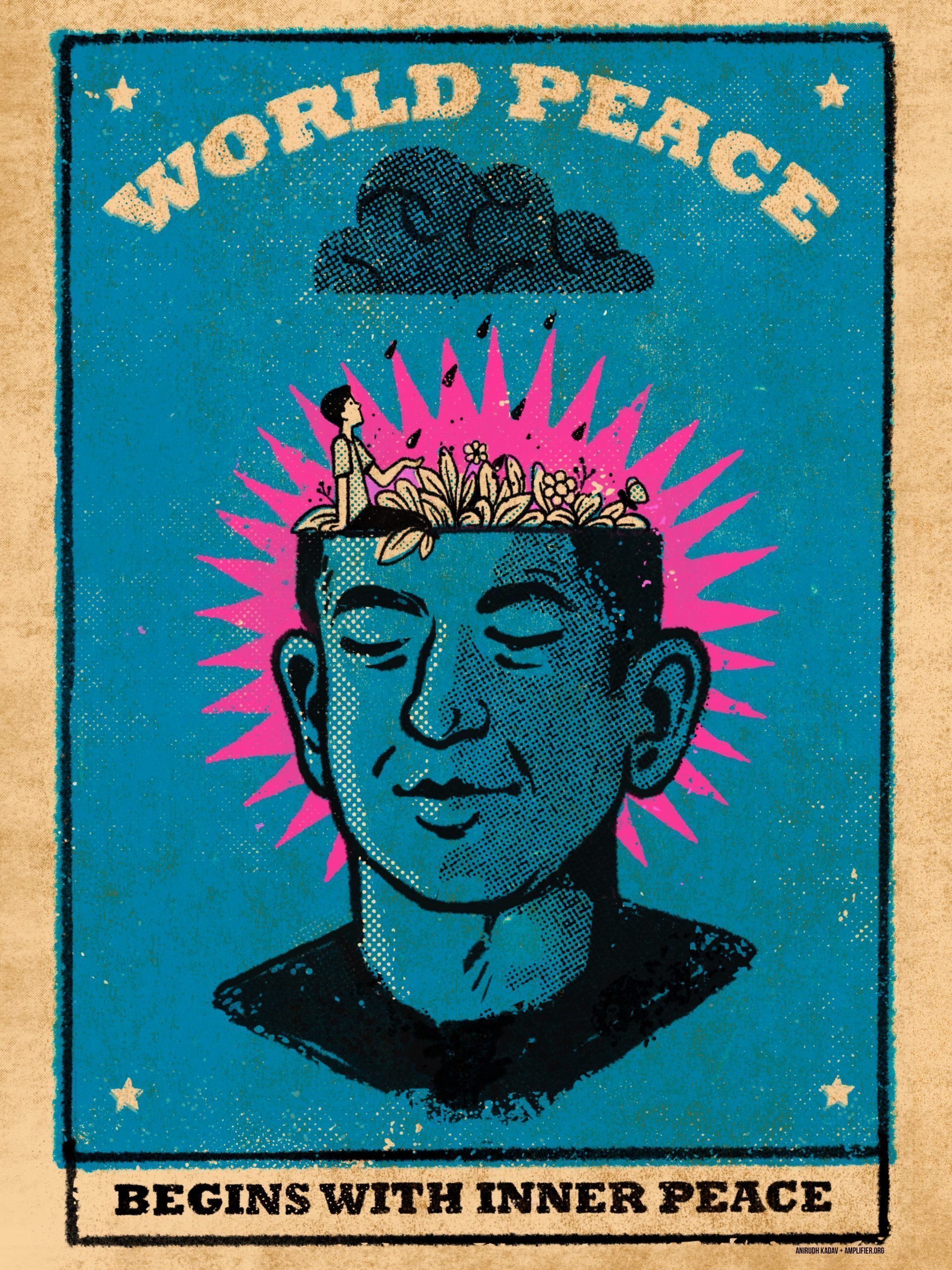
Laughter is a natural reaction – just like crying, or sleeping. We have all seen babies laugh, and – let’s be very honest – we all melt at the sound of a baby laughing. As a matter of fact, laughter is one of the rare things that ties humans together without boundaries. No matter what your past is, where you come from, or how you’ve been raised; when you find something fun or humorous, your body laughs/reacts to it. From tribes to metropolitan business-men, we all naturally laugh. Laughter is one of the basic instinctive reactions which is not influenced by our culture, education or background.

The odd thing about laughter, is that you can’t define it – neither its intensity nor its core. It can go from a shy, smiley hick-up, to a full-on, loud, open-mouthed uncontrollable explosion. The degrees are non-exhaustive. Laughter is non-exhaustive, and everywhere. In a joke, a word, a look, a grimace, a circumstance, a group of people, an individual, a repetition, a perception, an inside joke, an imitation, an impulse… the list is infinite. It is one of the very simple things that our body does, that we do not control but which we usually know well enough to kickstart.

Another interesting, fun fact – are there people who do not enjoy laughing? There are certainly some who will say so, but I am convinced that this would be playing a role. In fact, laughter relaxes certain muscles and we do not even know it – we can consider that it is a sort of homemade massage and workout (it even works your abs)! The effects of laughing are only beneficial. Medically, laughter releases endorphins, also known as the « feel good hormones », responsible for arousal, emotion and pleasure, and helps relieve pain.

We can often detect someone’s happiness on how much they laugh. At the early stages of a love relationship, or what we call the « honeymoon phase », couples often laugh regularly, recurrently, and easily. Humans, in their own complexity, can actually be quite simple when it comes to laughter. The happier they are, the more positive reactions their body will have, such as laughing. Studies reveal the happiness circle involved in laughter: the more people laugh, the more people engage in social laughter . Our instinctive reaction from seeing someone laughing is often a smile, and calm – embracing the moment. It’s contagious, too! If, when you are happy, you laugh, the reverse theory works too; so laugh more for more happiness.

Humans are victims of their own existence and conscience, and therefore do have moments of doubt, stress, fear or pain. These often negative emotions may even sometimes lead to depression. We may not control mental health, and all the negative stress that is imposed upon each one of us every day. We do, however, control how to deal with them. Practicing laughter regularly, stimulating your sense of humour, will not only keep your mind focused on something positive for you, but also relax your body from unwanted tension.

It seems that Provine was onto something: smiling and laughter are instinctual survival tools for humans that can help us thrive in our environment. Take the time to laugh every day. With others, at yourself, alone, watching a movie, reading a book. Take the time to find laughter every day, in little things, to increase your wellbeing, your positivity, and your happiness.

EMBRACING THE MAGIC THAT SURROUNDS USEMBRACING THE MAGIC THAT SURROUNDS US

by Samuel Lyons

As the opening credits for Mary Poppins Returns began, and the famous Cinderella Castle pulls into focus, I thought about the magic that Disney has embodied in so many people’s lives for decades. It hit me, this must have a connection to the ethos and beliefs of it’s creator Walt Disney.Wow. And what magic has once again been created under his brand.

Over the past year I have had the pleasure of experiencing the journey of personal transformation. Like all change, it has its pulls, pushes and personally for me some pain. In the latter part, specifically the last 3 months, this was then relieved through random bouts of crying both in sadness and pleasure. I really got in touch with this flow of emotion and it felt quite beautiful to allow myself to let go and to simply cry. Part of me felt like there was a need to resist and be strong, whilst the other part told me, it was okay. You deserve these tears. Throughout this time, I also got back in touch with my magic and the magic that surround me. For some reason, I had lost belief in it for a while. Although, as I allowed myself to explore and grow, I was reminded of my spirituality. This is when the magic reappeared.

“All the adversity I’ve had in my life, all my troubles and obstacles, have strengthened me… You may not realize it when it happens, but a kick in the teeth may be the best thing in the world for you.” (this is a quote from Walt Disney)

Sitting in Cineworld cinema on a Monday evening, there in front of me the Mary Poppins Returns movie was telling its audience to remember the magic. That when we forget it, life can seem far more glum and things become far more difficult. I was really quite moved by the underlying story they were portraying to adults and children. So much so, that there I was stopping tears from welling up inside me, on numerous occasions throughout the film. The simplicity of the messages were so powerful and profound. The reminder of the joy that is received by seeing the world through the eyes of a child. That wonderment. That hope. The power of the magical worlds we live in. Were we only to believe.

“When you believe in a thing, believe in it all the way, implicitly and unquestionable.” (this is a quote from the movie)

Bizarrely, as I am typing this, I can feel those emotions arising again. And I absolutely love it. Belief really is the most important message for humanity. Belief, in our own magic. Belief in the magic that surrounds us everyday. And even when things really feel like they are at their very worst. Stay calm, stay in the flow. Everything that is happening is the way it is meant to be. Hold onto that belief, until the magic happens and things change.

“Everything is possible. Annabel Banks

Even the impossible. Mary Poppins” (these are quotes from the movie)

WELLBEING GOES DIGITAL WELLBEING GOES DIGITAL

For some an oxymoron, a new concept has emerged in our vocabulary recently: that of “digital wellbeing”. Perhaps it is not surprising that academics have been researching the impact of new digital technologies on people’s wellbeing for quite some time already, but the fact that tech-giants like Google are now paying attention to the topic is a sign of its relevance for our modern societies.

As Google acknowledges, technology is transforming the way we spend time, and this is why it’s more important than ever to ensure the tools we use are helpful, and not a distraction. Let’s consider for a brief moment how digital tools have changed the work of changemakers and social innovators. Many of them use digital tools at the core of their ventures, e.g. think about tech-preneurs teaching digital skills to children to equip them with the skills of the 21st century. Others rely on technology to scale their impact, e.g. think about social entrepreneurs who can reach (back-then-unimaginable) large audiences through online platforms and apps.

It is clear that digital tools have opened up new horizons for changemakers (and for all of us), but as we learn to navigate in these waters full of fascinating possibilities, we must also make a well-rounded assessment on the impact of digital technologies on our work and life. In fact, many are pointing to the negative impact of digital technologies on our wellbeing, which contributes to behaviours such as addiction, distraction, anxiety… Whether we want it or not, digital tools will possibly become more and more present in our lives, so we might as well learn to recalibrate our digital diet so that it is diverse, balanced, and nutritious.

To help people – professionals, changemakers, youth, educators – consume healthy digital diets that feed their minds, bodies, hearts, and souls with the nutrients they need to thrive, is what motivated us to contribute to Google’s new course on digital wellbeing. This course shares a new series of digital wellbeing online learning videos, available here. As Google explains, “each video encourages you to think about how you use technology and suggests ways to find the right balance for you.” Have a look at the videos and let us know what changes you are making to maintain a more balanced digital diet.

Read Google’s blogpost on the topic here.
Visit Google’s Digital Workshop new course landing page here.