
VIEWING CHANGE THROUGH THE LENS OF WELLBEING VIEWING CHANGE THROUGH THE LENS OF WELLBEING

The social change sector is facing a wellbeing crisis. Social change organizations work on the front lines, tackling complex societal issues and providing critical support to vulnerable populations. A demanding workload combined with ever-present pressure to achieve meaningful outcomes with limited financial or operating resources exacerbates heightened levels of burnout experienced by the sector.  

Aiming to better understand how a wellbeing orientation can positively impact organizational health, The Wellbeing Project partnered with the Center for Healthy Minds and The Tavistock Institute for Human Relations to conduct research which identified the following approaches to fostering healthy, effective, and sustainable workplace environments for social changemakers.

The Critical Role of Organizational Leadership 

Senior leaders modeling wellbeing, communicating explicitly about the priority around wellbeing, and making time and providing resources for wellbeing activities as well as developing policies and strategies that reflect this organizational commitment, ‘gave permission’ to staff teams to participate in wellbeing.

The Benefits of Co-Created Strategies

Listening to staff and creating the conditions where people can speak up about the difficulties of their role are cardinal values of organizational wellbeing. By engaging staff and drawing on their strengths, skills, and ways of working, organizations can implement wellbeing-oriented actions and policies that are experienced by staff as more vital and authentic, create less additional burden, and increase the likelihood of uptake and sustainability. Top-down approaches to wellbeing are less sustainable and can be perceived as additional demands on staff time.

Integrating Wellbeing into Daily Workflow

Implementing microshifts–small, incremental changes to organizational policies, communications, personal development procedures, structure, staffing and workflow management–over time are key to supporting the emergence and maintenance of healthy, human-centric organizations.

The eight participant organizations employed a wide range of approaches, addressing obstacles to structural wellbeing such as income inequality, discrimination, and employment insecurity as well as focusing on personal (or inner) wellbeing through practices such as mindfulness and efforts to improve emotional awareness and social bonding. 

Making Inner Wellbeing Tangible and Accessible

The program’s focus on inner wellbeing appears pivotal insofar as it provides leaders and staff with a personal experience of the benefits of a focus on wellbeing. It transforms something that may be abstract into something that’s valued and understood experientially. Researchers found that equipping staff with strategies and personal practices to enhance resilience in the face of work challenges undoubtedly protects their wellbeing and can motivate staff to drive changes within their work environments. 

Consistent and Adaptive Funding is Central to Sustaining Wellbeing 

Nonprofits operate in a competitive funding environment and regularly experience pressure to deliver more results with less funding. Our organizational wellbeing research helps funders better understand the strains placed on the sector by existing funding and reporting models. Streamlining funding requirements reduces the administrative burden on nonprofit staff. Providing flexible and comprehensive funding allows social change organizations to respond to changing circumstances. Revisiting funding requirements as well as providing direct support for wellbeing activities has the potential to increase workplace wellbeing and organizational sustainability.  

Catalysing Wellbeing

The program played a catalytic and role modeling function, especially in authorising participants to pursue wellbeing as a legitimate organizational goal. The decision to work with a group of organizations rather than to work with each organization separately appears crucial, creating a community with shared goals whose members were able to provide mutual support, reinforcement, and inspiration to one another. As representatives of the organizations met and worked together, sharing their challenges, dilemmas and successes, they initiated and continued a process of mutual authorisation, deepening their commitment to building organizational wellbeing capacity over time.

Viewing change through the lens of wellbeing encourages organizations to consider the implications of their decisions, strategies, policies, and practices on the wellbeing of employees and can foster a work environment that promotes the overall health, happiness, and success of their staff.  A broader notion of wellbeing takes into account both the social, economic, and political context and the need to address inequalities and injustices as part of collective wellbeing. Recognising the need to address these broader pressures by implementing structural changes within organizations can potentially reshape the sector and our social systems.

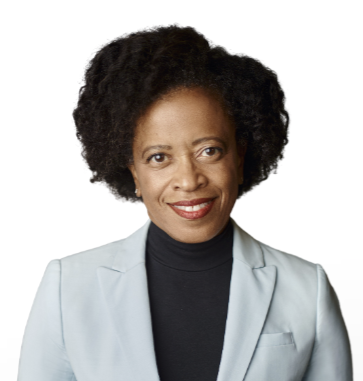
Rhonda V. Magee

Professor | Hoshi; University of San Francisco | Mount Iris Meditation Community

Rhonda V. Magee, M.A., J.D., is Professor of Law (Emeritus), and the founding Director of the Center for Contemplative Law and Ethics, at the University of San Francisco. She is the author of the “The Inner Work of Racial Justice: Healing Ourselves and Transforming Our Communities Through Mindfulness” (Penguin RandomHouse TarcherPerigee: 2019), which broke new ground on publication as the first book of its kind to integrate mindfulness principles and practices thoroughly into the conversation on addressing race and racism in diverse settings and communities, and helping us heal from the trauma that the legacies of racism causes. 
She accepted authorization as a spiritual guide and teacher in the Zen lineage, Hoshi Myozen Magee also draws on her training as a mindfulness teacher trained in Mindfulness-Based Stress Reduction, and her study and co-teaching with Bhikkhu Analayo, a Buddhist Monk in the Theravadan tradition, and renown scholar of early Buddhism. 

Hoshi Magee is a founding advisor of the Mindfulness in Law Society, and an internationally recognized mindfulness teacher and Keynote speaker. Her current writing and teaching explore how culturally-specific practices – including Black cultural spirituality and the quality of soulfulness — may intersect with and strengthen mindfulness, and consider the way that mindfulness may support ongoing efforts to strengthen communities across differences in these challenging times.

gaby-flores-fortmann-photo-1-gaby-flores

Gaby Flores Fortmann

Chief of Staff at The Wellbeing Project

Valencia,Spain

Connect with GABY FLORES FORTMANN :

Gaby is a proud community-builder that is incredibly grateful for 20 years of professional experience in public service, public affairs, and social impact consulting. She has been a mission-aligned partner to elected officials, governments, corporations big and small, non-profit organizations, and diverse communities working collaboratively on challenging issues from health equity and civic engagement to economic development and homelessness. Gaby is particularly passionate about relationship building, connecting the dots, being of service, and supporting organizations and their teams on their unique community building journeys.

She was born in Nicaragua, immigrated to the United States as a child (where she grew up and studied), and moved to Spain with her husband and daughter in 2022. This milestone international family relocation presented her with precious space and time to get settled, connect with her new community, and explore new personal and professional chapters.

This deeply important exploration around purpose cemented her lifelong desire to contribute to global social change in a meaningful way through her skills and experience – leading her to The Wellbeing Project where she is thrilled to join as its inaugural Chief of Staff.

What does inner wellbeing mean to you?

Personally, inner wellbeing became a true priority three years ago. I plan for it to be a lifelong journey now! For me, inner wellbeing is an ongoing, honest conversation with yourself – your hopes, fears, likes, dislikes, what makes your heart sing, what makes you blue – and being proactive in the many acts of self-care and kindness that can nurture your soul and make you a stronger, more authentic version of yourself (so you can be that for others). I see it as seeing you as the love of your life – or your own best friend – making any effort you can to demonstrate that you are worthy of this attention and care just as you are.

How would you define wellbeing in one word?

Peace

Are there any rituals or practices you use to enhance your wellbeing?

Guided meditation, Pilates practice, park walks, daily gratitude conversations with husband and daughter, reading, and celebrating our households many cultures through food, music, and annual celebrations.

Why is it important that we prioritize individual, organizational and societal wellbeing?

We must honor the interconnectedness between individual, organizational, and societal wellbeing. You truly cannot have one without the other!

Do you have any favorite books, podcasts, or articles that you believe support, promote or educate on wellbeing and related themes?

I am currently focused on reading books about the Latinx immigrant experience in the United States. These books have helped me process my personal journey growing up Latina in Los Angeles, California – guiding me to look at complex issues from racism and assimilation to belonging and the importance of community in a new light as an adult. Any literature etc. that helps you unpack trauma, make sense of experiences, and can educate you and others has the power to promote wellbeing and self-development. A couple of books that I connected with related to the aforementioned are: Crying in the Bathroom, A Memoir by Erika L. Sanchez; and You Sound Like a White Girl: The Case for Rejecting Assimilation by Julissa Arce.

Adrian Griffin

Digital Marketing Coordinator at The Wellbeing Project

Budapest,
Hungary

Connect with Adrian Griffin :

Adrian Griffin is a dynamic digital marketer and designer based in Budapest, Hungary, originally hailing from Miami, United States. With a passion for storytelling and visual communication, Adrian excels at bridging communities through thoughtful design and impactful narratives.

His career spans diverse experiences across the United States, including designing for the games and entertainment industries, curating art gallery shows in Los Angeles, and supporting black-owned small businesses in the Midwest. Each opportunity has contributed to his holistic worldview and fueled his drive to create meaningful connections through his work.

Adrian’s love for storytelling shines through his digital marketing expertise, where he uses social media as a powerful platform to share stories that resonate across cultures. His designs spark conversations, evoke emotions, and inspire deeper engagement.

Outside of his professional life, Adrian enjoys exploring global cuisines through cooking, seeking creative inspiration on Pinterest, and immersing himself in games and entertainment. A proponent of balance, he also prioritizes physical well-being with regular workouts and hiking adventures.

Adrian Griffin is committed to crafting designs and strategies that bring people together, spread positivity, and spark meaningful interactions.

What does inner wellbeing mean to you?
Inner wellbeing, to me, is about building a positive relationship with yourself. It’s recognizing that you are your own greatest supporter, nurturing self-compassion, and finding balance within to thrive.

How would you define wellbeing in one word?
Serenity

Are there any rituals or practices you use to enhance your wellbeing?
Consistently nourishing my body with good food, prioritizing my physical health, and taking time to pray.

Why is it important that we prioritize individual, organizational and societal wellbeing
Prioritizing your wellbeing is crucial, especially when life feels difficult and unstable. Amidst the uncertainty, it’s important to stay true to yourself and find stability within.

EPISODE 1

WITH GAIL CHRISTOPHER, TIEN UNG, JOHN KANIA & LAURA CALDERON DE LA BARCA

EPISODE 2

With Natalia Quinones, Rana Dajani, Melanie Goodchild, Celina De Sola & Katherine Milligan

EPISODE 3

WITH KERRY GRAHAM, DONNA KERRIDGE, LOUISE MARRA, MARK YETTICA PAULSON, ALLISON WAINWRIGHT

Welcome to a curated resource page dedicated to supporting the wellbeing of changemakers in the wake of challenging moments. Here, you’ll find tools, guides, and insights designed to help sustain your holistic wellbeing as we navigate complex, high-stakes environments. Whether you’re an activist, organizer, or community leader, these resources are here to uplift and empower you.

In times of increased pressure, it’s essential to have support systems in place. This collection offers a range of self-care practices, resilience strategies, and community-based resources tailored to help you stay grounded, focused, and connected. Use these tools to care for yourself and your mission, ensuring that you can continue to drive positive change with inner strength and balance.

Articles Articles

One Question, 109 Answers: No Matter Who Wins, _______. | reasons to be cheerful | November 5, 2024

A New Way to Talk to Each Other | Omega | Adyashanti

Healing Systems | Stanford Social Innovation Review | Laura Calderon de la Barca, Katherine Milligan & John Kania | February 12, 2024

Where Do We Go From Here? | Greater Good Science Center | Kayla DeMonte, Mylien Duong, Carol Graham, Kurt Gray, Manu Meel, Eboo Patel, Scott Shigeoka, Linda R. Tropp, Jeremy Adam Smith, Sahar Habib Ghazi, Kira M. Newman | November 6, 2024

Caring for Yourself During Election Season | Indiana University School of Medicine | October 22, 2024

Processing US Election Results | Facing History & Ourselves |  Erica Hodgin | October 25, 2024

The impact of election stress: Is political anxiety harming your health? | American Psychological Association | Zara Adams | October 22, 2024

Recognizing Your Emotions as Data, Not Directives | susandavid.com | Susan David | July 20, 2022

Eight Questions That Can Help You Survive Election Stress | Greater Good Science Center | Jeremy Adam Smith, Jull Suttie | September 19, 2024

Articles for Higher Education

The Morning After – Managing the Day(s) and Week(s) after Election Day – American Association of Colleges & Universities

Managing Election-Related Stress Information – Univeristy of Michigan Counseling and Psychological Services

Teaching in Difficult Times – Georgetown University Center for New Designs in Learning and Scholarship

One Question, 109 Answers: No Matter Who Wins, _______. | reasons to be cheerful | November 5, 2024

A New Way to Talk to Each Other | Omega | Adyashanti

Healing Systems | Stanford Social Innovation Review | Laura Calderon de la Barca, Katherine Milligan & John Kania | February 12, 2024

Where Do We Go From Here? | Greater Good Science Center | Kayla DeMonte, Mylien Duong, Carol Graham, Kurt Gray, Manu Meel, Eboo Patel, Scott Shigeoka, Linda R. Tropp, Jeremy Adam Smith, Sahar Habib Ghazi, Kira M. Newman | November 6, 2024

Caring for Yourself During Election Season | Indiana University School of Medicine | October 22, 2024

Processing US Election Results | Facing History & Ourselves |  Erica Hodgin | October 25, 2024

The impact of election stress: Is political anxiety harming your health? | American Psychological Association | Zara Adams | October 22, 2024

Recognizing Your Emotions as Data, Not Directives | susandavid.com | Susan David | July 20, 2022

Eight Questions That Can Help You Survive Election Stress | Greater Good Science Center | Jeremy Adam Smith, Jull Suttie | September 19, 2024

Articles for Higher Education

The Morning After – Managing the Day(s) and Week(s) after Election Day – American Association of Colleges & Universities

Managing Election-Related Stress Information – Univeristy of Michigan Counseling and Psychological Services

Teaching in Difficult Times – Georgetown University Center for New Designs in Learning and Scholarship

Videos & Podcasts Videos & Podcasts

Videos

Self-Regulation Skills in the Face of World Events with Tami Simon & Dr. Jeffrey Rutstein | Sounds True |

Emotional Guidance on Election Eve | Healthy Mind Innovations

Understanding the art of compassion with Barry Kerzin | TED

Living & Loving in Stressful Times | The Wellbeing Project

Podcasts

How do you sit quietly in the middle of a storm? | Search Engine | November 1, 2024

Guided Mindfulness Practices Guided Mindfulness Practices

Envision a Unified Nation: A Meditation | Omega | Brialle Ringer | January 28, 2021

Try a 5-Minute Self-Compassion Break | mindful.org | Kristin Neff and Christopher Germer | March 3, 2023

Fierce Self-Compassion Break | Greater Good Science Center

A Mindful Practice to Meet Tough Emotions with Curiosity | mindful.org | Judson Brewer | September 1, 2023

5 Minute Guided Morning Meditation for Positive Energy | YouTube | Lavendaire

A Guided Meditation to Label Difficult Emotions | mindful.org | Christopher Germer | January 23, 2019

Feeling Overwhelmed? Try the RAIN Meditation | mindful.org | Tara Brach | February 17, 2023

The S.T.O.P. Practice: Creating Space Around Automatic Reactions | mindful.org | Rhonda Magee | March 23, 2020

Having a Tough Conversation? Try this 12-Minute Meditation to Reset | mindful.org | Shalini Bahl | September 21, 2021

Common Humanity Meditation | Greater Good Science Center

Poetry Poetry

Rise | Hannah Drake

A Post-Election Day Poem | Rebecca Faulkner

Additional Resource Hubs Additional Resource Hubs

Have you come across resources that would be beneficial to our community? Have you come across resources that would be beneficial to our community?

If so, we’d love to hear from you.

    Dr. Richard J. Davidson

    Founder & Director of the Center for Healthy Minds, University of Wisconsin-Madison, and Founder & Chief Visionary for Healthy Minds Innovations, Inc.

    William James and Vilas Research Professor of Psychology and Psychiatry and Founder & Director of the Center for Healthy Minds, University of Wisconsin-Madison. Richard J Davidson is the founder and Chief Visionary for Healthy Minds Innovations, Inc.

    Richard J Davidson received his Ph.D. from Harvard University in Psychology in 1976. Davidson’s research is broadly focused on the neural bases of emotion and emotional style and methods to promote human flourishing including meditation and related contemplative practices. He has published over 440 articles, numerous chapters and reviews and edited 14 books. He is the author (with Sharon Begley) of “The Emotional Life of Your Brain” published in 2012 and co-author with Daniel Goleman of “Altered Traits” published in 2017. He was named one of the 100 most influential people in the world by Time Magazine in 2006. He was elected to the National Academy of Medicine in 2017 and appointed to the Governing Board of UNESCO’s Mahatma Gandhi Institute of Education for Peace and Sustainable Development (MGIEP) in 2018. In 2014, Davidson founded the non-profit, Healthy Minds Innovations, which translates science into tools to cultivate and measure well-being.

    LEARN MORE FROM DR. RICHARD J. DAVIDSONLEARN MORE FROM DR. RICHARD J. DAVIDSON