Skoll Foundation

The Skoll Foundation is a prominent philanthropic organization dedicated to advancing social entrepreneurship and innovation. Founded by Jeff Skoll, the first president of eBay, the Foundation focuses on supporting innovative social change initiatives that address critical global issues. It provides funding and resources to social entrepreneurs and organizations that work to tackle complex challenges related to poverty, health, education, and environmental sustainability.

The Skoll Foundation emphasizes the importance of scalable and sustainable solutions, aiming to foster transformative impact through its investments and partnerships. It also hosts the annual Skoll World Forum, which brings together thought leaders, practitioners, and funders to discuss and advance social entrepreneurship. By leveraging its resources and networks, the Skoll Foundation seeks to accelerate positive change and improve the lives of underserved populations worldwide.

Polaris Partners

Polaris Partners is a venture capital and private equity firm that invests in early-stage and growth-stage companies across various sectors. Founded in 1996 and headquartered in Boston, Massachusetts, Polaris Partners focuses on identifying and supporting innovative companies with high growth potential. The firm’s investment strategy spans several industries, including technology, healthcare, and consumer products.

Polaris Partners provides both financial backing and strategic guidance to its portfolio companies, leveraging its extensive network and industry expertise to help them scale and succeed. The firm’s approach combines deep market insight with hands-on support to drive growth and value creation. With a track record of successful investments and exits, Polaris Partners is known for its collaborative approach and commitment to building long-term partnerships with entrepreneurs.

National Council For Mental Wellbeing

The National Council for Behavioral Health is a prominent advocacy organization in the United States dedicated to improving mental health and addiction treatment services. It represents over 3,000 member organizations that provide mental health and addiction treatment services to millions of individuals nationwide. 

The Council focuses on promoting policies and practices that ensure access to comprehensive, high-quality behavioral health care. It also advocates for integrating mental health services into primary care settings and advancing innovation in behavioral health care delivery. Additionally, the National Council offers training and technical assistance to its members and works to raise public awareness about mental health issues.

Hewlett Foundation

The William and Flora Hewlett Foundation is a private charitable foundation based in Menlo Park, California. Founded in 1966 by William Hewlett and his wife Flora, the Foundation focuses on addressing critical social issues and promoting the common good through grantmaking and partnerships. Its mission is to support efforts that improve the quality of life for individuals and communities, with an emphasis on innovative and impactful solutions.

The Hewlett Foundation’s primary areas of focus include education, global development and population, environment, the performing arts, and philanthropy. It supports a range of initiatives, from advancing educational equity and addressing climate change to strengthening the arts and promoting effective philanthropy. By providing financial support and strategic guidance, the Foundation aims to foster positive social change and enhance the effectiveness of its grantees’ work.

IKEA Foundation

The IKEA Foundation is the philanthropic branch of the IKEA Group, focused on improving the lives of children and families in need globally. It aims to address critical issues such as child poverty, education, and health through strategic partnerships with non-governmental organizations and other stakeholders. The Foundation’s initiatives are designed to enhance child protection, provide educational and vocational opportunities, and support emergency relief efforts in crisis situations.

In addition to its work in humanitarian and educational sectors, the IKEA Foundation also invests in climate action to combat the effects of climate change on vulnerable communities. By combining financial resources with a commitment to sustainable and measurable impact, the Foundation works collaboratively with its partners to create lasting positive change and improve the overall quality of life for those in need.

THE BRIDGESPAN GROUP

The Bridgespan Group is a nonprofit organization that provides consulting and advisory services to other nonprofits and philanthropic organizations. Founded in 2000 and headquartered in Boston, Massachusetts, Bridgespan focuses on helping its clients achieve greater social impact by addressing strategic and operational challenges. Their work encompasses a wide range of sectors, including education, health, and social services.

Bridgespan offers services such as strategic planning, leadership development, and organizational effectiveness assessments. They also conduct research and publish reports on pressing social issues to inform and inspire philanthropy and nonprofit management. The organization’s mission is to help social sector leaders and organizations maximize their impact and address some of the world’s most challenging problems.

Anique Jordan

Artist, Writer & Curator

Anique Jordan is an artist, writer and curator who looks to answer the question of possibility in everything she creates.

As an artist, Jordan works in photography, sculpture and performance often employing the theory of hauntology to challenge historical or dominant narratives and creating, what she calls, impossible images. Jordan’s work considers different logics of time, the black surreal and the marvellous as it relates to the black Atlantic experience. Jordan has lectured on her artistic and community-engaged curatorial practice as a 2017 Canada Seminar speaker at Harvard University and in numerous institutions across the Americas. In 2017 she co-curated the exhibition Every. Now. Then: Reframing Nationhood at the Art Gallery of Ontario.  Jordan has recently completed her MFA in Photography at Rhode Island School of Design, is a 2024 recipient of Canadas 100 most accomplished Black women and is currently an Assistant Professor and AICAD Fellow at Parsons School of Design.

CONNECT WITH ANIQUE ON SOCIAL MEDIA :

Your Digital Hub Your Digital Hub

Dedicated to Organizational Wellbeing

Welcome to a co-created resource hub for integrating wellbeing into organizational culture.

Here, you’ll find information to promote staff wellbeing and to help your organization thrive in uncertain times. Explore our curated resources to understand the positive ripple effects that this work has on individuals and communities.

EXPLORE ORGANIZATIONAL WELLBEING FURTHEREXPLORE ORGANIZATIONAL WELLBEING FURTHER

Dive Into Organizational Wellbeing Stories From Around the World

How Organizational Wellbeing Inspires Welldoing: Lessons From the Social Change Sector How Organizational Wellbeing Inspires Welldoing: Lessons From the Social Change Sector

Stories from the Hearth

Guest post by:

Ricardo Paz

People & Culture Elder, The Wellbeing Project
🌍 Bogotá, Colombia

Quick Reads

  • The Wellbeing Project, along with eight organizations from around the world, the Tavistock Institute, and the Center for Healthy Minds spent five years researching the value of organizational wellbeing and how to foster it.
  • They learned that any organization, public or private, can benefit from promoting organizational wellbeing: it improves employee performance, which translates into improved organizational performance.
  • They also all agreed the approach was cost-beneficial: it was less expensive to invest in organizational wellbeing than otherwise.
  • Cultivating organizational wellbeing is an ongoing, dynamic, and long-term process — but the value added for employees, your organization, and your community are worth it.

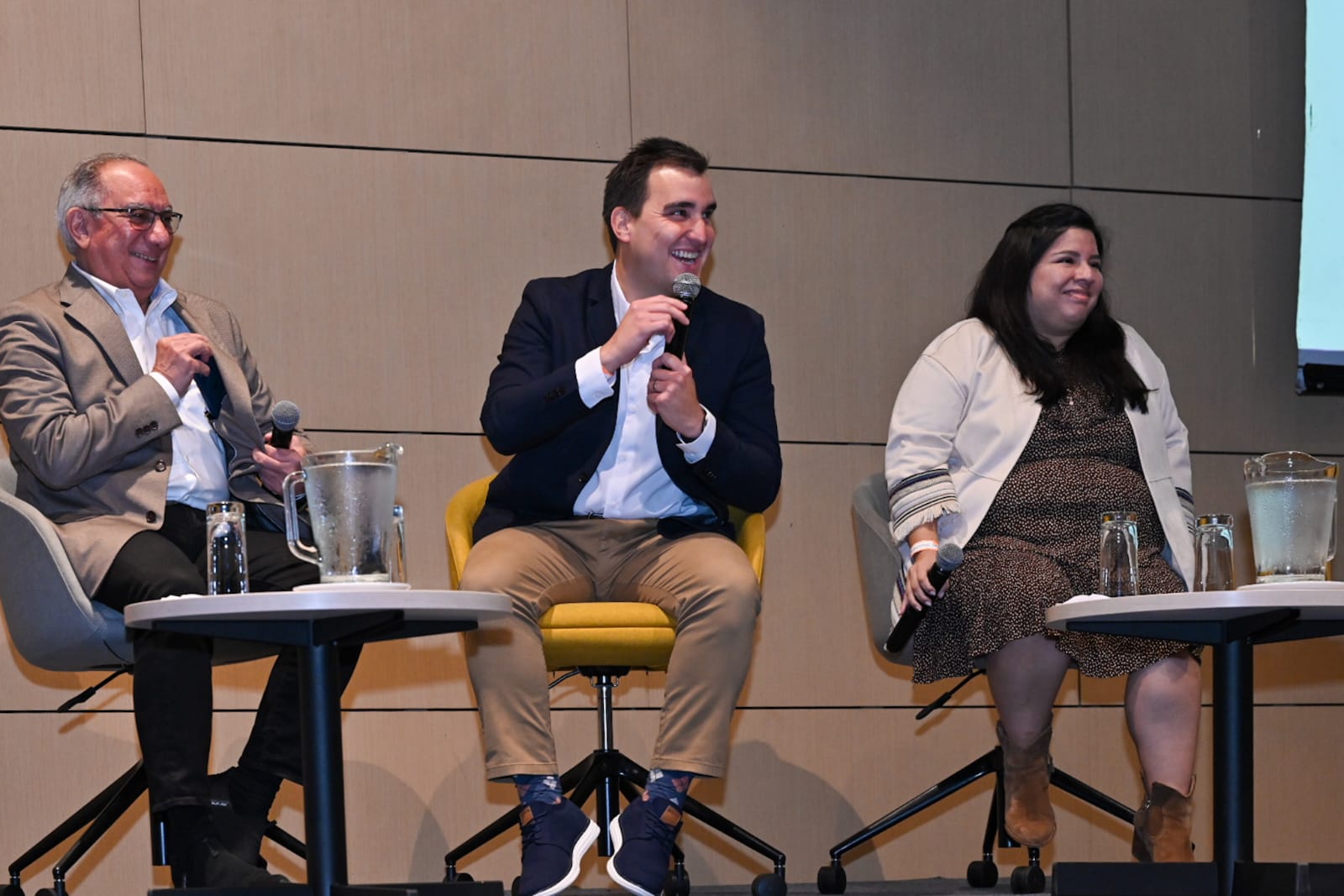
Ricardo (left) speaks at Hearth Summit Bogotá, sharing findings from The Wellbeing Project’s Organizational Exploratory Program (OEP).

In May, I had the pleasure of speaking at the Hearth Summit Bogotá, which focused on wellbeing and sustainable business. At this summit, sustainability was explored in three ways: 

Sustainable work: focusing on employee wellbeing and work-life balance

Sustainable business: focusing on sustainable production and consumption within businesses

Sustainable ecosystems: focusing on how businesses can have positive social and environmental impacts

The audience was filled with hundreds of leaders from the business sector: CEOs, managers, experts, and others joined together at the Hearth to take collective action and shift corporate culture towards one of wellbeing and welldoing.

I was grateful to share learnings from the social sector about how promoting wellbeing within organizations leads to greater welldoing.

I’m not the only one thinking about the importance of employee wellbeing: the World Health Organization has classified Extreme Burnout as an occupational health problem given the magnitude of cases presented. Multiple studies around the world show an increase in extreme burnout in organizations of all kinds. Gallup has estimated global losses from absenteeism, turnover, and burnout at $322 billion. Billion!

The situation is clear: organizations must turn their attention to the wellbeing of their employees. But how can they do this?

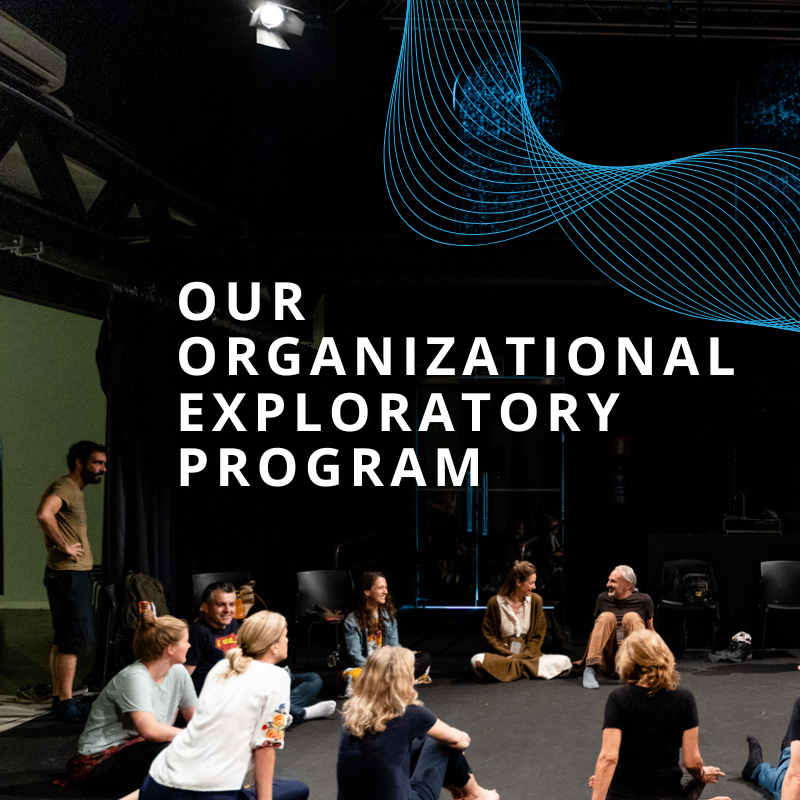
At Hearth Summit Bogotá, I shared learnings from a five-year Organizational Exploratory Program (OEP) that The Wellbeing Project co-created with eight organizations from around the world – from Brazil, Canada, China, Eygpt, Mozambique, Pakistan, Senegal, and the United States.

With the Tavistock Institute of Human Relations and the Center for Healthy Minds providing research and methodology support, we sought to work with these eight organizations to develop an effective framework to support organizational wellbeing in a participatory way, based on empirical evidence.

The learnings from these eight social organizations can be useful for organizations in other sectors, both public and private, as they share a common message: the wellbeing of the employees of any organization leads to their improved performance and, therefore, the improved performance of the organizations and the ecosystem that surrounds them. In short: wellbeing inspires welldoing.

But how can organizations create a culture of wellbeing? I shared three key learnings from OEP with changemakers in Bogota:

1. Create your own definition and vision of wellbeing.

Defining organizational wellbeing can be very different for one organization than for another, as well as at the individual level. For this reason, it is relevant to make a definition in a participatory way with all or most of those involved. This means it will be a slow, long-term process, with a long-term strategic vision, according to the challenges, objectives and environment of each organization.

2. Take small steps – they go far.

In this way, it is necessary to focus on a few first and small actions to advance little by little in a work plan that evidences progress and reinforces the evolution of the organization. The idea is that, when making strategic decisions, the needs of the people involved at all levels in the organization are considered.

3. Find the “middle way”.

Sometimes, an organization is focused solely on achieving its mission and goals. At the other extreme, there is the possibility of being too focused on people’s well-being. Organizations that are very focused on their mission often have high staff turnover, low levels of commitment, hypersensitivity to organizational maladjustment, and a high frequency of cases with extreme burnout. At the other extreme, in those too focused on people’s wellbeing, there is difficulty in achieving the organization’s mission, individual needs are constantly unsatisfied, their responsibilities are unclear and their energy is consumed in unnecessary tasks.

A third way, a middle way, is made up of an environment where people are guided by the mission and structure of the organization, their individual skills and competencies are clearly identified, the responsibilities of their roles are clear, and they are recognized for their professional contributions.

The Bottom Line

Through the OEP research, we learned that generating organizational wellbeing capacity is a four-step change management process: 

Defining objectives,

Co-creating them with all members,

Implementing, and

And constantly learning.

It is a slow process, without quick solutions or a linear approach. What is most important is the direction of changes rather than the immediate results. Leadership by example is also important, and we saw three fundamental factors in generating organizational wellbeing capacity: Leadership, Communication and Growth Mindset. 

And the final piece of the puzzle? These eight social organizations found that developing their wellbeing capacity was less expensive than not doing so. 

As one of the participants of The Wellbeing Project’s Inner Development Program said, “If you don’t have wellbeing in your staff, how can you provide wellbeing in your community? No one can give what they don’t have.”

The same is true for your organization. Whether you work in a non-profit, a business, or any other type of organization, the message can be the same:

Wellbeing Inspires Welldoing: if we are well, we’ll do it better.
EXPLORE THE REGIONAL SUMMITS FURTHEREXPLORE THE REGIONAL SUMMITS FURTHER

Dive Into Stories From Around the World

Discover Organizational WellbeingDiscover Organizational Wellbeing

Meet and hear stories from the changemakers championing wellbeing in their organizations.

Empowering Kenyans Through Justice: Chief Justice Martha Koome on Wellbeing in Kenya Empowering Kenyans Through Justice: Chief Justice Martha Koome on Wellbeing in Kenya

Stories from the Hearth

Reflections from:

Her Ladyship Chief Justice Martha Koome

Chief Justice of the Supreme Court of Kenya
🌍 Nairobi, Kenya

Her Ladyship Martha K. Koome assumed office as Chief Justice and the President of the Supreme Court of Kenya on May 21, 2021.

Prior to her appointment as the 15th Chief Justice of the Republic of Kenya, she was a Senior Judge of the Court of Appeal. During her stint as an Appellate Judge, she headed the Criminal Division of the Court and in addition, chaired Committees which developed the Court of Appeal Practice Directions in Civil and Criminal Appeals as well as the Registry Manual that standardized the registry experience at the Court.

At Hearth Summit Nairobi, the Chief Justice was chair of the pillar on restorative justice, providing deep insights on the role of formal and informal justice in societal wellbeing. She also spoke about the need to support the wellbeing of actors in the judicial system, like judges.

Read her reflections below, originally published on her blog, and watch her exclusive interview with The Star Kenya.

“I have the immense honour to co-host the Hearth Summit Nairobi, 2024 alongside Archbishop Anthony Muheria, Archbishop of Nyeri, Kenya, Wanjira Mathai, Managing Director, Africa and Global Partnerships, World Resources Institute and Edwin Macharia, Partner, Axum Kenya; The Wellbeing Project’s Advisory Board.

The Hearth Summit, hosted by local communities of changemakers, advances a hopeful vision of individual, collective and ecological wellbeing for all – catalyzing a culture of wellbeing for changemakers and in changemaking everywhere.

At this critical moment in our country and planet, wellbeing in all aspects remains core to our survival. At the Judiciary, we are focused on nurturing restorative justice which will heal the justice system by reshaping it through the lens of our innate, empowering age-old reconciliatory systems.

We are deliberately deploying green justice to ease remand and prison congestion and encouraging parliament to review our penal laws in alignment with the Constitution and post-independence state.

By investing in alternative justice systems, we acknowledge that justice is not only found in the formal court system but in homes, communities, places of worship and markets hence the need to have multiple ways of resolving disputes.

We will continue to nurture cohesion through justice and to find uplifting homegrown ways to ensure that the justice system holds safe and sacred the fabric of our society. As we protect the wellbeing of our nation, we also seek your support to nurture and protect the wellbeing of our exceptional judges, judicial officers and staff.

It is not the structure of the systems we build that guard our humanity, it is the humanness of those systems that make our lives dignified and worthy.”

EXPLORE THE REGIONAL SUMMITS FURTHEREXPLORE THE REGIONAL SUMMITS FURTHER

Dive Into Stories From Around the World

Discover the Wellbeing Movement in AfricaDiscover the Wellbeing Movement in Africa

Meet and hear stories from the changemakers championing the wellbeing movement in Africa.