Homecoming A Journey of Homecoming:
Vipul Shaha on Mindfulness, Nature, and Belonging
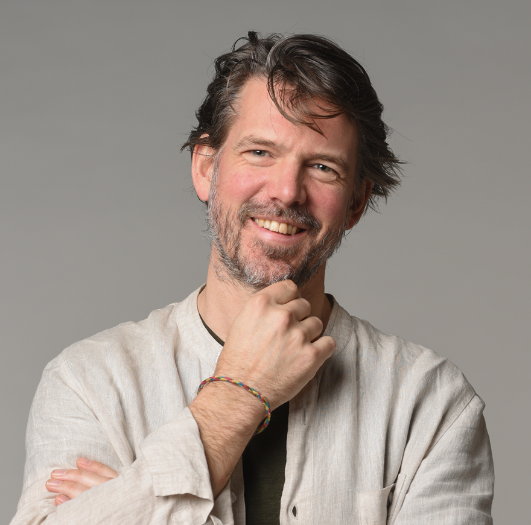
At the intersection of psychotherapy, indigenous wisdom, and environmental education lies the work of Vipul Shaha. Based in Pune, India, Vipul is the founder of Mindful Being, where he serves as a psychotherapist, educator, and nature facilitator.
But if you ask Vipul who he is beyond his titles, he will tell you he is a pilgrim.
“I have been a seeker for as long as I can remember,” Vipul shares. “My work is a natural extension of a personal path focused on understanding the nature of reality (Dharma) and cultivating inner silence. To the extent that I’m calm and rooted within myself, I can create spaces where others experience the same.”
What is the heart of your work, and what inspired you to begin it?
Vipul Shaha: “At the heart of my work lie awareness and connection, guided by a quiet faith in the unfolding of human consciousness. Through Mindful Being, I hold spaces where people can slow down and reconnect—with themselves, with one another, and with the living Earth.
This path has been shaped by three formative experiences: encountering Vipassana meditation as a teenager; living alongside an indigenous, land-based community; and working with children in a forest school. Each revealed the same truth—belonging to self, community, and land is essential to our wellbeing.“

The Seeds of Awareness
At the age of 17, under the guidance of S. N. Goenka-ji, Vipul learned the foundations of self-awareness and “righteous action” at a Vipassana retreat which continue to guide his work with young adults today. Then, after graduating from Harvard, Vipul spent a gap year living with a land-based indigenous community in India. This experience offered him a blueprint for a more integrated way of living and learning. Finally, working as an environmental educator at a Krishnamurti Foundation forest school, he witnessed firsthand how “falling in love with nature” is the ultimate medicine for human wellbeing.

How does your work nurture a deeper sense of ecological belonging?
VS: “My work invites people into relationship with nature—not as a backdrop, but as a living presence. Through forest walks, mindfulness-based retreats, therapeutic conversations, and learning journeys—sometimes held outdoors—I encourage people to listen again.
Inspired by Shinrin-yoku (forest bathing), and alongside therapists, educators, indigenous knowledge holders, and land stewards, I co-facilitate one of India’s first Adventure and Nature-Based Therapy programs.
When safety, care, and connection are created — with Mother Nature as a co-therapist — something profound shifts. It becomes a journey of homecoming: remembering that nature has always been our home, and that we are wired for connection.”

Can you share a moment or challenge that brought this to life?
VS: “My niece Anvi has become one of my greatest teachers. Her name means ‘Goddess of the Forest,’ representing the divine feminine—and watching her interactions with the natural world, I see how perfectly she lives into it: through her barefoot walks, her conversations with trees, her fascination with ants and moon cycles. For me, these are constant reminders that intimacy with nature is our original language.
And yet, alongside this joy, there is grief. Many children today are separated from such experiences—by urban life, shrinking natural spaces, and systems that leave little room for wonder. Anvi’s presence continually asks me: What kind of world are we shaping for those who come after us? And how closely do my daily choices align with that vision?”
A Practice for You: The “Sit Spot”
If you are looking for a small first step toward ecological belonging, Vipul invites you to begin a simple ritual:
-
Find your ‘Sit Spot’: A tree, a rock, a stream, or even a quiet park bench that feels safe.
-
Visit regularly: Observe the changes in the seasons. Listen to the birds. Journal or create art.
-
The Goal: Over time, you may discover a quiet truth: you are not just in nature; you are interconnected with all of life.
Explore more: 🎧Listen to Vipul’s Guided Mindfulness Practices here.
What is the most critical lesson you have learned that should be shared?
VS: “This work is subtle—planting seeds and trusting they’ll bloom. Over time, I’ve watched relationships soften, health regain priority, and lives reorient toward meaning.
The key insight? Ecological belonging begins with belonging to ourselves. Humanity’s disconnection from nature mirrors our disconnection from ourselves. As Thich Nhat Hanh said, we’ve become “hungry ghosts,” endlessly consuming to fill an inner emptiness.
This work can’t be sustained through shame or fear. It calls for embodied experiences of interconnectedness, tenderness, and love—for ourselves, each other, and the living Earth.”

What small, first step would you encourage others to take in their own community?
VS: “Find a place in nature that feels safe and nourishing—a tree, rock, stream, or park bench. Visit regularly. Observe. Listen. Journal. Create. Let the seasons teach you.
Over time, you may discover a quiet truth: you are interconnected with all of life.“

Connect with Vipul:
You can find Vipul on LinkedIn and his website, or reach out directly by email. He’s always open to connecting with kindred spirits, synergistic projects, and initiatives that align with mindful, nature-immersive, and relational ways of being. He is particularly eager to collaborate on nature-based programs that support youth and marginalized communities.
Our Partners Meet Our Partners
Thank you to the wonderful group of governmental institutions, cultural organizations, and foundations that partnered with us to make this wellbeing journey and event possible.
Partnerships Inquire About Partnership & Support
We are thrilled by your interest in supporting our mission! Partnerships are vital to advancing global wellbeing and social change.
Please use the form below, and our Fundraising team will connect with you shortly. For immediate questions, feel free to contact Hayley Barnard, Corporate Development Director, directly at: hayley@wellbeing-project.org
Arts Arts
Art has always been a vital force in human experience — a universal language through which we make sense of the world and connect across differences. It enables us to process complex emotions, bridge divides, and imagine new ways of being. Art is transformation: it heals, questions, and redefines how we see ourselves and the societies we create.
At the global Hearth Summit, the arts are not an addition but a core element — a living thread woven through every aspect of the gathering. They deepen our connection by inviting participants into a shared journey of reflection and creation, where individual and collective experiences intertwine. They act as catalysts for social change, helping us reimagine society, challenge conventions, and inspire new approaches to wellbeing and social change.
The Arts Program —developed in collaboration with local and international cultural partners— brought a vivacious, multidisciplinary pulse to the event. It deepened both individual and collective experiences and journeyed participants into an expressive arc leading to a strengthened, shared sense of purpose long after the Summit.
Artists Artists
The Summit featured a vibrant mix of artists and ensembles from around the world, alongside talented creators and groups from the local scene. Through music, dance, visual arts, and storytelling, the Hearth Summit artists animated and deepened both individual and collective experiences throughout the Summit.
Arts Commissioned Arts
The Arts Program featured commissioned artworks by acclaimed international artists. Through the different expressions of visual art, Hearth Summit attendees were invited to engage their senses along with the mind to explore what inner wellbeing means in the context of social change.
Arts Performing Arts
Storytellers, musicians, and dancers took the stage to perform spirited artistic sets enriching the attendees’ experience. The wide range of performances that accompanied every encounter provided strong conduits for integration, leading to creation, collaboration, and collective transformation.
Speakers Speakers
Fitting our individual and collective stories into a narrative allows us to make sense of the world.
Telling and retelling it shapes our identity, just as listening to others’ stories helps us locate ourselves within a collective narrative map. Yet some stories offer a glimpse of possibility — an invitation to expand, transform, or rewrite parts of our own narrative, enabling us to act differently and evolve.
Speakers Speakers
Keynotes Keynotes
Keynotes Keynotes

Beyond the Known: How Science Is Rewriting What It Means to Be Alive
Dr. Richard J. Davidson
Arts Commissioned Artworks

DRAGON NEST – CHENG TSUNG FENG
Taiwanese artist, Cheng Tsung Feng, bridges the past with the present through his deep exploration of traditional craftsmanship. Drawing inspiration from ancient cultures, his works tell stories of handmade memories, while pushing boundaries of creativity with modern techniques. In honor of the traditions and stories of Ljubljana, Feng has created a nest for the mythical dragon–a creature both nurturing and protective, fiery and gentle. Visit the nest, sit inside, be renewed and reborn.

TENT – CHIARA CAMONI
Born in Piacenza, Italy, and working in the Apuan Alps of Tuscany, Chiara Camoni creates connections with people, places, and plants. Her practice engages a shifting, spontaneous group of friends, family, and others who shape the work alongside her. In Ljubljana, she is working with Krater, the artist collective that embraces regenerative practices and alliances to open eyes to nature and each other anew. Camoni’s installation of silks dyed with the natural pigments of local plants, invites all to immerse themselves in an environment of belonging.

THE MIRROR OF PEACE – RENEE VAN BAVEL
Based in Berlin, Dutch artist Renee van Bavel, creates timely work asking the urgent questions: What does peace look like? And how can we protect it? Her reflective wall, THE MIRROR OF PEACE is a spatial monument that invites the viewer to have a personal experience with peace. While looking at their reflection, viewers read: “This is what people living in peace look like.” A life lived in peace cannot be taken for granted, and we must act consciously, every day, to preserve it.

EYES AS BIG AS PLATES – KAROLINE HJORTH & RIITTA IKONEN
Karoline Hjorth and Riitta Ikonen are a Norwegian-Finnish artist duo.
Their twelve-year-long collaboration, Eyes as Big as Plates, captures individuals actively involved or impacted by the effects of today’s era of mass extinction. Through photography, wearable sculpture, action research, and activism, the artists call for a collective and synchronised environmental stewardship.
Living Systems Learning from Living Systems:
Nathalia Manso on Regenerative Learning
In the Atlantic Forest of Rio de Janeiro, Nathalia Manso is weaving something essential: connections between inner transformation and systemic change, between ancient wisdom and contemporary leadership, between humans and the living world.
As an Ecotuner and Regenerative Learning Facilitator and member of our Ecological Belonging Network, Nathalia creates immersive experiences that invite us to remember what modernity has taught us to forget—that we are not separate from nature, but expressions of it. Through practices drawn from Deep Ecology, Ecopsychology, and ancestral wisdom, she guides leaders and changemakers toward a regenerative mindset, one that honors sensitivity, grief, wonder, and our fundamental belonging to Earth’s living pulse.
What is the heart of your work, and what inspired you to begin it?
Nathalia Manso: “The heart of my work lies in remembering our true nature—that we are part of a greater intelligence—so we can regenerate our ways of being, thinking, and acting within a living world. I create bridges between inner transformation and systemic change for leaders, changemakers, and teams.
What brought me to this path was realizing that the root of the many problems we face is a profound crisis of disconnection and a belief in separation. The symptoms we see—ecological, social, spiritual—all emerge from this same place.
My work seeks to transform the mechanistic, fragmented worldview into a regenerative mindset. By integrating what has been separated—mind and body, reason and emotion—and using nature as our teacher, we cultivate capacities that allow us to find creative, resilient responses to the challenges of the metacrisis.”

Nathalia’s work is rooted in the landscapes of Brazil, particularly the Atlantic Forest, the biome that has shaped her sensibility since childhood. This connection to place runs deep through everything she creates, drawing from Brazil’s relational and cultural richness, a country woven from many ancestries, contradictions, and possibilities of coexistence.

How does your work nurture a deeper sense of ecological belonging?
NM: “I seek to cultivate connectivity through experiential practices that deepen the relationship between our inner and outer nature. This often means creating spaces where people slow down enough to listen more deeply—to the land, to their bodies, and to their own intuition.
Through embodied experiences like nature walks, collective rituals, and practices like Forest Bathing, participants begin to feel their interconnection rather than only think about it. I’ve witnessed again and again how a simple moment of awe or quietly observing a more-than-human being softens the boundary between self and world.
At the core is the strengthening of relationships of reciprocity, reverence, and wholeness with the living Earth. When we understand that the notion of a separate individual is an illusion, we awaken our ecological self. This shift transforms how we lead, learn, and re-imagine organizations.”

Can you share a moment or challenge that brought this to life?
NM: “There isn’t a single story, but a pattern I’ve witnessed many times: people arrive feeling tired, anxious, or disconnected, and then something subtle begins to shift. It shows up in softened eyes and deeper breaths, in silent tears or laughter returning. This might happen while sitting quietly with a tree or sharing a story in a circle.
What often follows is a visible change in how they relate, with more gentleness, curiosity, and care. These small awakenings ripple outward, strengthening relationships and inspiring a renewed sense of purpose and participation in life.”
The heart of Nathalia’s work lies in a simple yet profound recognition: The ecological, social, and spiritual symptoms we see in the world all emerge from this same place—a forgetting of our fundamental nature as participants in a living system. This understanding led Nathalia to study Regeneration, Ecopsychology, Deep Ecology, and ancestral wisdom traditions that remind us of who we truly are. With nature as teacher, she helps people learn from living systems to reframe how we see ourselves, our relationships, and our actions in the world.
What is the most critical lesson you have learned that should be shared?
NM: “I have been reflecting deeply on the importance of having safe collective spaces to honor our pain and grief. A profound learning on this regenerative path is recognizing that death is an intrinsic part of life’s process of renewal. This means learning to process the pain that moves through us collectively, and to compost what must be left behind so that new ways of being can emerge.
Healing the wounds of separation may be our greatest collective challenge, and for that, we need community.
Ultimately, the most important lesson has been recognizing that we don’t need to save, solve, or fix the world. We are simply participants in, and expressions of, a living system in the ongoing process of transmutation. This frees us from the heroic narrative and gives us the humility of those who are part of something much greater.”

What small, first step would you encourage others to take in their own community?
NM: “A simple first step is to begin noticing the place where you live with new eyes. Start building a relationship with your surroundings as if they were part of your extended community.
Practices of attention, presence, and deep listening—like Sit Spot (regularly sitting in the same place outdoors)—help resensitize our senses. Forest Bathing invites us to slow down and perceive the forest and its beings as teachers.
Above all, ecological belonging is about allowing ourselves to feel. Reclaiming sensitivity is revolutionary—it reconnects us with both beauty and grief, reminding us that to belong is simply to be in relationship.”