Investing in Wellbeing Investing in Wellbeing:

A Core Strategy for Lasting Impact in Philanthropy

Guest Post By
The resilience and impact of the nonprofit sector hinge on the wellness of its people.

Once seen as a peripheral concern, wellbeing is now central to philanthropy—especially amid declining funding, shrinking civic space, and rising social and climate pressures. Even more, research shows that prioritising wellbeing has immense social, psychological and economic returns, including up to $11.7 trillion in global economic value, higher retention, improved productivity and a more resilient and adaptive workforce capable of navigating complex change.

At Laudes Foundation, we did not come to this conclusion alone. Our growing commitment to wellbeing was shaped by listening to philanthropic peers and especially our partners. This prompted us to pilot targeted initiatives aimed at strengthening wellbeing—and in doing so, to also reflect on our own internal culture and practices. We are learning alongside our partners and still have a long way to go.

This article explores three key insights drawn from that experience, and from emerging research, to offer a roadmap for how funders can more intentionally support nonprofit resilience through wellbeing.

1. Challenging Perfectionism and Efficiency as Dominant Values

In philanthropy, the pressure to demonstrate impact can lead to an overemphasis on delivering programmatic efficiency and perfection. While these values are often seen as benchmarks of success, they can unintentionally create unattainable standards that nonprofits feel pressured to meet.

When grant-making culture skews towards a “maximum output” mentality, burnout can become more than a risk—it can become systemic. Historian Jill Lepore’s work underscores this issue, framing burnout as not only a consequence of modern workplace demands but as a “badge of success” within performance-driven environments. In the nonprofit sector, the damage is compounded by the emotional burden of mission-driven work, often leading to moral distress—the gap between what one aspires to do and what limited resources make possible.

To shift this and embrace flexibility and care in how we fund, funders must examine their own expectations. Are we applying pressure through rigid KPIs, unrealistic timelines, or inflexible reporting demands? Are we inadvertently valuing deliverables over the people delivering them?

2. Philanthropy Should Fund Nonprofits to Win, Not Just Survive

A primary barrier to achieving nonprofit resilience lies in funders’ tendency toward transactional rather than transformational funding. This can manifest as rigid grant structures, burdensome reporting, or inflexible budgeting. Ultimately, this has created an internalised culture of scarcity among the nonprofit sector, where results, programmatic growth, and scale are prioritised often at the expense of the very individuals driving the work.

We must recognise that nonprofits are not all the same, and thus a culture of scarcity is also an issue of equity. They vary by size, geography, sector, and the lived experiences of their leadership and staff—all of which intersect to shape their access to power, funding, and influence. Smaller organisations—especially those led by women, youth, or people from marginalised communities—are often more deeply affected by power imbalances, underfunded operational costs, and donor-imposed constraints.

To be genuinely effective, best practice shows funders must move beyond “project funding” and instead provide multi-year, flexible grants that cover core costs, fair wages, staff retention, and leadership development, among others. It’s about investing in both what an organisation does and who it is. When nonprofits can budget for the time and wellbeing of their people—not just their outputs—they can build stronger, more adaptive teams and a culture of care that allows innovation and resilience to flourish.


3. What We Learned from Funding Wellbeing Initiatives

Supporting wellbeing initiatives as a funder sends a powerful message: we see the people behind the work and we care about their health, as well as the organisations’ broader culture and sustainability.

Our wellbeing support came from listening to what partners needed to thrive and thus connecting the benefits of wellbeing to our strategic goals. This became the starting point of our Wellbeing Pilot, which offered partners EUR 10,000 stipends alongside tailored advisory support from experts in mental health and psychological support to design and implement culturally relevant wellbeing initiatives over the course of one year.

The initiatives that emerged were as diverse as our partners—ranging from mental health support and team building exercises to improved workspaces, coaching, and activities to alleviate financial stress. While these grants were too modest in size to deeply transform organisations, they proved catalytic. For many partners, it was the first time they had engaged their boards, leadership, or teams in open conversations about wellbeing, and thus helped to normalise a topic that has long remained hidden behind mission-driven urgency.

As one partner noted, “I’ve never had a wellbeing budget from a funder before… the fact that we’ve got it means we can have discussions with the team about what to do with it. In the grand scheme of things, the amount of money we got isn’t much, but it’s a massive boost to the organisation and the team. It’s so forward-thinking, and I wish other funders did it too.”

Through this journey we learned that:

Wellbeing Is Context-Specific—and Should Be:

Partners defined wellbeing in diverse ways, from mental health and stress management to team cohesion, leadership development, and organisational clarity. This reflected differences in team size, sector and geography, and reinforced the need for flexible support – rather than one-size-fits-all solutions – to ensure relevance and respect.

Leadership Buy-In Is Crucial:

Where leaders championed wellbeing, teams were more engaged, and initiatives took deeper root. Where buy-in was limited, progress stalled or felt surface-level. This reminded us that wellbeing cannot be siloed but rather modelled from the top and embedded into leadership behaviour and organisational values.

Cultural Grounding of Wellbeing Is as Important as Financial Support:

Despite the support provided many partners faced hurdles, such as staff seeing wellbeing as “extra work,” unclear priorities, or lack of time. These barriers showed that wellbeing is not just a new initiative—it often requires a shift in organisational culture. Partners who succeeded made time for open dialogue, addressed team hesitations, and aligned wellbeing with mission and strategy.

Organisational Development (OD) and Wellbeing Are Deeply Connected:

Some partners used the funding to strengthen internal systems or strategy, while others prioritised team care. Rather than separate domains, we found OD and wellbeing reinforce one another: well-run organisations are more likely to sustain wellbeing, and wellbeing, in turn, strengthens team performance and cohesion.
Sustaining Wellbeing Requires Creativity and Continued Ecosystem Support:

Many partners are exploring ways to sustain wellbeing—such as budgeting a portion of grants toward it or integrating it into team planning. But not all have the same capacity or external support to do so. Partners flagged the need for additional non-financial support through peer learning, access to trusted consultants, and shared tools or case studies. These ecosystem-level investments can help ensure that wellbeing is not a one-off intervention but a long-term practice.

Reinforcing Philanthropy as a Force for Wellbeing

Ultimately, this pilot showed us that we can not build impact on the back of a burned-out workforce. Prioritising wellbeing is not a distraction from outcomes—it is how we unlock them.

It is time for philanthropy to prioritise people over outputs, actively funding, offering technical support and normalising conversations about wellbeing with partners. At Laudes, we are trying to walk this talk—not just externally with partners, but also internally reviewing policies and practices to ensure that wellbeing is embedded into our own culture and operations. 

Disrupting perfectionism, scarcity mindsets, and transactional relationships is not easy, but it is necessary to build a sector that is not only more effective, but also more humane, just, and resilient. We hope these lessons encourage others to invest in people, organisations and the ecosystem not as a trend, but as a core pillar of how we build a healthier, more just philanthropic sector.

Sources:

1. Thriving workplaces: How employers can improve productivity and change lives, McKinsey Health Institute and World Economic Forum, 2025.

2. Partners shared wellbeing was a growing area of support during the 2022 Partner Perception Report, which was reinforced during direct conversations and the 2023 Partner Retreat.

3. Burnout: Modern Affliction or Human Condition?, The New Yorker, 2021.

4. The Psychology of Burnout within International Development, Journal of Occupational Health Psychology, 2023.

5. Breaking the Starvation Cycle, Humentum, 2022.

6. Project Grants Still Need Not Be the Enemy: An Equity-Oriented Update One Year Later, Centre for Effective Philanthropy, 2022.

7. To Ensure Nonprofit Well-Being, Invest in Wages, Workload, and Working Conditions, Centre for Effective Philanthropy, 2024.
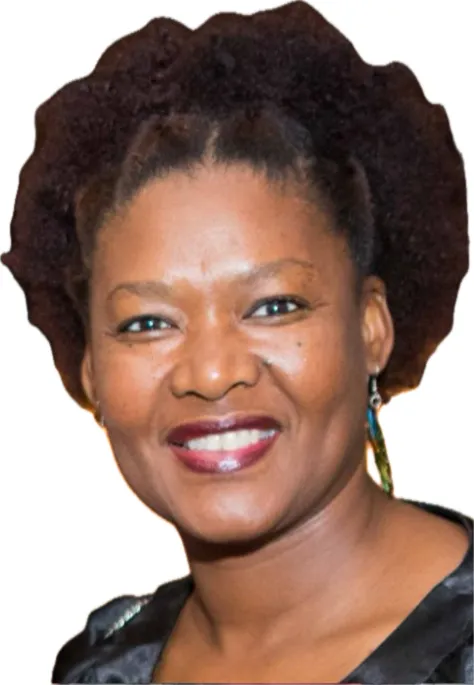
Marlene Ogawa

Synergos

Marlene is based in Johannesburg, South Africa, where she works with cross- and multi-sectoral leaders on the Bridging Leadership project, building collaborative and purpose-driven servant leadership principles. Her work centers on relational leadership and social connectedness, emphasizing personal change, common purpose, and collaborative action.

Marlene partners with clients to design and facilitate processes around compassionate leadership and foster effective intercultural diversity, equity, and inclusion (ICDEI) environments. She designs strategic development processes, leads courses, and consults on and facilitates various ICDEI and organizational development initiatives around themes like race, gender, and social transformation. Marlene’s approach encourages impactful dialogue spaces and focuses on building the capacity of leaders to hold space, lead teams, and model the institution’s vision. She is the author of several publications, including the book, Thriving Women, Thriving World: An Invitation to Dialogue, Healing and Inspired Actions.

Marlene has a degree from the University of Johannesburg and various certificates in project management and ICT. Her experience working with decision makers across diverse sectors, including philanthropy, children/youth services, academia, local governance, and the broader business and development sector, has enriched her work, equipping her with tools from cutting-edge methodologies, including World Café, Open Space Technology, and Appreciative Inquiry.

Connect with Dr. Phuntsog on social media: 

Connect with Shang Shung Institute School of Tibetan Medicine on social media:

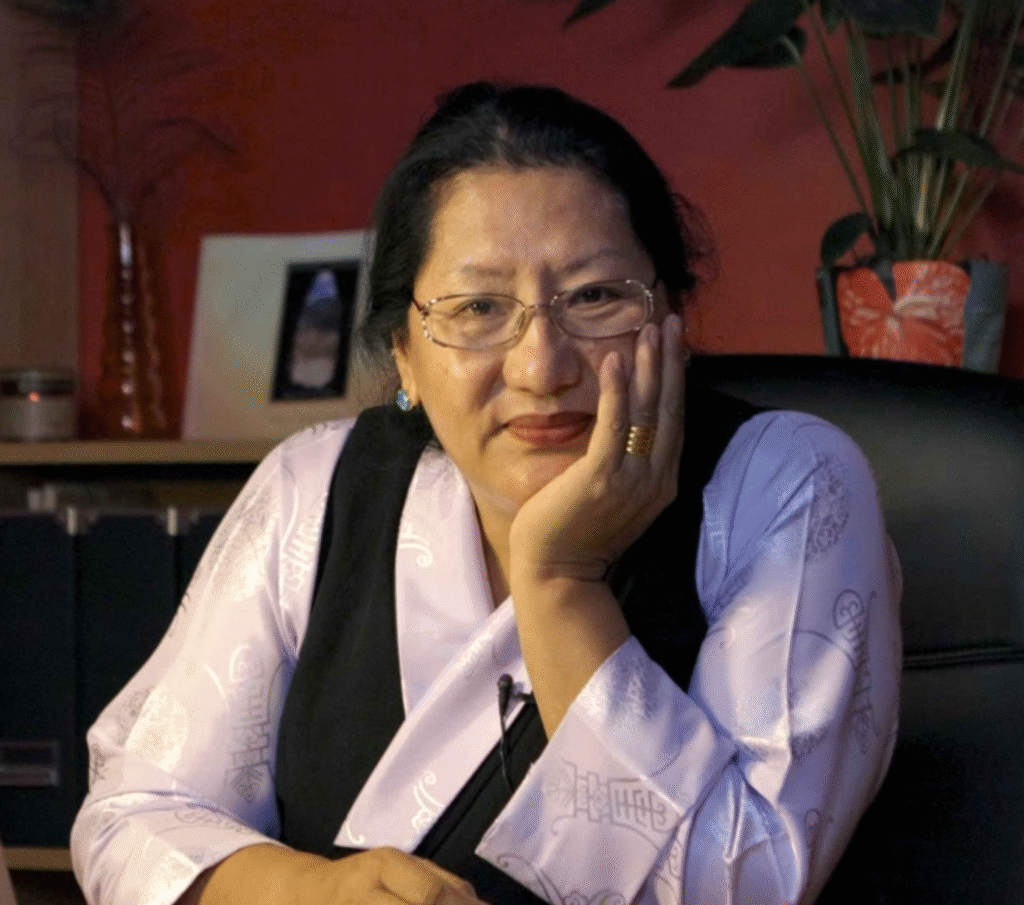
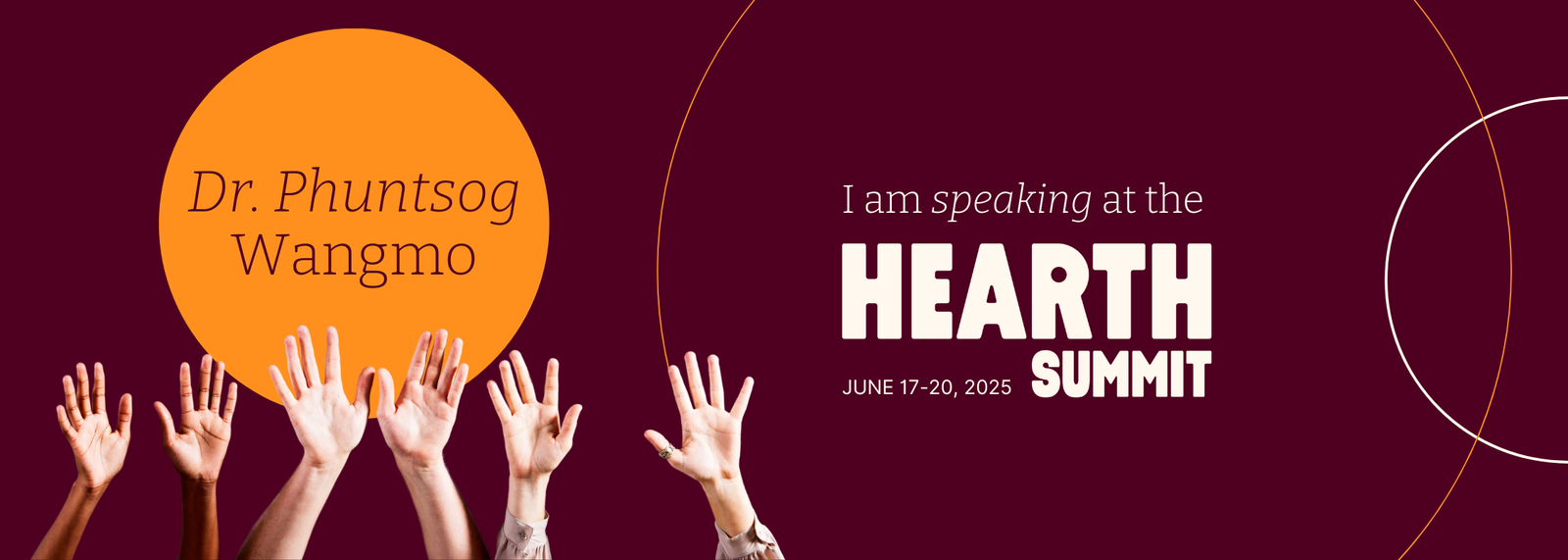
Dr. Phuntsog Wangmo

Shang Shung Institute School of Tibetan Medicine

International Director, Shang Shung School of Tibetan Medicine Khewang (Tibetan for Honored Scholar) Phuntsog Wangmo (Ping Cuowangmu) received her advanced degree from the Lhasa University School of Traditional Medicine in 1988 after completing her five-year training program and two-year residency. During that time, she studied with the Khenpos Troru Tsenam and Gyaltsen, two of Tibet’s foremost Tibetan Medicine doctors. Dr. Phuntsog Wangmo had the exceptional opportunity of extensive clinical training under Khenpo Troru Tsenam for four years. Thereafter, she dedicated many years of work as a doctor of Tibetan Medicine in Eastern Tibet, where she collaborated with and directed the implementation of A.S.I.A., the non-profit organization founded by Professor Namkhai Norbu. After that, she worked on behalf of A.S.I.A., setting up hospitals and training centers in the remote regions of Sichuan Province and Chamdo Prefecture. From 1997 to 2000, she was the A.S.I.A. project coordinator in Tibet for the development of Gamthog Hospital in collaboration with expatriate personnel as well as the overall health coordinator and practitioner of traditional Tibetan medicine, supervising health activities throughout the surrounding region of Chamdo Prefecture. In 2007, she co-founded the American Tibetan Medical Association (ATMA), a national organization representing the Tibetan medical profession within the United States. Its mission is to preserve, protect, improve, and promote the philosophy, knowledge, science, and practice of Tibetan medicine for the benefit of humanity. In 2012, Dr. Phuntsog Wagmo was appointed the International Director of the School of Tibetan Medicine She is currently in residence at the Shang Shung Institute of America, the international seat of the School of Tibetan Medicine, where she continues in her leadership as Director and International Director of the Institute’s national and international programs in the U.S.A., Russia, and Tenerife, Spain.

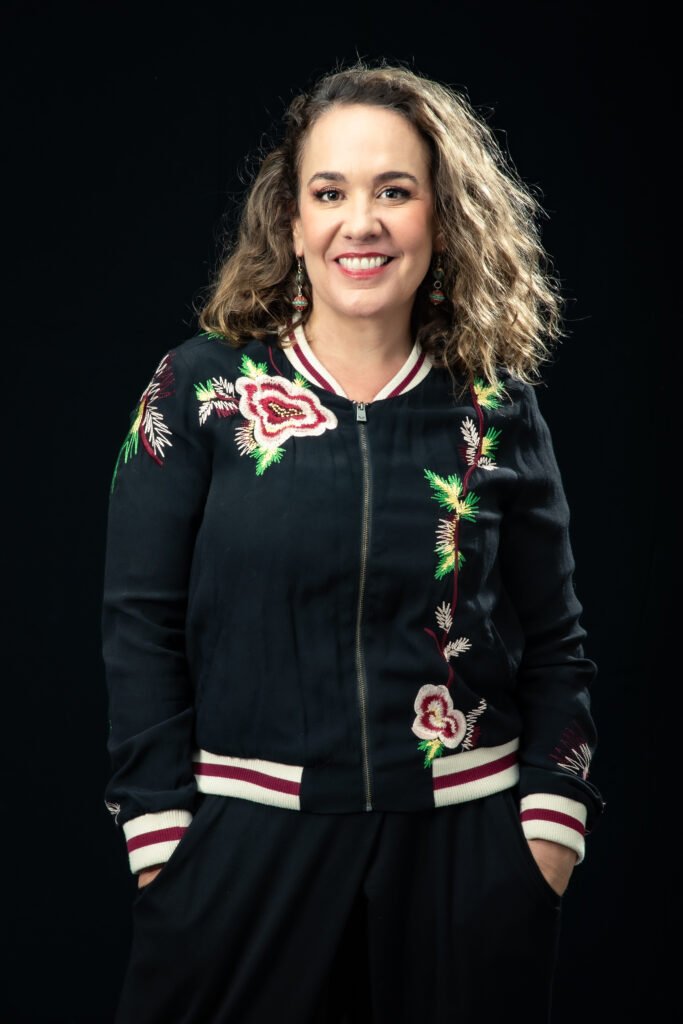
Catalina Cock Duque

Co-founder and Chief, Fundación Mi Sangre

Catalina is a social entrepreneur driving systemic change through innovation. As co-founder and President of Fundación Mi Sangre, she leads initiatives to unlock young people’s potential and activate ecosystems for more peaceful, democratic, and regenerative societies. Under her leadership, the organization has impacted over 2 million lives in Colombia, addressing issues like violence prevention, reconciliation, gender equity, and migrant inclusion. Recognized as Social Innovator of the Year by the Schwab Foundation in 2024, she is also an Ashoka Fellow, Synergos Fellow, and Aspen Fellow. Catalina co-created the world’s first social and environmental certification for artisanal gold mining, scaling it across 10+ countries as co-founder of Green Gold and the Alliance for Responsible Mining. Certified as an Integral Coach, she consults globally on leadership, social innovation, and systems change, fostering collaboration across Latin America, North America, Europe, and Africa.

Connect with Catalina on social media: 

Connect with the Fundación Mi Sangre on social media:

Connect with Sam on social media:

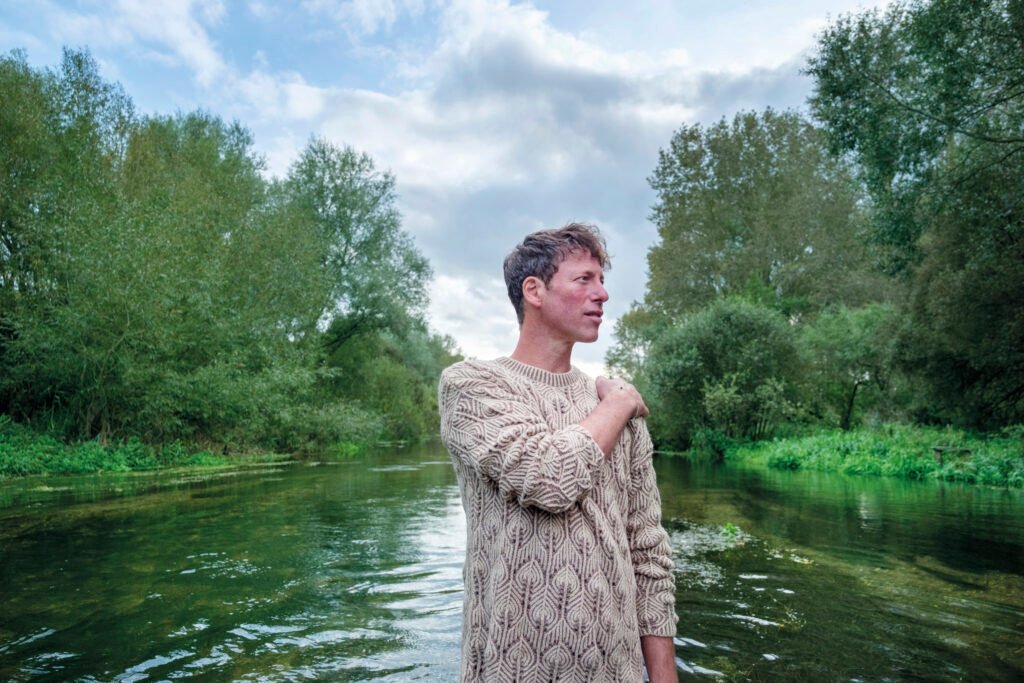
Sam Lee

Artist, Singing With Nightingales

Sam Lee holds a unique place in British music as a Mercury Prize-nominated singer, inventive arranger, song collector, folksong interpreter, conservationist, and creator of live events. His work consistently challenges what traditional music can be—bridging heritage with bold innovation and breathing new life into ancient songs. His journey began with the groundbreaking 2012 debut Ground Of Its Own, a striking blend of traditional and contemporary sounds that earned a Mercury Prize shortlist and was supported by a prestigious Arts Foundation award. It signaled Sam’s immediate and distinct presence on the folk and wider music scene. He followed with albums The Fade In Time and Old Wow, both further showcasing his talent for fusing old and new, earning recognition from Songlines (Artist of the Year) and BBC Radio 2 Folk Awards. His 2024 album songdreaming marked another creative peak—named one of Mojo’s Top 10 Folk Albums of the Year and awarded Best European Album at the 2024 Songlines Music Awards. It has remained a fixture on the Official Folk Albums Chart. Songlines magazine wrote: “We’ve seen Sam Lee progress from wunderkind singer and song collector to a respected spokesperson of the planet, its custodians (of all species) and its sounds… A folk voice for the England of the 21st century.” Beyond music, Sam is a storyteller and environmental advocate. In 2021, he published The Nightingale: Notes on a Songbird, exploring the legacy of the bird in folklore, music, and ecology. As a regular voice on radio and TV, and a skilled composer for film, his songs have appeared in major productions including King Arthur (2017), The Unlikely Pilgrimage of Harold Fry (2023), and Speak No Evil (2024) starring James McAvoy. He is the founder of The Nest Collective, an influential platform for folk, global, and acoustic music, active for over a decade. A committed activist, Sam co-founded Music Declares Emergency, served on the boards of the UK’s Featured Artists Coalition and the US Folk Alliance International, and partnered with EarthPercent to donate a portion of album proceeds to environmental causes. Sam’s deep connection to music and nature was sparked in his childhood in Kentish Town and shaped by summers at Forest School Camps. His artistry has been deeply influenced by mentors such as Scottish Traveller singer Stanley Robertson and by years of collecting songs from Gypsy and Traveller communities across the UK. With every project, Sam Lee affirms that tradition and transformation can exist hand-in-hand—creating work that is musically rich, socially conscious, and deeply rooted in the cultural and natural world.

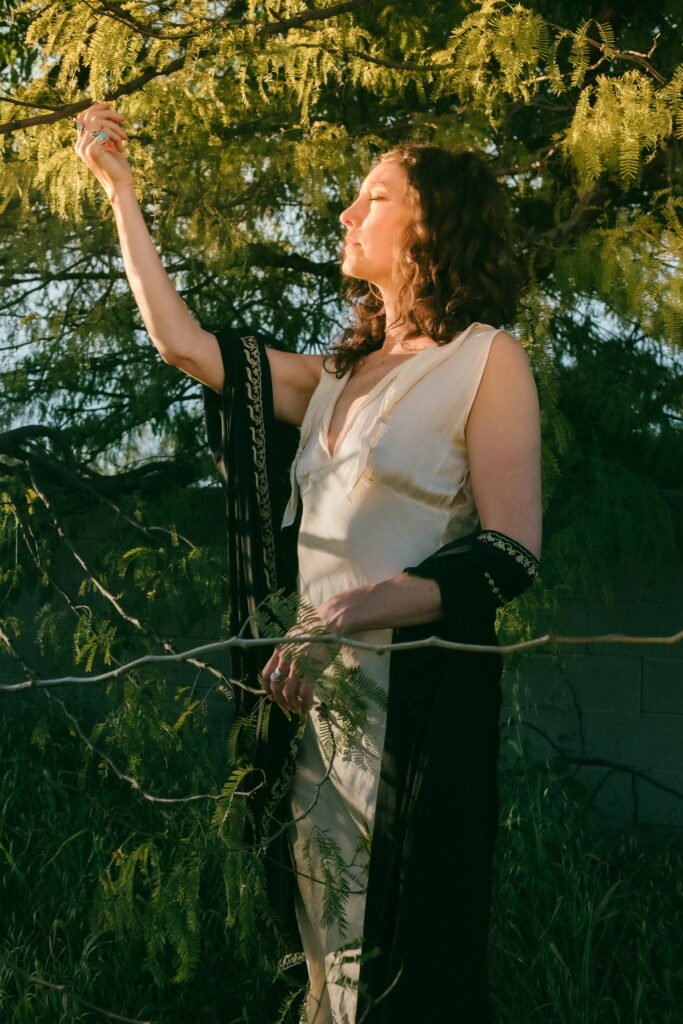
Heather Wolf

Musician, voice coach, facilitator; True Voice, Brewess, Teen Talking Circles

Artist for the Remembrance of Folk Wisdom, Heather Wolf is a singer, storyteller, voice coach, and circle practitioner from the islands of the Pacific Northwest. Running through her work is a conviction that folk arts and practices – living within the collective, belonging to the whole, and forming the vital foundation of every healthy culture – can help us embody our sacred relations with other humans and the living world. Heather leads private sessions, retreats, and workshops worldwide, gives mythopoeic performances of folk song & story with the Appalachian mountain dulcimer. Her music spans soothing, entrancing folk ballads to moody, sensuous rock. With a voice both mesmerizing and enchanting, she sings to a wild and ancient soul moving through all things. Heather’s upcoming LP Midnight Hour is out this July, 2025. www.heatherwolf.love

Connect with Heather on social media:

Connect with Aakash on social media:

Connect with the Aakash Odedra Company on social media:

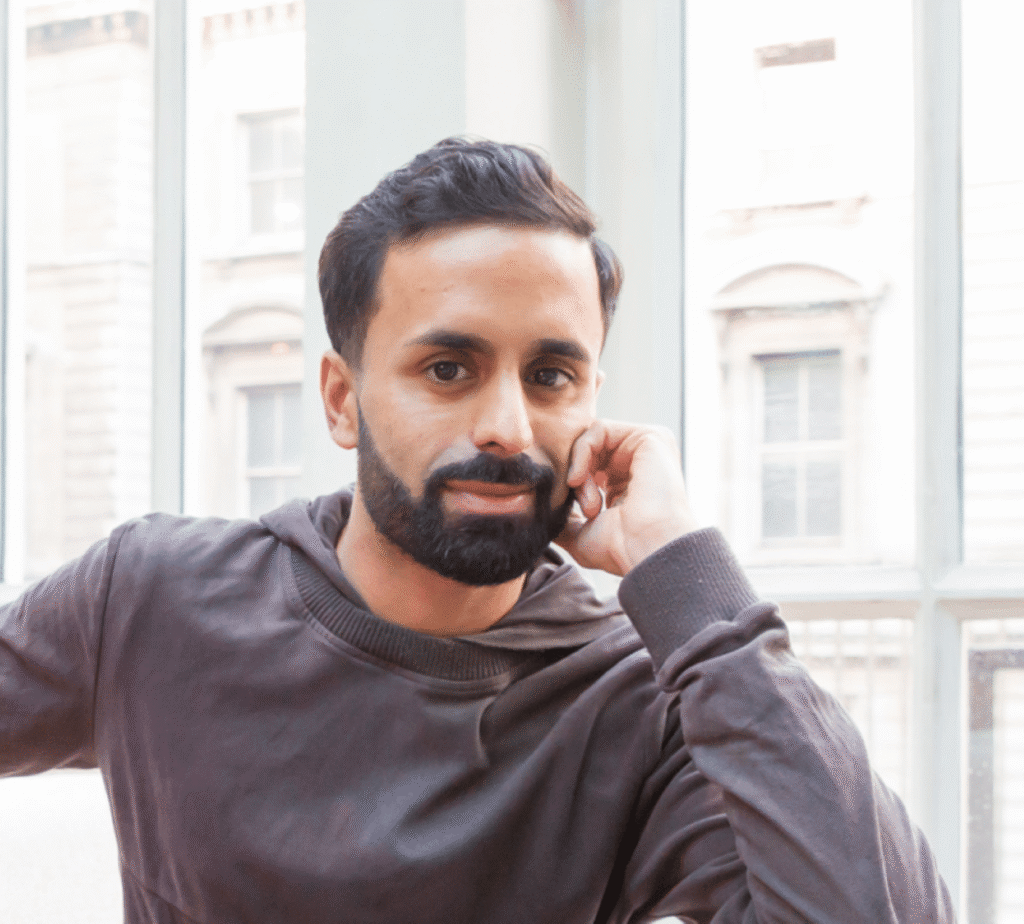
Aakash Odedra

Choreographer; Performer; Artistic Director, Aakash Odedra Company

Aakash Odedra is an internationally acclaimed contemporary dancer and choreographer based in Leicester, UK. Known for his unique synthesis of classical Indian dance form Kathak with contemporary dance, Aakash has gained significant recognition, including the Bessie Award, the Amnesty International Award for Freedom of Expression, the British Empire Medal (BEM) awarded by HRH Queen Elizabeth II in 2020 and the most recent “Best Show”at the Edinburgh International Festival. Trained under renowned gurus like Nilima Devi, Asha Joglekar, Chitraleka Bolar, and Chhaya Kantaveh, Aakash seamlessly blends the intricacies of classical dance with modern sensibilities. His works, such as Rising, Murmur, Echoes, #JeSuis, Samsara, Mehek, and Songs of the Bulbul, have been performed globally to critical acclaim. He has collaborated with distinguished artists like Akram Khan, Sidi Larbi Cherkaoui, Russell Maliphant, Aditi Mangaldas, Rani Khanam, Sabrina Mahfouz, and David Poznanter. A frequent headliner at major international festivals, Aakash continues to create evocative and thought-provoking performances that resonate with audiences worldwide.

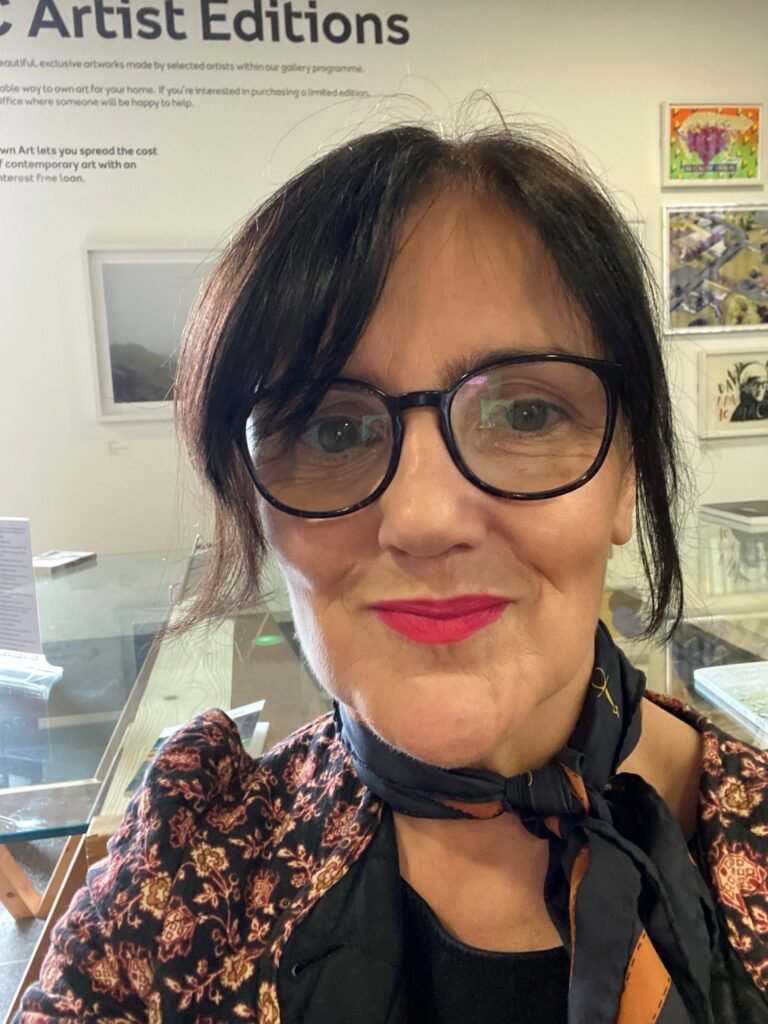
Elaine Forde

Creative Learning & Engagement Manager, The MAC (Metropolitan Arts Centre)

Elaine has focused in career working with artists and communities to drive personal and social change. As Creative Learning & Engagement Manager she has over ten years’ experience of senior leadership experience in two of Northern Ireland’s leading arts organisations – the MAC (Metropolitan Arts Centre) in Belfast and The Playhouse in Derry. Over the past 20 years her work has been rooted in social practice – working alongside community members, partner organisations and artists to drive positive social change. Her work has resulted in ex-combatants from Northern Ireland’s conflict becoming peacebuilders; hostile policing protocols changing to better support young people; and the testimonies of people in the asylum system contributing to the Northern Ireland Human Rights Commission’s action to prevent the UK Government’s illegal Migration Act from being implemented in Northern Ireland. She holds a Masters in Fine Art in Chelsea Art College (London University of the Arts), a Post Graduate Diploma in Arts Management from Ulster University and a BA Degree in Fine Arts from Ulster University.

Connect with Elaine on social media: 

Connect with the MAC on social media:

Connect with Anne on social media: 

Connect with the Theatre of Witness Network on social media:

Anne Walker

Facilitator and Director, Theatre of Witness Network

Born in 1968, the normalisation of violence and conflict including the Murder of her uncle on “Bloody Sunday” had a profound impact on how Anne lived in the world and identified as a young woman of Derry. At age 18 she became a Republican Activist. In 2010, in search for a deeper personal understanding, Anne engaged with Theatre of Witness in their Production of ‘I Once Knew a Girl’. She shared her story for the first time. This process was revelatory for Anne who felt a profound change had occurred. Since then, Anne has worked tirelessly to effect change through Live Performances, Storytelling & Art Workshop Facilitation, Media Recording or Personal Connection. Anne has used her story to help others on their journey toward reconciliation working with groups of ex-opposing combatants, victims and survivors, police, army, and people from conflict backgrounds locally, nationally and globally. Anne’s work includes regular collaborations with; Theatre of Witness, Schools and community groups, Shared Education, European and American colleges , Warrington Peace Centre, Ex-prisoners and combatants, Member of the Irish Consortium of Women’s mediators, Glencree All Island Women’s Peacebuilding Network. Centreity, Training for Women’s Network and Women in Community, Playhouse Derry (Peace Academy) Research Advisory Committee – NI Arts. OSCE – Organisation for Security and Co-Operation in Europe.